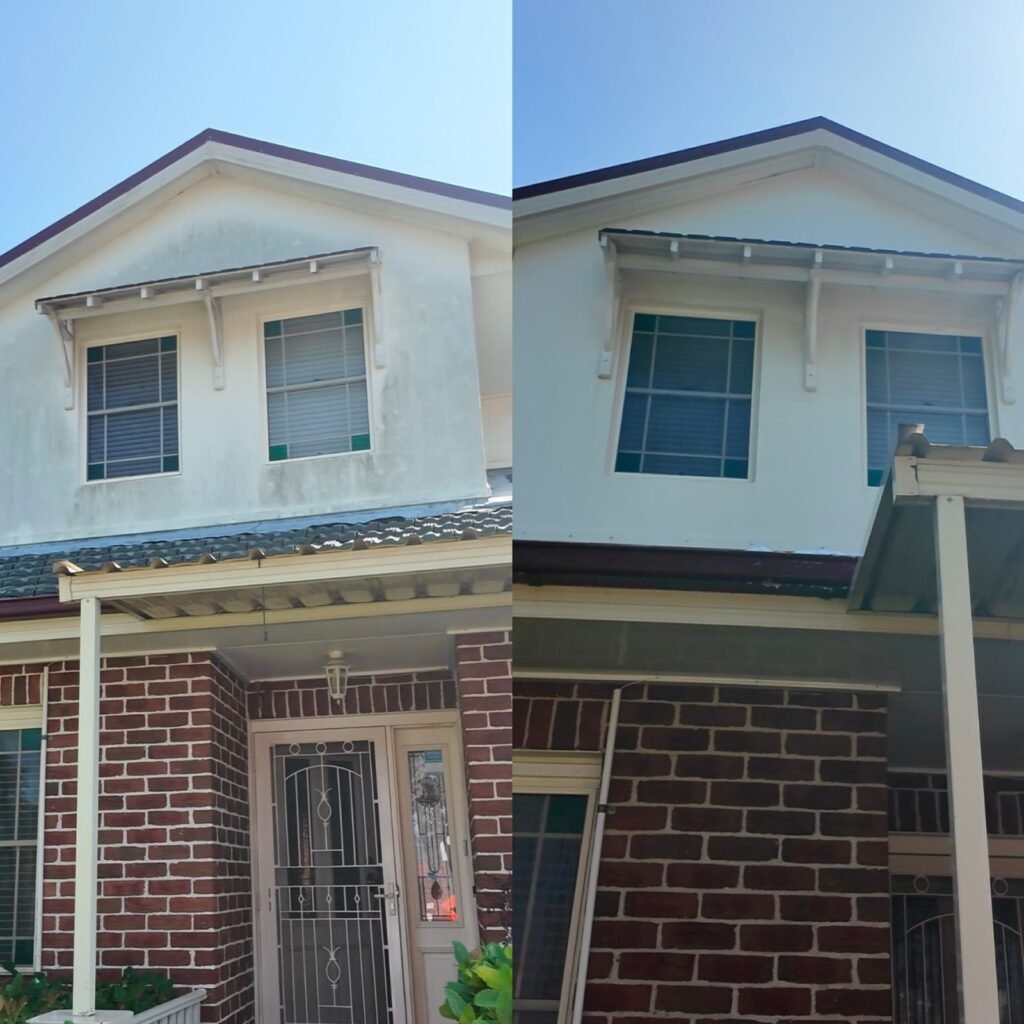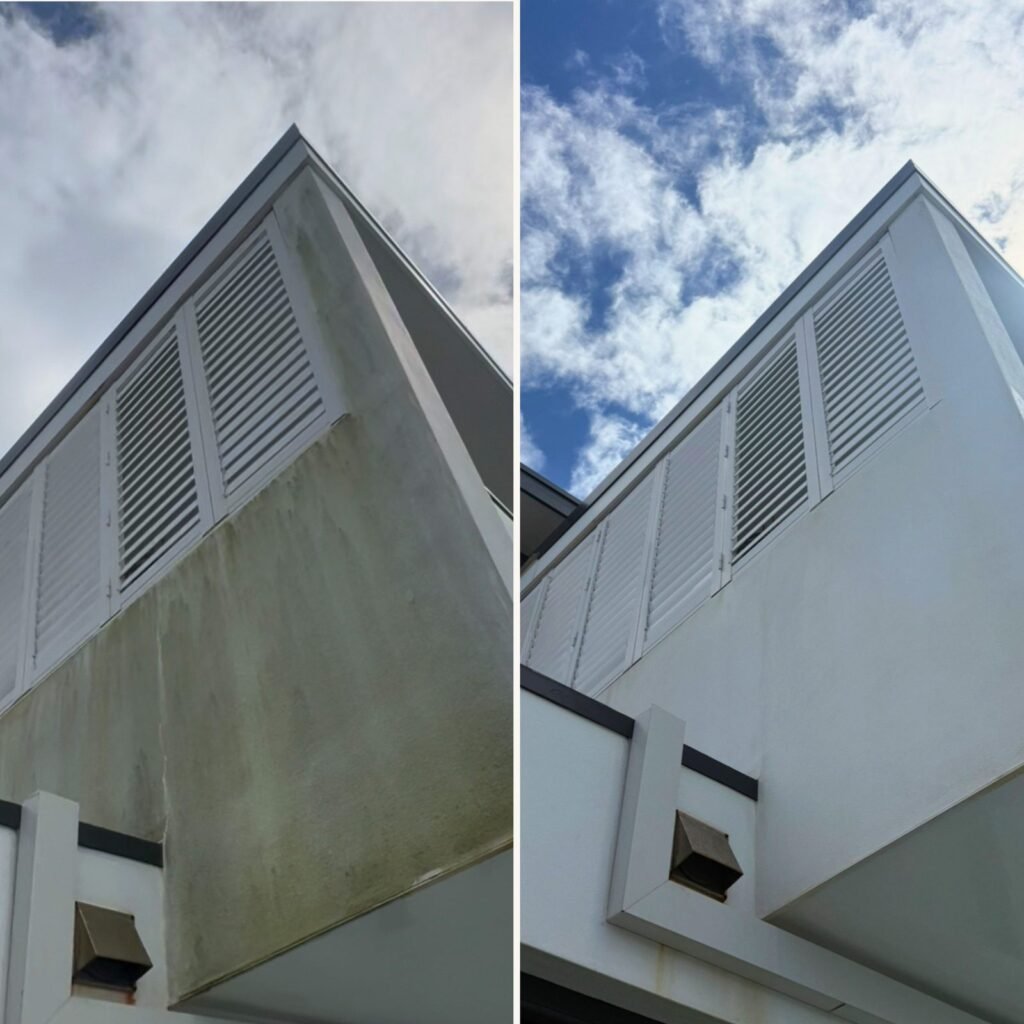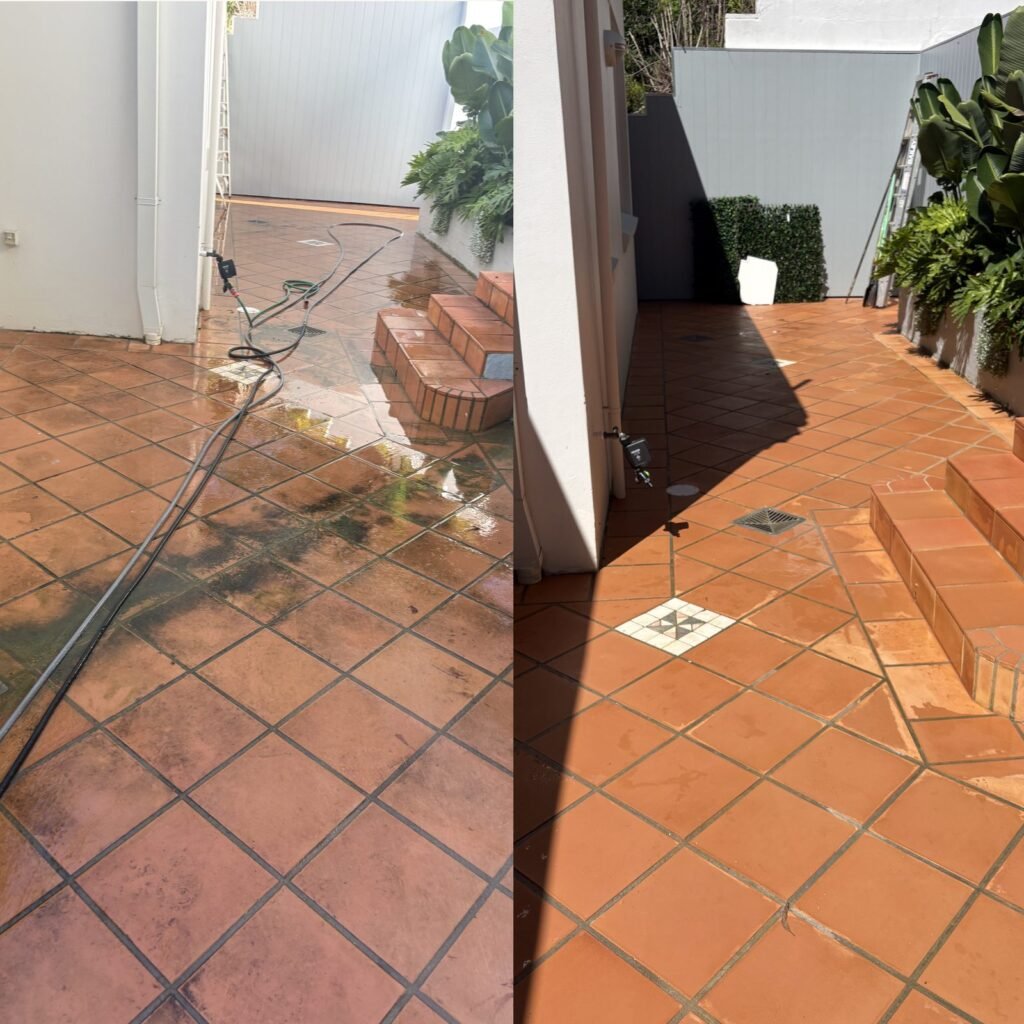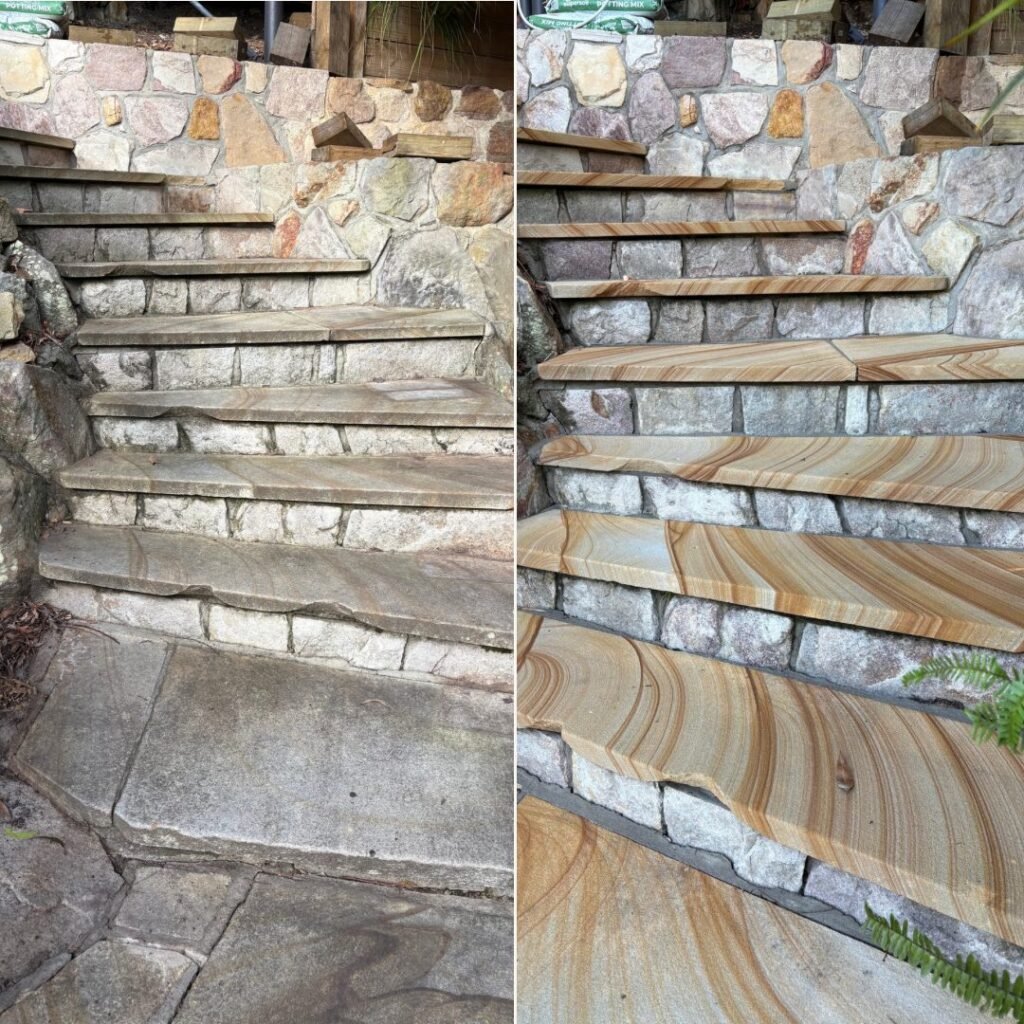
When we tell a customer we soft wash their render instead of pressure washing it, the next question is usually “with what?” It’s a good question, and the industry is often vague about the answer. Here is the plain version.
The three ingredients
Nearly every soft-wash mix used on Sydney homes is built from three things:
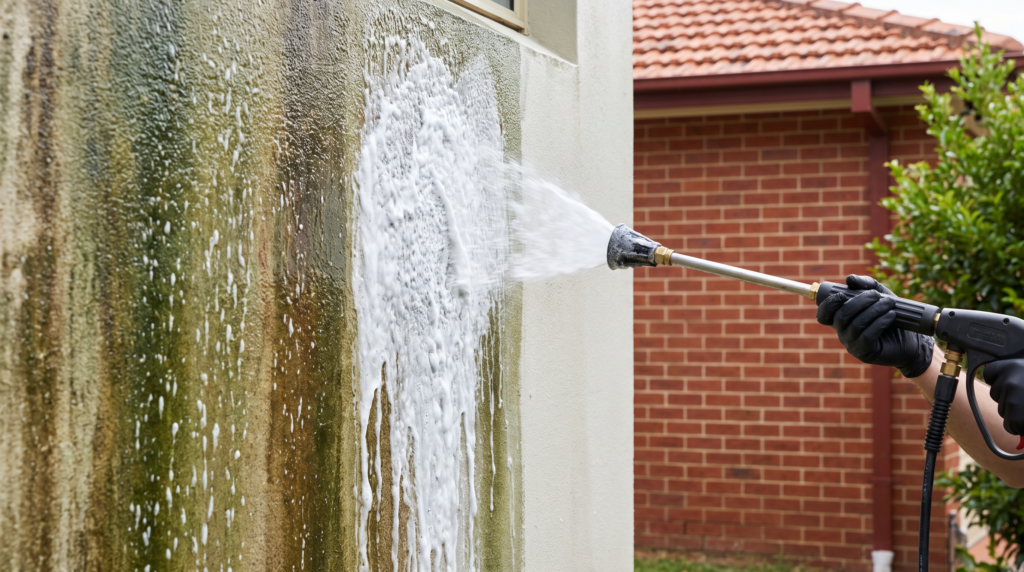
- Sodium hypochlorite. This is the active ingredient in pool chlorine and household bleach. It kills the mould, algae, lichen and bacteria that make render, roofs and stone go green and black. Pool-grade hypochlorite comes at around 12.5 percent and is diluted down heavily before it touches a wall.
- A surfactant. A soap. It lets the mix cling to a vertical wall long enough to work instead of running straight off, and it lifts loose grime so the rinse carries it away.
- Water. Most of the mix, by a long way.
Some operators add a neutraliser, scent, or an inhibitor to slow re-growth. The core is still hypochlorite plus soap.
How strong is it, really?
This is where operators vary enormously and where damage happens. The working strength that reaches the surface depends on the job. On a lightly soiled painted wall we’re often at well under 1 percent active hypochlorite. On a heavily infested south-facing render in Castlecrag that hasn’t been cleaned in a decade, it goes higher. On a roof with thick lichen, higher again.
The point is that the strength is chosen for the surface and the growth, tested on a small area first, and increased only if needed. A single “house wash mix” sprayed on everything is how you get bleached timber, dead hedges and streaked Colorbond.
Why it works when pressure doesn’t
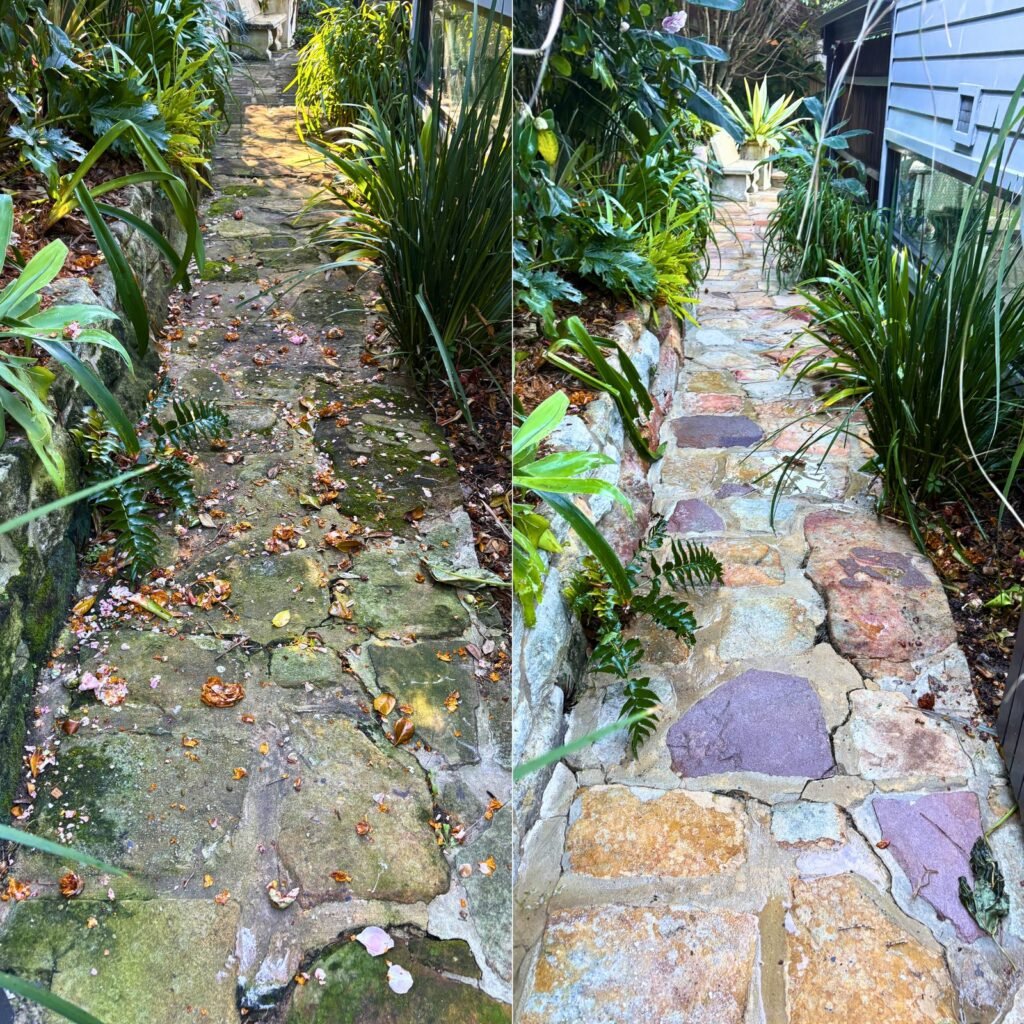
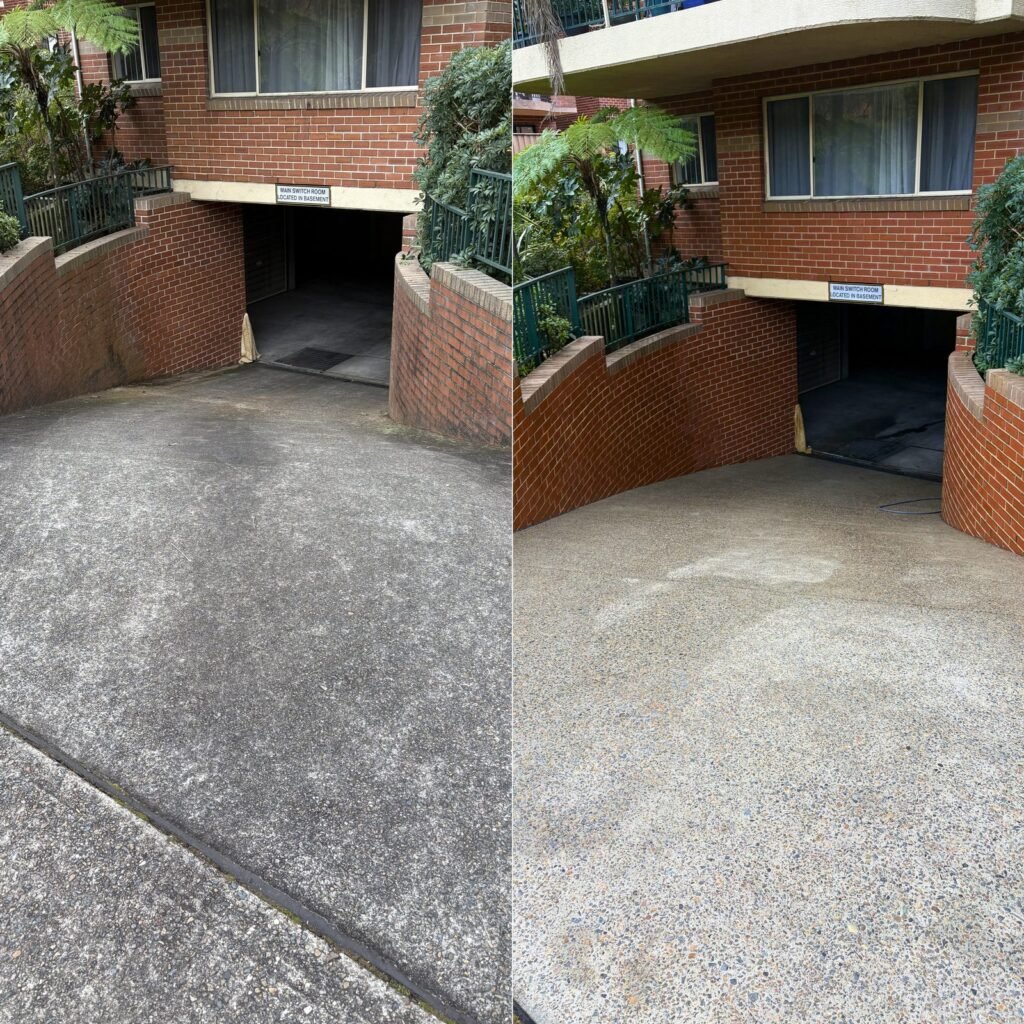
Mould and algae are organisms with roots in the surface. High pressure blasts the visible growth off the top and leaves the roots, which is why a pressure-washed render often looks worse again within a year. Hypochlorite kills the organism. The dead growth then rinses off or weathers away over the following weeks, and because the roots are dead, regrowth is much slower. On roofs in particular, lichen that has been killed will continue to lift and fall away for months after the job.
What it can damage
We’d rather you hear this from us than find out. Hypochlorite at working strength will:
- Burn plants. Everything under and beside the wall gets wet down first, covered where practical, and rinsed thoroughly afterwards. On a job in Bellevue Hill last year we spent longer protecting a hedge than cleaning the wall behind it. That’s the job.
- Mark unprotected metal. Zinc, galvanised steel and some aluminium finishes can spot. Rinse quickly and completely.
- Lift oxidised paint. If a painted surface is already chalking, cleaning will expose that. It isn’t causing the failure, but it will reveal it.
- Stain fabric and corrode fittings if overspray isn’t managed. Outdoor furniture, awnings and cars move or get covered.
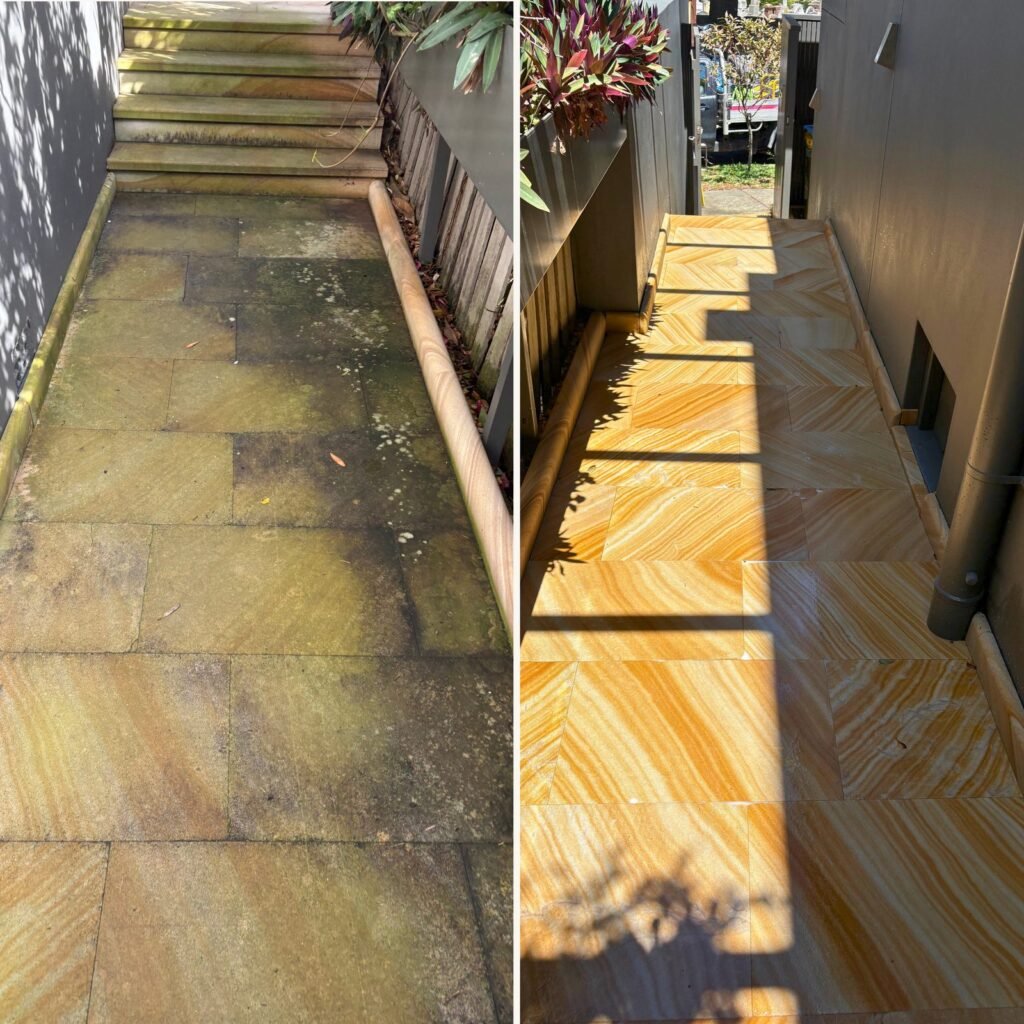
It will not, used correctly, damage sound render, masonry, painted surfaces, concrete or most roof tiles. Sandstone is a special case: heritage sandstone and lime mortar are cleaned with much gentler chemistry, and we don’t use hypochlorite on them without a specific reason.
The “eco-friendly” question
Customers ask about this a lot, and they deserve a straight answer rather than marketing.
Hypochlorite breaks down quickly into salt and water once it’s done reacting and diluted; it does not persist in soil the way some chemicals do. The environmental risk is concentrated run-off reaching stormwater and then the harbour or ocean, which is a real issue on Sydney’s coastal suburbs and is managed by controlling where the water goes, not by pretending the chemical doesn’t exist.
There are alternatives. Percarbonate-based cleaners (oxygen bleach) are gentler and we use them on some stone and timber. Quaternary ammonium biocides kill growth without bleaching and are useful where colour is at risk. Both work more slowly, cost more, and on a heavily infested roof they often just don’t have the power to do the job in one visit. “Chemical-free” cleaning of biological growth generally means high pressure, which damages the surface and leaves the roots behind. If a company claims to be entirely chemical-free and also promises your roof will stay clean, one of those claims is wrong.
What to ask your cleaner
“What are you using and at what strength?” A good operator will tell you plainly. “How are you protecting the garden?” should get a specific answer, not “we’re careful”. And “where does the run-off go?” should get a plan.
Written by the crew at The Prestige Standard. We soft wash render, roofs and painted surfaces across Sydney’s Eastern Suburbs, North Shore and Northern Beaches, and the strengths and methods described here are what we use in practice. Every property is different; treat this as background, not a recipe.