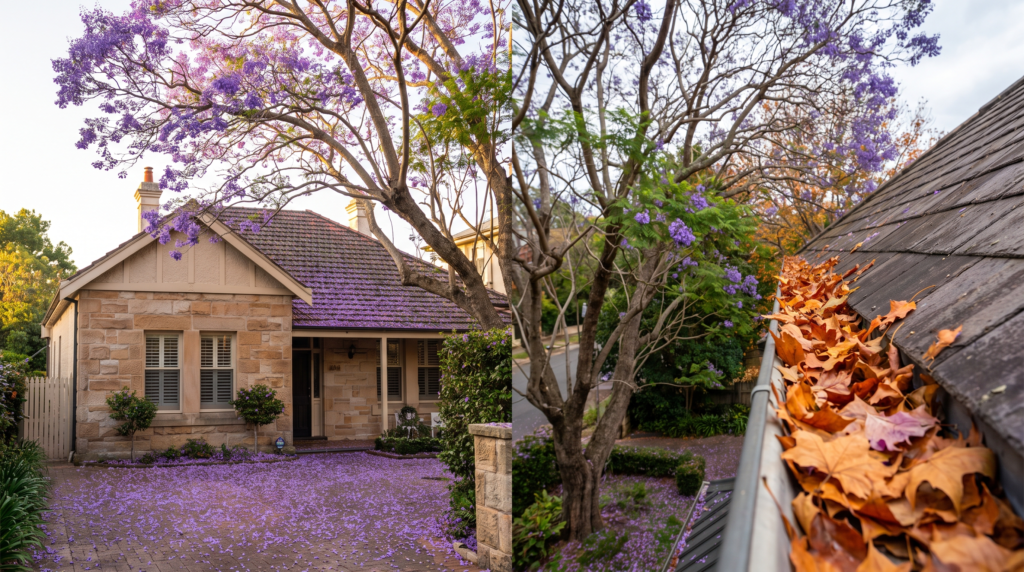
Everyone wants their house cleaned in October. It’s understandable: the weather’s turned, the jacarandas are out, and the grime of winter is suddenly obvious in the sun. But “when it looks worst” and “when it’s best to clean” aren’t the same thing, and some of our best results come from jobs booked in months nobody thinks of.
What each season does to a house
Summer (December to February). Hot, humid, with afternoon storms. Mould and algae grow fastest now on shaded south faces. Gutters fill with storm debris. Surfaces dry fast, which is good for sealing but means soft-wash mix can dry on a hot north wall before it’s done its job. On the coast, sea breeze salt builds up through the whole season.
Autumn (March to May). Sydney’s most reliable weather: mild, drier, lighter winds. Deciduous trees and the tail end of the gums drop leaves into gutters and onto paving, and wet leaves on sandstone or pale concrete leave tannin marks within days. East-coast lows start turning up from late autumn.
Winter (June to August). Cooler, shorter days, more overnight moisture, lower sun that leaves south walls in shade all day. Growth slows but doesn’t stop, and moisture that never fully dries feeds lichen on roofs and moss in shaded paving joints. Rendered walls stay damp longer after rain.
Spring (September to November). Warming, windy, pollen everywhere. Jacaranda flowers stain paving purple-brown; a wet carpet of them on sandstone is one of the harder marks we deal with. Bushfire season starts and with it, occasionally, a film of ash on everything. Demand for cleaning peaks and lead times stretch.
When we’d actually book each job
- House washing (render, paint, brick): autumn or spring. Mild temperatures let the soft-wash mix dwell without drying out and let the walls dry properly afterwards. Autumn edges it: the clean lasts through winter’s slow-growth months and the house looks right by spring without the spring queue.
- Roof cleaning: autumn through early spring. Dead lichen needs weeks of weathering to fall away, so a roof treated in April looks its best by the end of winter. Summer roof work is limited by heat on tiles and by afternoon storms making the surface unsafe.
- Gutter cleaning: twice. Once in late autumn after the leaf drop and before the winter lows, once in spring before the summer storms. Properties under gums, jacarandas and paperbarks often need a third.
- Sandstone and paving: whenever it’s dry, but the most valuable time is straight after the leaf and flower drops (late autumn, and November for jacarandas) before tannin sets. Sealing wants at least two dry days after cleaning, which makes late summer and autumn the reliable windows.
- Driveways and concrete: any season. Concrete doesn’t care much. Avoid the day after heavy rain, when the slab is saturated and the surface cleaner just moves water around.
- Salt rinses on the coast: late summer, after the season’s build-up, and after any big easterly blow.
- Pre-sale and pre-photos: two to three weeks before the photographer, not the day before. That leaves time for surfaces to dry evenly and for dead growth to clear.
Why we don’t clean in the rain, or right after it
Rain during a soft wash dilutes the mix off the wall before it works, and rain the day after rinses away any sealer that hasn’t cured. Just as importantly, a wall or roof that’s been wet for days is saturated, and driving more water into it at any pressure is how moisture gets behind render and under tiles. We’ll move a job rather than push through a wet week, and a good operator should tell you the same.
Region by region
Northern Beaches: salt is the year-round issue; the clean that matters most is the late-summer rinse. North Shore: canopy shade means growth never really stops; the autumn house wash and a winter roof treatment do the most work. Eastern Suburbs: sandstone and salt together; autumn for stone cleaning and sealing, and a jacaranda-season clean-up for anyone with pale paving in Woollahra or Bellevue Hill.
The short version
If you only clean once a year, do it in autumn. If you clean twice, autumn and early spring. Book gutters in May and September. And whatever the season, book two to three weeks before you need it to look good, not two days.
Written by the crew at The Prestige Standard, based on scheduling and return visits across Sydney’s Eastern Suburbs, North Shore and Northern Beaches. Seasonal patterns are general; a shaded south-facing wall in Castlecrag and a north-facing render in Maroubra will not behave the same in any month.






