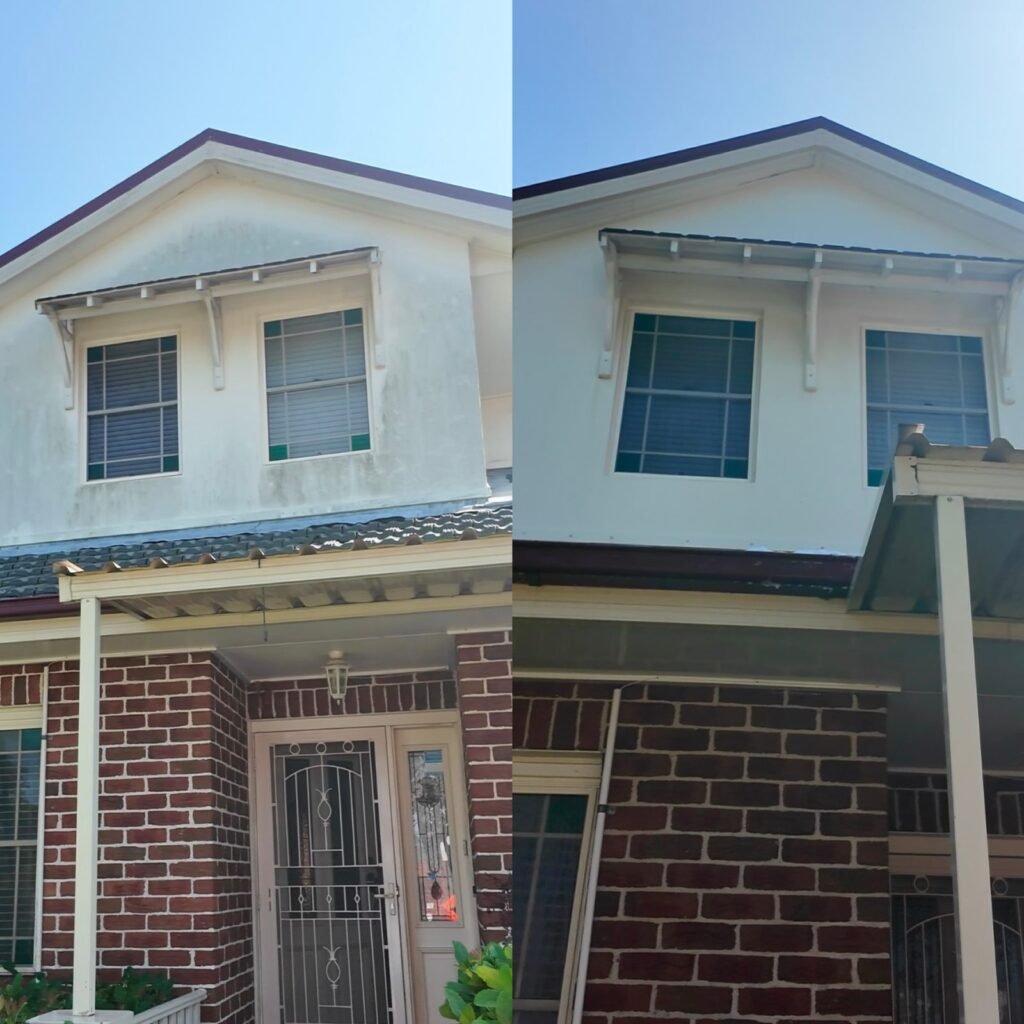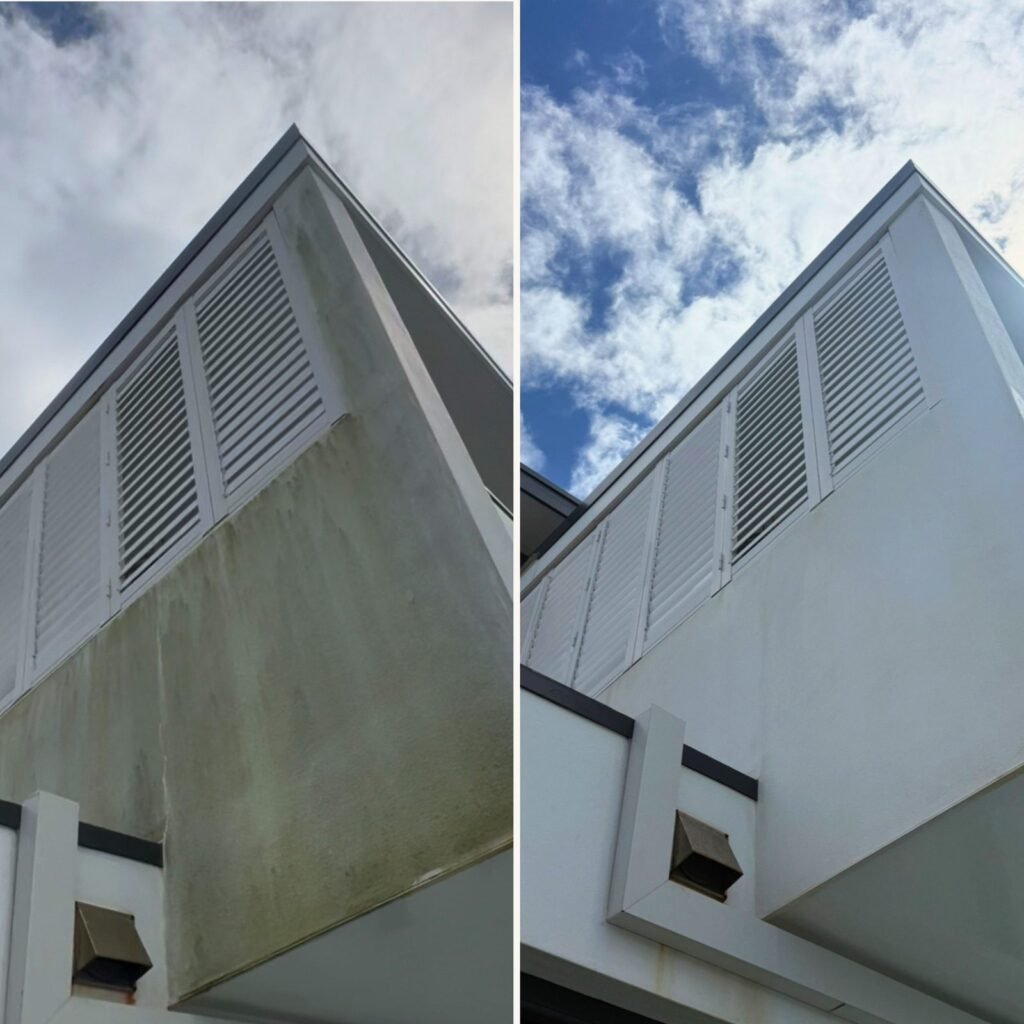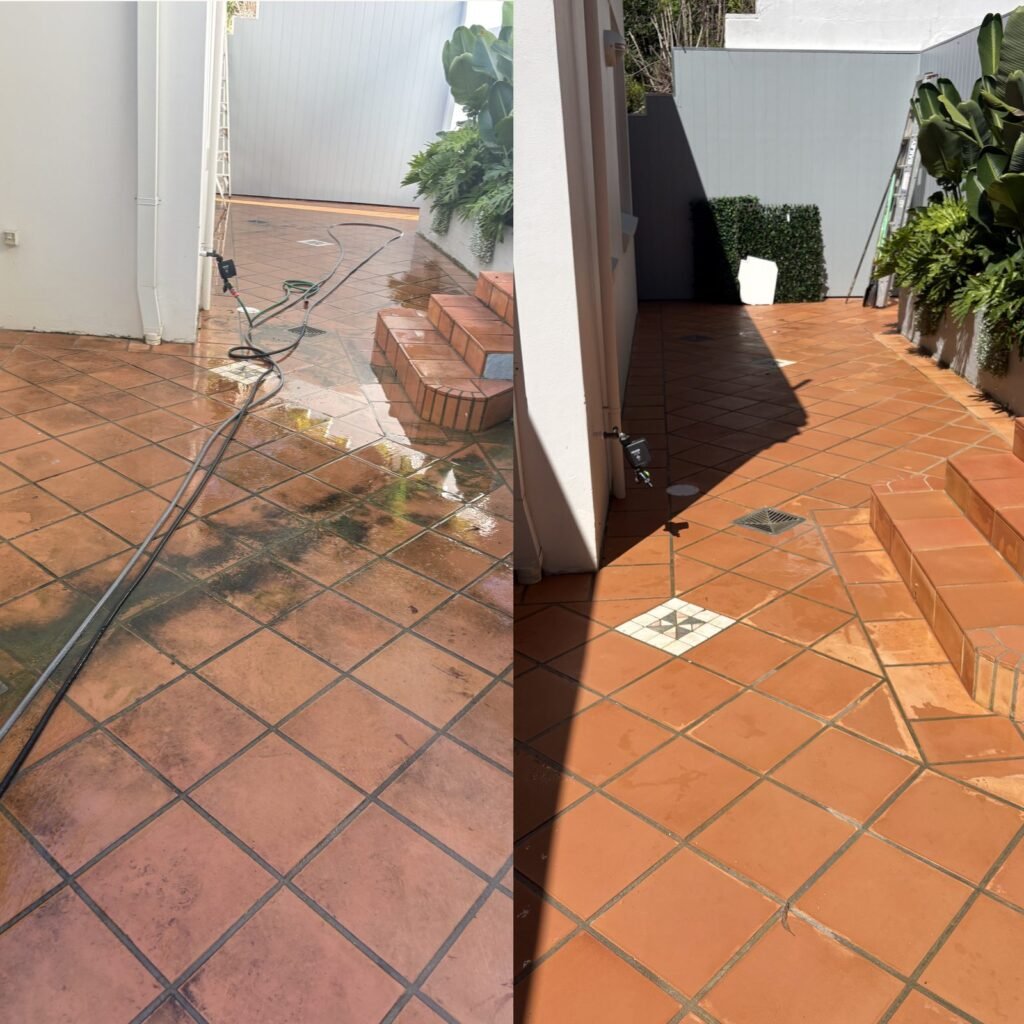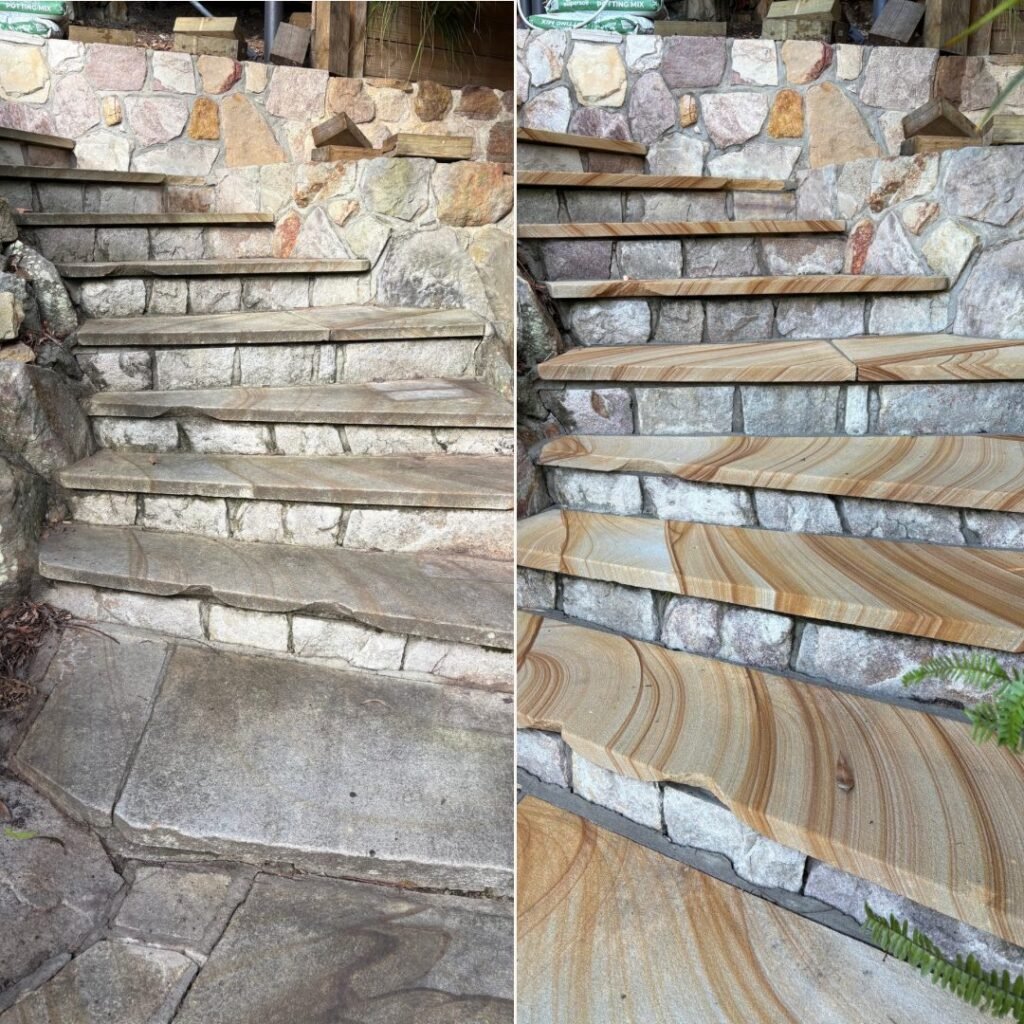
If a house was painted before 1970, assume there is lead in the older coats. If it was painted before 1950, assume there is a lot of it. That covers most of the terrace stock in Paddington, Balmain, Glebe and Surry Hills, the Federation homes across the North Shore, and the older cottages through Manly and Freshwater.
The paint is usually buried under later coats and doing no harm. Washing is one of the few routine jobs that can change that.
How lead ended up there
Lead was used in Australian domestic paint at high concentrations for decades, with limits tightened progressively from the mid-1960s and again in the 1990s. A house repainted five times since 1940 still has the original lead-bearing coats underneath, sitting directly on the timber, render or iron.
Intact and covered, it is stable. The hazard is dust and paint chips, which is what you get whenever the surface is abraded.
Why high pressure is the wrong tool on old paintwork
A pressure washer aimed at flaking hundred-year-old paint does not clean it. It strips it. Chips and paint dust go into the air, onto the path, and into the garden beds and lawn directly beneath the wall.
The soil is the part owners underestimate. Paint chips washed off a wall do not disappear; they break down into the topsoil, at the exact height a small child plays and a vegetable bed sits. Soil around older painted houses in Sydney is a well-documented source of lead exposure, and a careless wash adds to it in an afternoon.
Young children and anyone pregnant are the people this matters to most, which is why the correct response is caution rather than a cheaper contractor.
What a controlled wash looks like
Cleaning old paintwork is entirely doable. The requirements are that nothing abrades the film and nothing enters the soil:
- Low pressure only, applied to clean rather than to strip.
- Ground protection under the work area, so chips and sediment are captured rather than washed into beds.
- Collection and disposal of the captured debris, not a rinse into the garden.
- Vegetable beds, play equipment, sandpits and pet areas covered or isolated.
- No scrubbing, sanding or wire brushing as part of the cleaning scope.
This is the same soft washing discipline used on render and heritage brick, with the containment made explicit because the consequence of getting it wrong is different.
Flaking paint is not a cleaning problem
There is a point where a wall stops being dirty and starts being failed. If the paint is lifting, blistering or shedding in sheets, no wash will improve it, and any wash will remove some of it.
At that stage the job is a repaint, and the preparation is regulated work for good reason. A painter experienced with lead-safe practice will contain the area, avoid dry sanding and blasting, and dispose of waste properly. Getting an exterior cleaner to blast the loose paint off first as a favour is precisely the thing that creates the contamination.
What to ask before booking
- How old is the paintwork, and are we assuming lead is present?
- What ground protection is being used, and what happens to the captured sediment?
- Is the scope cleaning only, or does it include any stripping or scrubbing?
- What pressure is being used on painted surfaces specifically?
Where this comes up most
Terraces with zero setback are the hardest cases: the wall is a metre from a shared path or a neighbour’s courtyard, there is nowhere for overspray to go, and the paint is the oldest in the city. Those jobs are slower and cost more, and a quote that treats them as routine has not thought about the site.
Heritage brick and stone that has never been painted is a different matter entirely, covered under brick cleaning and sandstone cleaning.
Written by the team at The Prestige Standard, exterior cleaning contractors working across Sydney. Fixed written quotes within 24 hours with every surface itemised, $20 million public liability. See our service areas or call 0494 810 609.
General information only. For health advice about lead exposure, speak to your GP or your local public health unit.