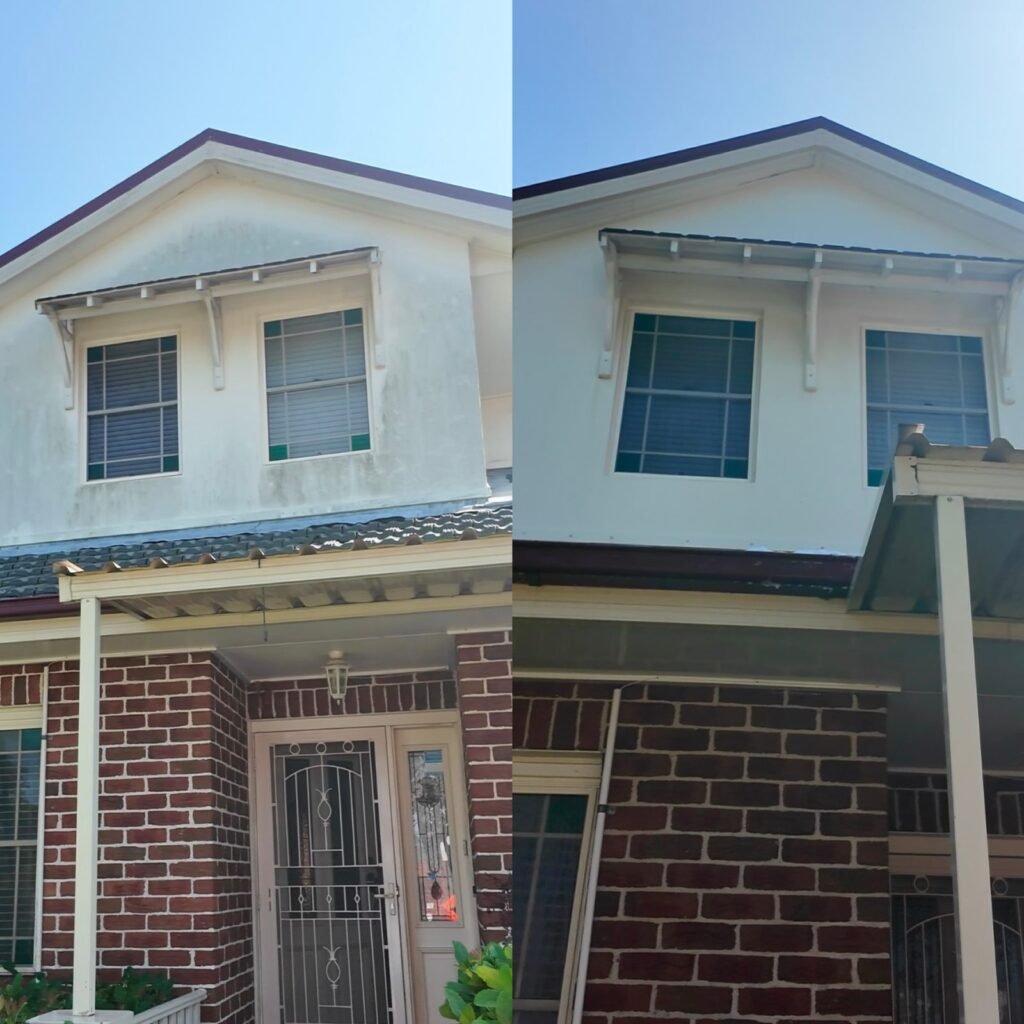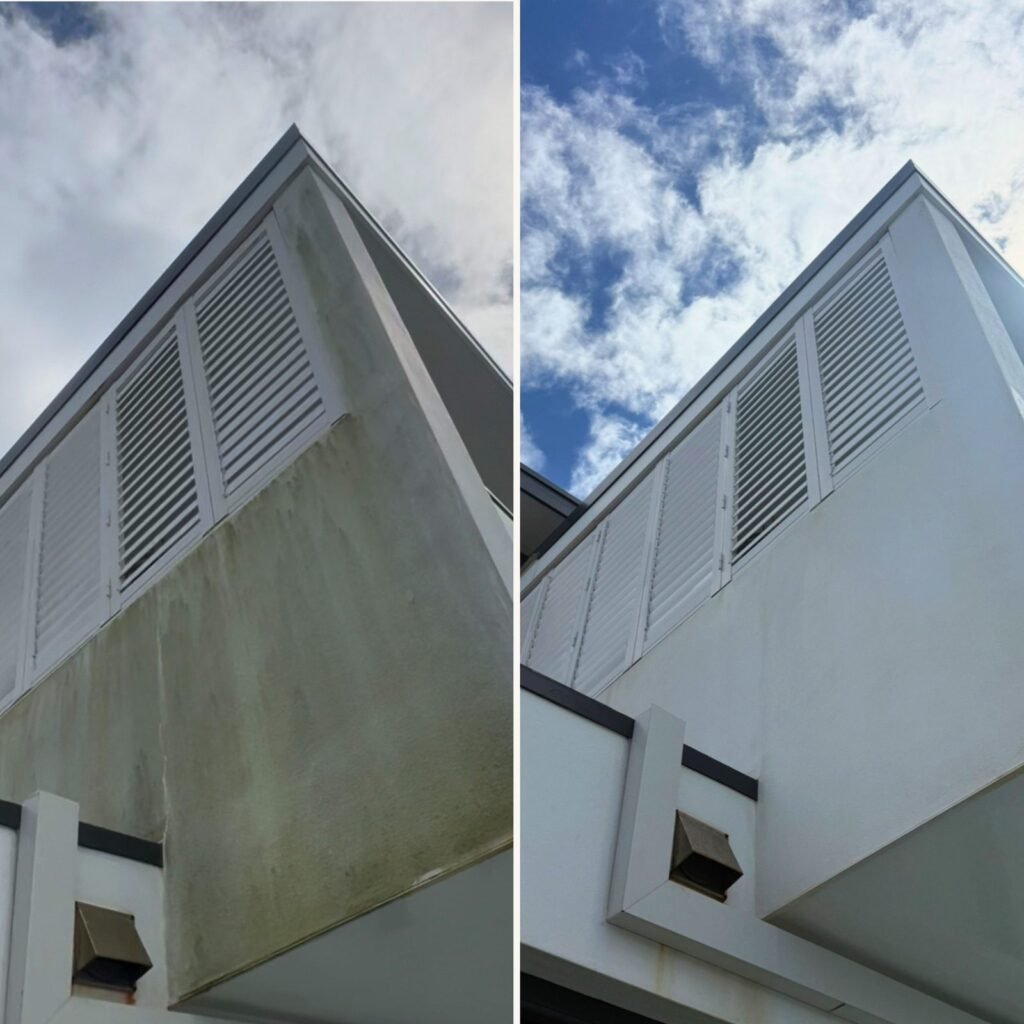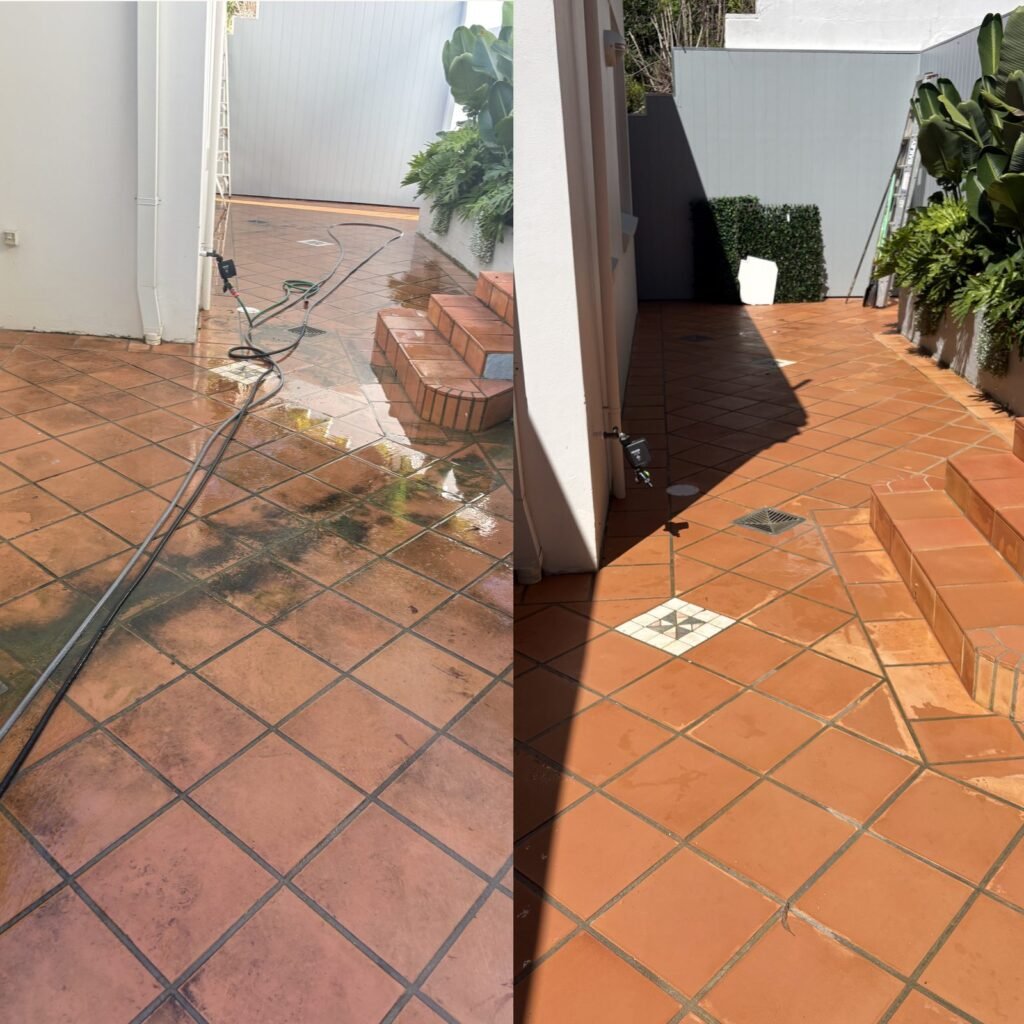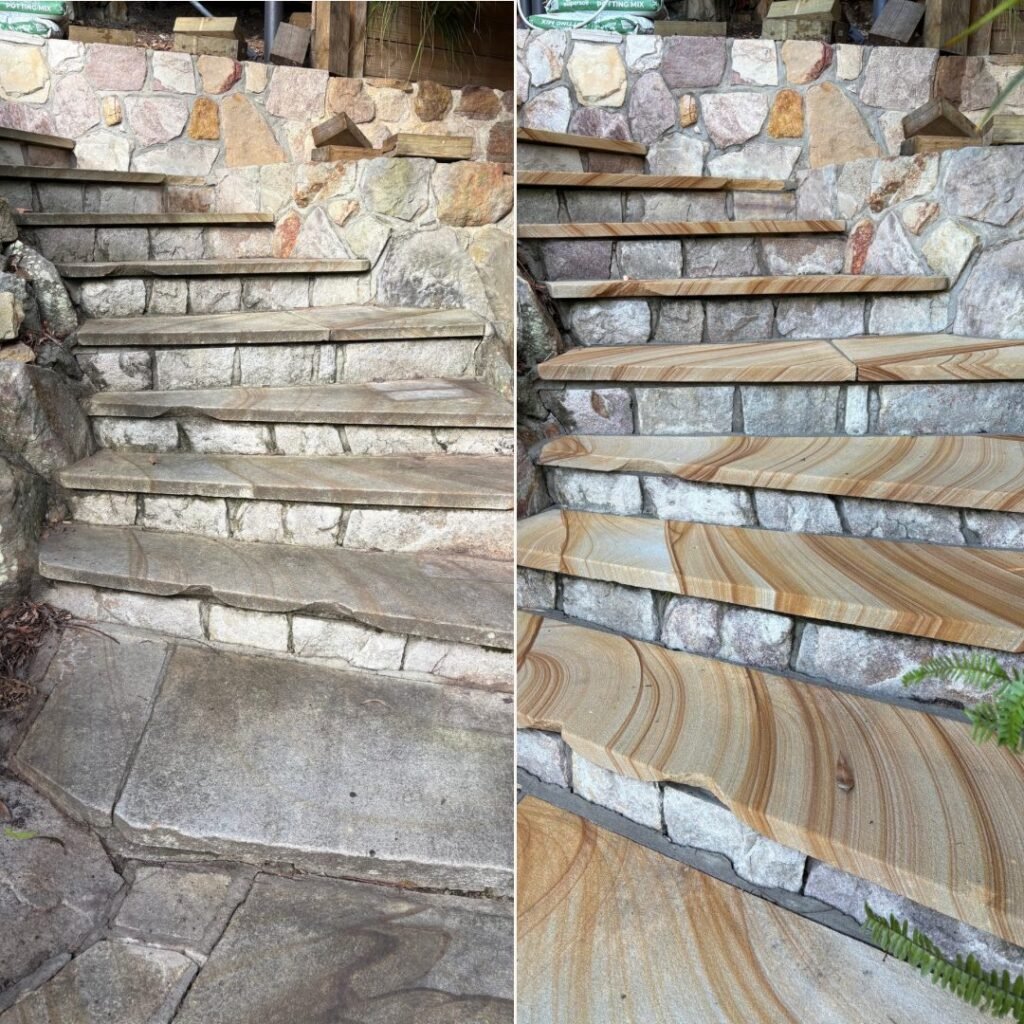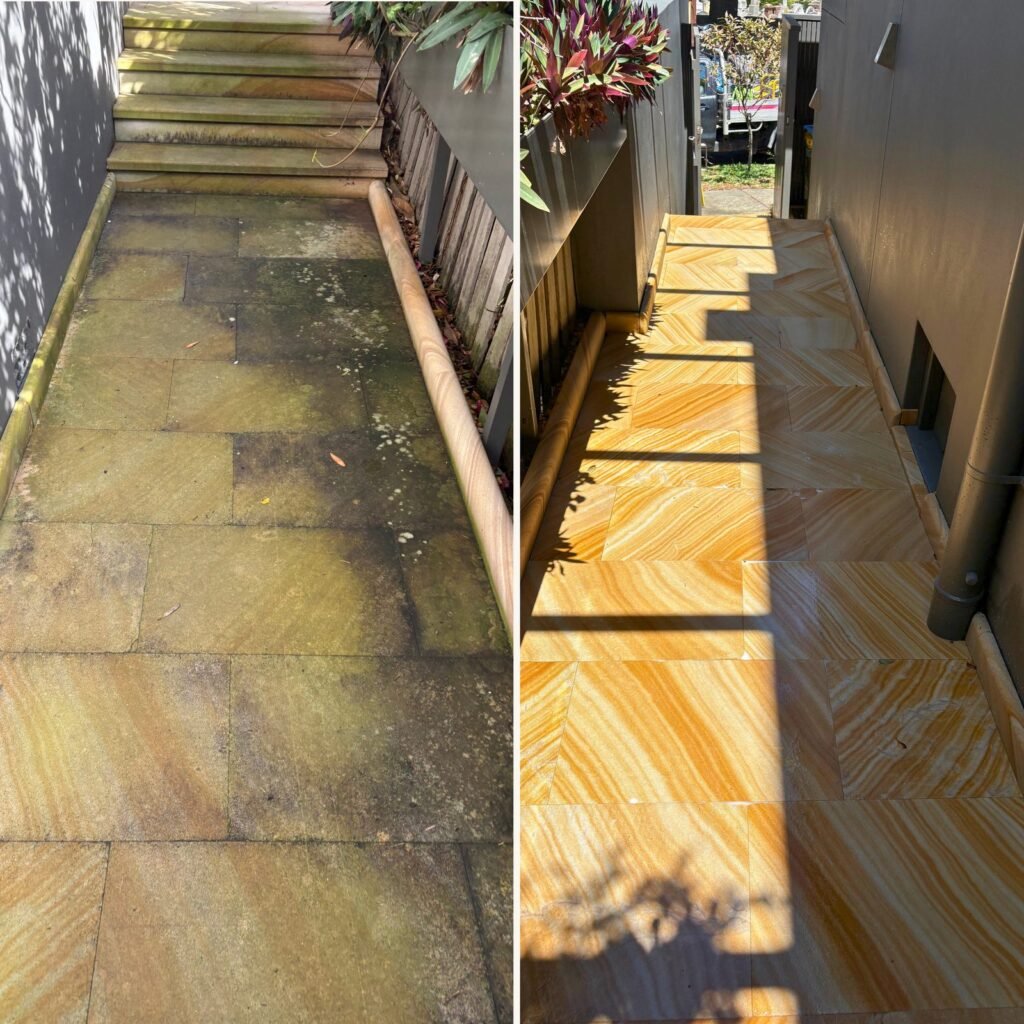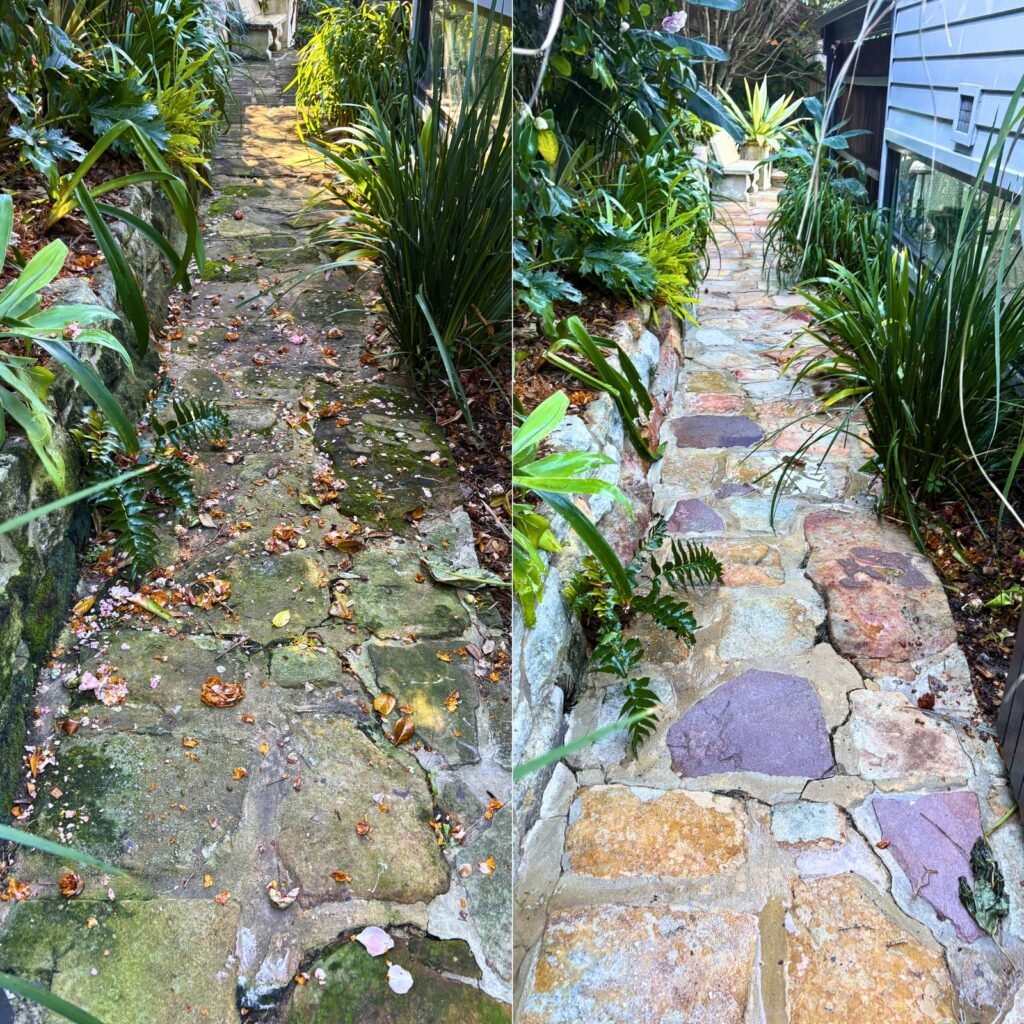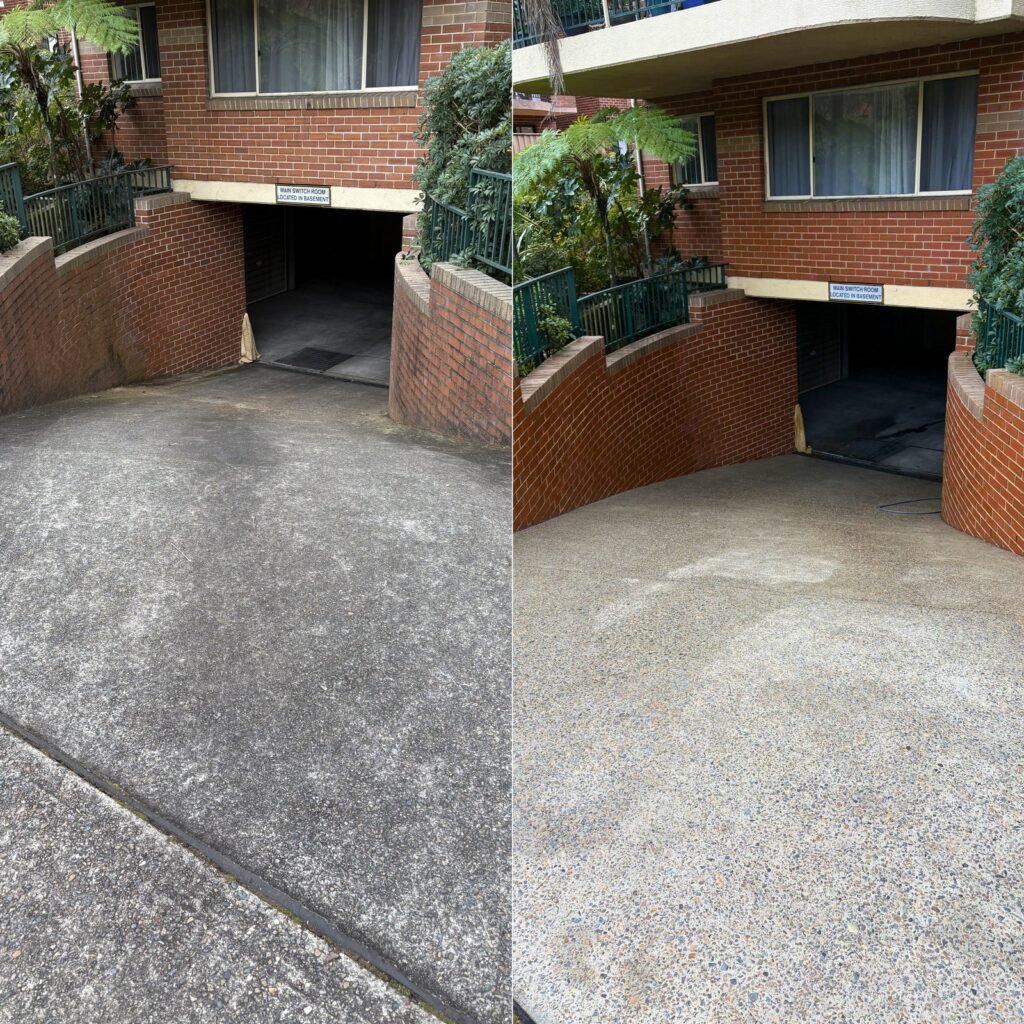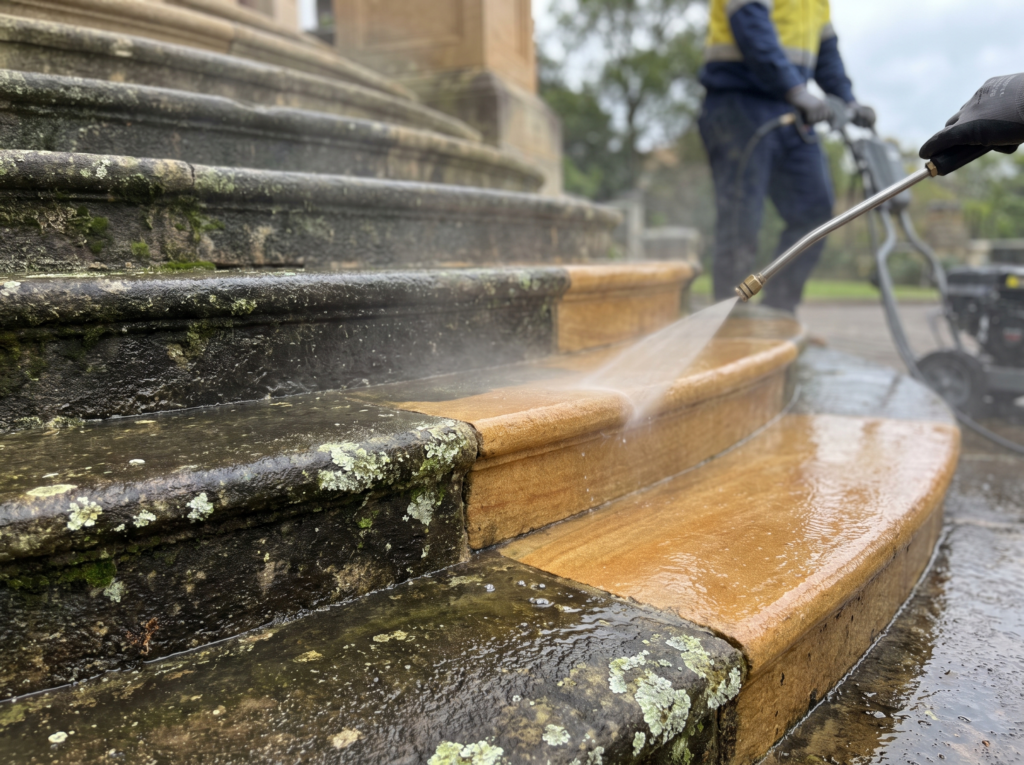
The short answer: no — not the way most people mean it. Pointing a high-pressure wand at sandstone doesn’t clean it. It erodes it, and the damage is permanent.
What actually happens under high pressure
Sydney sandstone is soft and porous — that’s why colonial masons could carve it by hand. A modern pressure washer at typical driveway settings removes the weathered face of the stone along with the dirt. You’ll see the results on badly cleaned stone all over the Eastern Suburbs: pale stripes tracking every pass of the wand, a furry, open texture where the surface used to be smooth, and stone that now soaks up water and stains faster than before it was “cleaned.”
That striping cannot be washed out or blended away. The only fix is having a stonemason grind the whole surface back, which costs many times what a proper clean would have.
How sandstone should be cleaned
Professional sandstone cleaning is chemistry-led, not pressure-led:
- Identify the stone and the staining. Black biological growth, salt efflorescence, rust and organic staining each need different treatment.
- Apply the right solution and let it dwell. For the black staining that covers most Eastern Suburbs sandstone, that means a biocide that kills the growth at the root — not just strips the visible layer.
- Rinse at low, controlled pressure. Enough to lift the loosened residue; never enough to cut the stone.
- Seal. A breathable impregnating sealer keeps salt and water out of the pores without trapping moisture inside the stone.
Why the dwell time matters
Lichen and black algae root into the stone’s surface. Blast the visible growth off and the organism remains — which is why cheaply cleaned sandstone is green-black again within a year, while properly treated stone stays clean for several.
When some pressure is acceptable
Dense, sound sandstone in good condition can tolerate a light rinse pressure once the chemistry has done the work. Soft, weathered, or heritage stone often can’t take even that, and is finished with low-flow rinsing only. Knowing the difference is most of the skill.
If your sandstone steps, walls or paving have gone black, the right clean will bring them back completely — and sealing them afterwards means you won’t be repeating the exercise every year.