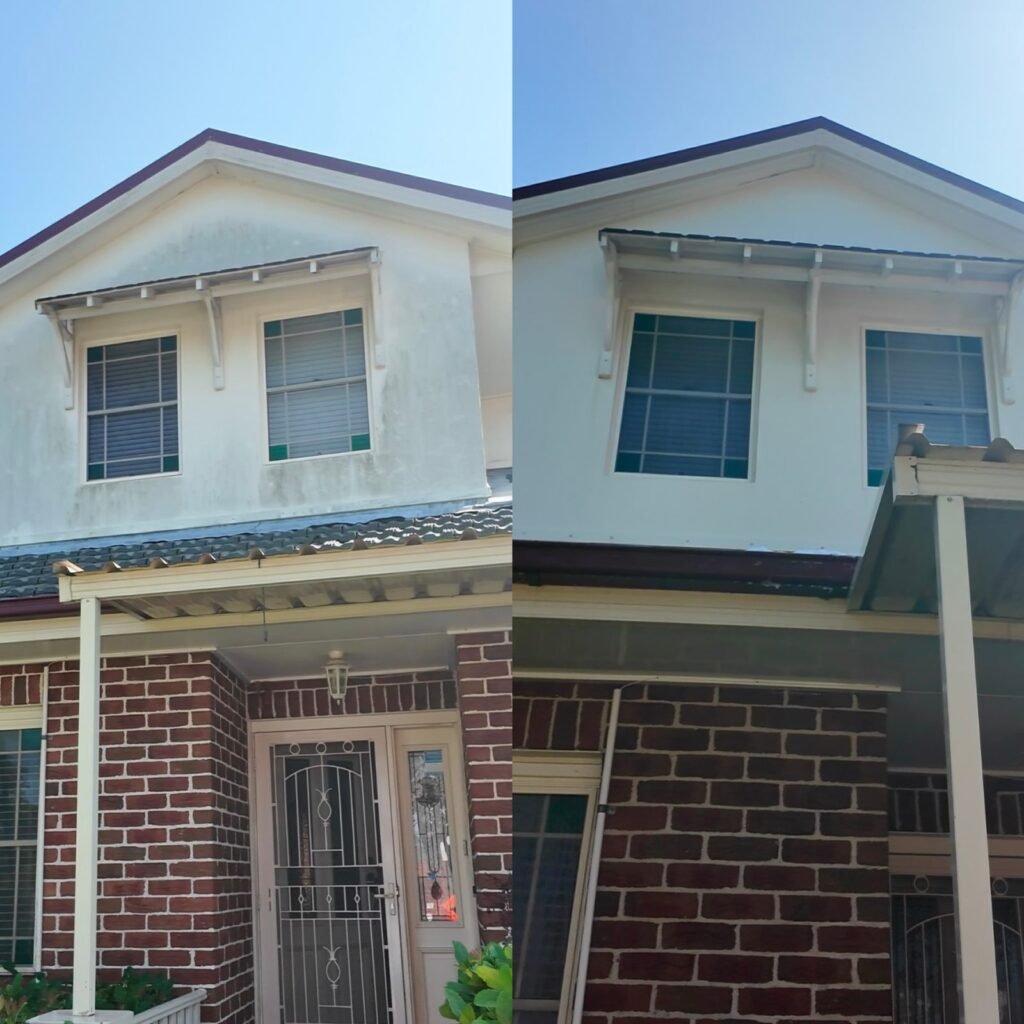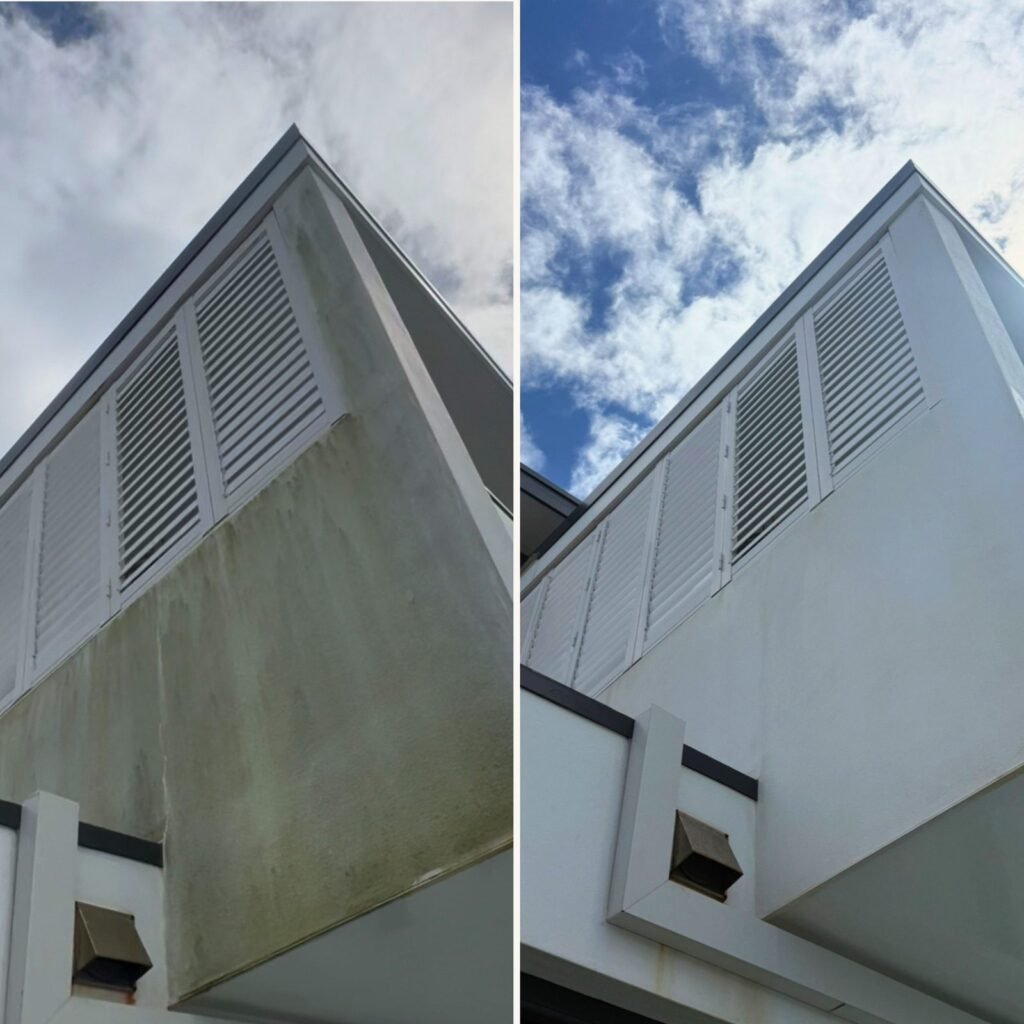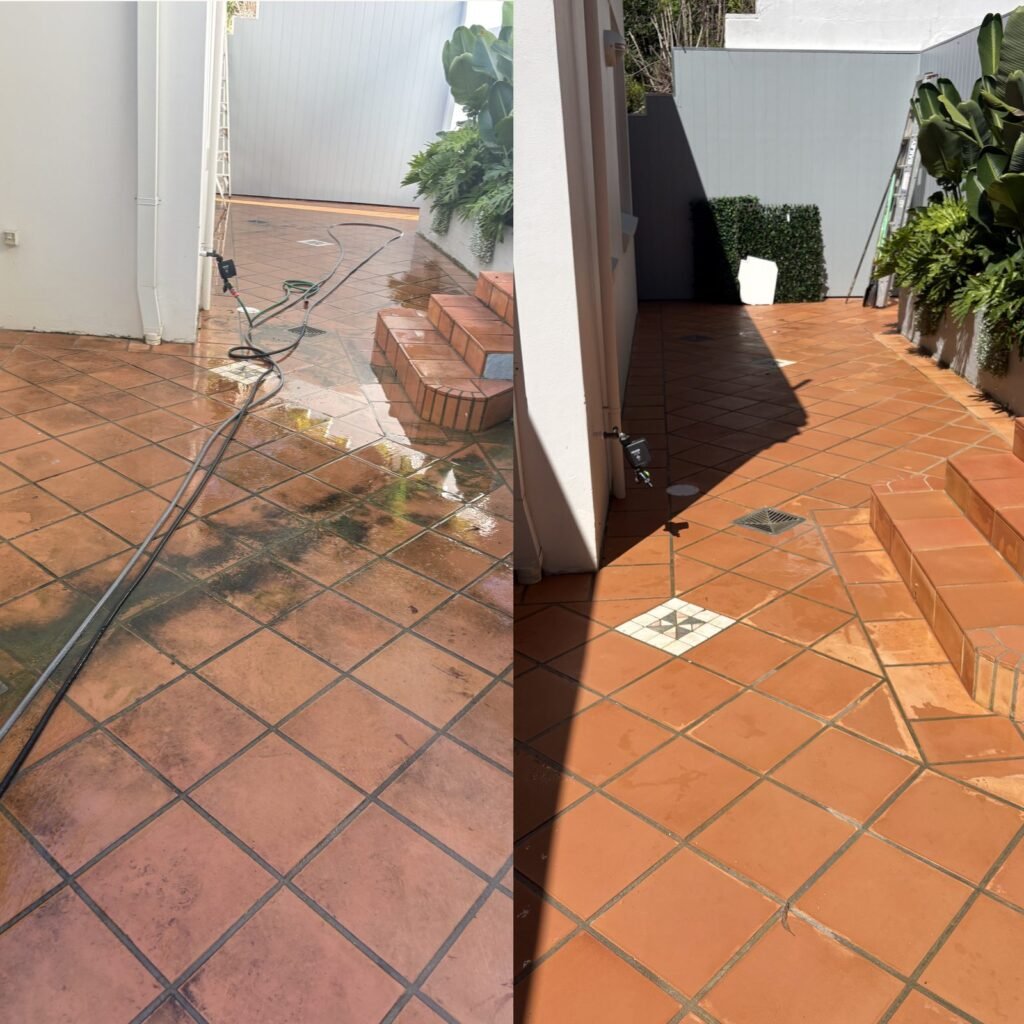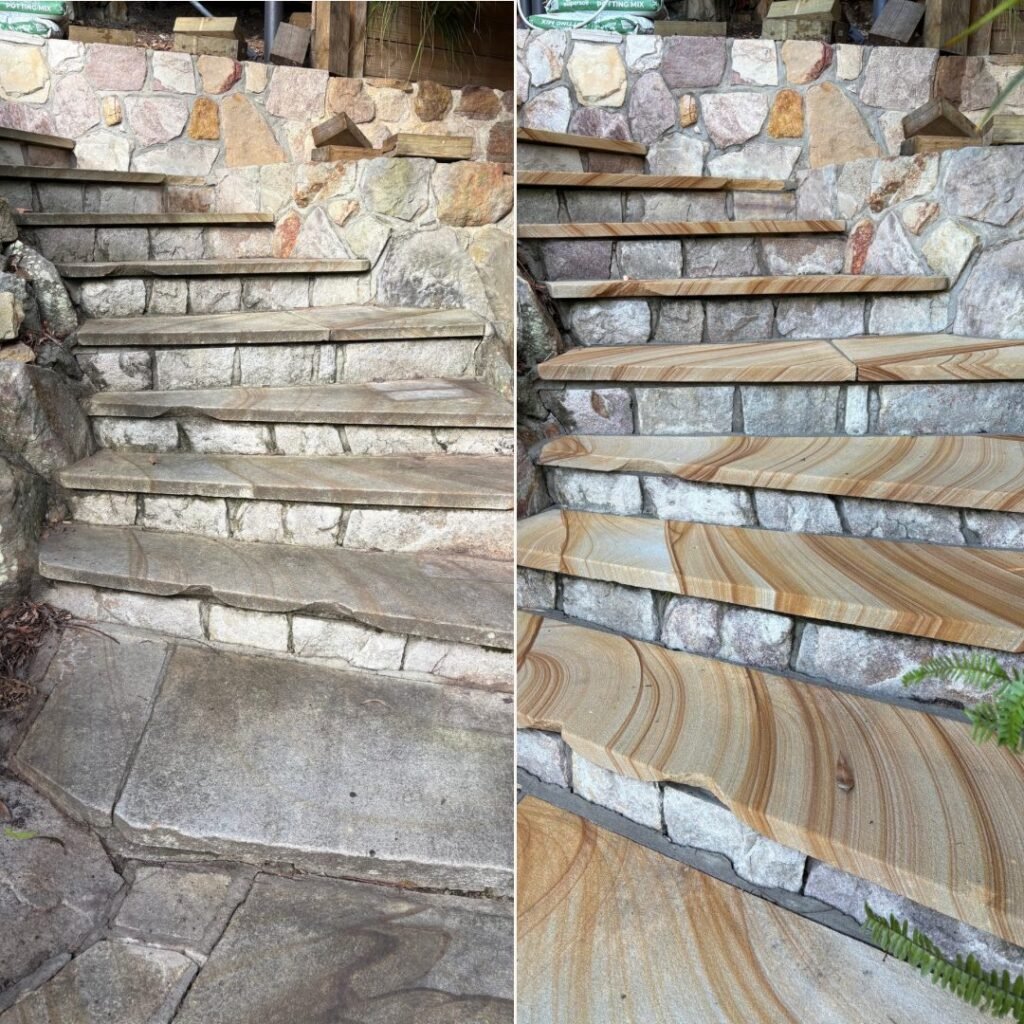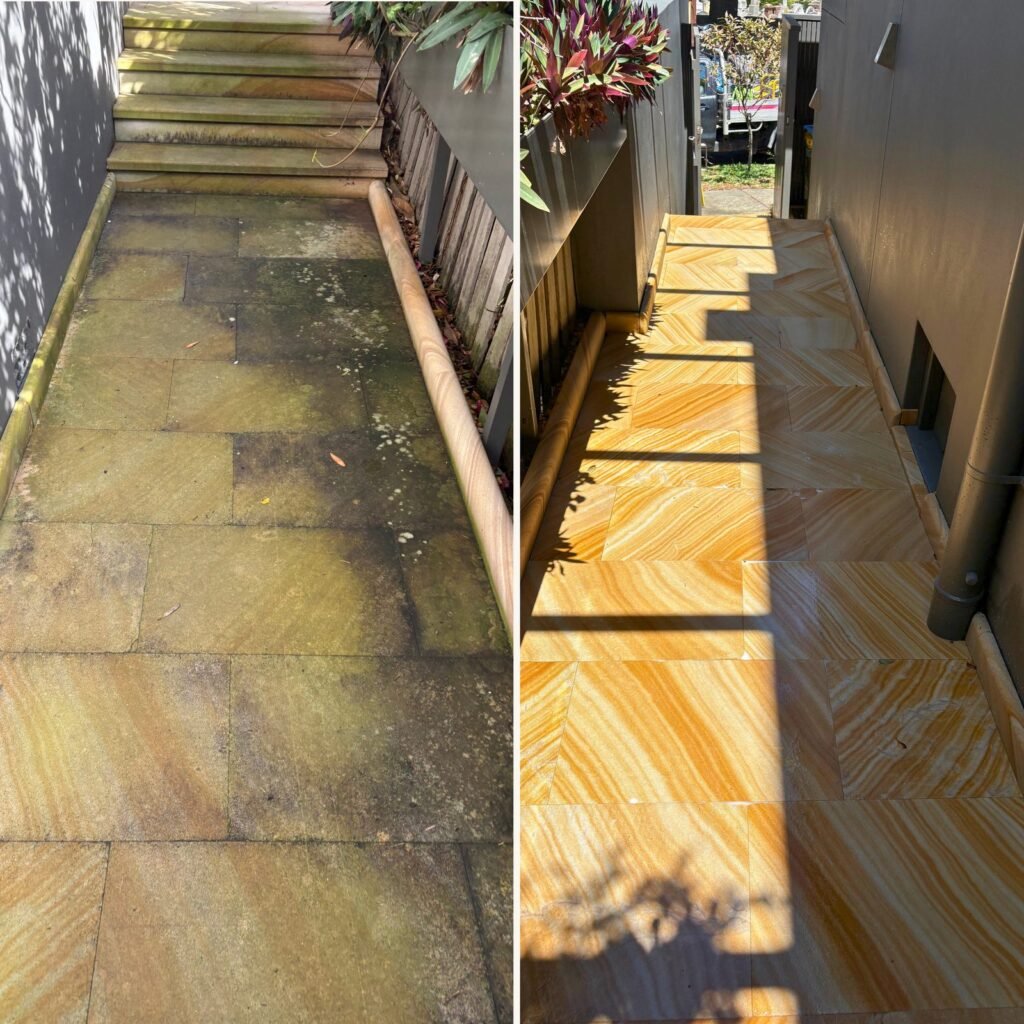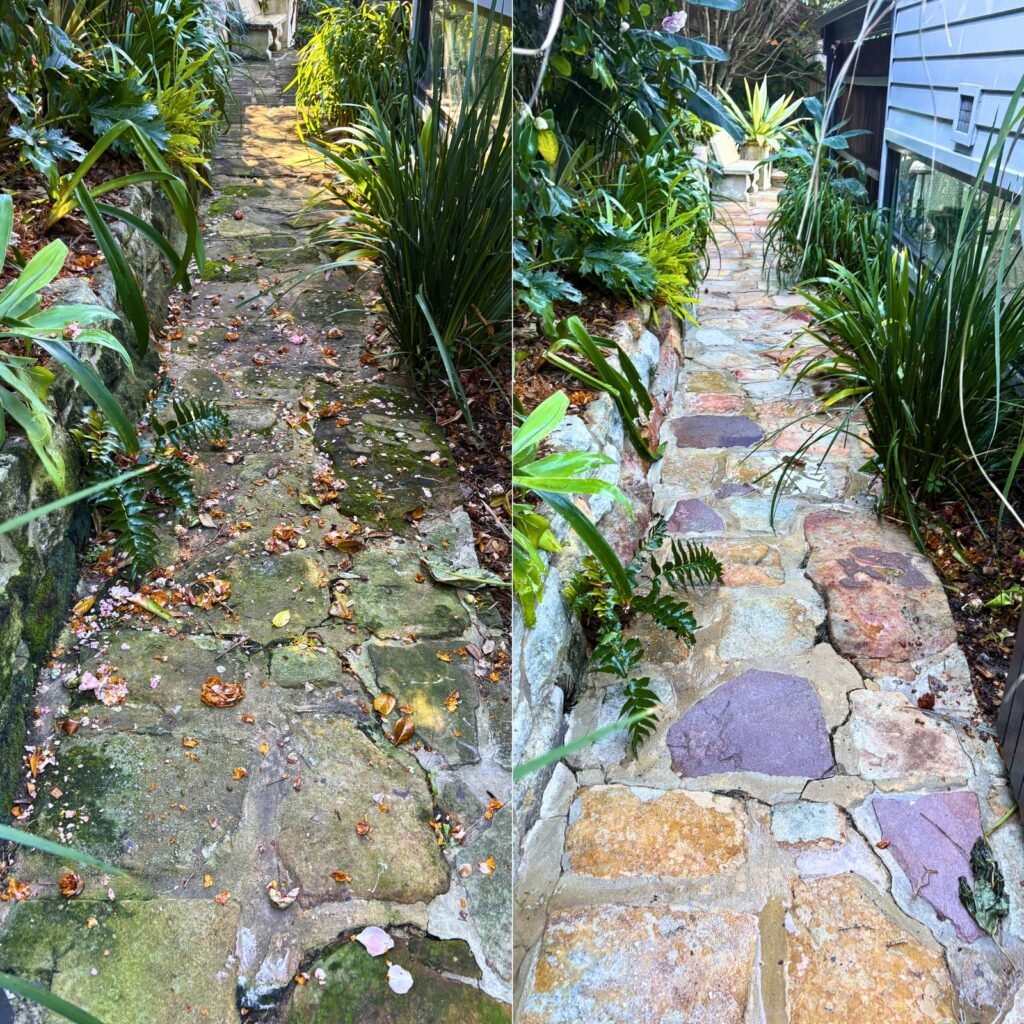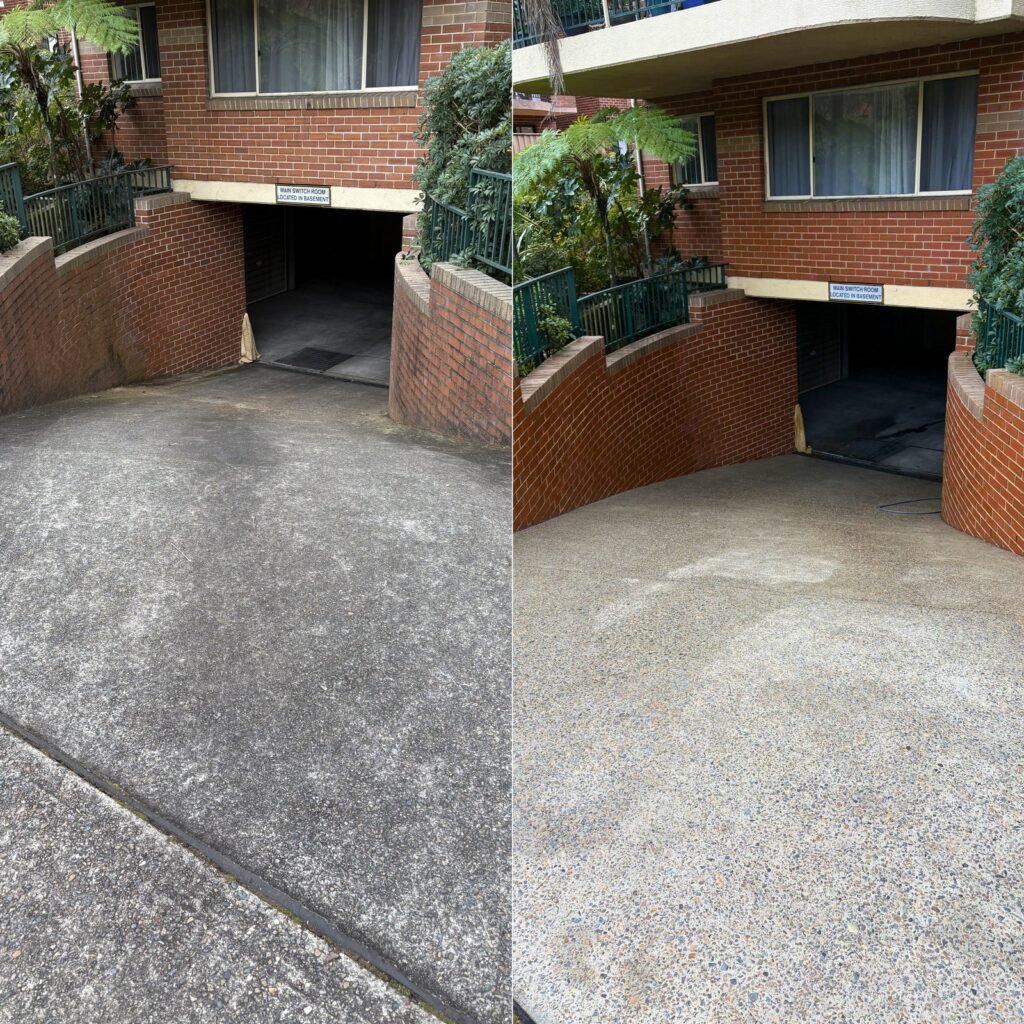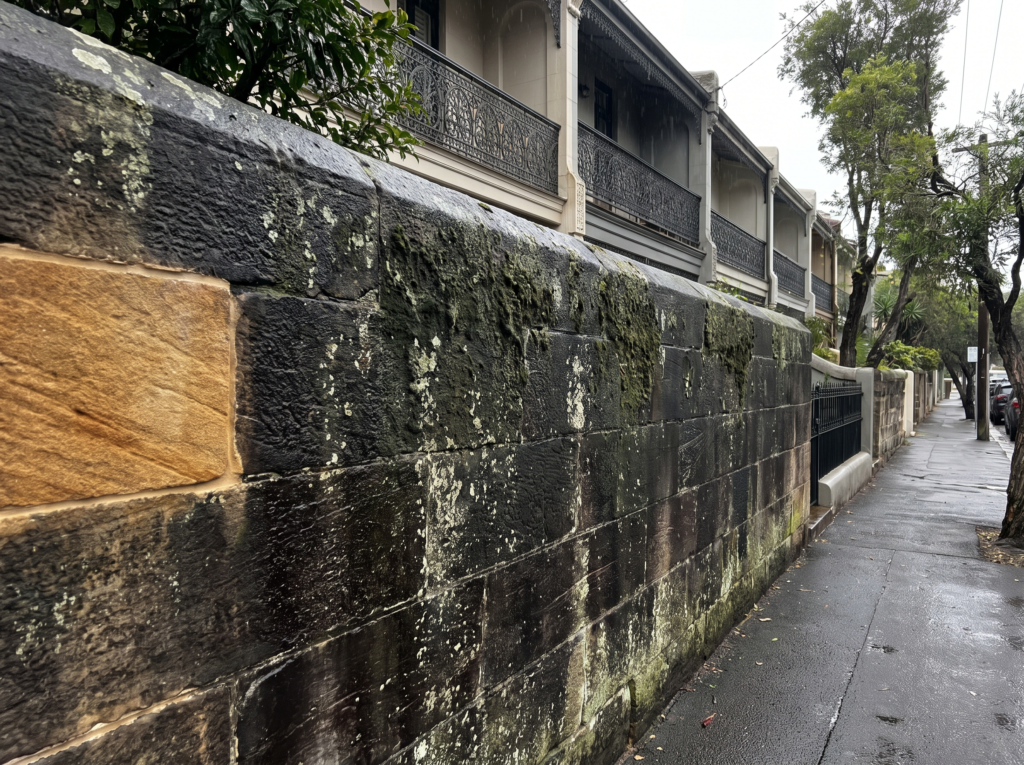
Walk any street in Vaucluse, Woollahra or Paddington and you’ll see it: sandstone walls and steps that have turned grey-black, sometimes streaked green. The stone underneath is still golden — what you’re looking at is a living film growing on its surface.
It’s biology, not dirt
The black layer on Sydney sandstone is almost always biological: a community of algae, cyanobacteria, lichen and fungi collectively feeding on moisture and minerals at the stone’s surface. Sandstone is ideal habitat — porous enough to hold water, mineral-rich, and slightly rough, giving spores something to anchor to.
That’s why scrubbing or hosing barely touches it, and why it comes back so quickly after a superficial clean. You’re not removing a stain; you’re pruning an organism.
Why the Eastern Suburbs is the perfect storm
Three local conditions accelerate the blackening:
Coastal humidity and salt. Salt is hygroscopic — it draws and holds moisture. A salt-laden stone surface stays damp longer after every dew and shower, which is exactly what the growth needs.
Shade. South-facing walls, tree canopy and the shadow of neighbouring buildings keep surfaces from drying. That’s why one wall of a property is often dramatically blacker than the others.
Age and porosity. Older, weathered sandstone is more porous, holds more water, and blackens faster. Heritage stone in Paddington and Woollahra shows it worst.
Does it damage the stone?
Yes, slowly. Lichen in particular anchors filaments into the surface and secretes mild acids that break the stone down grain by grain. It also holds a permanent moisture layer against the surface, accelerating salt damage from within. Blackened sandstone isn’t just a cosmetic issue — it’s stone weathering faster than it should.
Getting it off — and keeping it off
The growth needs to be killed with an appropriate biocide, allowed to die back, then rinsed off at a pressure the stone can carry. Never blasted — high pressure erodes sandstone permanently.
Then seal. A breathable impregnating sealer starves regrowth of the damp surface it needs, and it’s the difference between sandstone staying clean for one year or five. In coastal suburbs it’s not an optional extra.