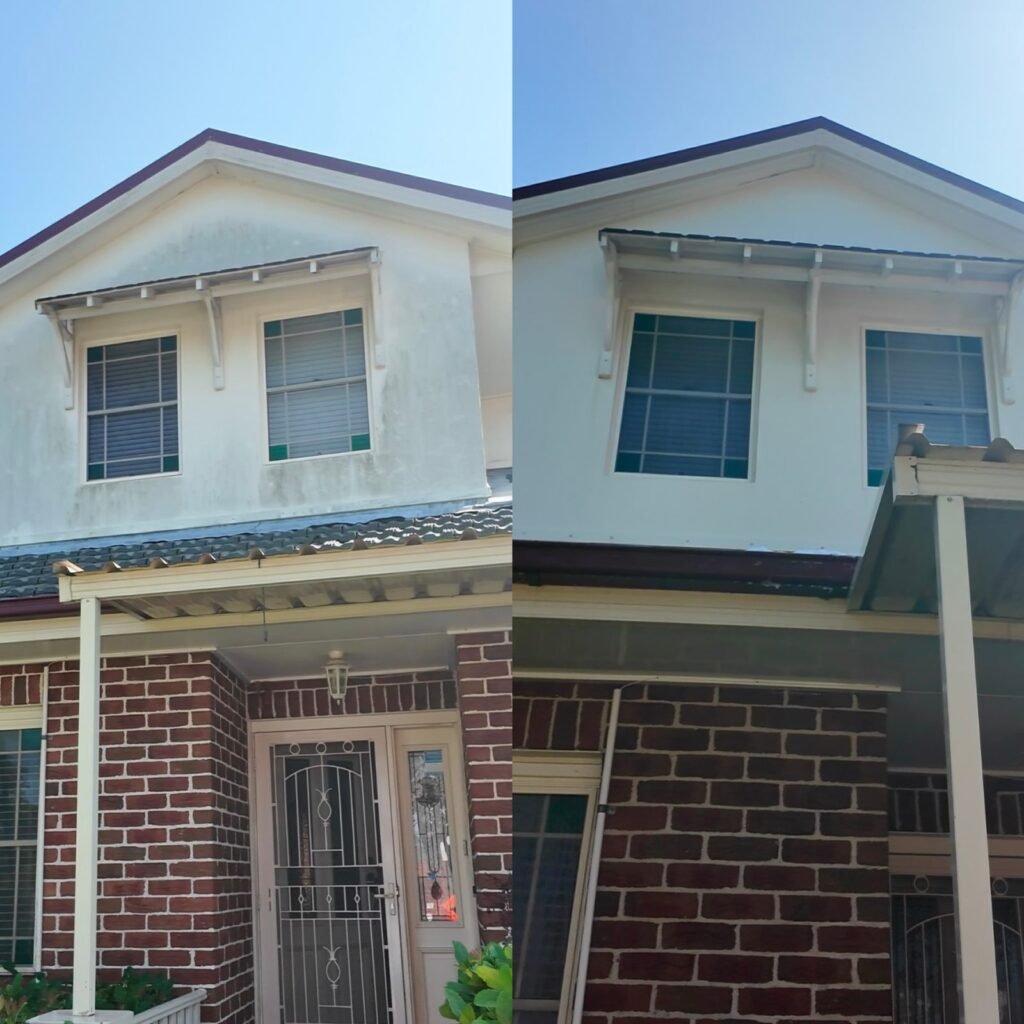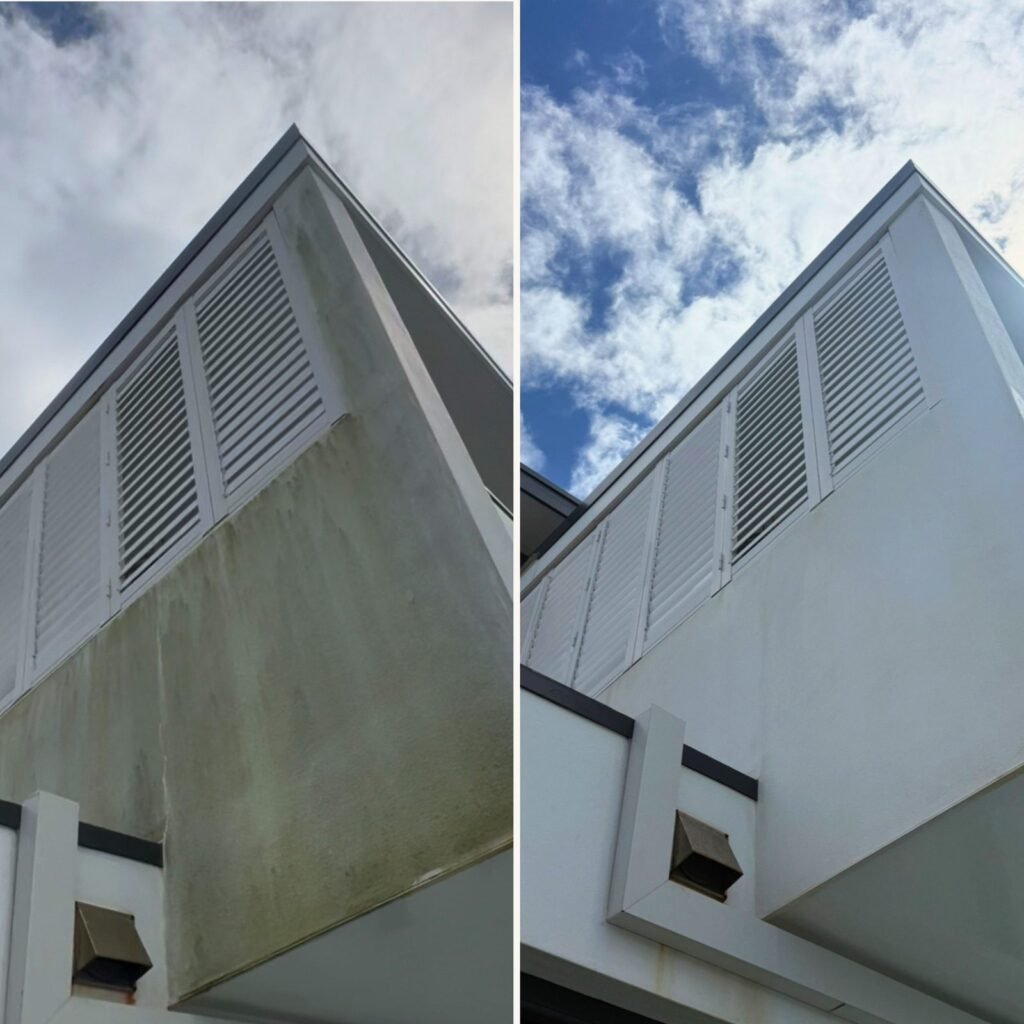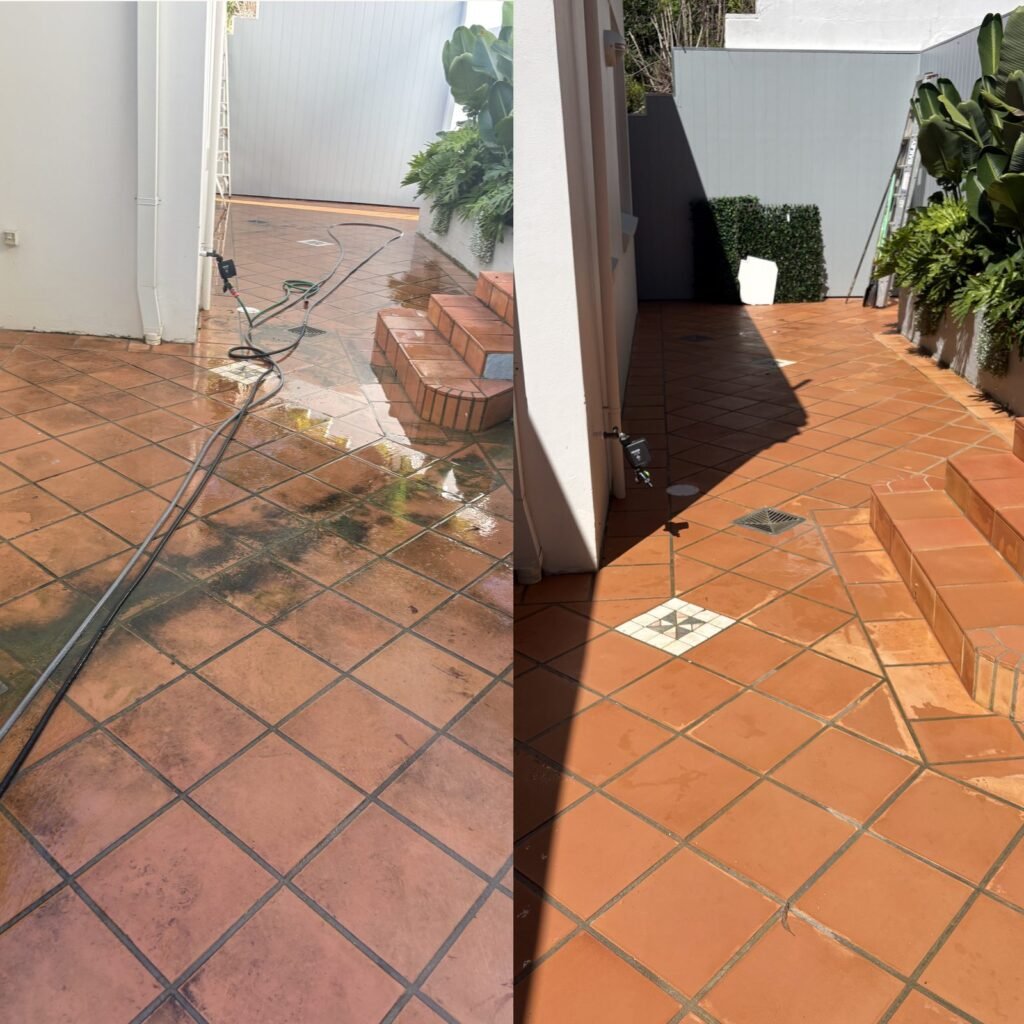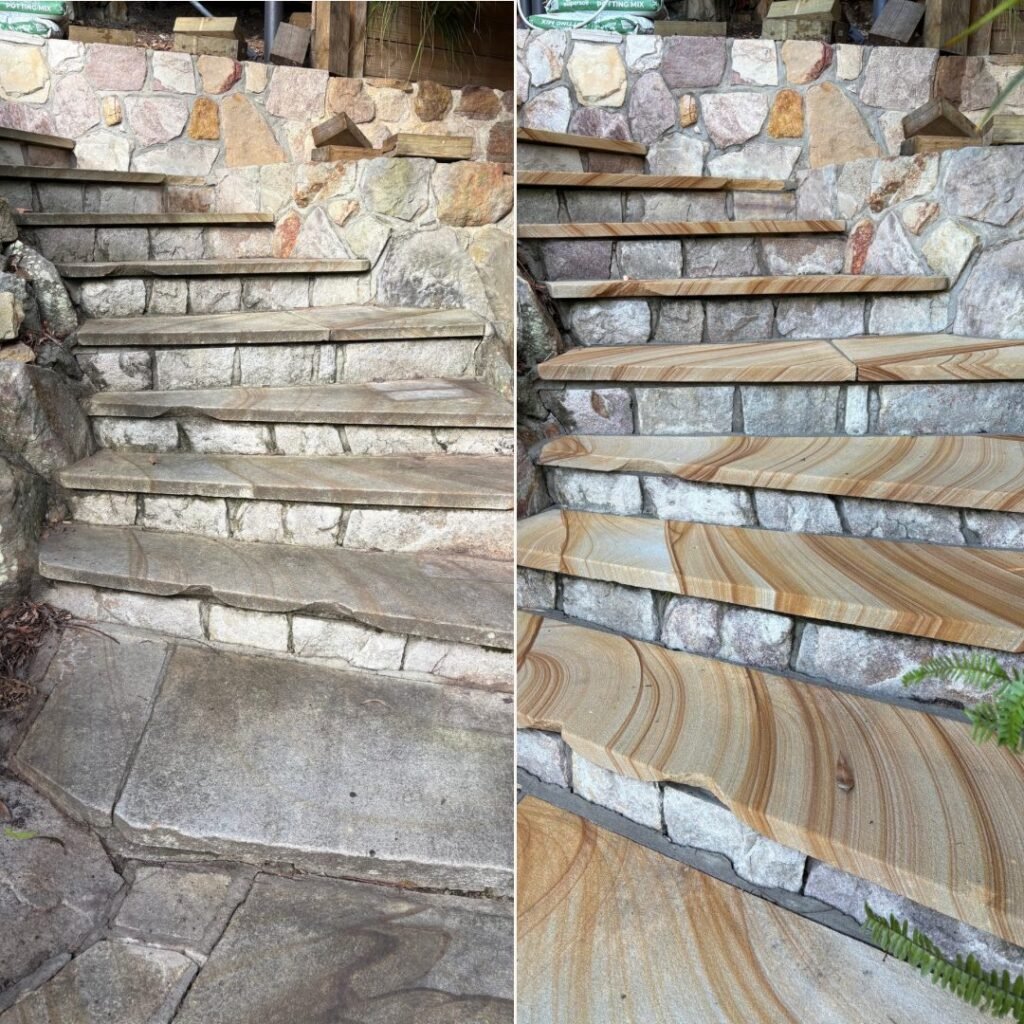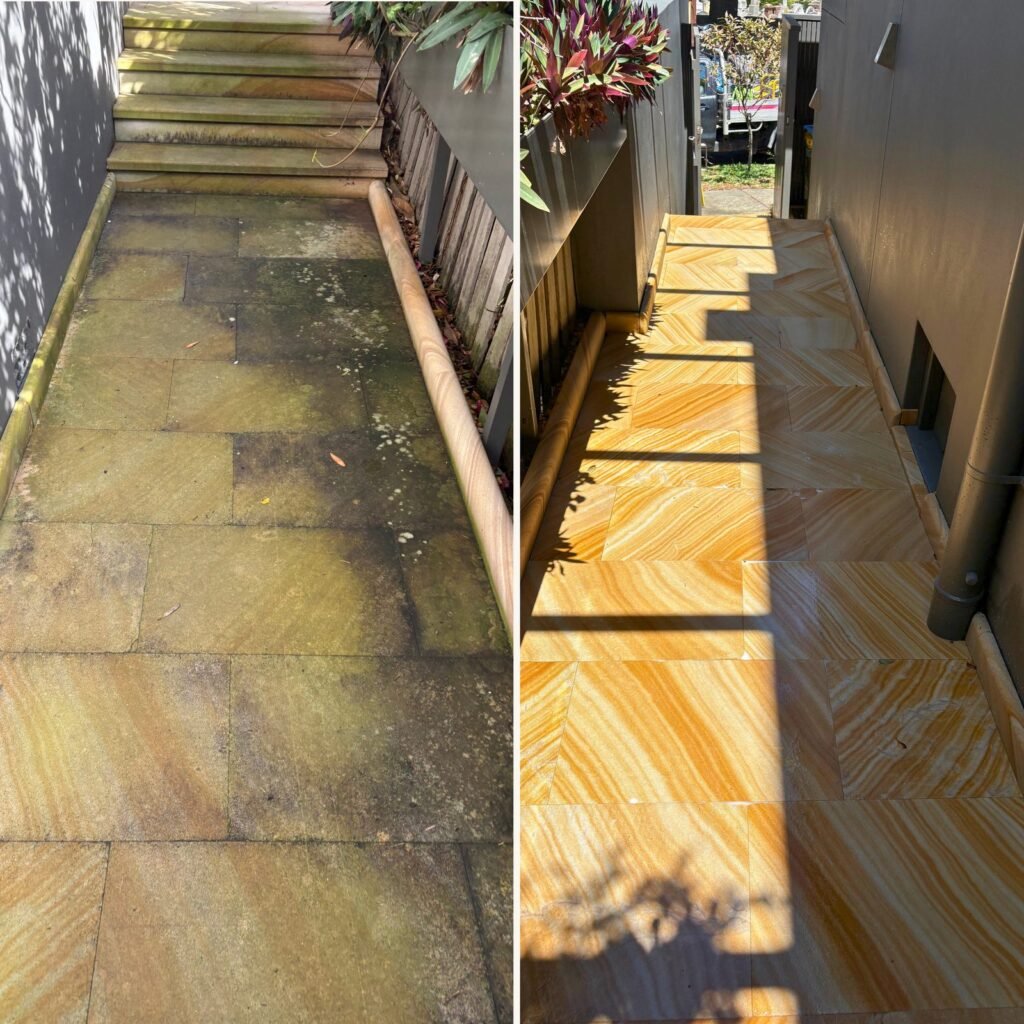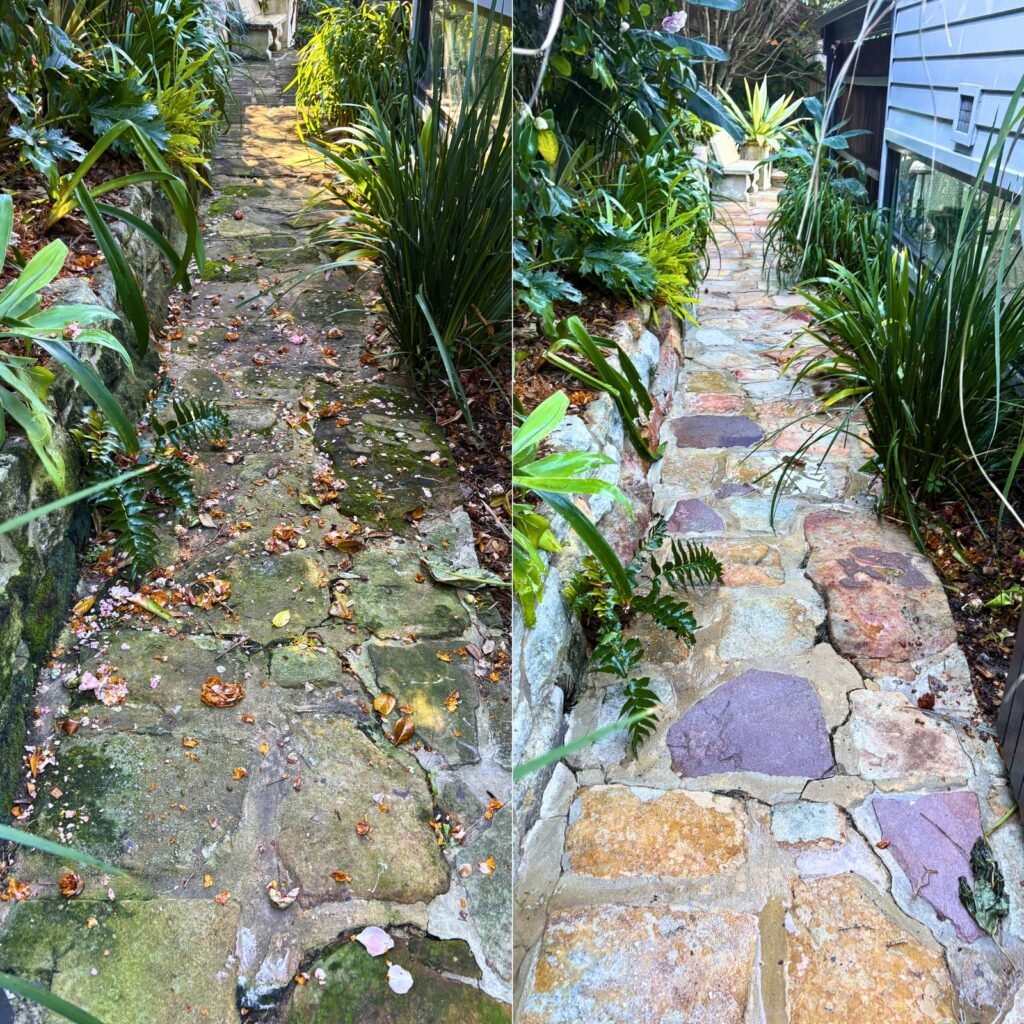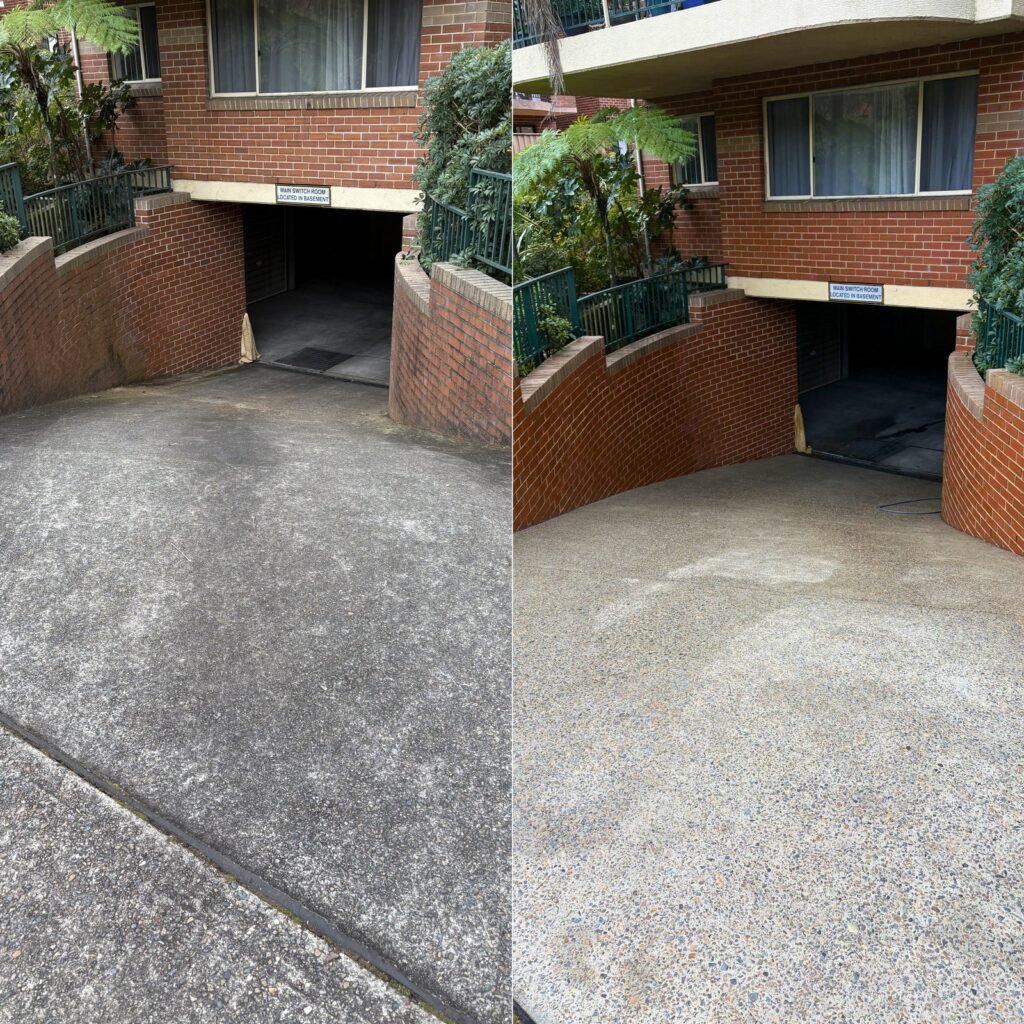
Sandstone pavers are beautiful, forgiving to walk on, and shockingly easy to ruin with a Saturday-morning cleaning session. Before you reach for the pressure washer or whatever’s under the laundry sink, here’s what actually works — and the short list of things that cause permanent damage.
First: what NOT to use on sandstone
High-pressure water. Sandstone is compressed sand. A pressure wand doesn’t clean the surface, it removes it — leaving permanent stripe marks, a furred texture, and stone that now absorbs water and re-soils faster than before. We wrote a full piece on this: Can You Pressure Wash Sandstone? (Short version: not the way most people mean it.)
Acid. Hydrochloric/muriatic acid, heavy-duty “paver cleaners”, even vinegar — acid dissolves the natural cementing minerals in sandstone and can leave burn marks and yellowing that cannot be undone.
Chlorine bleach, straight and strong. It whitens the growth without killing the roots, can bleach the stone’s natural colour unevenly, and torches every plant it runs into.
Wire brushes. They scratch, and steel fragments left in the stone rust into orange spots.
The safe method that works
- Dry clean first. Sweep thoroughly and lift leaf litter out of the joints — leaf tannin is one of the main stainers.
- Wet the stone with plain water. Damp stone stops the cleaner soaking in too deep and doing its work below the surface.
- Apply an alkaline or pH-neutral stone cleaner — or for green/black biological growth, a purpose-made outdoor biocide — and give it time. Twenty minutes of dwell beats twenty minutes of scrubbing. Keep it off the garden and don’t let it dry on the stone.
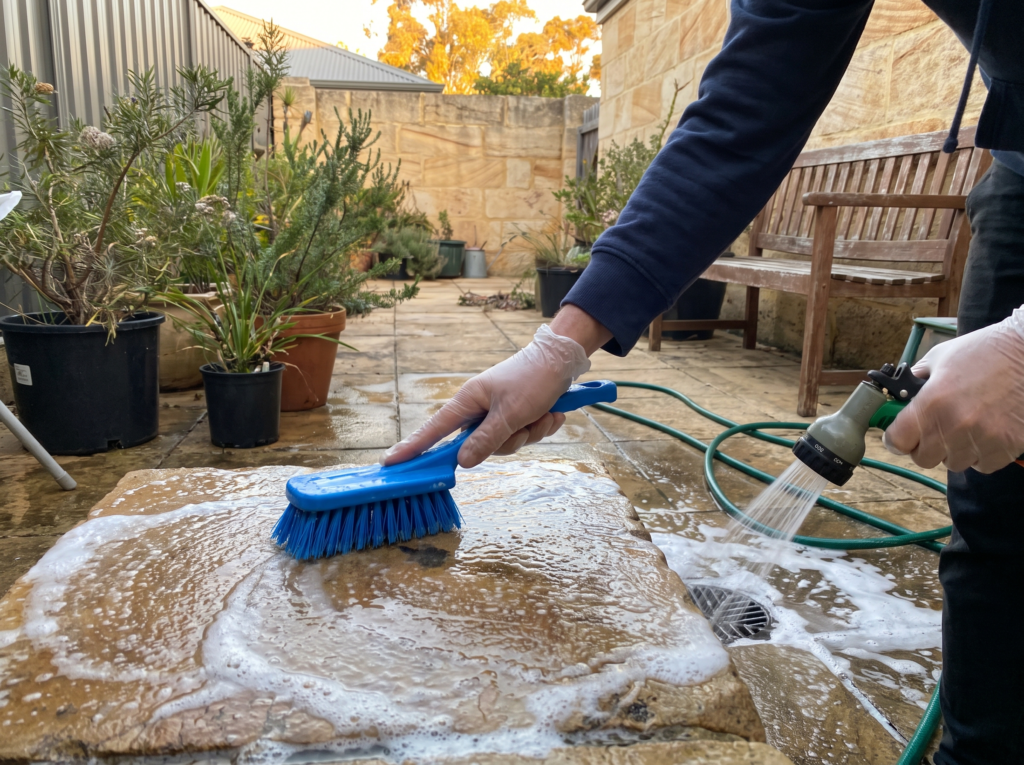
- Scrub with a stiff plastic brush, working with the grain of the stone rather than grinding in circles on one spot.
- Rinse generously at low pressure — a garden hose with a fan nozzle is plenty. Rinse twice; cleaner residue left in the stone attracts dirt.
For biological growth, expect the full result over the following fortnight as the treated organisms die off and weather away — that delayed improvement is the sign it was killed at the root rather than shaved off the top.
Keep them clean: the follow-up that matters
Once the pavers are clean and fully dry, a breathable impregnating sealer is what stops the whole cycle repeating — water, oil and organic matter bead off instead of soaking in, and the next clean is a rinse rather than a project. Our guide to choosing one: Best Sandstone Sealer for Sydney Homes.
When to stop and call someone
Stop if the staining doesn’t respond (deep-set oil, rust and heavy lichen need targeted professional chemistry), if the pavers are heritage stone, if there’s white powdery bloom (that’s efflorescence — a moisture problem, not a dirt problem), or if the area is simply big enough that doing it properly by hand isn’t realistic. Our sandstone cleaning and sealing service handles all of it across the Eastern Suburbs with stone-safe chemistry and a fixed written quote — request one here.