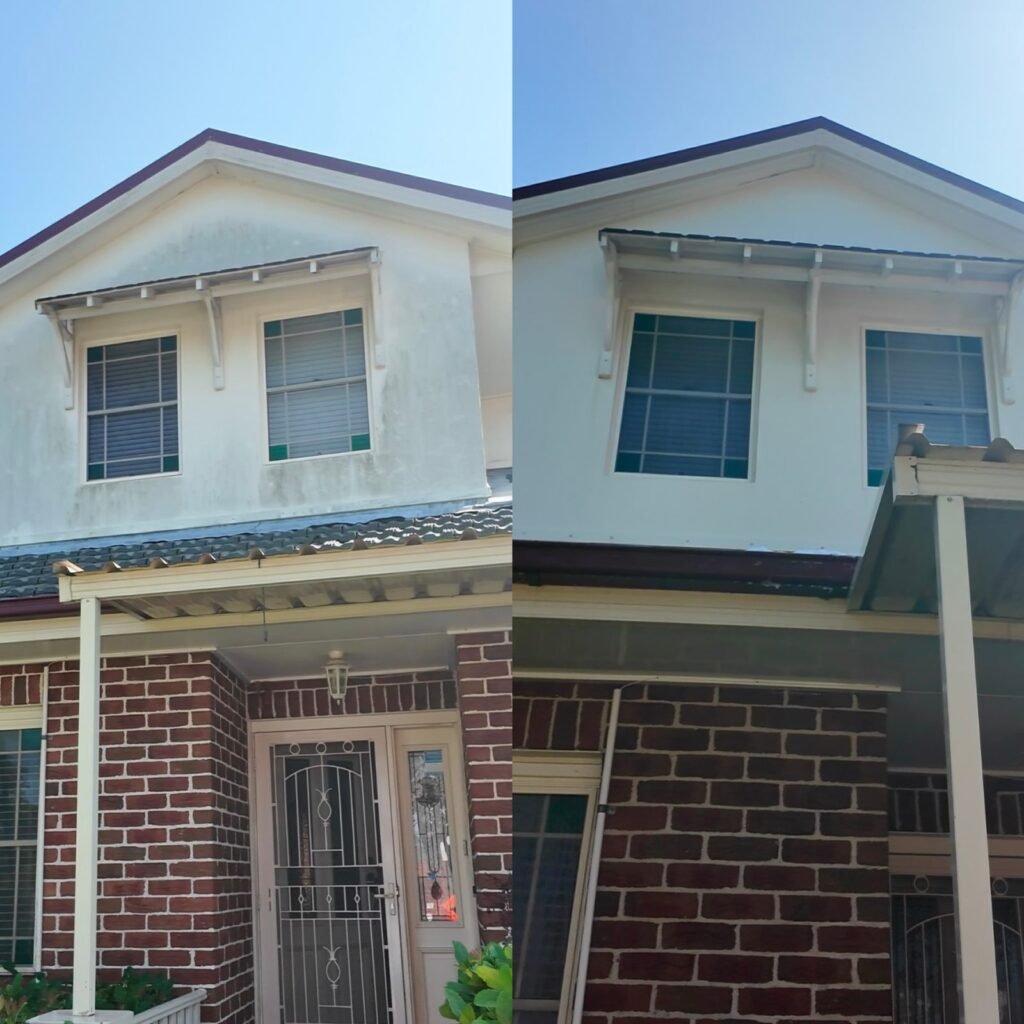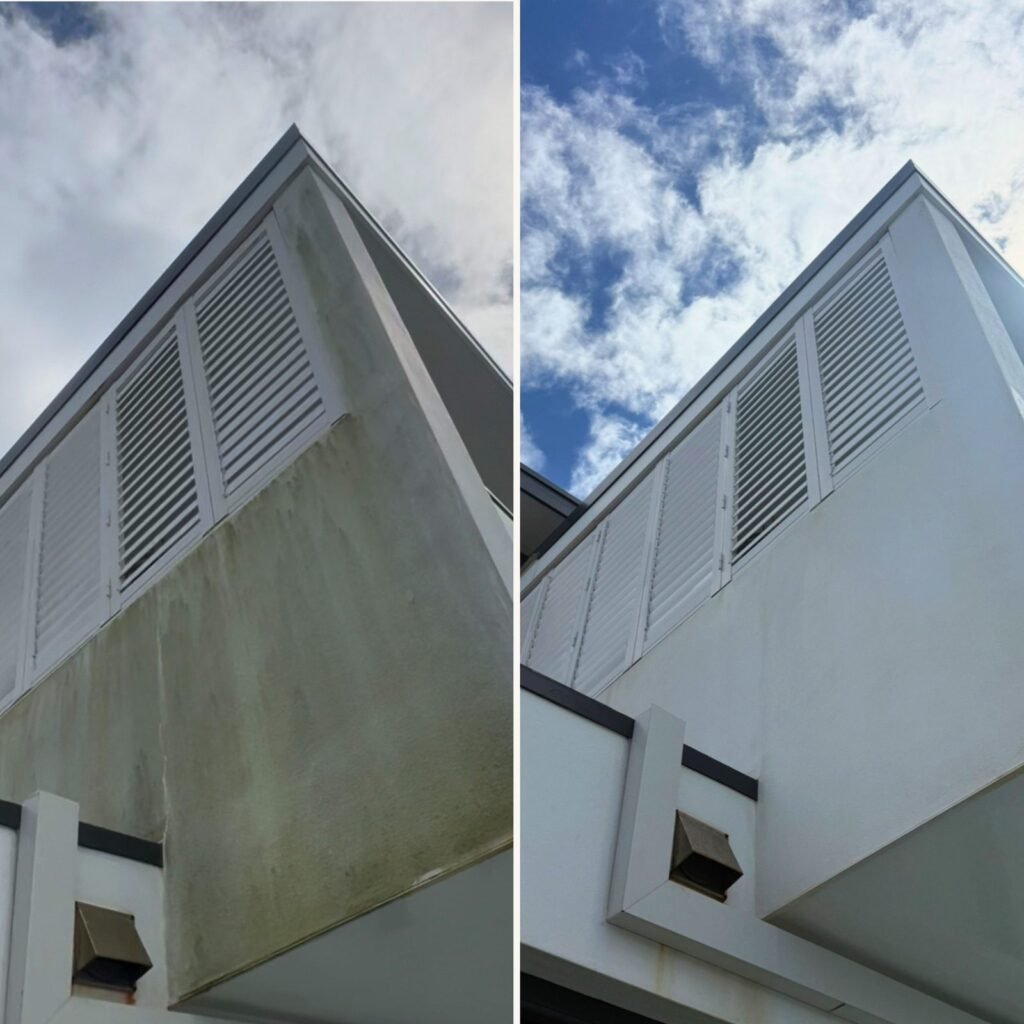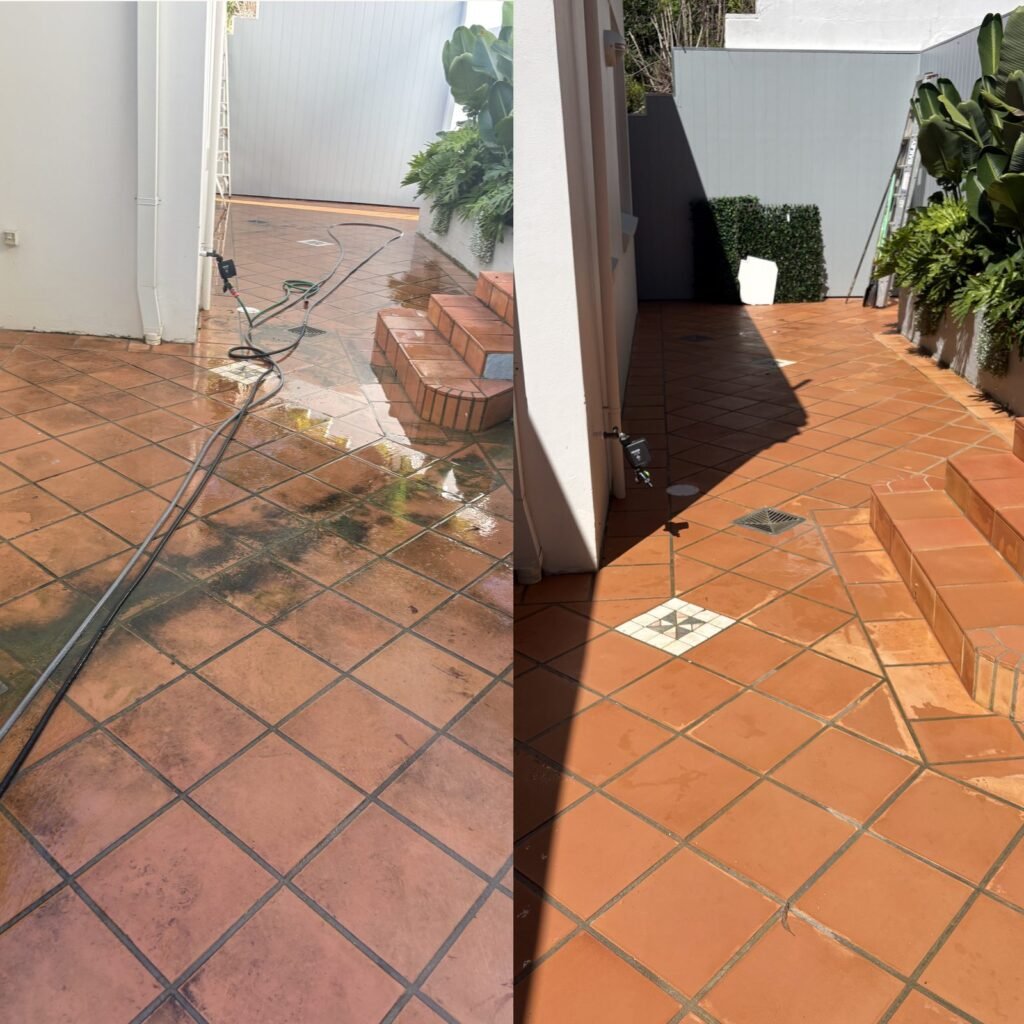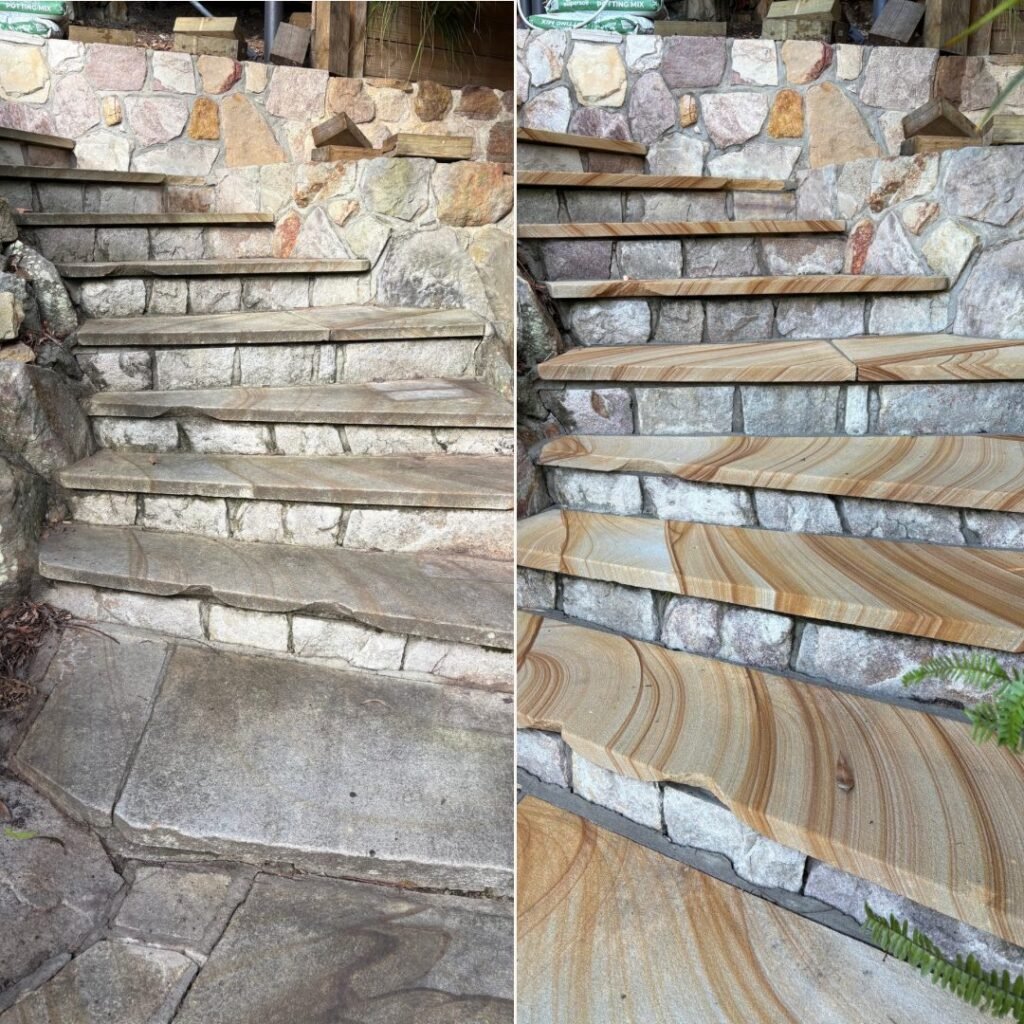
It can — and badly — which is exactly why the question matters. Done wrong, roof cleaning cracks tiles, strips surfaces and forces water into the roof cavity. Done properly, it extends the roof’s life. The difference is entirely in the method.
How roofs get damaged in the name of cleaning
Cracked and dislodged tiles. Aged terracotta in particular becomes brittle with decades of weathering; careless foot traffic and aggressive pressure both crack it. Some heritage terracotta is genuinely past the point where any cleaning is worth the risk — an honest contractor will tell you so.
Stripped surfaces. High pressure on concrete tiles removes the coloured surface coat along with the lichen, leaving pale patches and an open, porous surface that weathers faster afterwards. On Colorbond it can damage the paint system.
Water driven under the laps. Tiles overlap so water flows down and off. Blast upward or against the lap direction and you push water underneath — into sarking, insulation and ceilings, where the damage surfaces weeks later as stains nobody connects to the cleaning.
What safe roof cleaning looks like
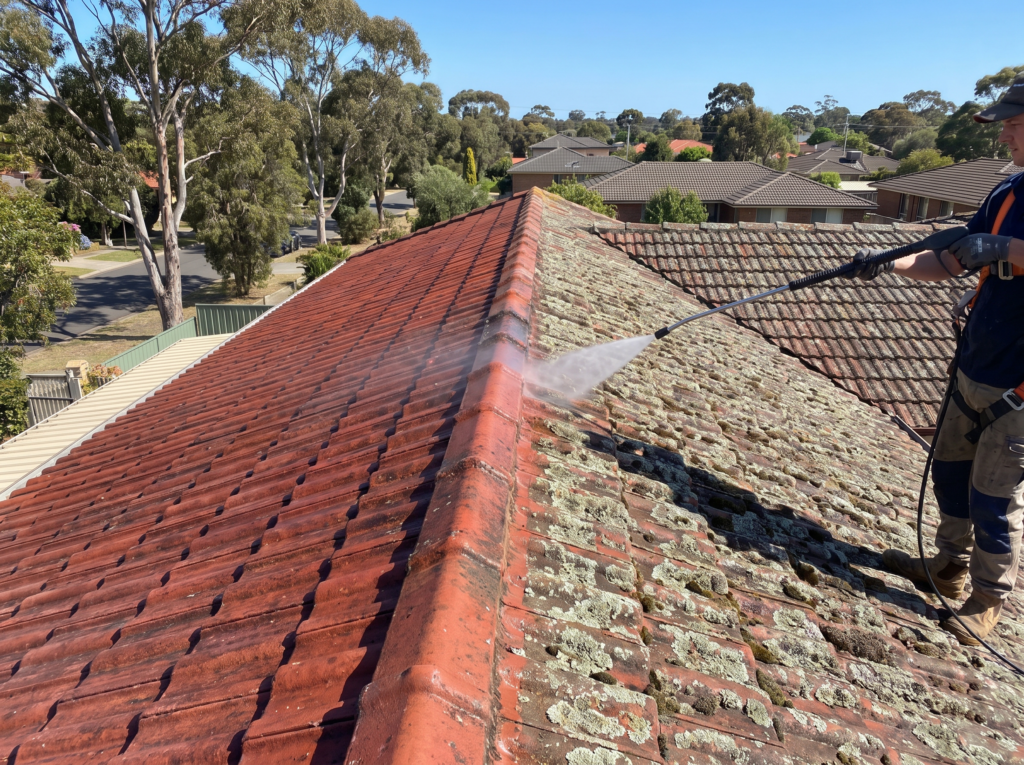
The growth — moss, lichen, algae — is treated with a biocide first and given time to die. Lichen anchors into the tile surface; killed, it releases and rinses away, where blasting it off tears the tile surface with it and guarantees regrowth from the surviving root structure.
Cleaning then happens at a pressure matched to the material — considerably gentler on aged terracotta and slate than most people expect — always working with the fall of the roof, never against the laps. Proper height safety throughout: harness and anchor points, not ladder-and-hope.
Afterwards, everything brought down gets cleared out of the gutters, valleys and downpipes. Leaving it there converts a clean roof into a blocked stormwater system at the first heavy rain.
Questions to ask any roof cleaner
Do you treat growth before cleaning, or just pressure wash? What pressure do you use on aged terracotta? How do you work relative to the tile laps? What height safety do you rig? Do you clear the gutters afterwards? Vague answers to any of these are your cue to keep looking — a roof is the most expensive surface on the house to get wrong.