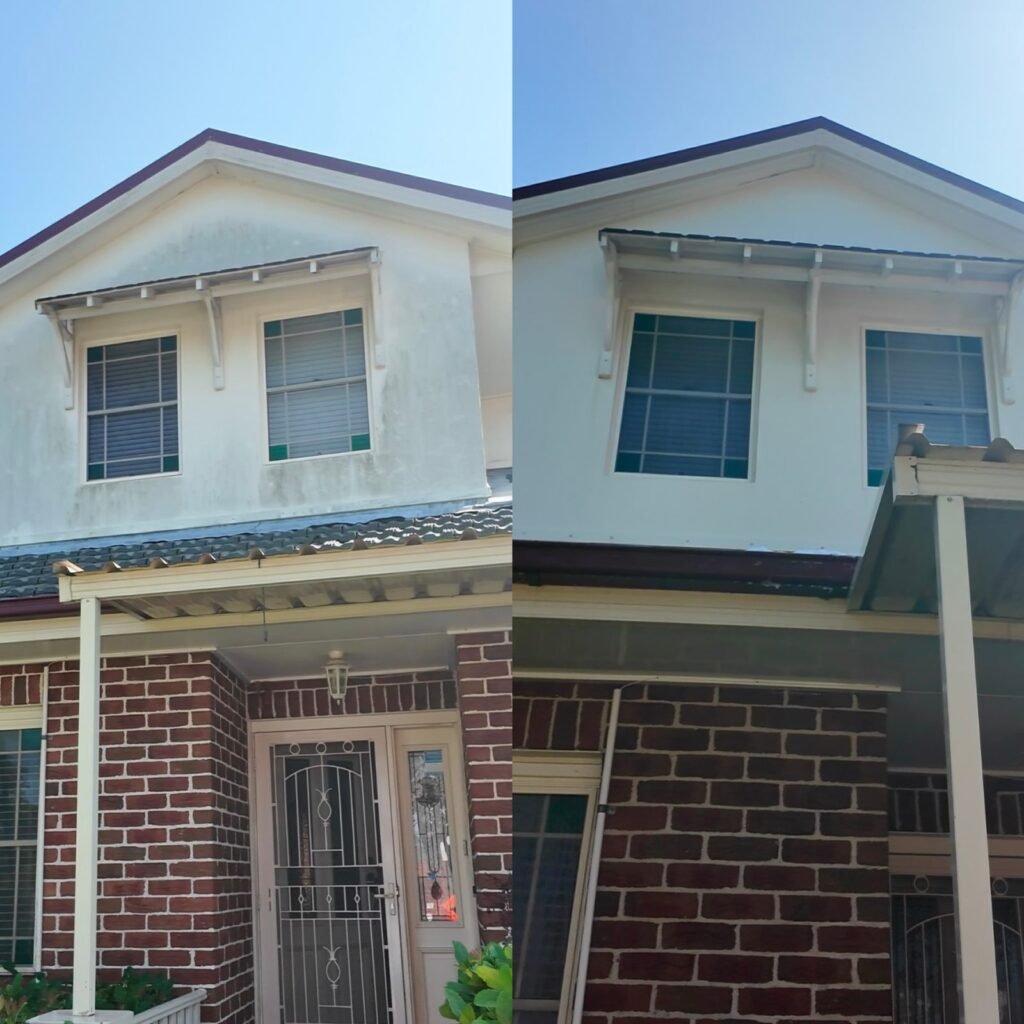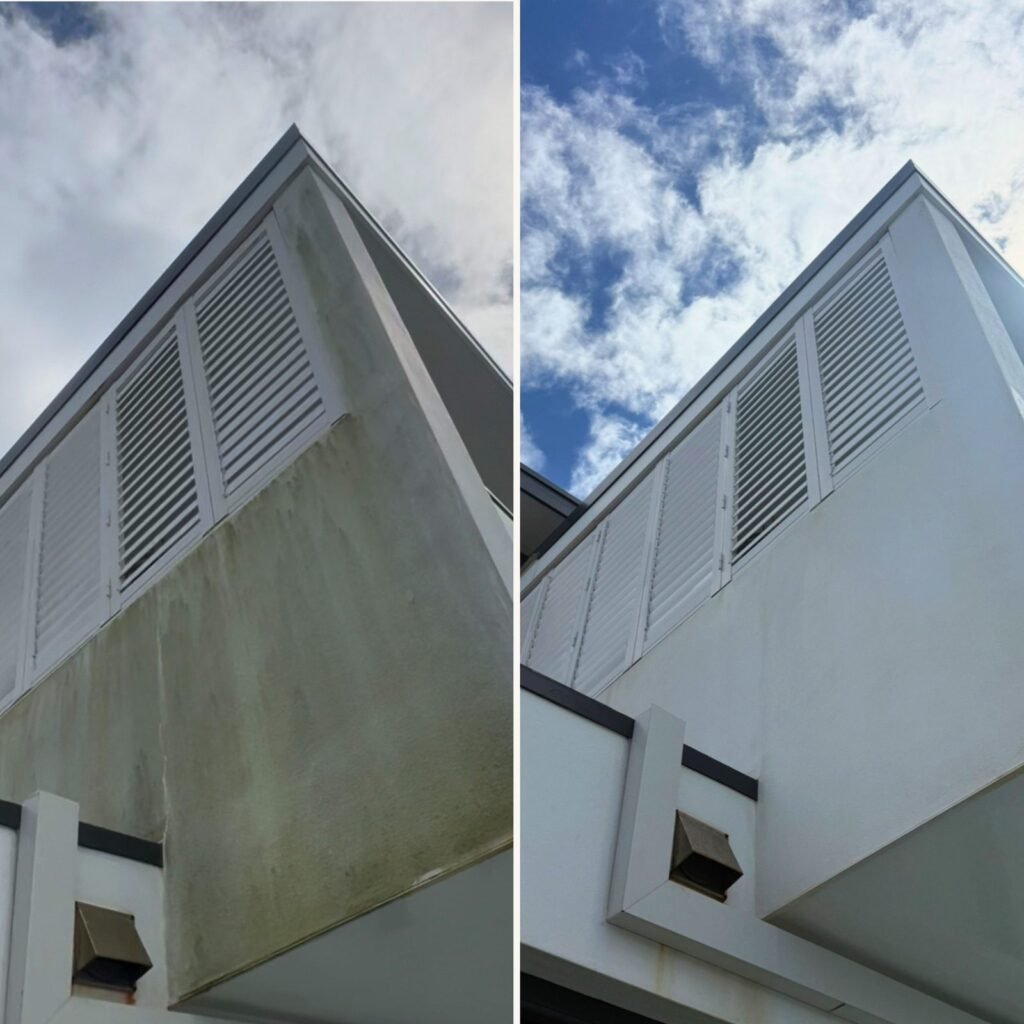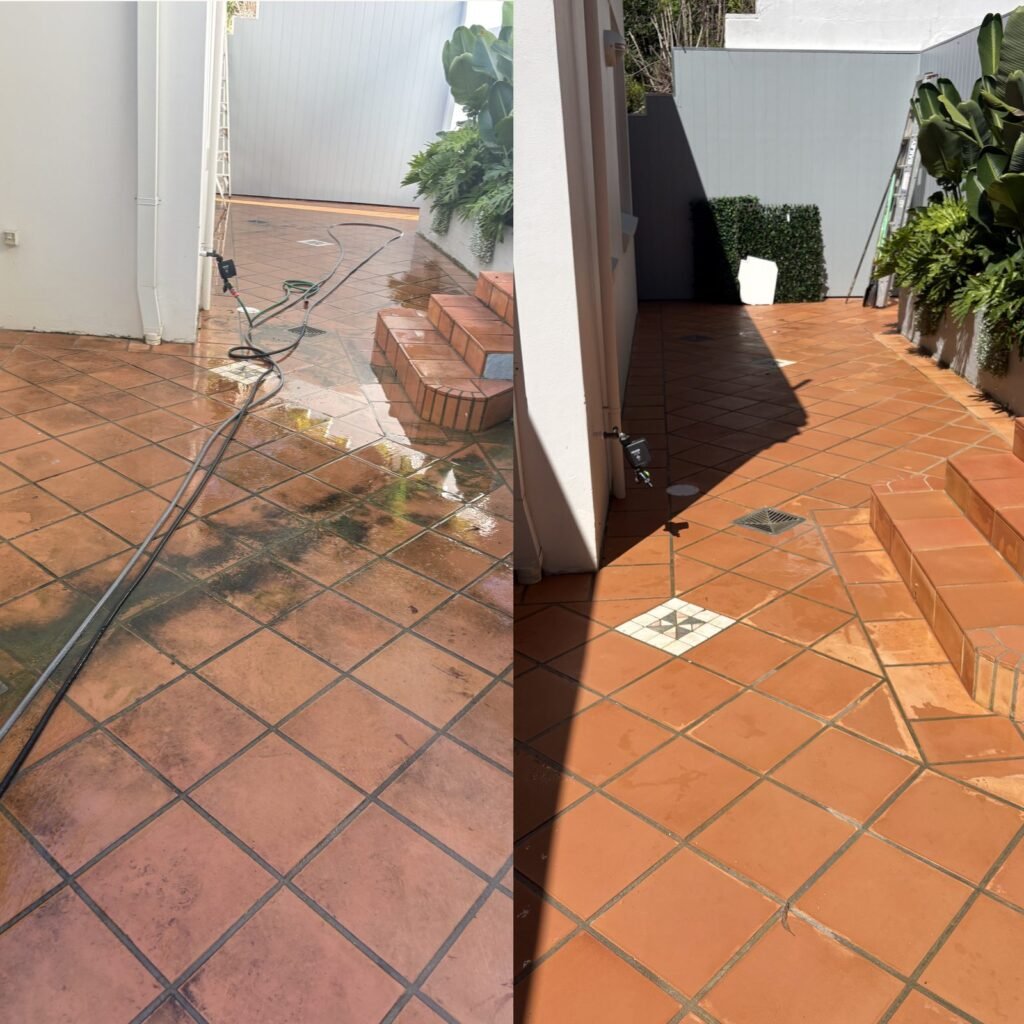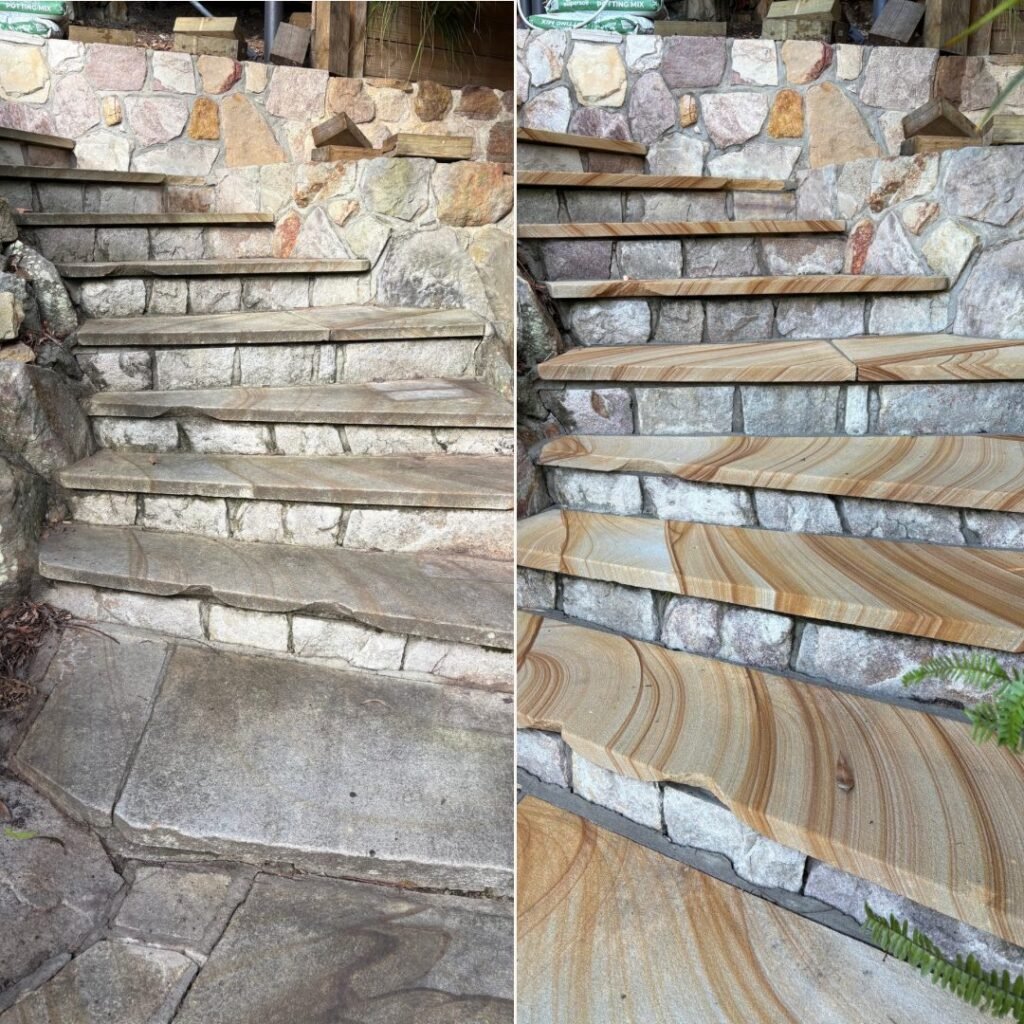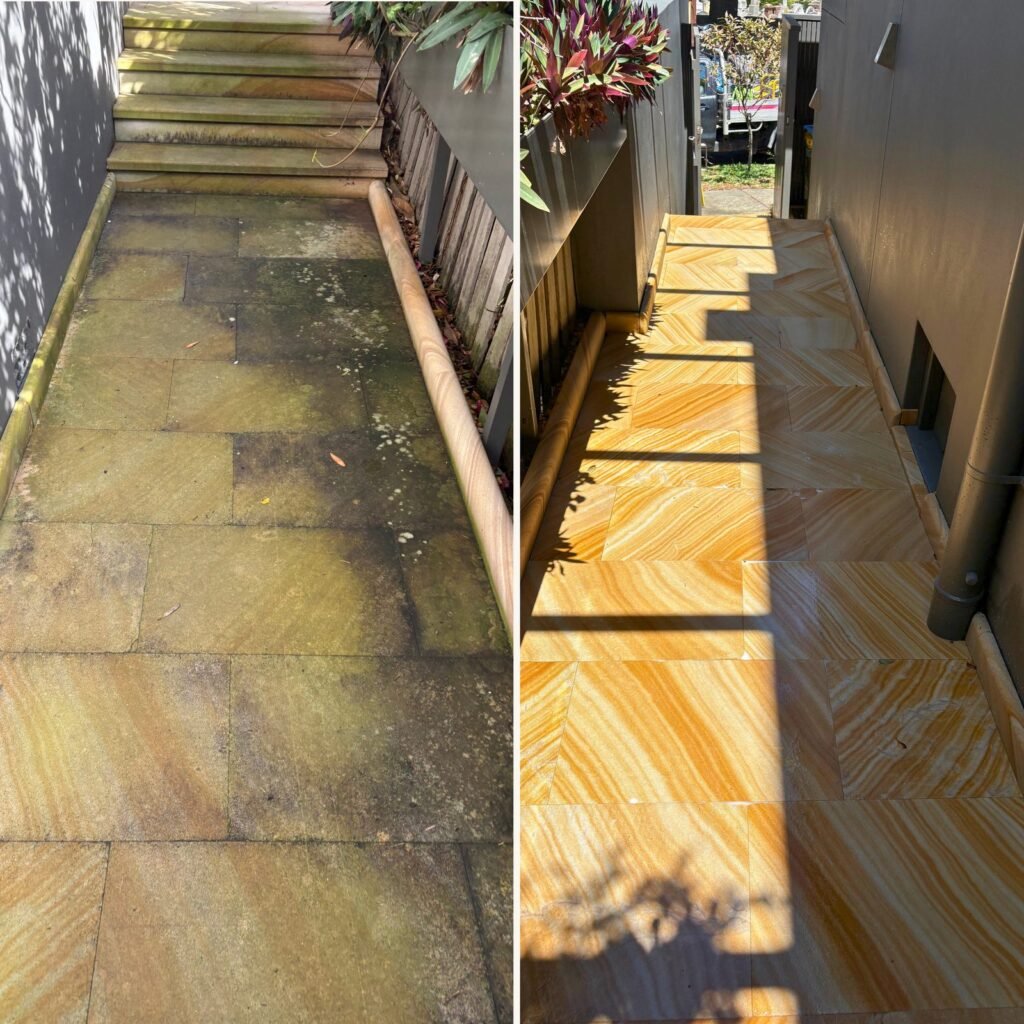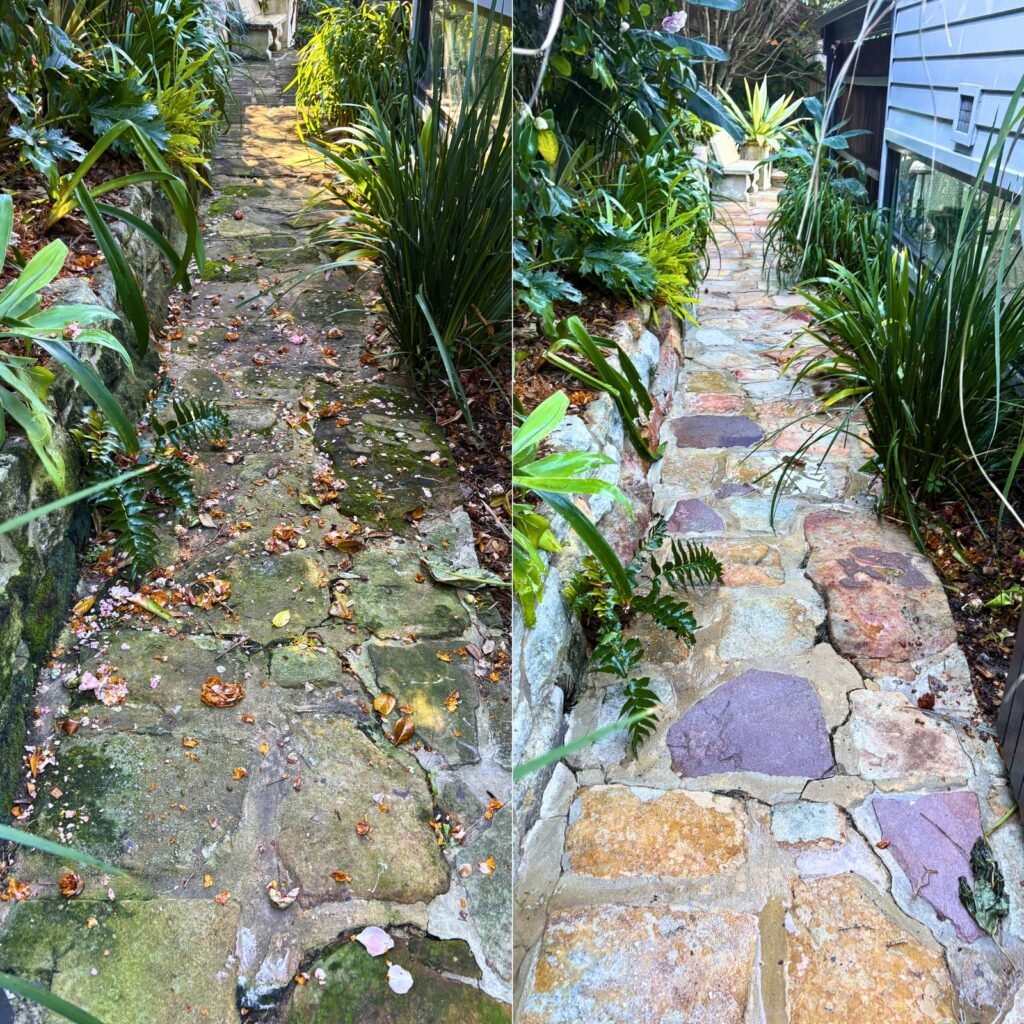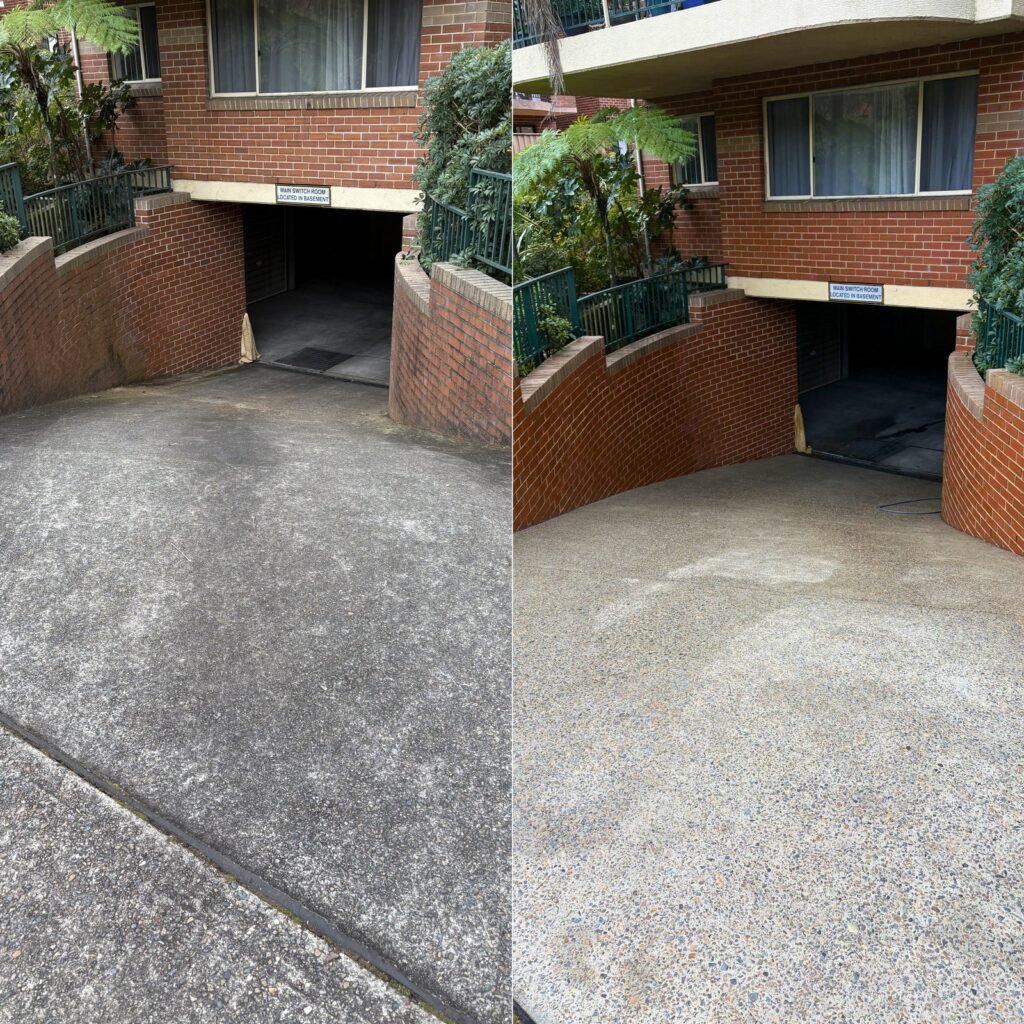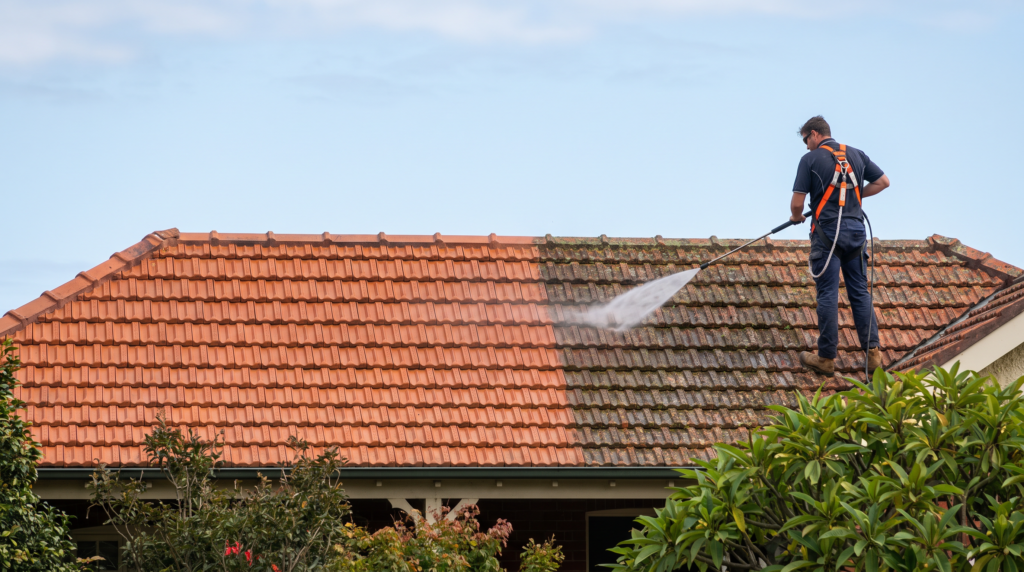
If your roof tiles have gone green, black or patchy, the instinct is to blast them clean. Understanding what’s actually happening on the tile surface explains why the gentle method wins every time on a Sydney roof.
Terracotta and concrete tiles are porous
Both terracotta and concrete tiles rely on a surface coating or glaze to shed water and resist growth. Once that coating ages, the porous body underneath soaks up moisture, and that’s where lichen and moss take hold. The staining you see is biological, not just grime.
What high pressure does
A pressure lance strong enough to strip lichen is strong enough to strip the tile’s coating with it. You end up with a raw, porous surface that absorbs water faster, grows moss back sooner, and — on older terracotta — can chip and crack outright. It also forces water up under the overlaps and into the roof space. Many manufacturers void the tile warranty the moment high pressure has been used.
What soft washing does
Soft washing applies a treatment that kills the moss, lichen and algae at the root, then rinses at low pressure. The growth dies and weathers off over the following weeks. The tile coating stays intact, the surface isn’t opened up, and regrowth is slowed dramatically because the spores have been killed rather than scattered. It’s the method every roofing body and tile manufacturer recommends.
Which tiles, which approach
Terracotta: always soft wash — it’s brittle and the glaze is irreplaceable. Concrete: soft wash, then consider re-sealing or re-coating if the surface has already worn. Metal and Colorbond: gentle wash only, never abrasive. Whatever the material, the winning approach is chemistry first, pressure last.
Get it done properly
Our roof cleaning uses soft washing on every tile roof, protecting the surface and the warranty. It pairs naturally with gutter cleaning and, where the coating has worn, roof restoration. Request a fixed written quote — we respond within 24 hours, fully insured with $20 million public liability.