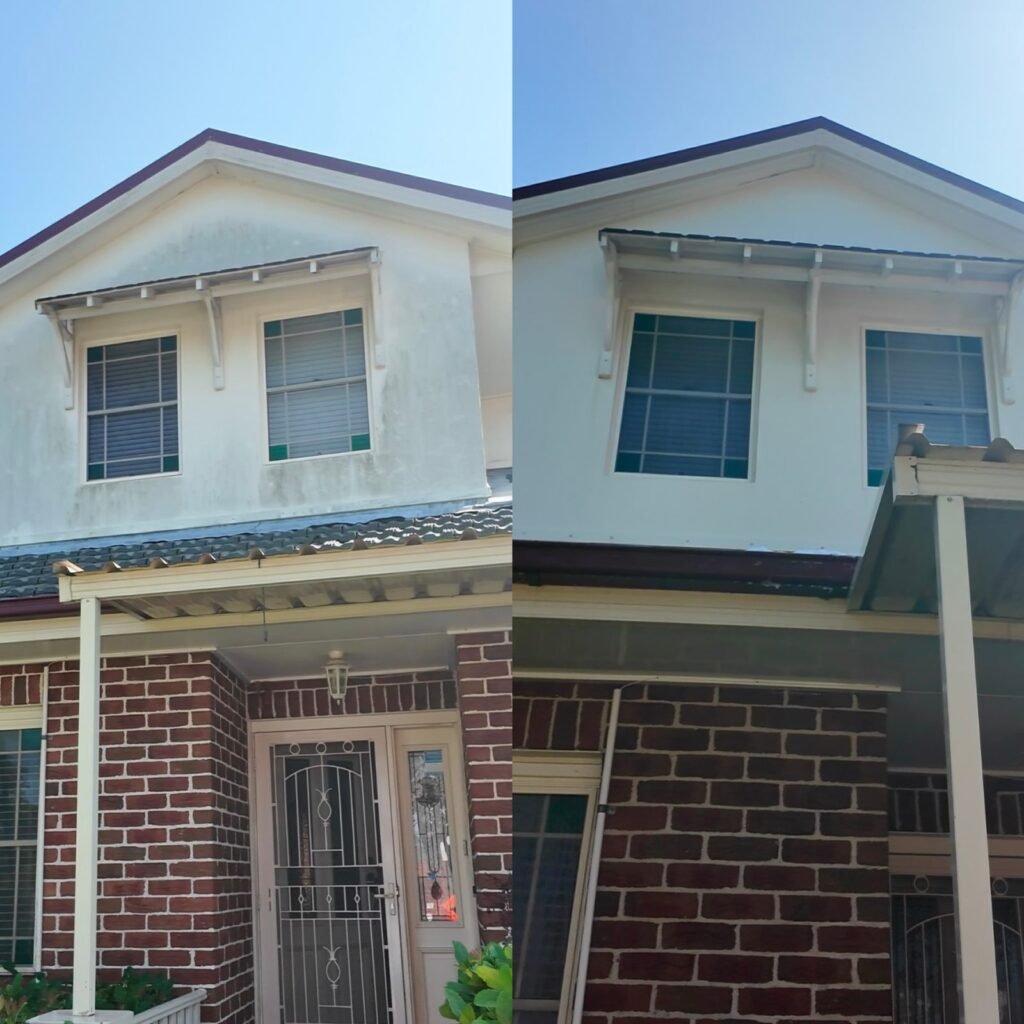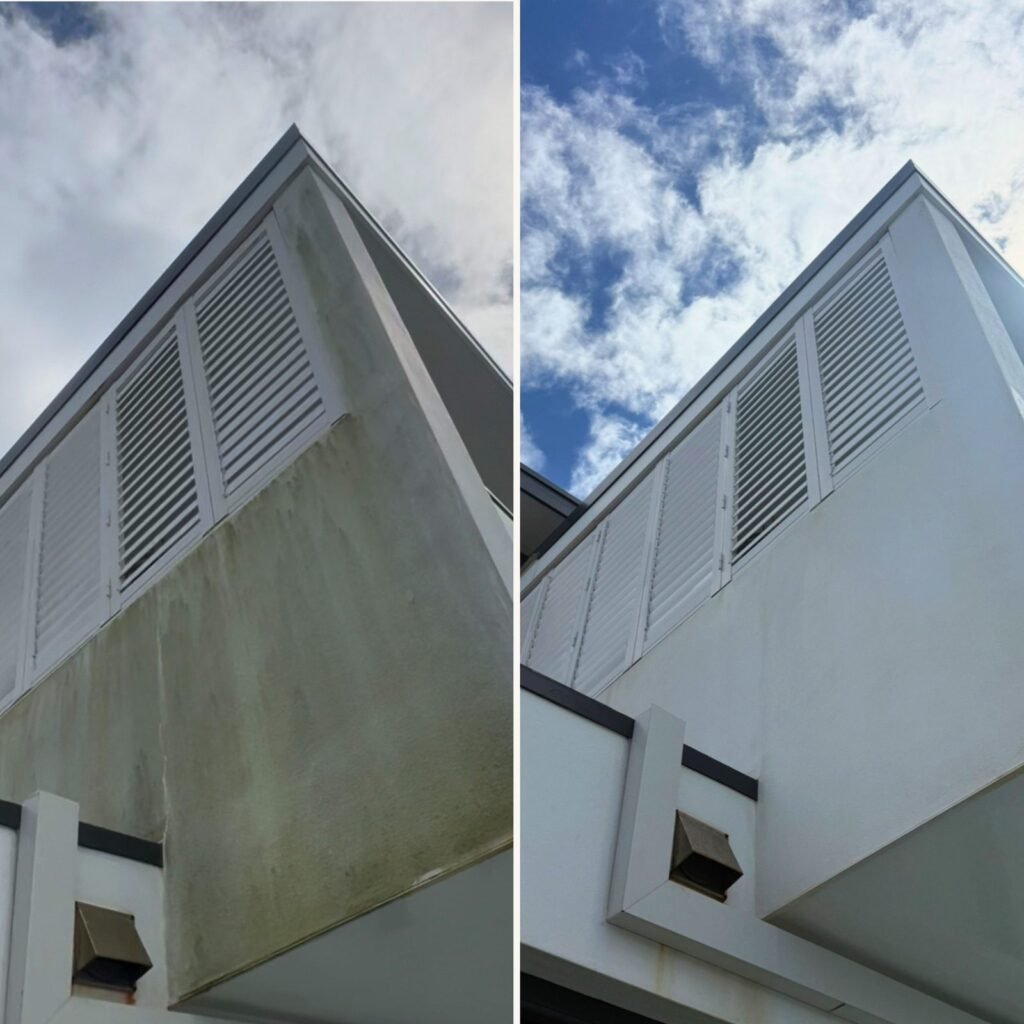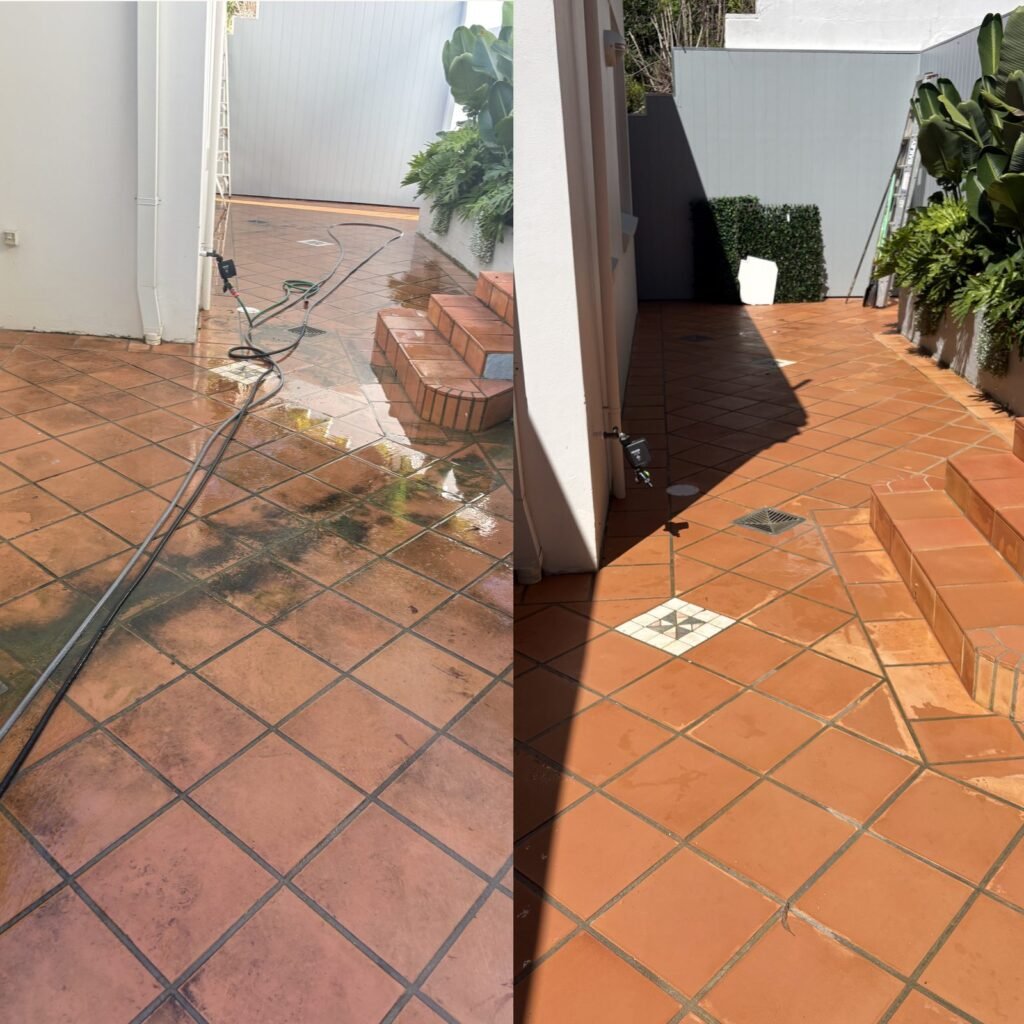
A driveway is often the biggest single hard surface on a property, and the first thing visitors and buyers see. Getting it clean is straightforward with the right gear and approach — and easy to get wrong in ways that stripe the concrete or spread the stain.
Know what you’re removing
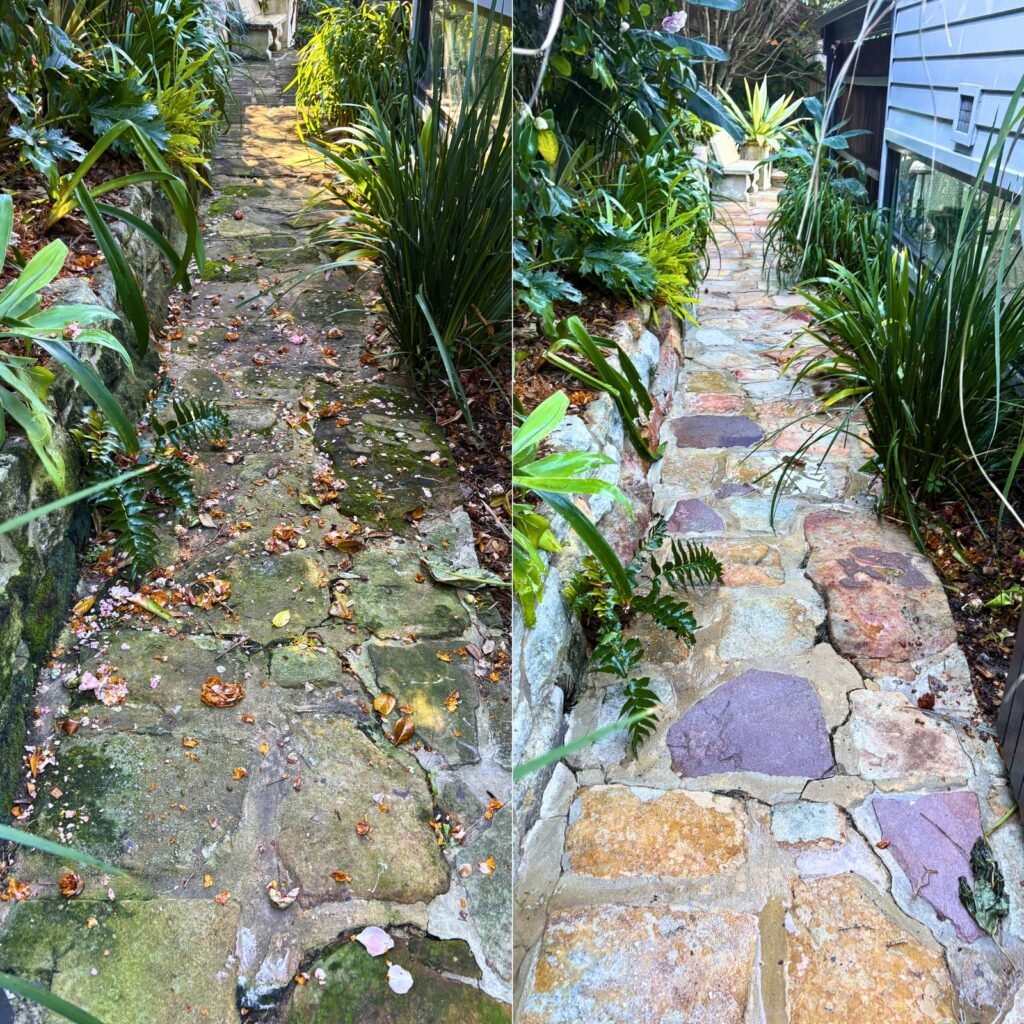
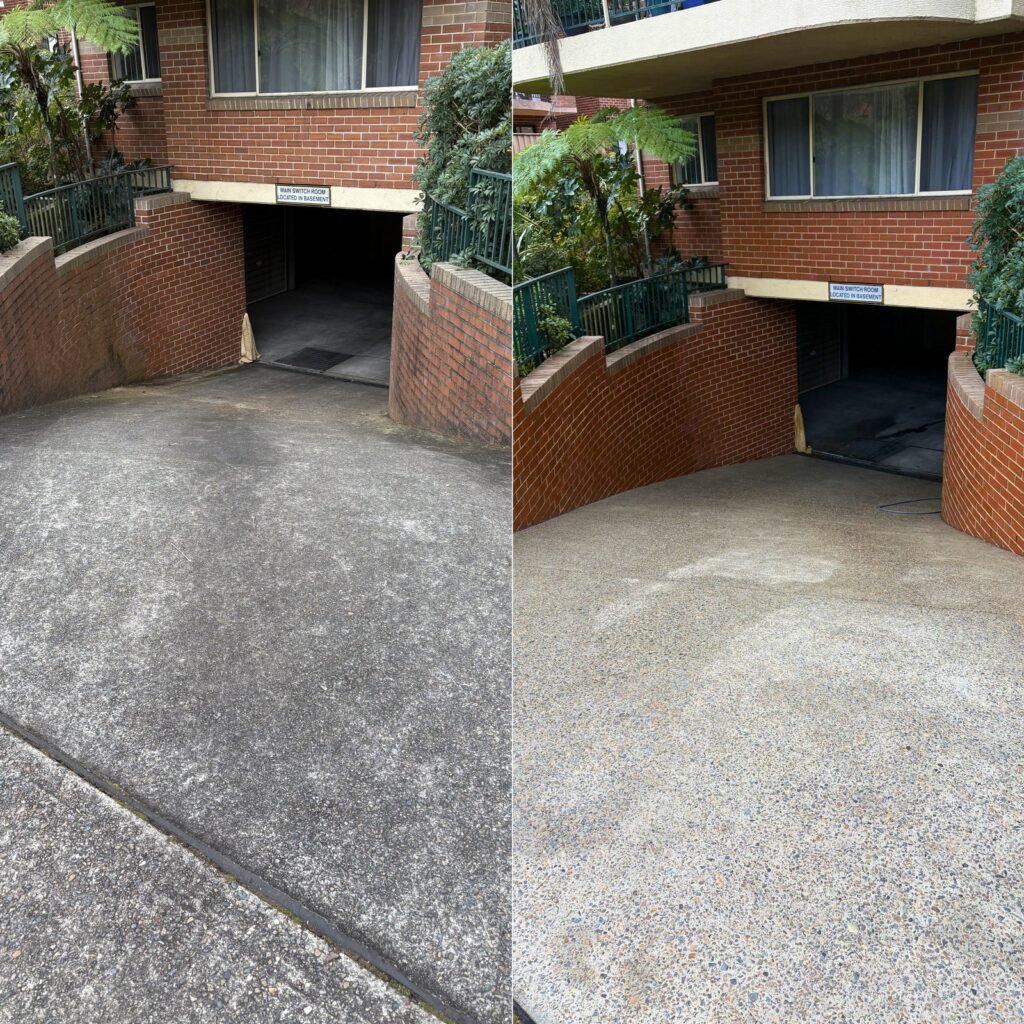
Driveway grime is rarely one thing. There’s general atmospheric dirt, black moss and algae in the damp patches, oil and transmission drips near the garage, tyre rubber at the turning points, and on older concrete, ingrained staining. Each responds to a different treatment, which is why a blanket blast leaves a patchy result.
Pressure alone leaves stripes
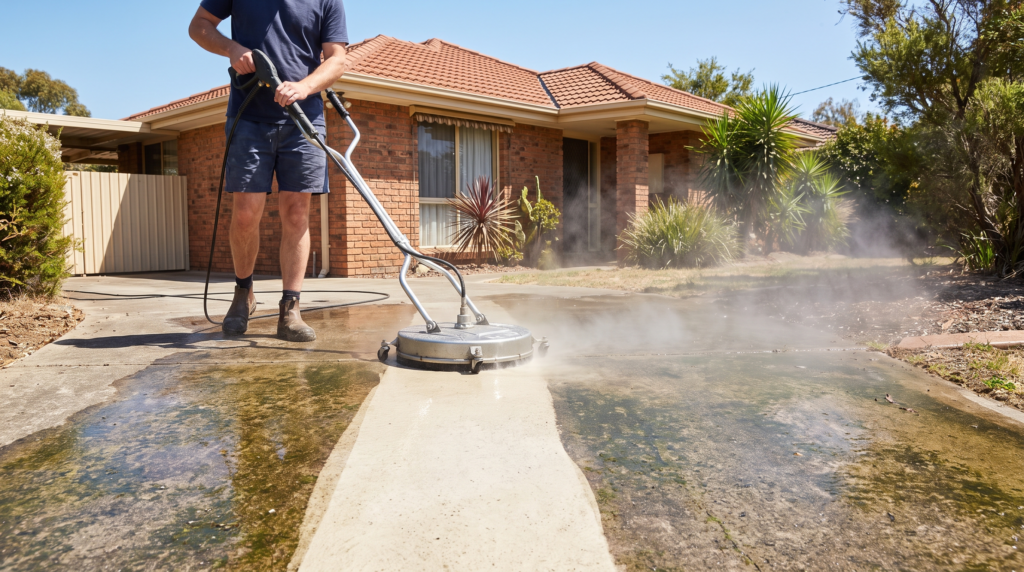
A pressure washer held too close, or moved unevenly, etches lines into concrete — the classic zebra-stripe driveway. The fix is a flat-surface cleaner that holds a consistent distance and overlaps evenly, plus a pre-treatment that lifts the growth and oil so the pressure is doing less of the work.
Oil and rust need pre-treatment
Oil sits in the pores of the concrete; blasting it just spreads it. It needs a degreaser worked in and lifted first. Rust from metal furniture or run-off needs a specific rust remover, not more pressure. Skip these steps and the stain is still there once the surface dries.
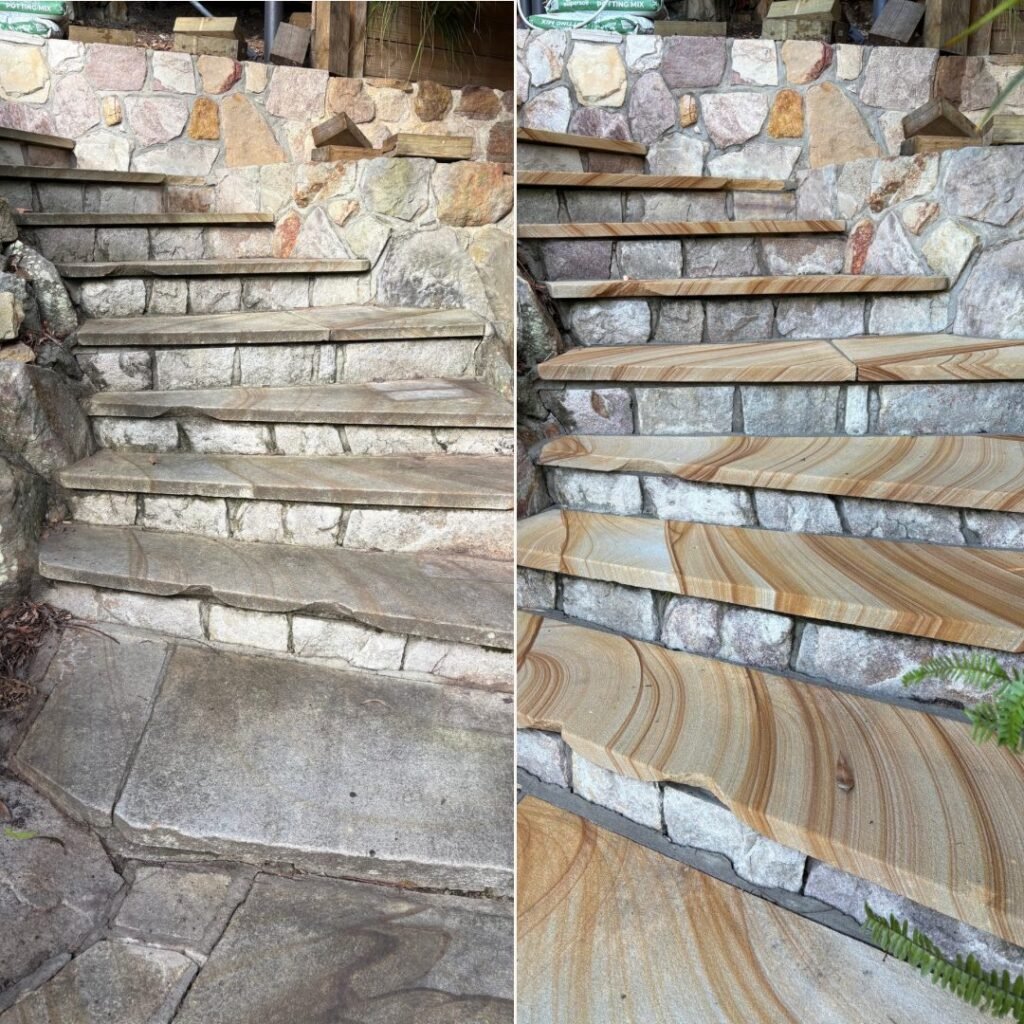
Pavers and sandstone are different again
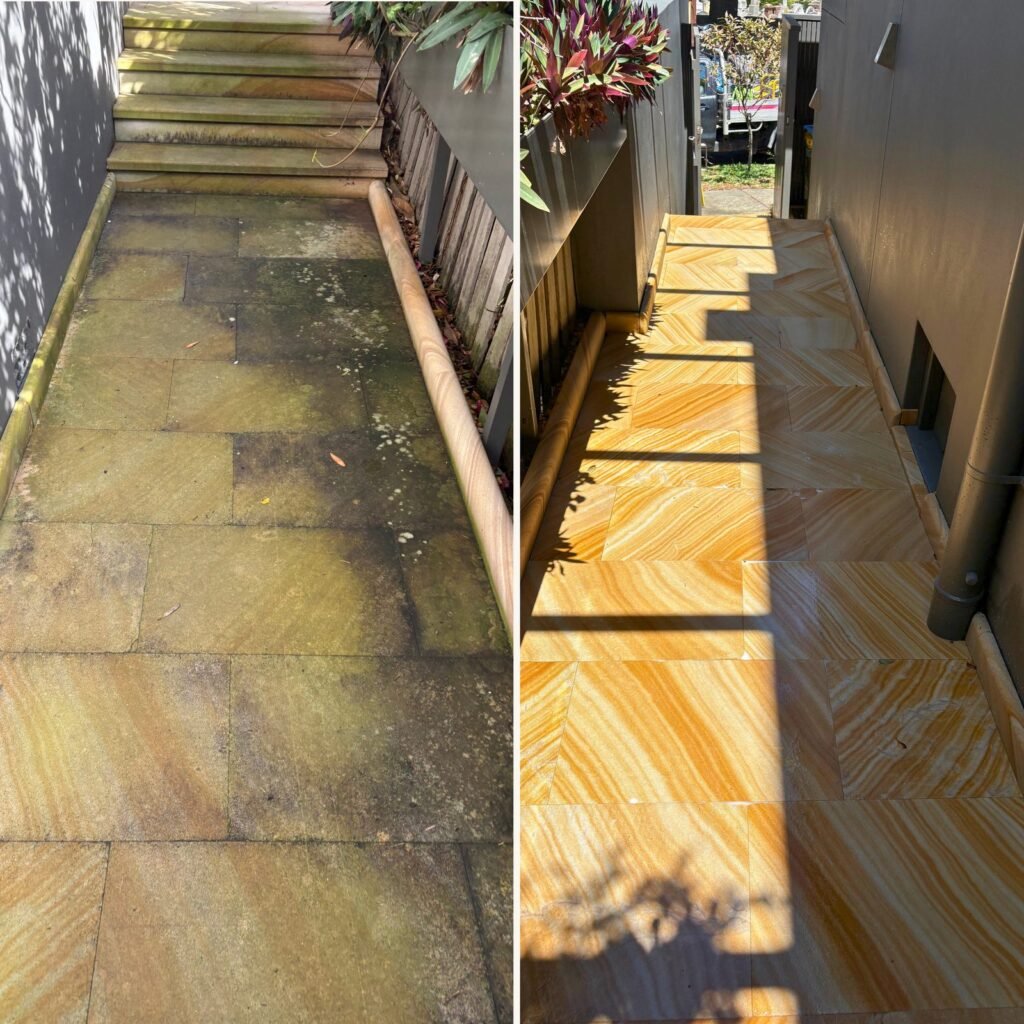
Concrete takes real pressure. Sandstone and many pavers do not — too much pressure pits the stone and blows out the jointing sand. Those surfaces want lower pressure and the right cleaning agent, then often a seal to keep them clean longer.
The lasting result
Our driveway and concrete cleaning matches the method to the surface and the stain, and we can seal afterwards so it stays clean and sheds oil. Request a fixed written quote — 24-hour turnaround, $20 million public liability.