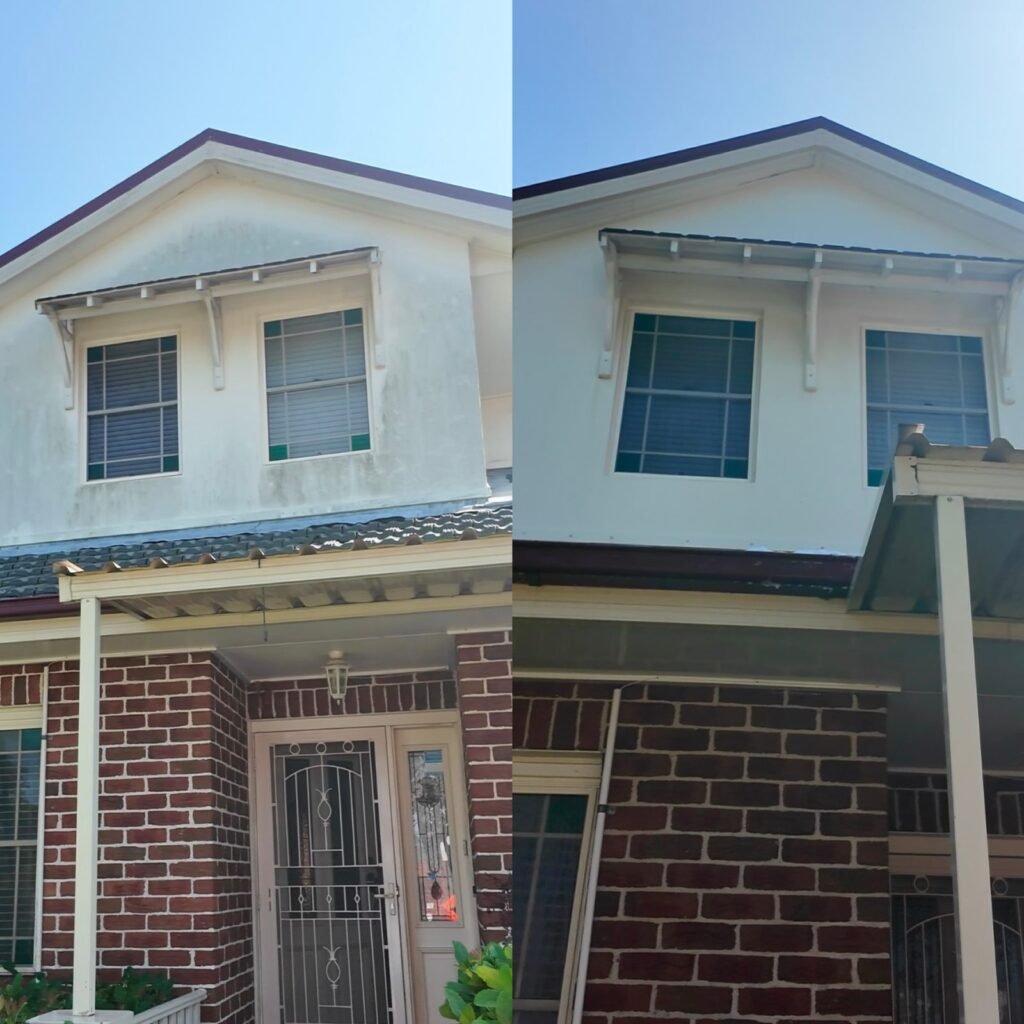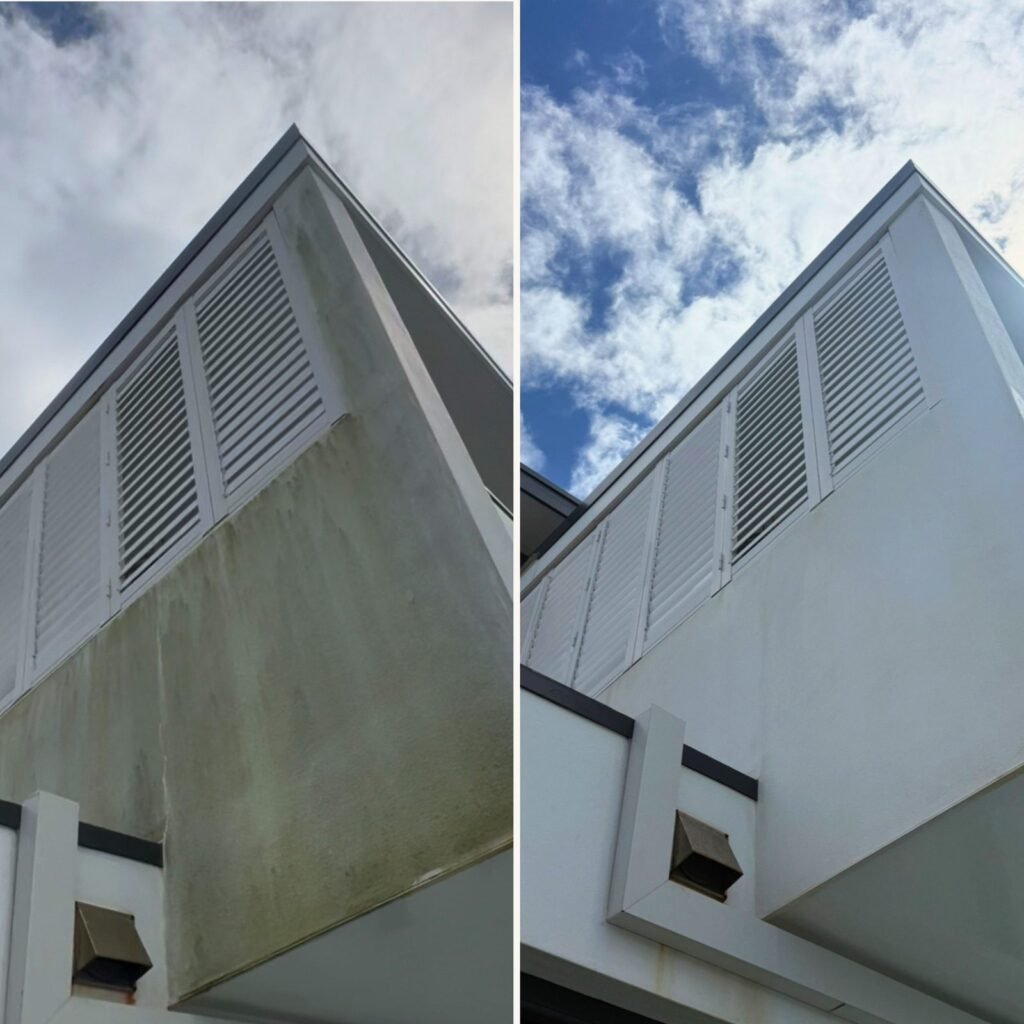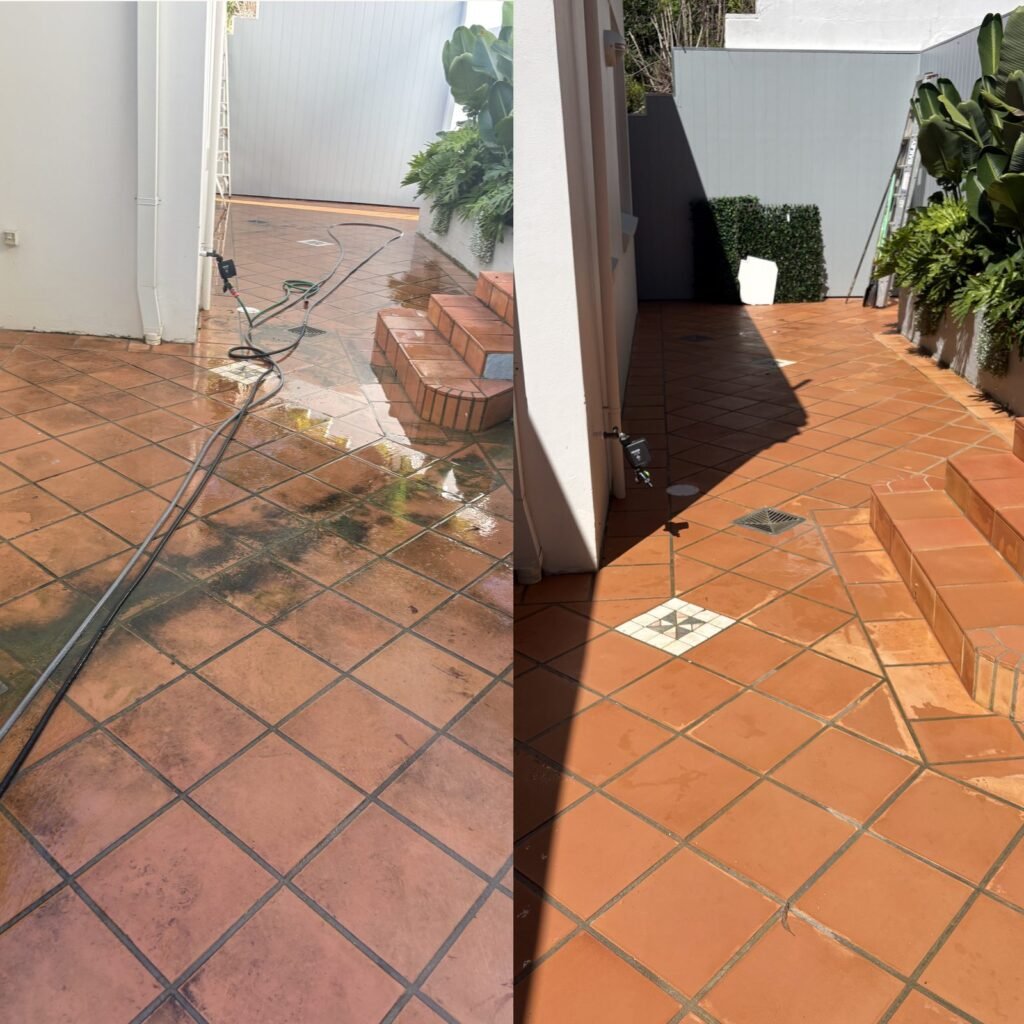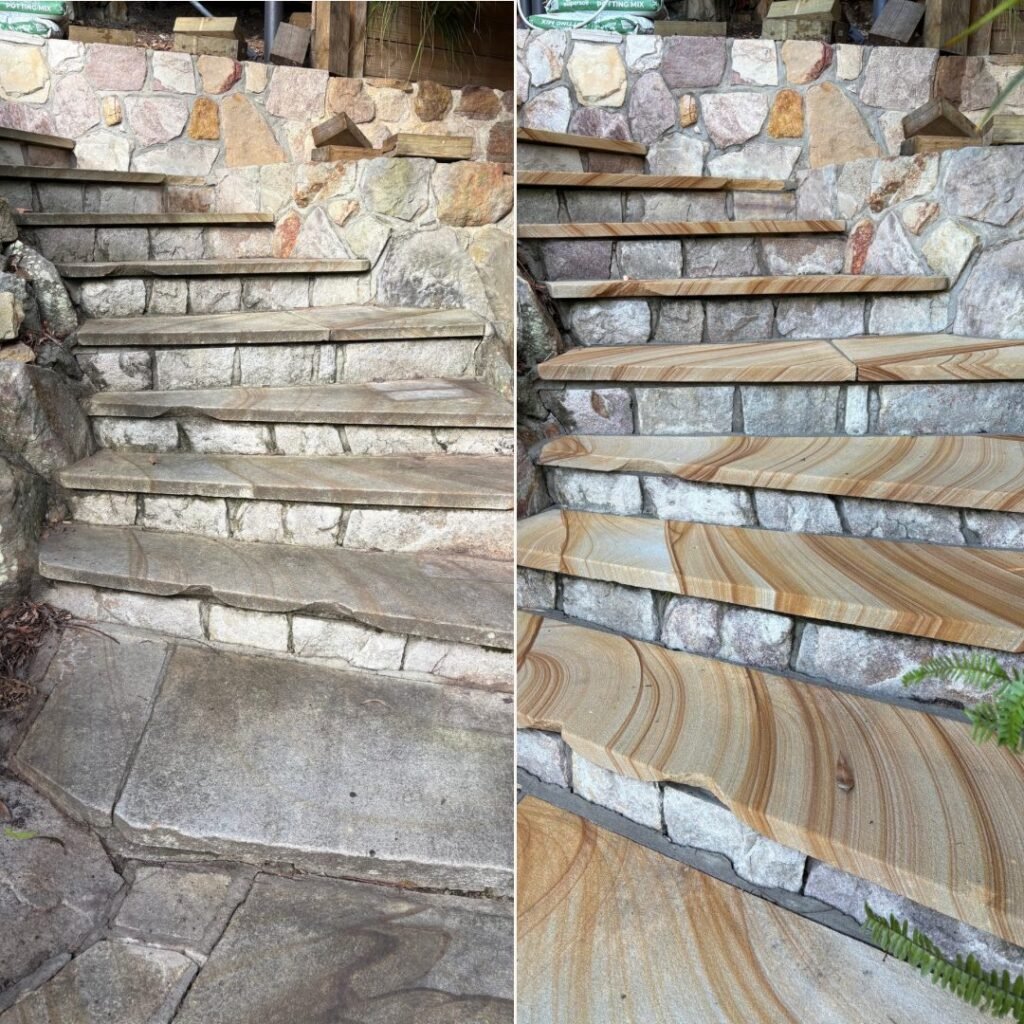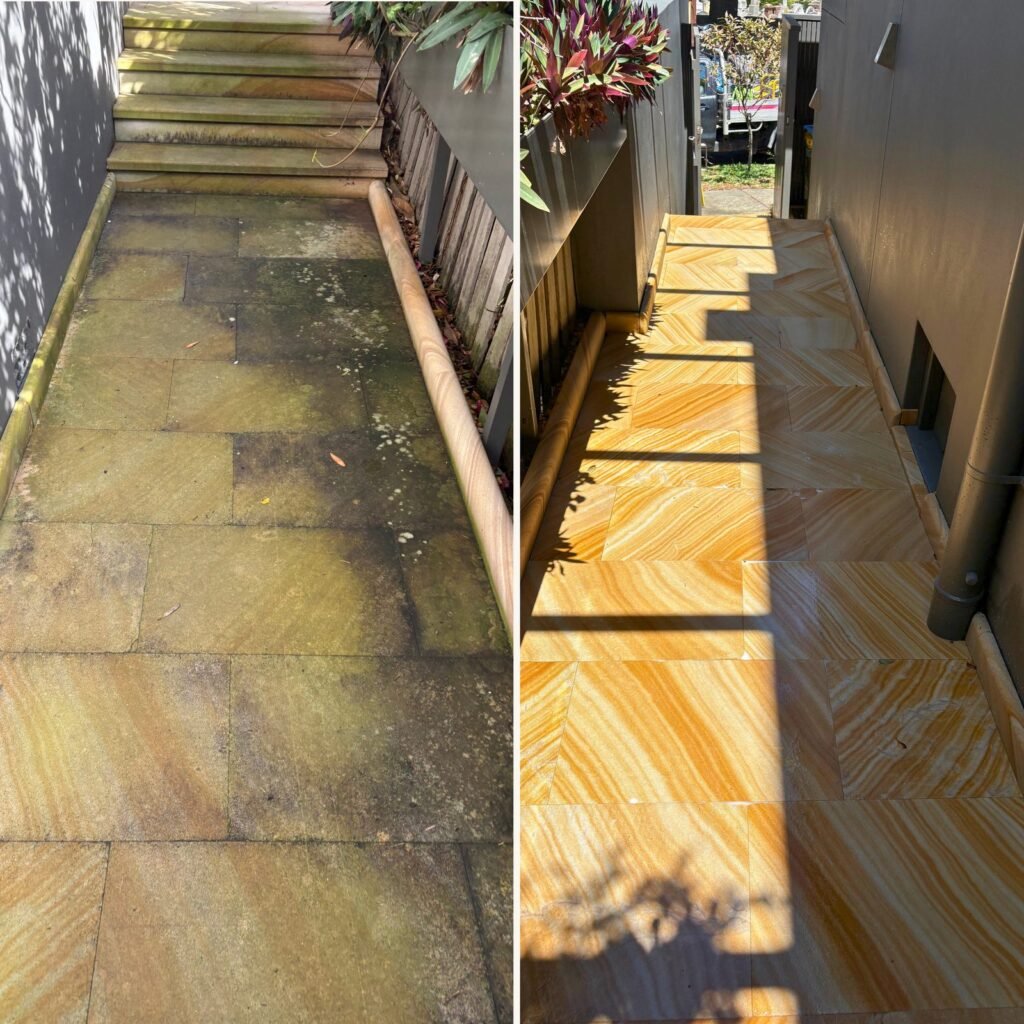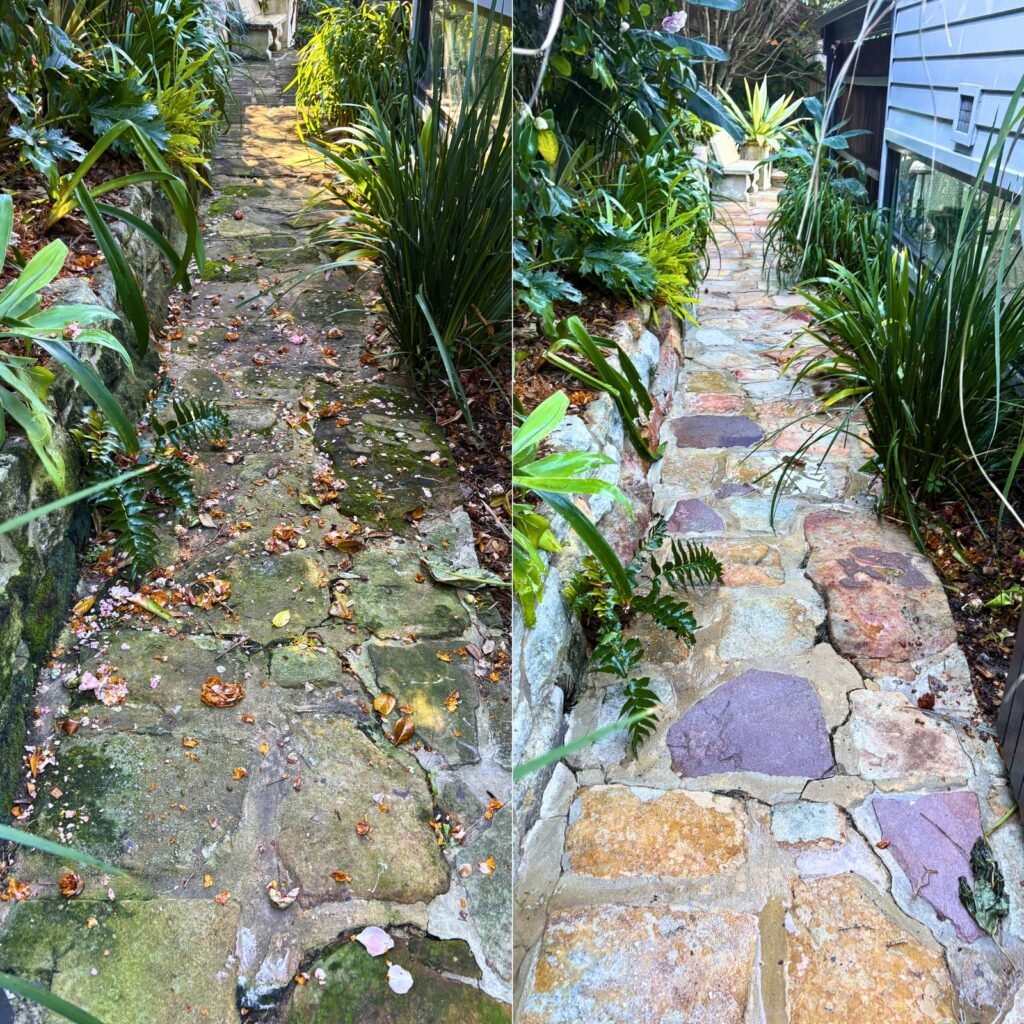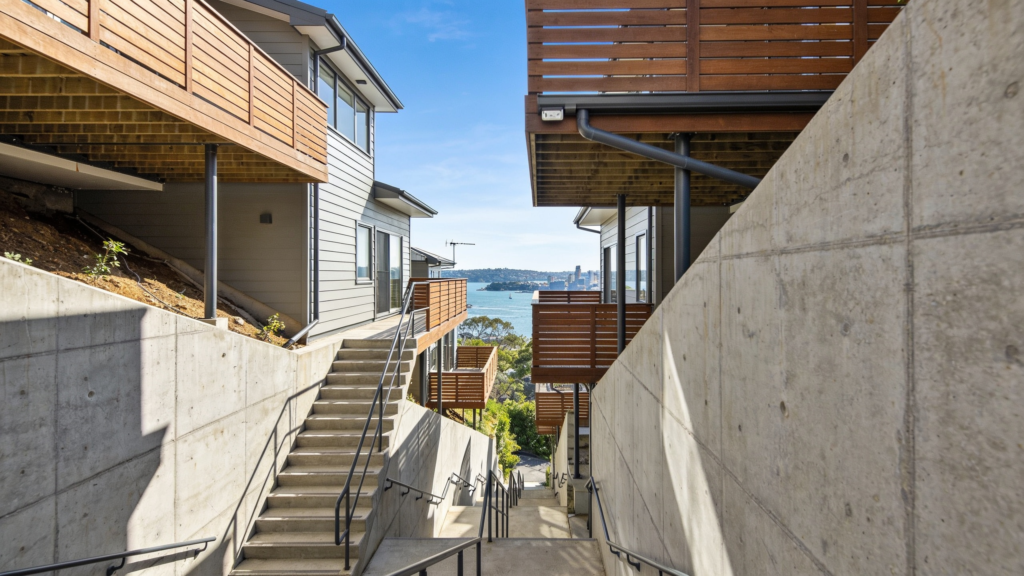
A great many Sydney homes sit on slopes. Steep blocks are the norm through much of the Eastern Suburbs, the harbourside North Shore, and the escarpment side of the Northern Beaches, and they change exterior cleaning work fundamentally.
If you have had two quotes for the same house that differ by several hundred dollars, access is usually where the difference lives.
The same wall is not the same job
A single-storey wall on flat ground can be reached from the ground with a pole. The same wall on the downhill side of a sloping block might sit four or five metres above the ground below it — the house reads as single-storey from the street and is effectively three levels at the back.
That changes everything: the equipment needed, the time taken, the number of people required, and the risk being carried.
What the rules require
NSW work health and safety regulation treats any risk of a fall of more than two metres as a matter requiring managed control. That is not a guideline; it is a duty on the person conducting the business, and it applies at a residential property.
The regulation also sets out a hierarchy — eliminate the risk where you can, and where you cannot, use the highest practical control. Working from the ground with extension equipment sits above using an elevated work platform, which sits above ladders, which sit above harness-based systems used as a last resort.
In practice this is why a contractor may quote to clean your upper level from the ground with telescopic equipment and take longer, rather than throw a ladder up and be done in half the time. The slower method is frequently the compliant one.
Where the money actually goes
Elevated work platforms. Where a scissor lift or knuckle boom is genuinely needed, hire, delivery and a licensed operator are real costs. On a steep block there is the additional question of whether a machine can get there at all — many cannot.
Scaffold. Occasionally the only safe option on a tight sloping site, and it typically costs more than the cleaning.
Extra crew. Rope-assisted work and ladder work both require a second person. One-person quotes on a steep multi-level property should prompt a question about how they intend to do it.
Time. Carrying equipment down forty steps, setting up, and carrying it back is unproductive hours that still have to be paid for.
Water and power. A tap at the front of a property forty metres from and ten metres above the work area is a genuine logistical problem.
What to check before accepting any quote
Ask for the contractor’s public liability certificate and check the amount and that it is current. Ask whether they hold workers compensation for anyone who will be on site — if an uninsured worker is hurt on your property, the exposure can reach you.
Ask specifically how they intend to reach the high sections. A clear answer indicates it has been thought through. Vagueness usually means ladders and hope.
And take seriously anyone who tells you part of the job is not safely accessible with their equipment. That is a contractor being straight with you rather than taking the money and improvising.
Things owners can do to reduce the cost
- Clear access paths, side gates and the space around the work area beforehand
- Cut back planting that blocks access to walls and gutters
- Point out the closest tap and outdoor power before the day
- Flag known problems — loose balustrade, unstable step, soft ground
- Bundle jobs into one visit, since setup on a steep site is a large share of the cost
That last point is the significant one. If the gutters, the upper walls and the roof all need attention within a year or two of each other, doing them together avoids paying for difficult access three separate times.
The uncomfortable part
Falls from height remain one of the leading causes of death and serious injury in Australian construction and trade work. The gap between the cheapest quote and the next one is often precisely the cost of doing it properly.
You are entitled to choose the cheaper option. It is worth knowing what has been left out of it.
Related: how to clean gutters safely.