Shade sails, retractable awnings, cafe blinds and umbrellas all sit in the same category: expensive fabric, exposed to everything, and routinely ruined by well-intentioned cleaning.
The single most useful thing to understand is that outdoor fabric is not really a fabric problem. It is a coating problem.
The coating is what you are protecting
Most quality outdoor fabrics are either solution-dyed acrylic or PVC-coated polyester. In both cases performance depends on a surface treatment — a water repellent, a UV stabiliser, sometimes a soil-release finish.
That treatment is thin, and it is mechanically fragile. Vigorous scrubbing with a stiff brush removes it. So does high pressure. So does bleach.
Once it is gone the fabric may look clean, and it will absorb water instead of shedding it, stay damp longer, and grow mould faster than before. This is why people report that a sail “went bad quickly” after being cleaned — the cleaning caused it.
Why the mould is on the underside
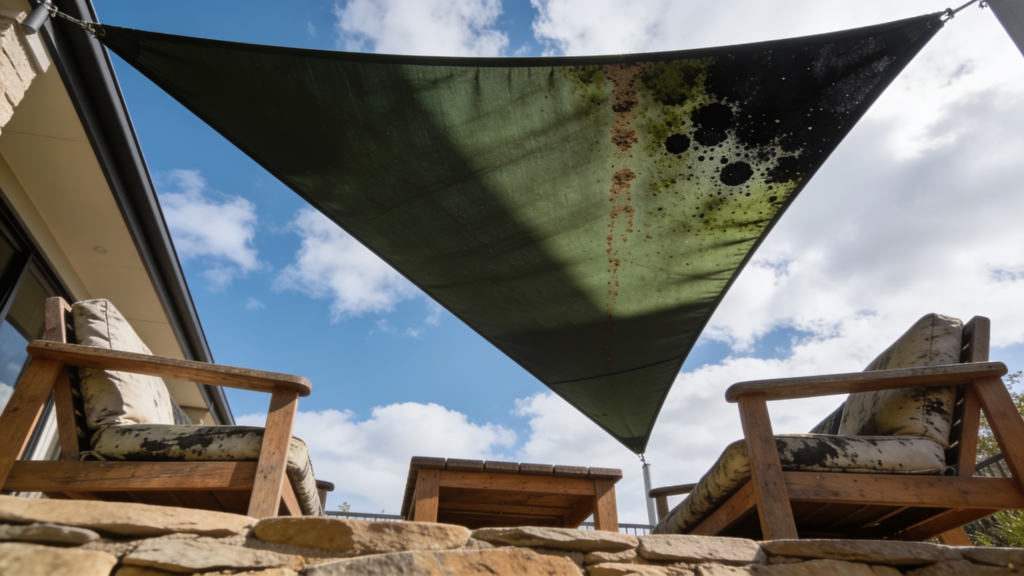
Look at a shade sail that has been up a few years and the growth is almost always worse underneath, particularly in the corner that gets least sun.
The top surface gets UV, which suppresses growth, and rain, which rinses it. The underside gets neither. It gets humidity, still air, and in a Sydney summer, warmth. That is ideal for mould.
Cleaning only the visible top surface therefore misses the actual problem, and the underside growth reseeds the top within a season.
Bleach is the classic mistake
Household bleach on outdoor fabric does three things: it strips the water-repellent finish, it degrades stitching, and on many fabrics it lightens the colour irreversibly.
The stitching point deserves emphasis. Shade sail thread is usually UV-stabilised polyester, and it is already the component that fails first — sails typically tear at the seam, not across the middle. Weakening thread with bleach on a large sail under tension is how a sail ends up on the lawn after a storm.
Most manufacturers specify mild soap and lukewarm water. That advice is boring and it is correct.
Method that works
Brush off loose debris dry first. Rinse with plain water. Apply a mild fabric-appropriate cleaner and let it dwell — dwell time replaces scrubbing force, and that is the whole trick. Agitate gently with a soft brush. Rinse thoroughly, because residue attracts dirt. Dry fully before re-tensioning or retracting.
That last step matters more than people expect. Rolling a damp awning into its cassette, or retracting wet cafe blinds, creates exactly the dark humid conditions mould wants. A great deal of awning mould is caused at the moment of putting it away.
PVC blinds behave differently
Clear PVC cafe blinds are not fabric and want different treatment. They scratch easily, they go cloudy with abrasion, and solvents will haze them permanently.
Soft cloth, mild soap, no abrasives, and a dedicated PVC conditioner to keep them flexible. Cloudy PVC that has been scrubbed cannot be brought back.
Re-proofing
After a few years, and certainly after any cleaning, the water repellency will be reduced. Fabric-specific re-proofing products restore it, and they need to be applied to clean, dry fabric to work.
Whether it is worth doing depends on the fabric’s remaining life. Sun-degraded fabric that has gone brittle and chalky is at the end of its service — re-proofing a sail that is close to tearing is not money well spent. Check by flexing a corner; brittle, stiff fabric that crackles is done.
Getting more years out of them
- Retract awnings and blinds only when dry
- Take shade sails down for storms rather than trusting the fixings
- Clear leaf litter from the low corner where it collects
- Clean the underside, not just the top
- Keep bleach and pressure washers away from all of it
- Check stitching and fixing points annually — that is where failure starts
If a sail is stained rather than mouldy, say the fabric is fine but there is a rust run from a fixing, that is a different job and worth identifying before anyone starts cleaning.