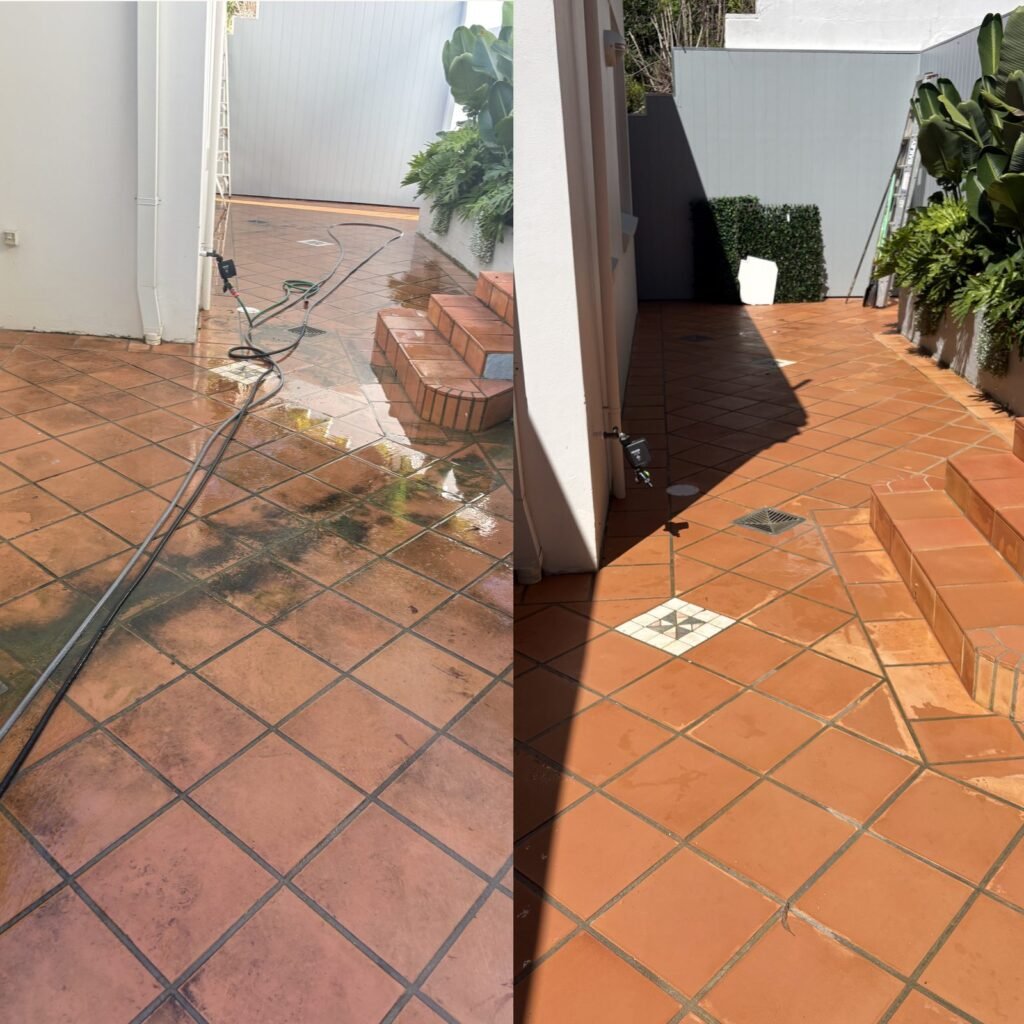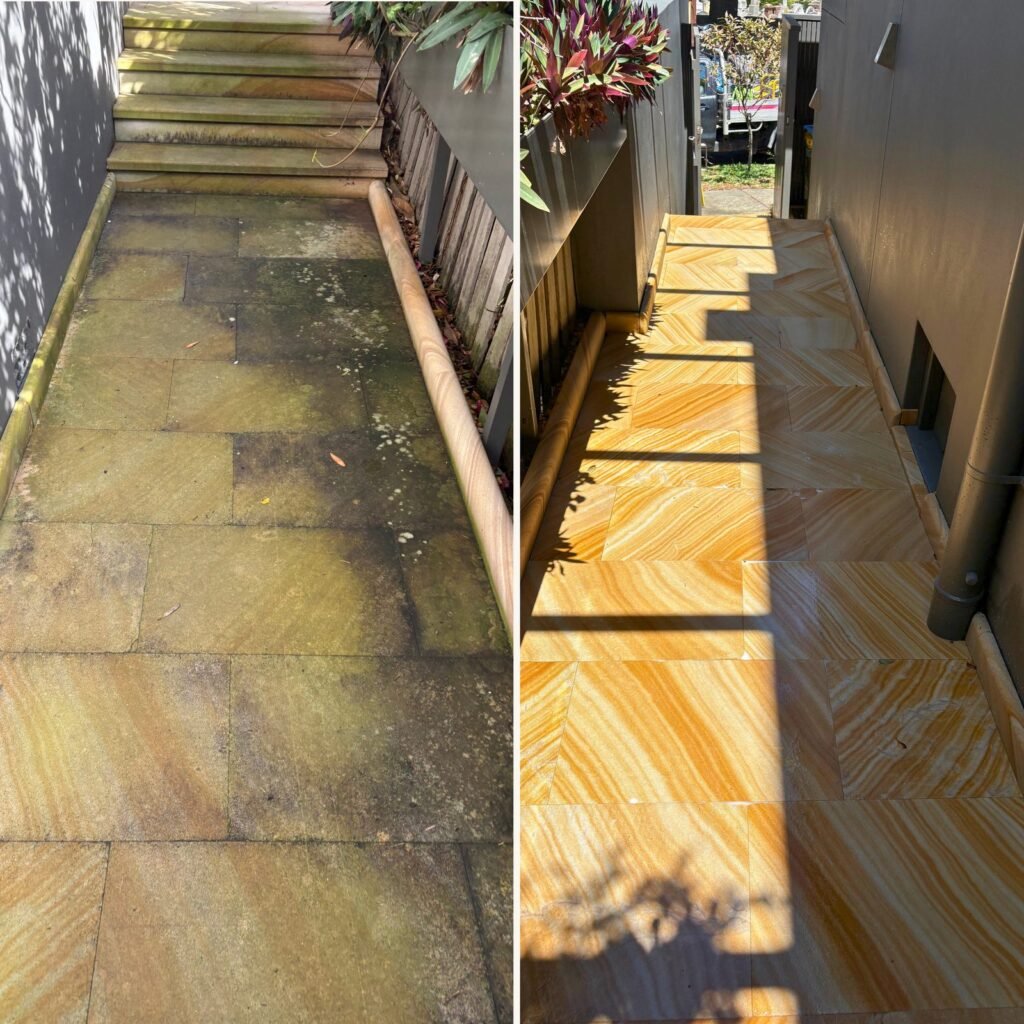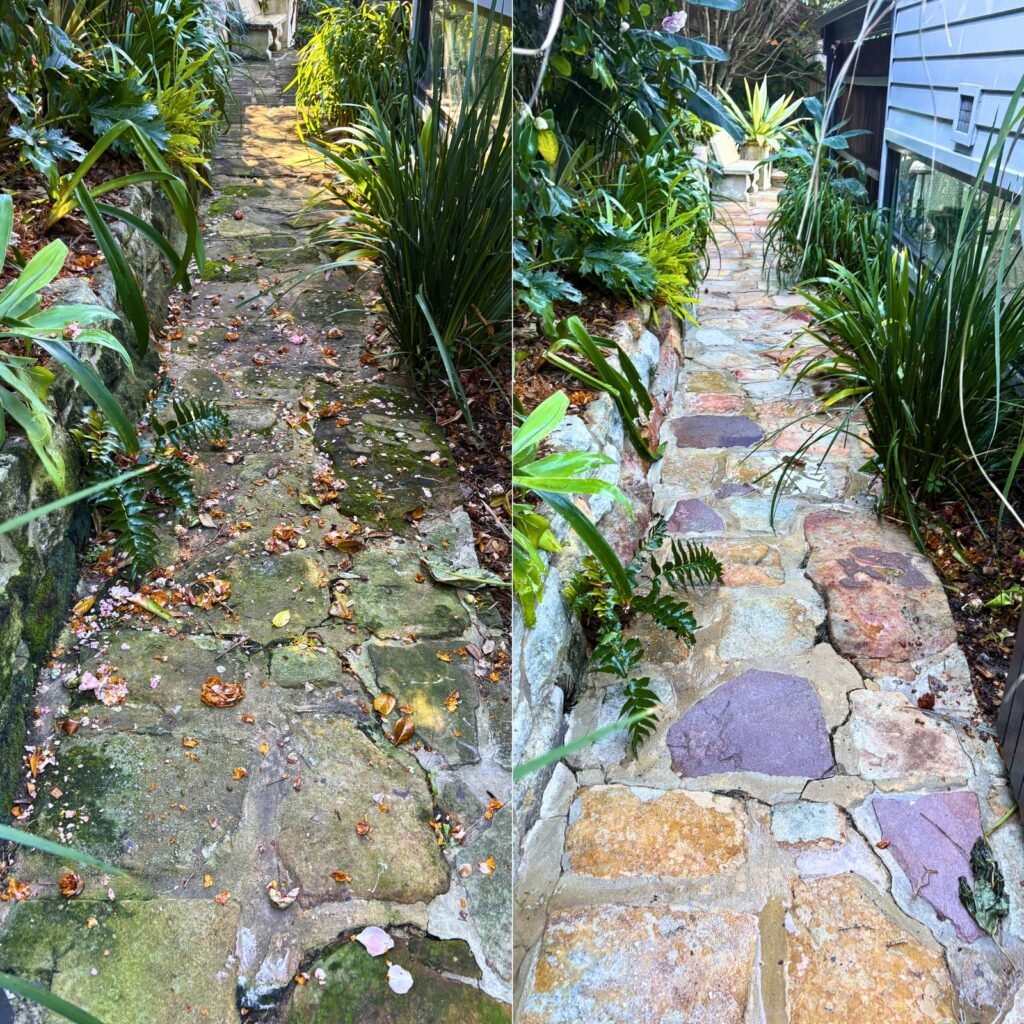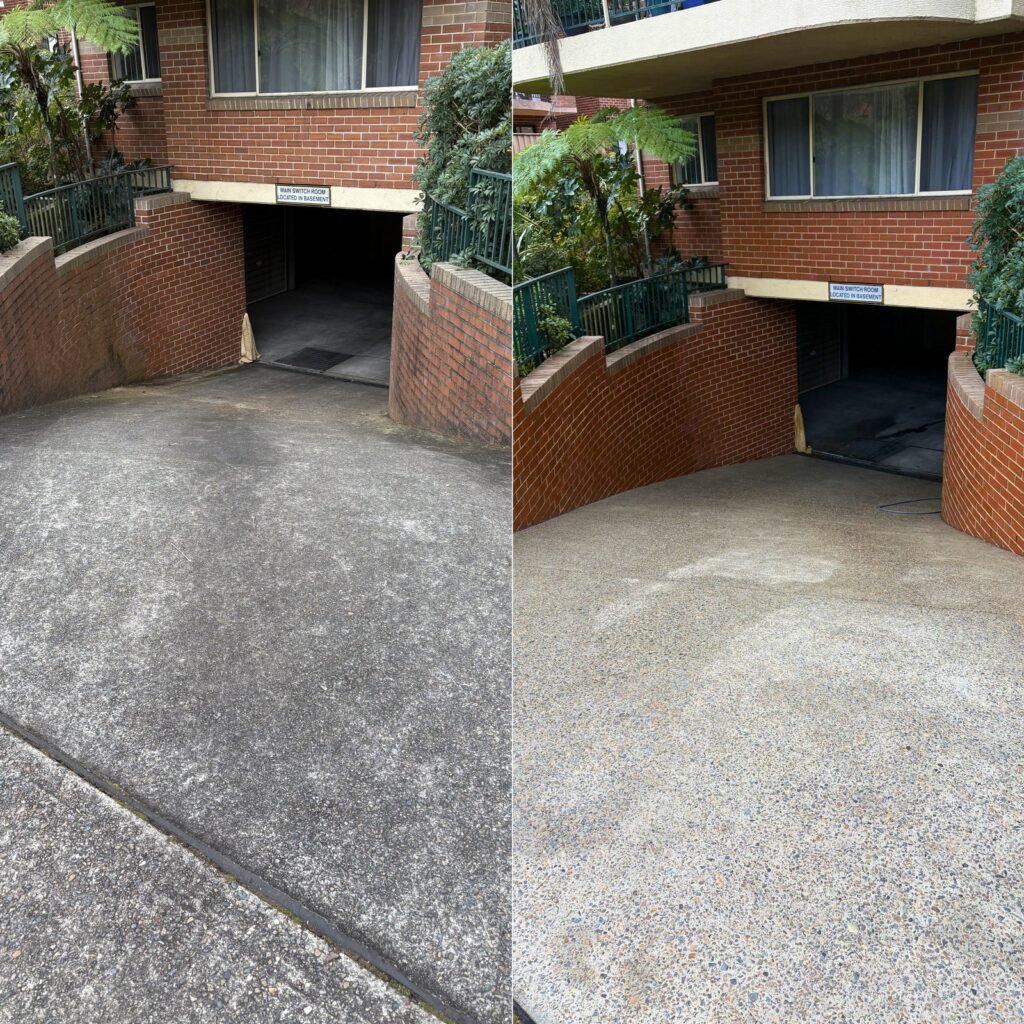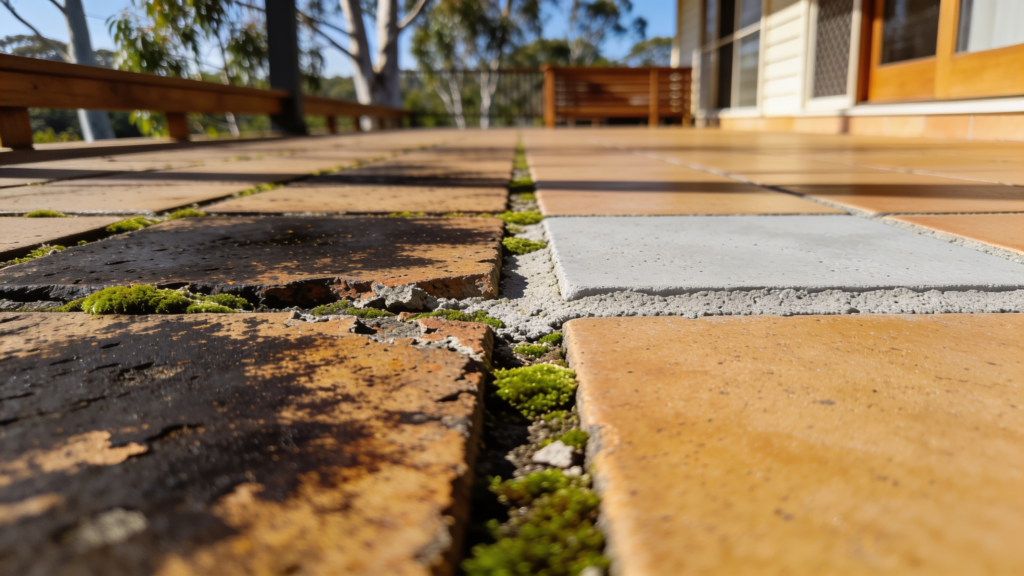
Tiled terraces, balconies and pool surrounds age in a predictable way. The tile itself — porcelain, ceramic, most stone — survives well. The grout between the tiles does not, and it is the grout that makes the whole area look tired.
Grout is the weak point by design
Cement-based grout is porous and considerably softer than the tile beside it. Outdoors it absorbs water, holds organic growth, takes UV, and moves with thermal expansion.
It sits slightly below the tile surface, so it is also where water, dirt and leaf litter collect. In practice you have a soft absorbent channel running through a hard non-absorbent surface, and everything problematic accumulates in the channel.
That is why a terrace can be washed and still look dirty. The tiles are clean; the joints are not.
Pressure washing grout is a trap
A pressure washer will clean grout very effectively for about a second, and then start removing it.
Grout erodes far faster than tile, so a concentrated jet cuts a groove along the joint. The immediate result looks excellent — bright, clean lines. Within a season the lowered joints hold more water and debris than before, growth returns faster, and eventually enough material is gone that the joint needs replacing.
Worse, on a balcony or terrace over living space, eroded grout compromises the drainage plane. Waterproofing membranes underneath are designed on the assumption that the tiled surface sheds most of the water. Once joints are open, more water reaches the membrane and any weakness in it starts to matter.
Water in the ceiling below a balcony is a far more expensive problem than grubby grout.
What works instead
The effective approach is chemical dwell time plus gentle agitation, not force.
An appropriate cleaner suited to the tile — alkaline for organic growth and general soiling, and specifically not acidic on stone or on cement grout — applied and left to work, then agitated with a brush and rinsed at low pressure.
Acidic tile cleaners are widely sold and they dissolve cement grout. On a porcelain terrace with cement joints they will clean the tile and quietly eat the joints. On travertine or limestone they damage both.
For heavy organic growth in shaded joints, a soft wash treatment kills growth at the root, which keeps the joints clean for far longer than any mechanical clean.
When grout needs replacing, not cleaning
Some honest indicators:
- Joints noticeably recessed below the tile face
- Grout that crumbles when scratched with a screwdriver
- Hollow sound when tapping tiles — a bedding or adhesion issue, not a grout one
- Cracked grout along a consistent line, which usually means movement rather than wear
- Persistent efflorescence coming out of the joints, indicating water moving through the system
That last one is worth taking seriously on a balcony. White bloom emerging from joints means water is getting under the tiles and carrying salts out. Cleaning it off treats the symptom.
Sealing
Grout sealer is genuinely useful outdoors, and it is not permanent. A penetrating sealer reduces absorption and slows organic growth taking hold, and it wears out — typically a few years outdoors, sooner in full sun and traffic.
It must go onto clean, dry grout. Sealing over growth locks it in, and it will keep growing under the sealer.
Epoxy grout does not have these problems and is worth considering at replacement time on a surface that has failed twice.
Keeping on top of it
Sweep debris out of joints rather than hosing it along them. Treat shaded sections before winter rather than after. And keep the pressure washer for the driveway.
If your terrace has gone dark along the joints while the tiles still look fine, that is normal and it is fixable without touching the grout structurally — provided nobody has already cut it away.