The outdoor unit of a split system is a heat exchanger. It works by pushing air across a finned coil, and anything restricting that airflow makes the system work harder, run longer and cost more.
It is also electrical equipment with a refrigerant circuit, which sets clear limits on what you should be doing to it.
Why it matters
A condenser coil clogged with dust, pollen, grass clippings and cobwebs cannot reject heat efficiently. The compressor runs longer to achieve the same result.
That shows up as higher running cost, reduced cooling on hot days, and shortened compressor life. On a Sydney summer afternoon, when the unit is already working at its limit, a dirty coil is the difference between coping and not.
Coastal properties have a second problem: salt corrosion of the aluminium fins and the copper tubing. The fins thin, break down and eventually the coil leaks refrigerant. Units near the surf can lose years of life to it.
What you can safely do
Turn the power off at the isolator first. There is usually a switch on the wall near the unit, and a circuit breaker in the board. Both.
Then:
- Clear the surroundings. Leaf litter, overgrown shrubs, stored items. The unit needs clear air on the intake and discharge — generally at least 300mm at the sides and a metre in front of the fan.
- Brush the fin surface gently with a soft brush, working in the direction of the fins, never across them.
- Rinse the coil with a garden hose at normal mains pressure, from the inside out where you can reach, so debris is pushed back the way it came.
- Clear the drain if there is one, and remove anything sitting under the unit.
- Wipe the casing.
Let it dry fully before turning the power back on.
What not to do
No pressure washer. The aluminium fins are extremely thin and bend under pressure. Flattened fins block the airflow permanently and the only fix is a fin comb or a new coil. Pressure can also drive water into the electrical compartment.
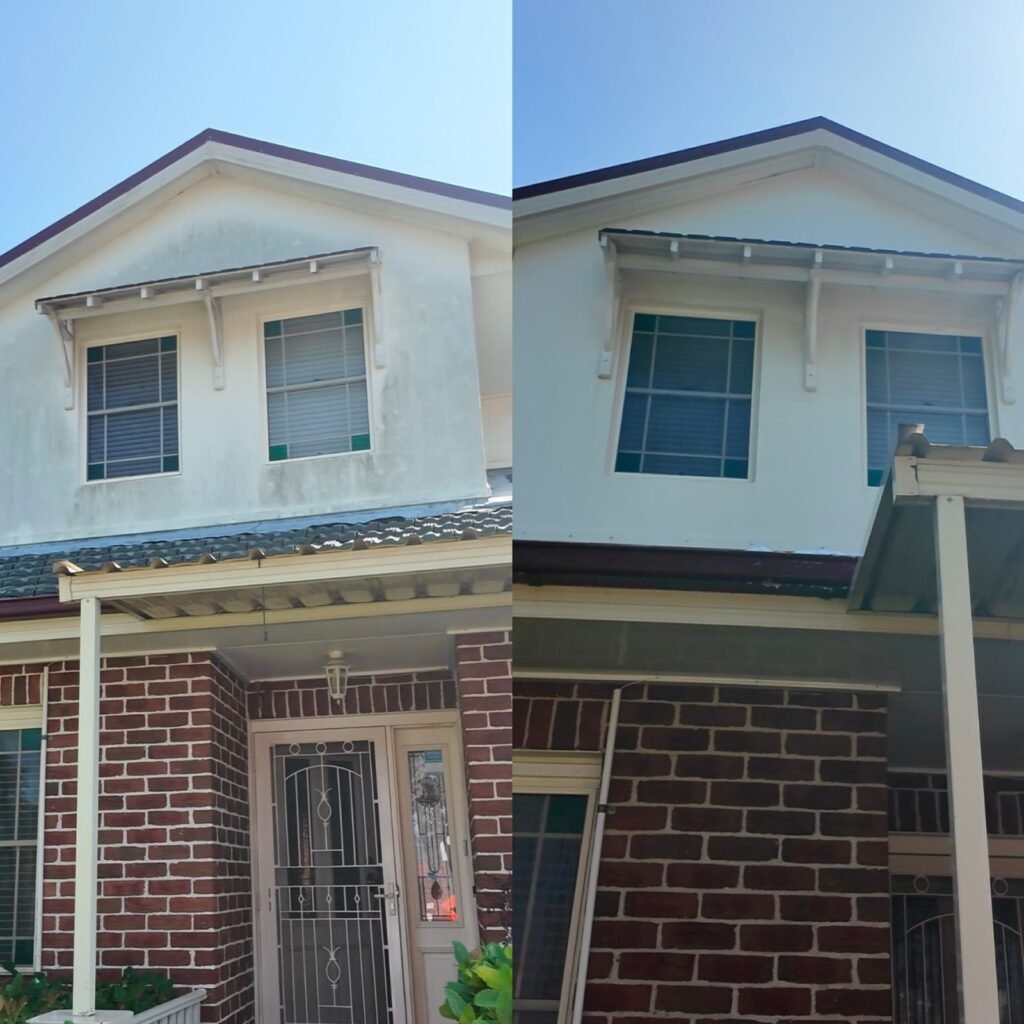
This is the same principle as the wider rule about keeping water away from electrical equipment during exterior cleaning. If you are having the house washed, the air conditioner should be identified and protected before anyone starts.
No opening the unit. The electrical compartment and anything involving the refrigerant circuit is licensed work. Handling refrigerant in Australia requires an ARC licence.
No strong chemicals. Caustic or acidic coil cleaners used wrongly corrode aluminium. Purpose-made coil cleaner, applied per instructions, or plain water.
Do not bend the fins straight with a screwdriver. A fin comb is a few dollars and does it properly.
Coastal units
If you are within a few hundred metres of surf, the single most valuable thing you can do is rinse the coil with fresh water regularly — monthly in summer.
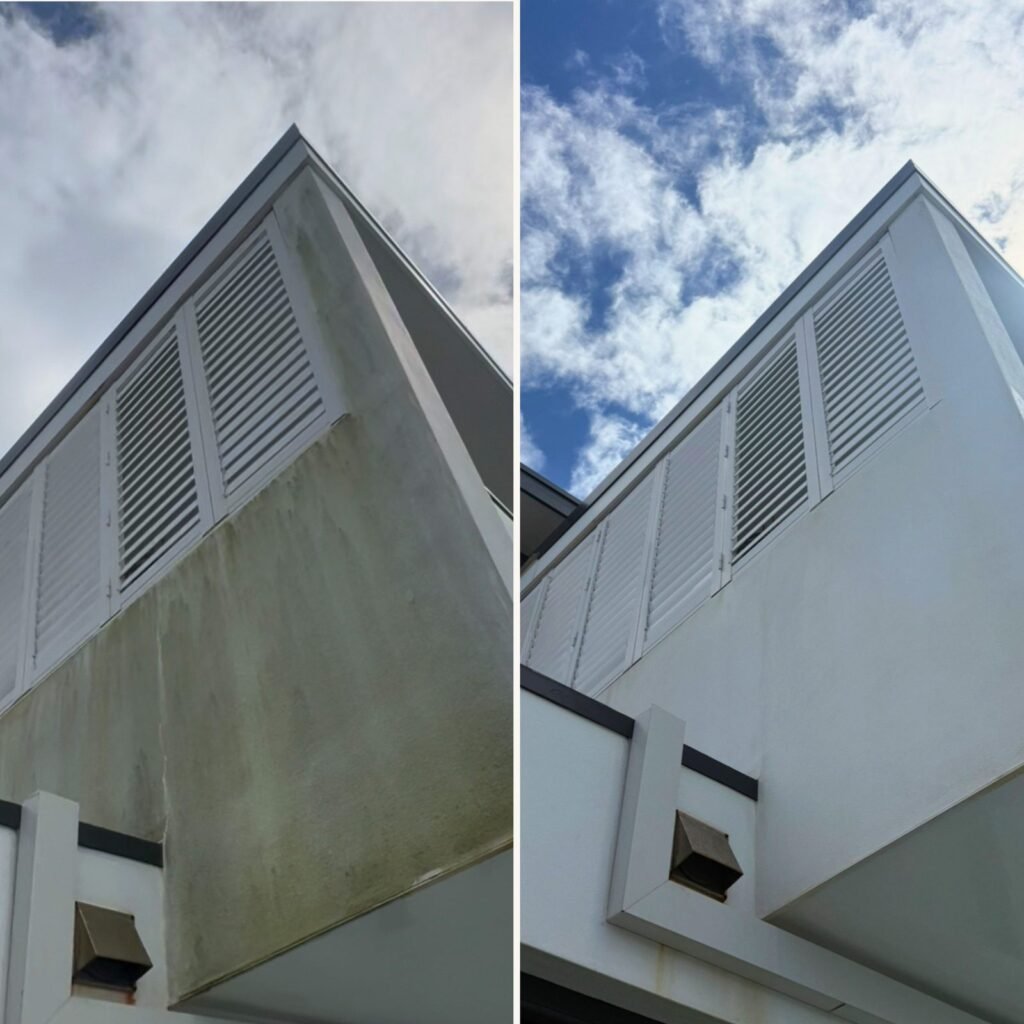
Same principle as everything else on a coastal property: remove the salt before it does the damage, and pay attention to the sheltered faces that rain does not reach. See what coastal Sydney does to a home’s exterior.
Coastal-rated units with coated coils exist and are worth specifying near the beach.
What needs a technician
- Anything inside the electrical compartment
- Deep coil cleaning with chemical cleaners
- Refrigerant pressures, leaks or top-ups
- The indoor unit’s evaporator coil and drain pan, which is where mould grows and where the smell comes from
- A unit that is icing up, tripping the breaker, or running constantly
The indoor side is worth mentioning: a mouldy evaporator or blocked condensate drain is a health issue and a common cause of a damp smell. Related, a condensate drain discharging against a wall causes localised damp and efflorescence — worth checking where yours goes.
When to do it
Spring, before the first hot spell, and again before winter if you use it for heating. Monthly rinses on the coast between times.
If we are washing the house, the unit gets isolated and covered as part of the pre-start checks — see what exterior house cleaning includes.