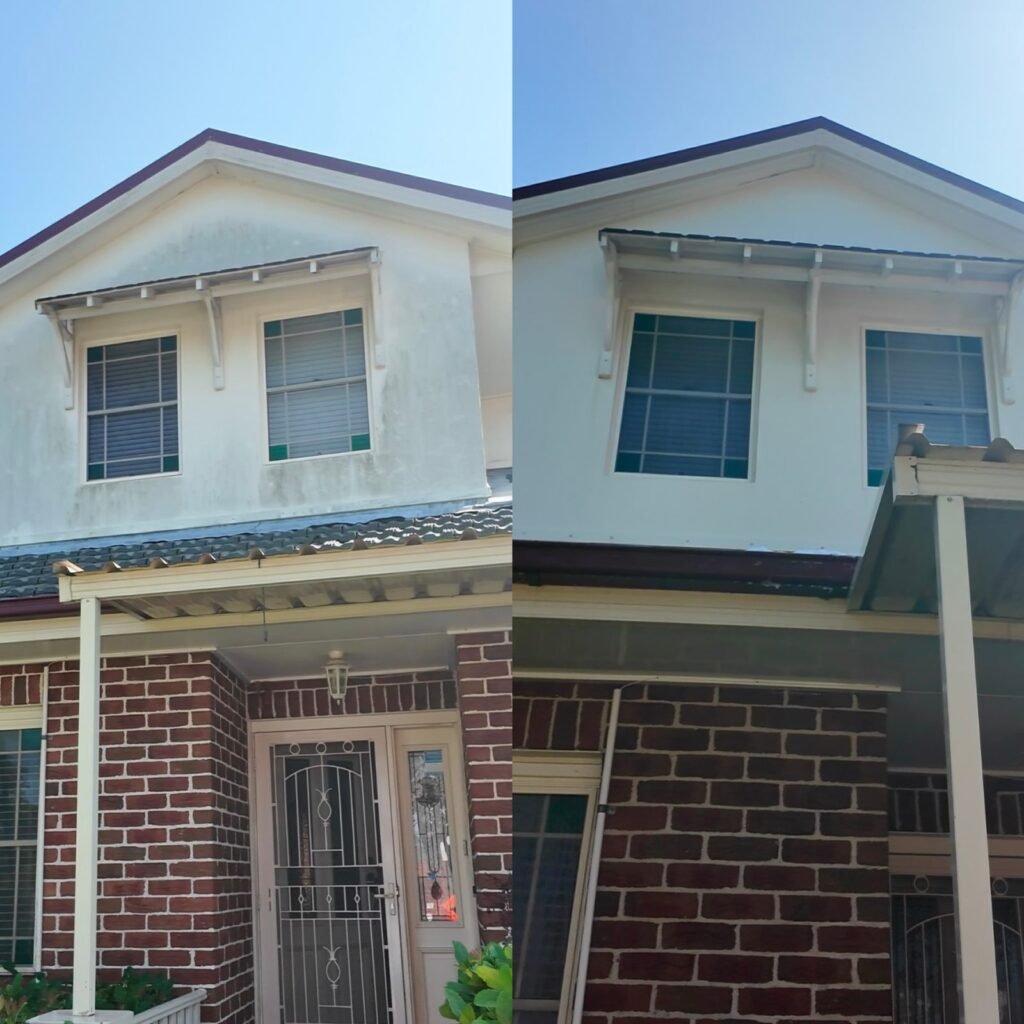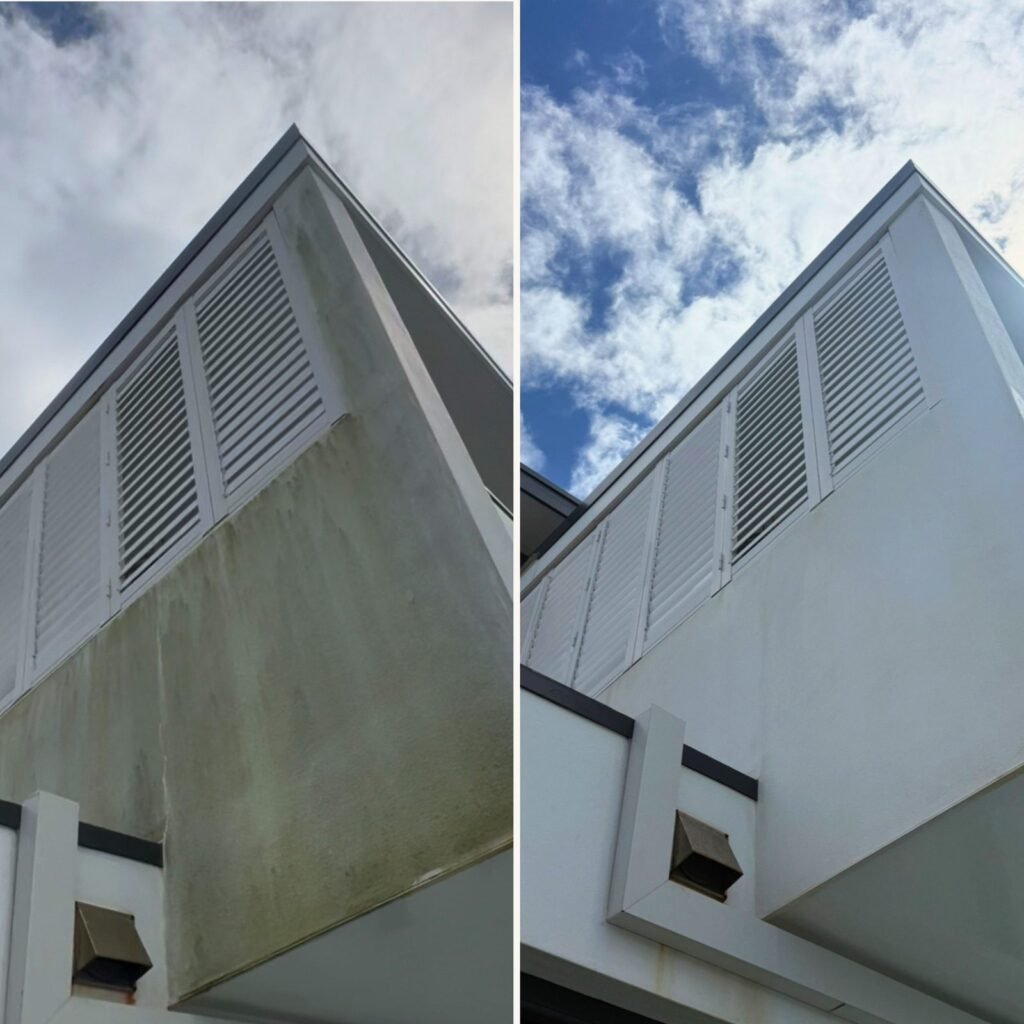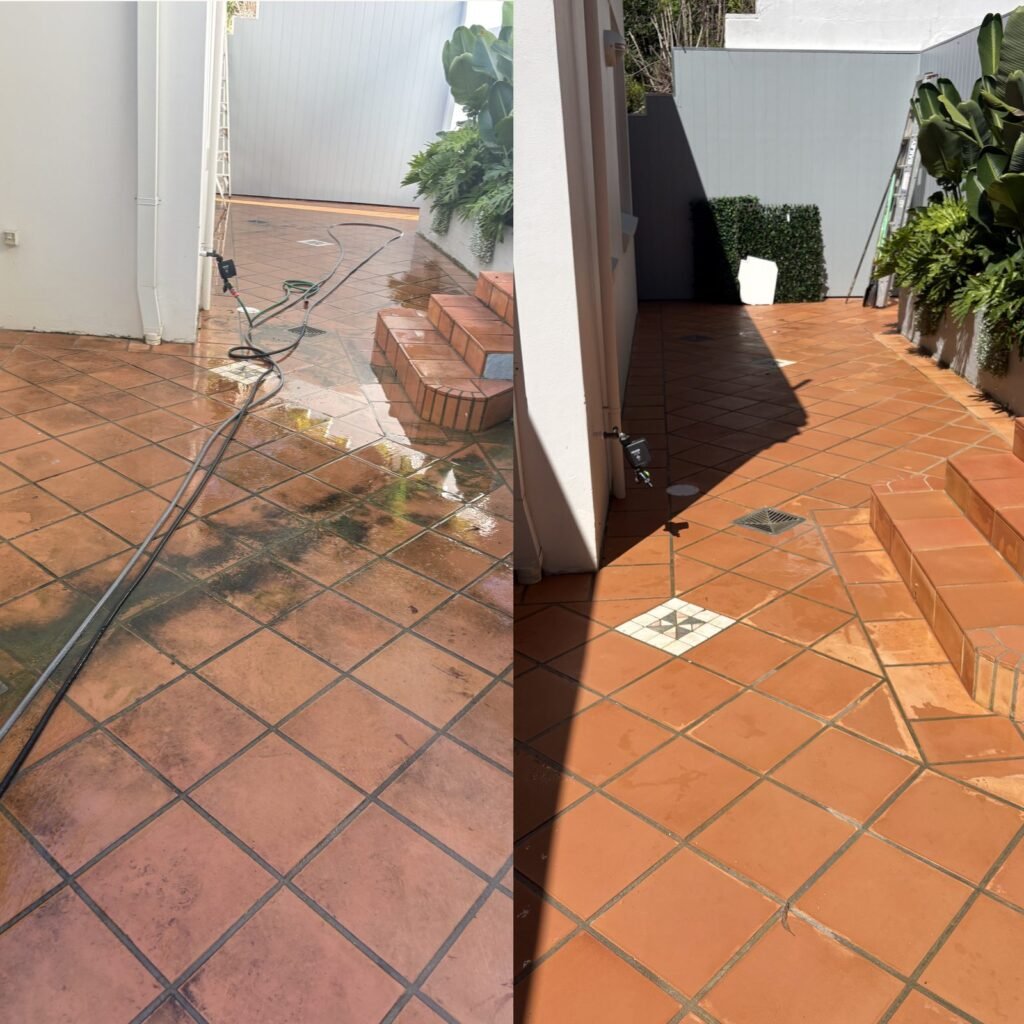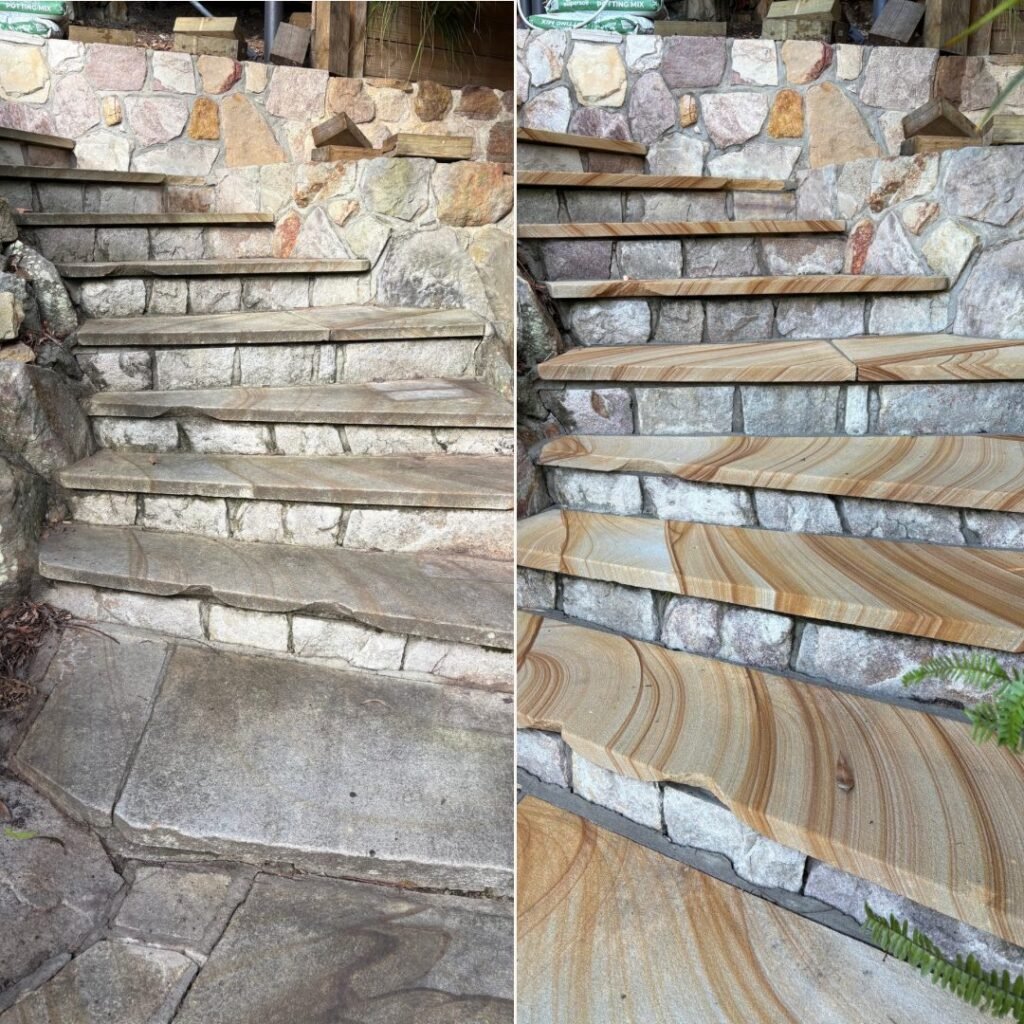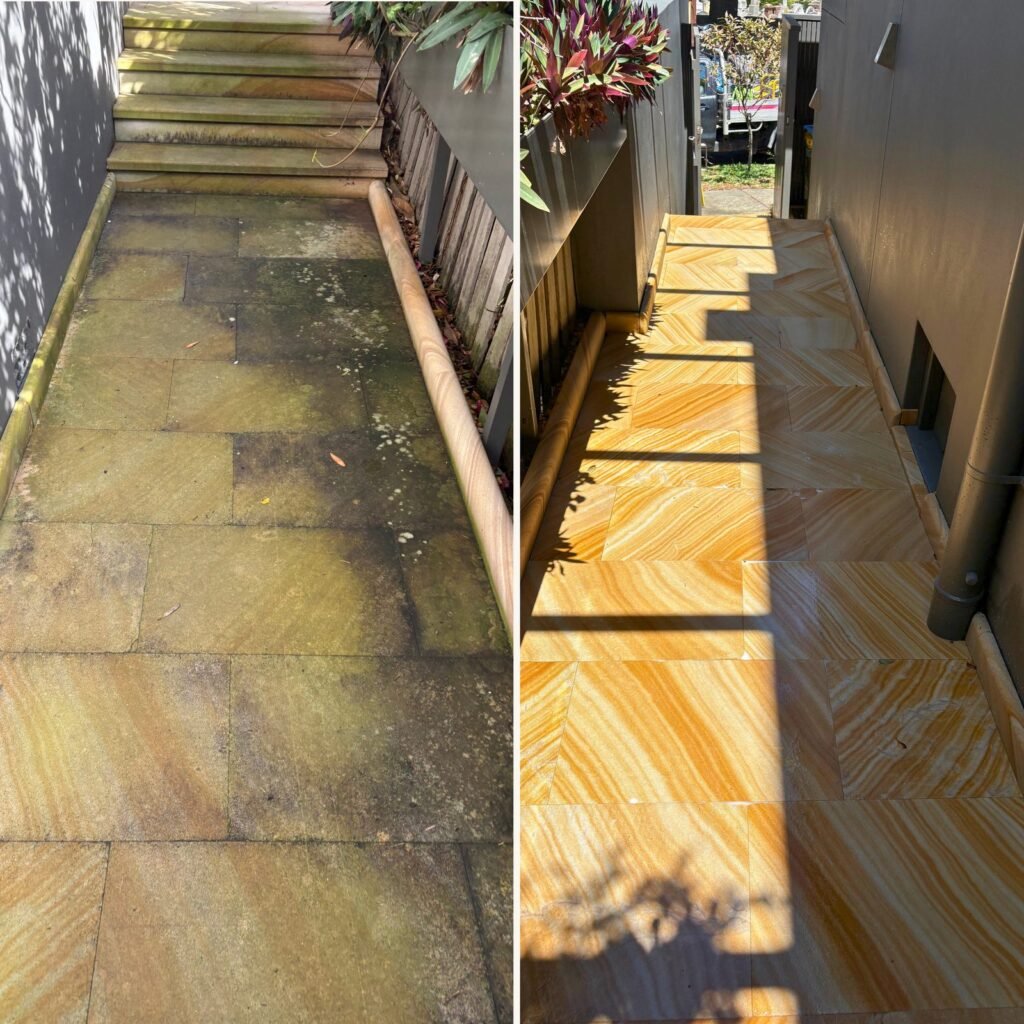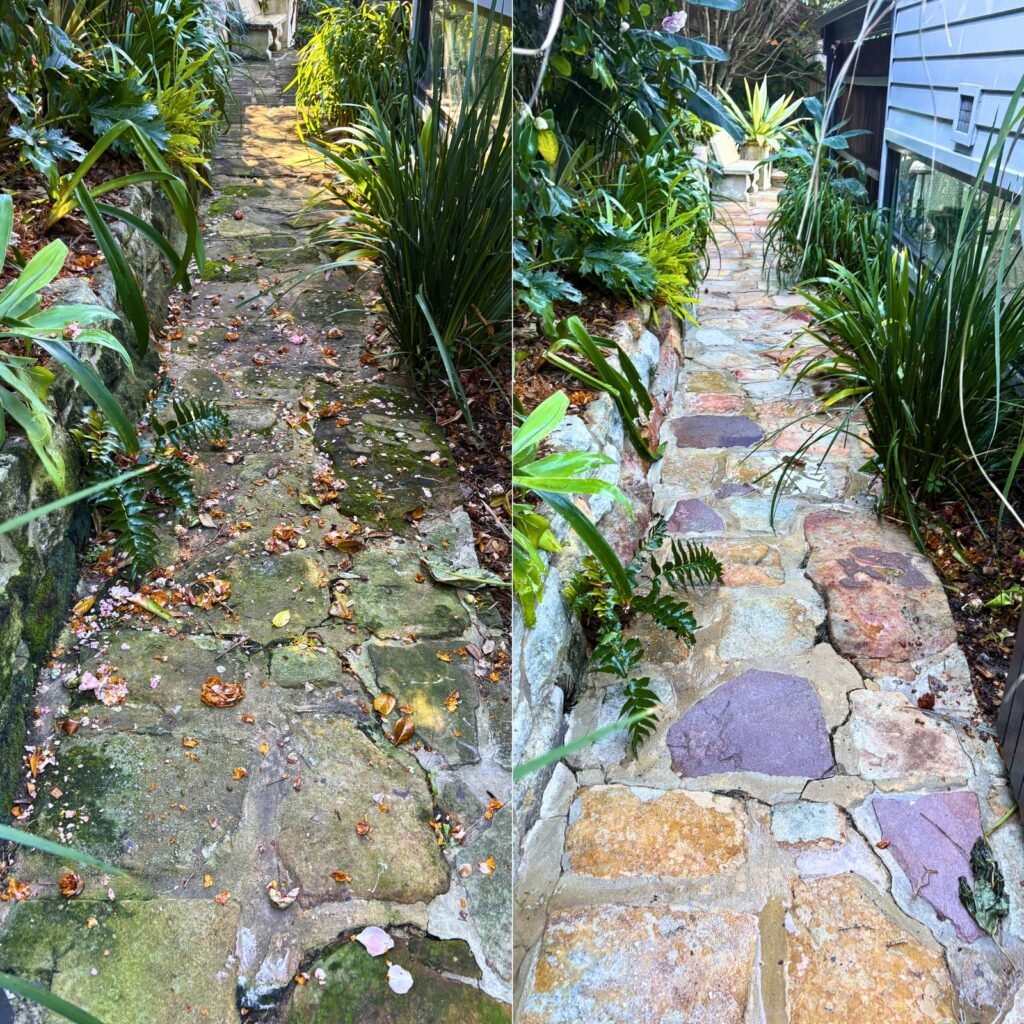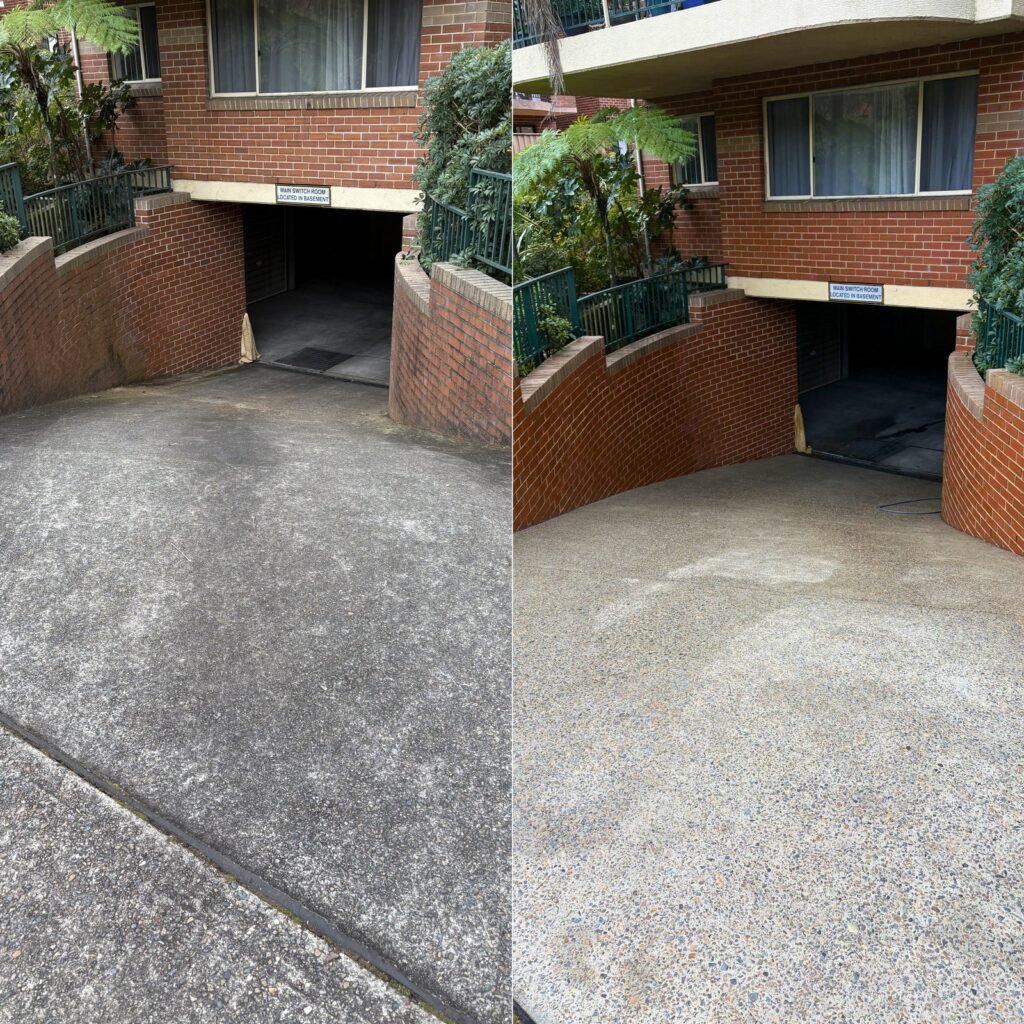
Most sandstone advice you will find is written about paving — driveways, paths, courtyards. Interior sandstone is a different problem, and in the Eastern Suburbs there is a lot of it: entry halls, hearths, stair treads, bathroom floors and the internal-to-external stone runs that were popular in Vaucluse, Bellevue Hill and Woollahra renovations through the 1990s and 2000s.
The mistakes we see indoors are consistent, and almost all of them come from treating interior stone like exterior stone.
Interior sandstone is usually sealed, and that changes everything
Exterior sandstone is often left bare. Interior sandstone is nearly always sealed, because nobody wants a porous floor absorbing red wine in a dining room.
That seal is the thing you are actually cleaning. A topical sealer sits on the surface as a sacrificial film; an impregnating sealer soaks into the stone and leaves the surface looking natural. They fail in different ways and they need different care.
A topical seal that is breaking down looks patchy or cloudy, and it will often show traffic paths where the film has worn through. An impregnating seal that has expired does not look like anything at all — until water stops beading and starts darkening the stone. The tea-towel test is crude but reliable: a few drops of water left for five minutes. If the stone darkens underneath, the seal is no longer doing its job.
Cleaning a floor with a failing seal without addressing the seal itself just moves the problem around. The stone looks better for a fortnight, then marks faster than before because the cleaning has taken the remaining film with it.
The supermarket-cleaner problem
Sandstone is a calcareous stone in the sense that matters here: acids attack it. A large proportion of general-purpose floor cleaners, bathroom sprays and “natural” cleaners are acidic, and vinegar is the worst offender because people believe it is gentle.
Acid etching on sealed sandstone shows up as dull patches that will not polish out. On unsealed stone it opens the surface, which then holds dirt more readily than it did before. Neither is reversible by cleaning — the damage is to the stone, not to something sitting on it.
Strongly alkaline products cause a different problem: they can strip sealers unevenly, leaving a floor that is half-sealed and impossible to clean to a consistent finish.
For routine maintenance, a pH-neutral stone cleaner and a well-wrung mop is genuinely all that is wanted. The temptation is always to reach for something stronger when a floor looks tired, and that is usually the moment the damage happens.
Moisture from below, not above
This is the one that catches people out, and it is more common close to the harbour and the coast.
Sandstone laid on a slab, or over a subfloor with poor ventilation, can draw moisture upward. The stone is porous by nature, so it behaves as a wick. On the surface you see white bloom, darkening at the edges of slabs, or a floor that never quite dries out in one section while the rest is fine.
That white bloom is efflorescence — mineral salts carried to the surface by evaporating moisture. It is a symptom, not the disease. You can remove it, and it will come back, because the moisture pathway is still there.
Sealing a floor in that condition makes matters worse rather than better. Trapping moisture under an impermeable film is how you get sealer blistering and, in older Eastern Suburbs houses with heritage subfloors, how you get problems that are no longer about the stone at all.
If a floor shows persistent efflorescence in the same spot, the useful next step is finding out where the water is coming from — drainage, a failed membrane, subfloor ventilation — before anyone cleans or seals anything.
Where interior stone meets the outside
Plenty of Eastern Suburbs homes run the same stone from a living area out to a terrace or pool surround, deliberately, so the transition disappears.
It looks excellent and it complicates maintenance, because the two halves live completely different lives. The exterior half takes UV, rain and — from Rose Bay through to Bondi and Coogee — salt-laden air. The interior half takes foot traffic and cleaning products. They will not weather at the same rate, and they should not be sealed with the same product.
Treating the run as one surface is how you end up with a visible line at the threshold within a couple of years.
What actually restores an interior sandstone floor
When a floor is genuinely tired rather than dirty, the sequence is usually strip, clean, neutralise, dry properly, then re-seal.
The drying step is the one most often rushed. Sandstone holds water, and sealing over residual moisture is a reliable way to produce a cloudy finish that has to be stripped and redone. In winter, in a shaded harbourside room with poor airflow, that wait can be considerably longer than anyone expects.
Honeycombing, delamination or spalling is a different conversation. That is stonemasonry, not cleaning, and pushing harder with cleaning equipment on stone that is breaking down will take material off a surface that cannot be put back.
A short checklist
- Test whether the seal is still working before deciding what the floor needs
- Keep acids away from it, vinegar included
- Use pH-neutral products for routine cleaning
- Treat recurring white bloom as a moisture problem, not a cleaning problem
- Seal interior and exterior runs of the same stone differently
- Allow properly for drying before any re-seal
If you are weighing up whether a floor needs cleaning, re-sealing or a stonemason, photographs usually tell us enough to point you in the right direction. You can see how we approach stone on our sandstone cleaning in the Eastern Suburbs page, or read about the outdoor side in cleaning sandstone pavers without ruining them and why Sydney sandstone turns black.