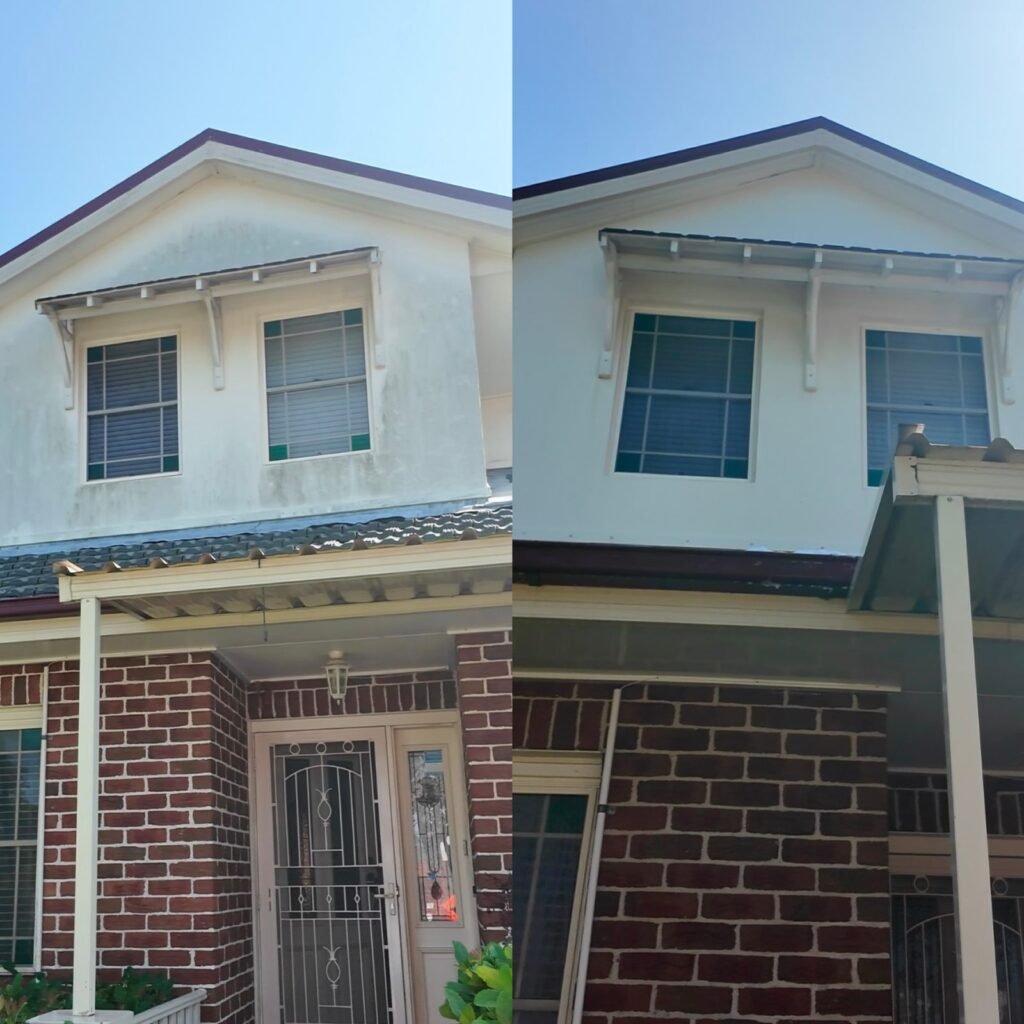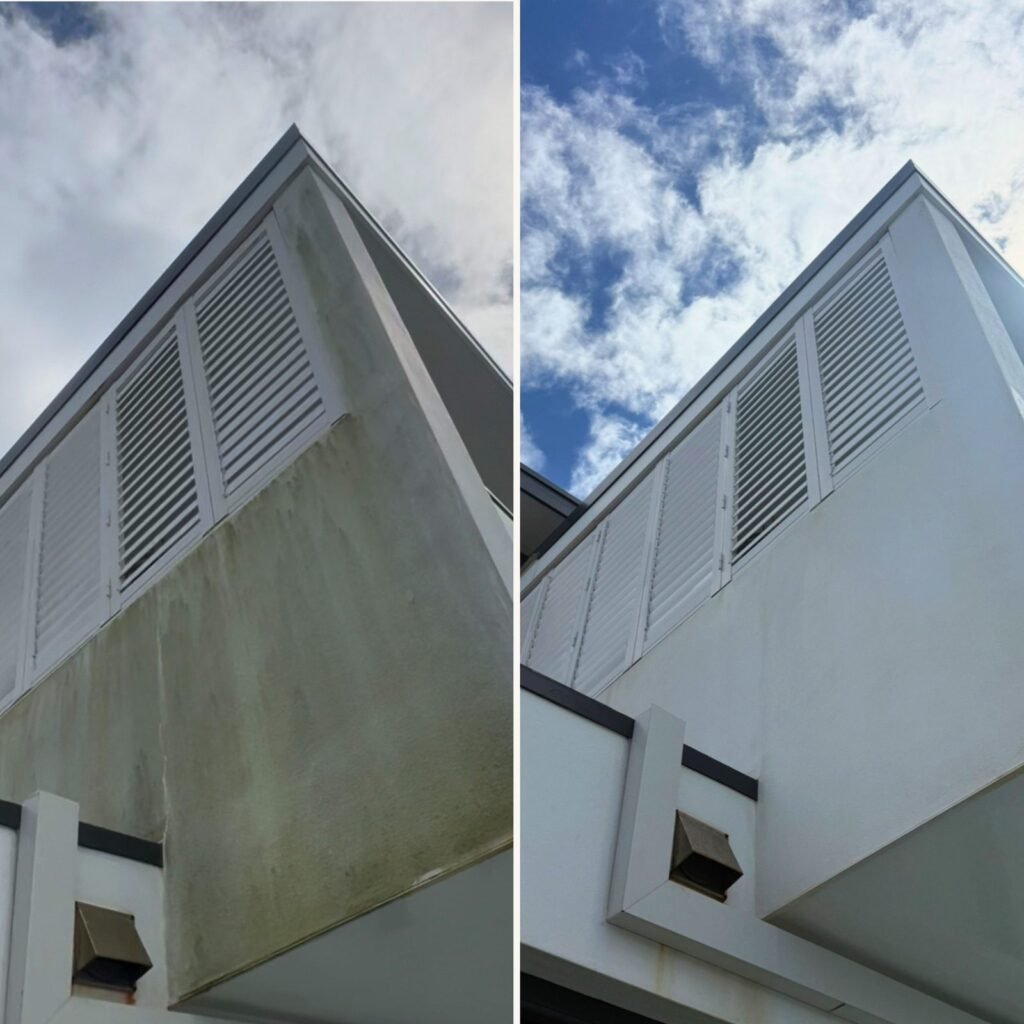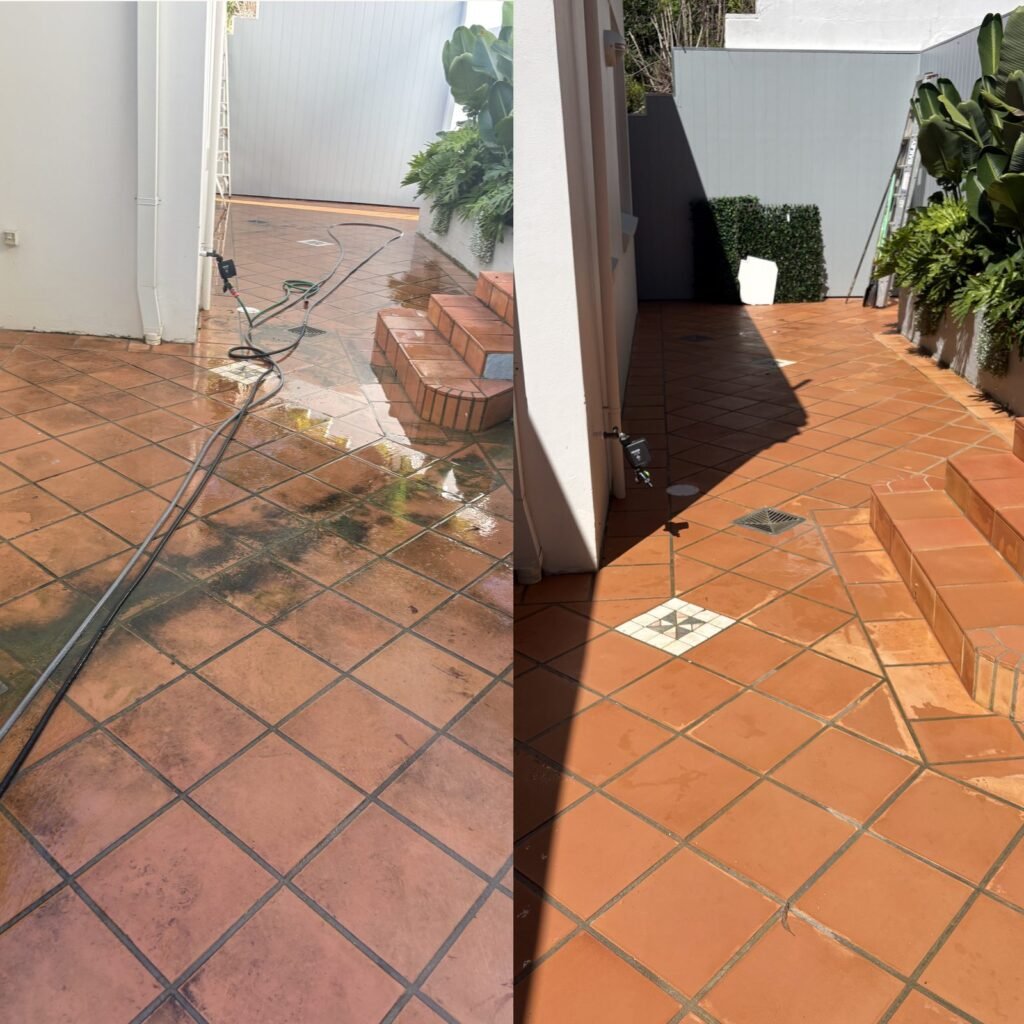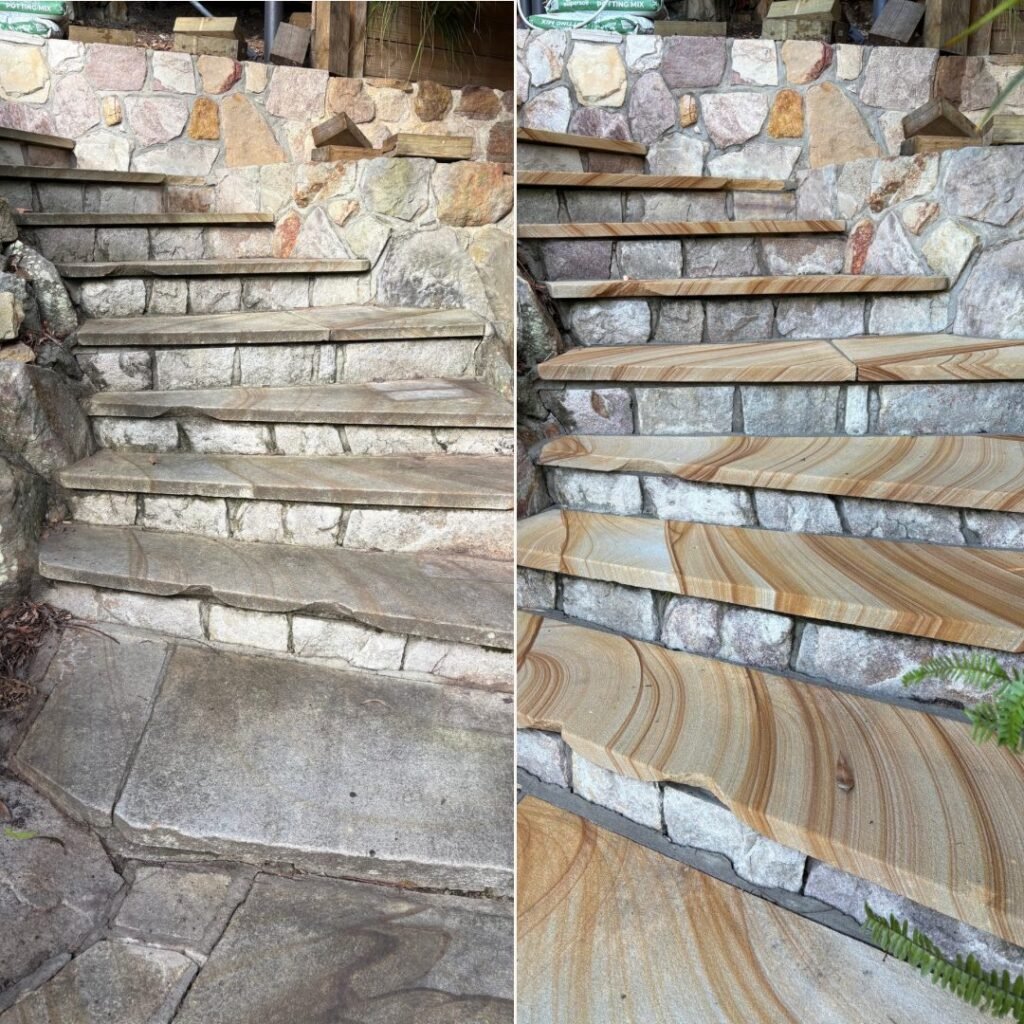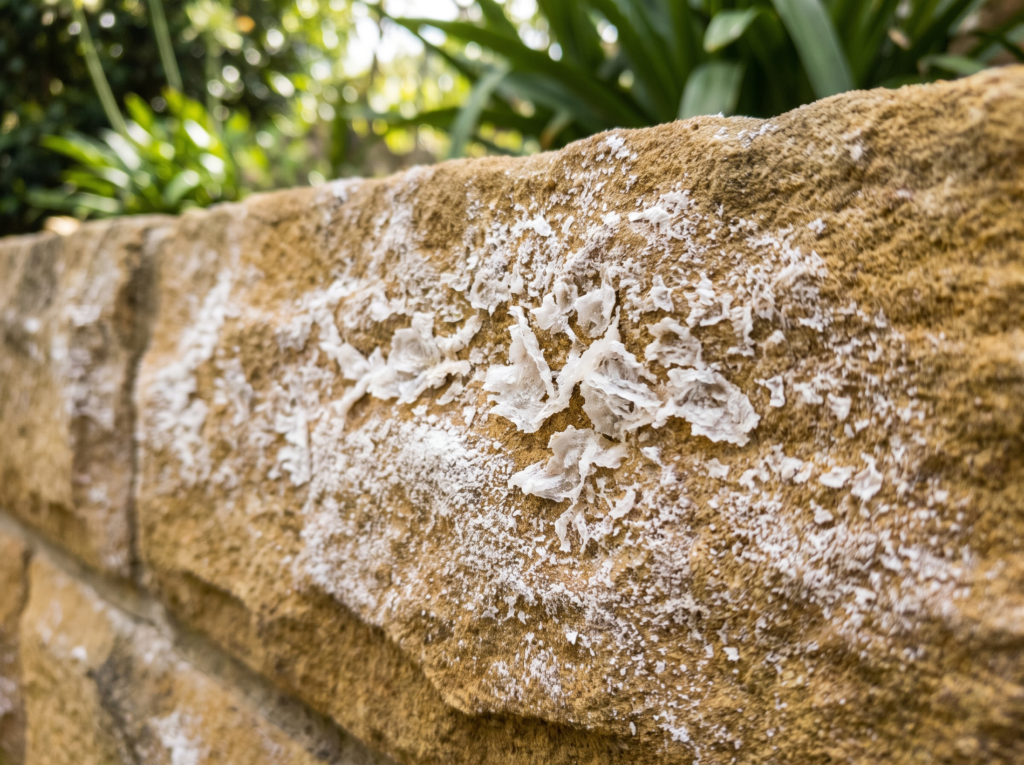
If a white, powdery or crystalline bloom has appeared on your sandstone wall, limestone paving, brickwork or concrete pavers, the first thing to know is that it isn’t dirt, mould or paint failure. It’s efflorescence — mineral salts migrating out of the material — and it’s less a stain than a message: water is moving through your masonry.
What’s actually happening
Stone, brick, mortar and concrete all contain soluble salts, and coastal Sydney adds its own supply from sea air and salt-laden ground moisture. When water gets into the material — from rain, garden irrigation, a leaking gutter, or rising damp — it dissolves those salts. As the surface dries, the water evaporates and leaves the salt behind as that white crust. Wipe it off and it returns after the next wet week, because the source hasn’t changed.
The visible bloom is the harmless version. The damaging version happens when salts crystallise below the surface (subflorescence) — the crystals grow with enough force to flake and spall the face off soft stone. That’s the mechanism behind crumbling sandstone retaining walls and pitting limestone near the coast.
How to remove it — and the acid mistake
Fresh efflorescence often brushes off with a stiff dry brush — always try dry removal first, because water just re-dissolves the salt back into the surface. Persistent deposits respond to specialist efflorescence treatments and careful low-moisture washing.
The classic DIY error is acid washing. On brick and some concrete, professionals do use carefully diluted acid — but on sandstone, limestone, travertine or marble, acid is catastrophic: it etches and dissolves the stone itself, permanently. Given how often efflorescence shows up on exactly those stones, this single mistake ruins a lot of good masonry every year.
The real fix is the moisture, not the salt
Removing the bloom without addressing the water guarantees a repeat. The usual suspects, roughly in order: garden irrigation spraying the wall, a leaking or overflowing gutter feeding a wall below, poor drainage holding water behind a retaining wall, ground moisture rising where there’s no damp course, and simple coastal exposure. Fixing the water source is what actually ends the cycle — and it’s the part worth diagnosing properly.
Sealing: the right way and the dangerous way
Once the stone is clean, the salts are drawn out and the moisture source is managed, a breathable impregnating sealer stops the stone drawing in new salt-laden water while still letting internal moisture escape. Done in that order, it’s excellent protection. Done in the wrong order — sealing over active efflorescence, or using a film-forming sealer — it traps the salt and moisture inside and accelerates the spalling dramatically. Sequence is everything.
When to get help
If efflorescence keeps returning, if the surface is starting to flake or pit, or if it’s on valuable sandstone or limestone where experimentation is expensive, it’s worth a professional eye. Our sandstone and limestone cleaning and sealing services treat efflorescence as part of full stone restoration — we identify the moisture driver, draw the salts out safely, and seal breathably so it stays fixed. Fixed quotes across the Eastern Suburbs here.