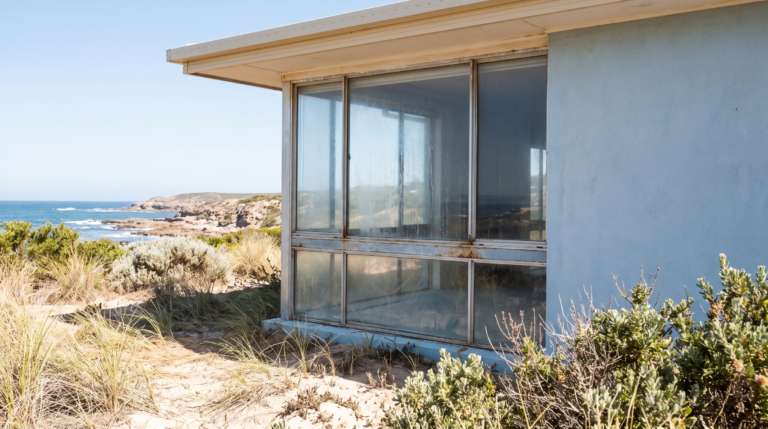
A recurring conversation on beachfront and harbourside jobs: the windows get cleaned regularly, and they still look dull. The owner assumes the cleaner is cutting corners.
Usually they are not. There are two distinct problems on coastal glass, they look similar from three metres away, and only one of them comes off with a squeegee and detergent.
Salt film
Salt film is airborne deposit. Onshore wind carries salt aerosol inland and it settles on any exposed surface — glass, aluminium frames, stainless balustrade fittings.
It sits on the glass rather than bonding into it, so it lifts with the right solution. The catch is the rate of accumulation. Anything within sight of the water rebuilds a visible film within weeks, which is why one-off cleans on a beachfront property feel like they never last. They are working; the exposure is simply constant.
Salt is also doing quiet damage elsewhere while it sits there. It pits aluminium window frames and corrodes fittings, and once aluminium is pitted no cleaning restores the finish.
Hard water staining
This one is different in kind, not degree. Hard water spotting is mineral — calcium and magnesium — left behind when water evaporates off the glass. The usual sources are irrigation and sprinklers hitting the same pane day after day, and runoff from concrete or render above a window.
The mineral bonds to the silica in the glass. Early on it can be removed with the correct restoration treatment. Left long enough, it etches: the mineral effectively becomes part of the glass surface, creating microscopic pitting that scatters light.
Once glass is etched, no clean will bring it back. The remaining options are mechanical polishing, which is expensive and not always successful, or replacement.
How to tell which one you have
A rough field test: salt film is fairly even across the whole pane and worst on the elevation facing the water. Hard water staining is patchy and localised, often in an arc or a band, and appears on panes near a sprinkler line, a downpipe or a wall that sheds runoff.
If the marks stay in exactly the same pattern after a normal clean, that is mineral rather than film.
Why this matters before you get a quote
It matters because of what is being promised. A standard clean will handle salt film. It will not remove bonded mineral staining, and no amount of repeat cleaning will.
Anyone quoting to make heavily etched glass look new is quoting a result they cannot deliver. The honest version is an assessment first: what will come back, what is permanent, and what it costs to attempt the middle ground. Our approach to this is on the window cleaning page.
Balustrades collect more than windows
Pool fence and balcony glass usually looks worse than the windows on the same property. It takes direct spray, it rarely gets included in a standard window clean, and it is often the first glass a visitor sees up close. Worth naming specifically when you ask for a quote.
Prevention is mostly scheduling
For coastal properties, a scheduled cycle beats reactive one-offs. The point is not cosmetic — it is getting salt off before it pits the frames, and mineral off before it etches. Both of those failure modes are permanent, and both are cheap to avoid and impossible to reverse.
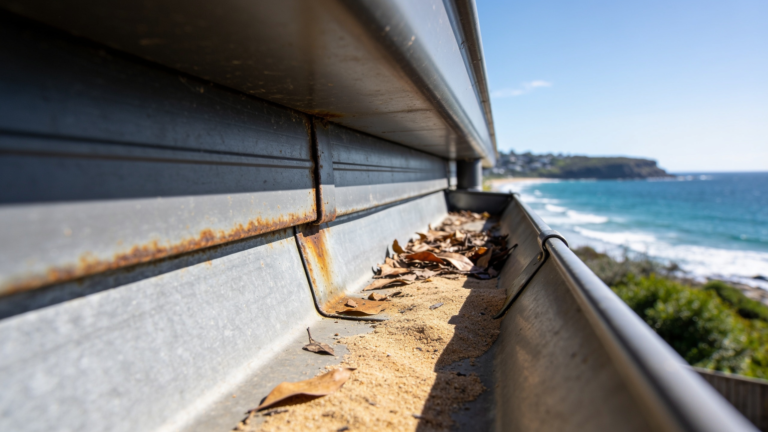
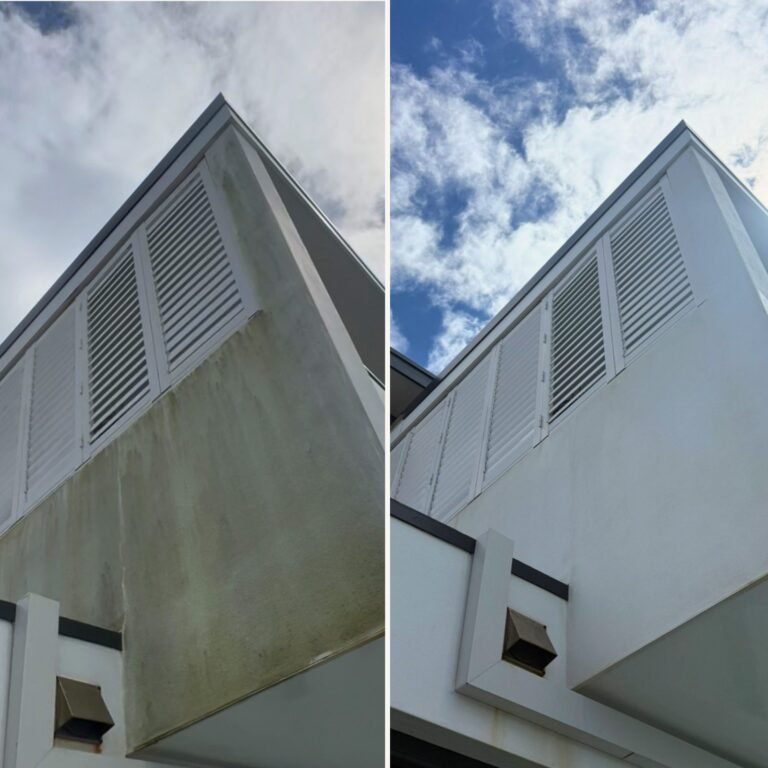
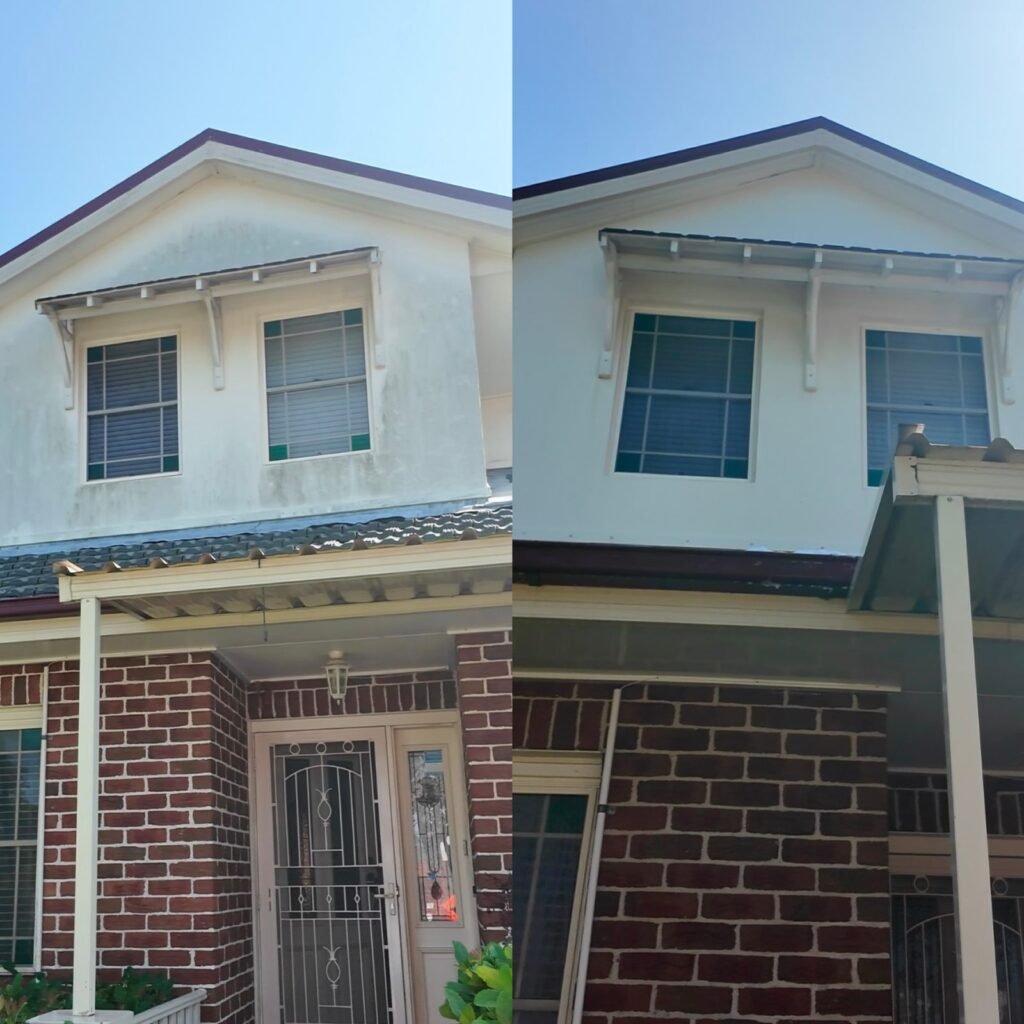
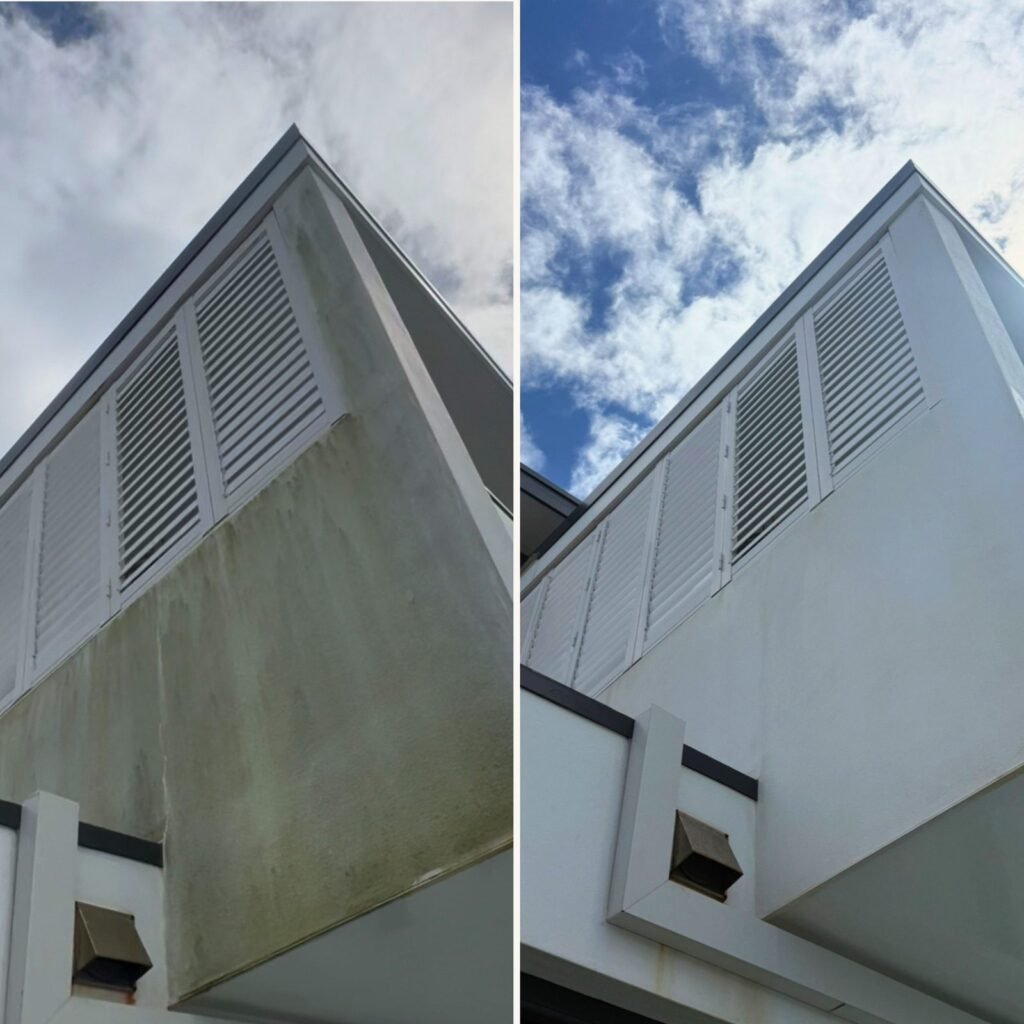
The same salt attacking your glass is working on render and paintwork at the same time, which is what house washing addresses, and it collects on gutters and roof surfaces too. Regional detail for the coast is on our Northern Beaches page.
Written by the team at The Prestige Standard, exterior cleaning contractors working across Sydney’s coastal and harbourside suburbs. Fixed written quotes with every surface itemised, $20 million public liability for strata and commercial sites. See our service areas or call 0494 810 609.
Photo by Polina Kuzovkova on Unsplash.