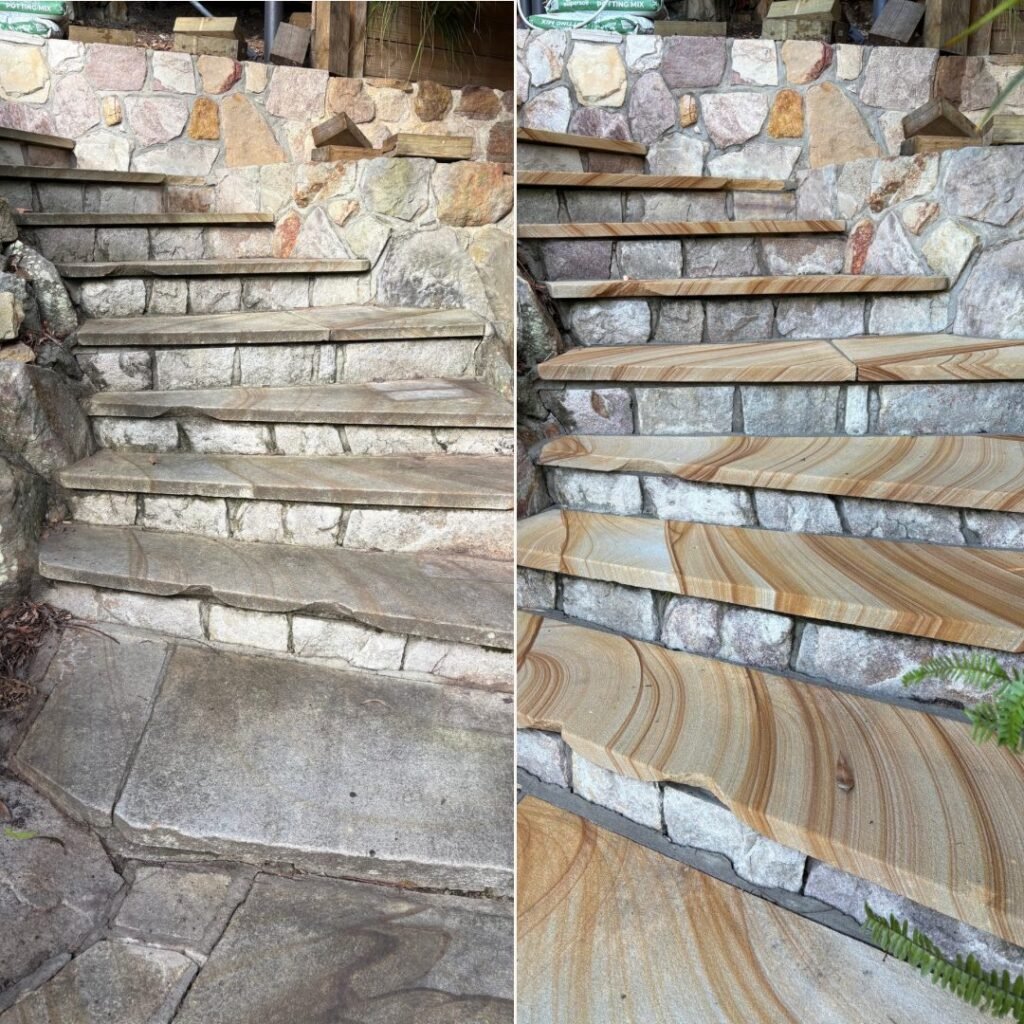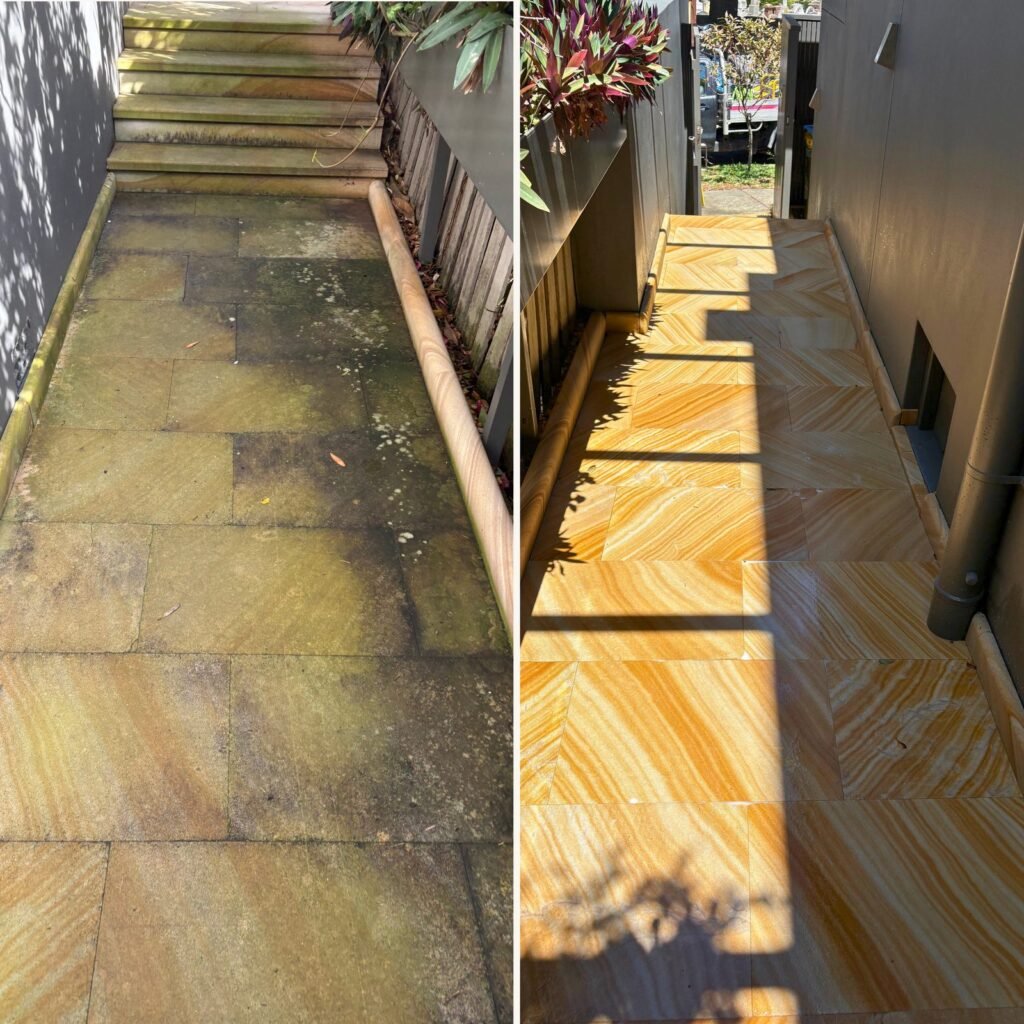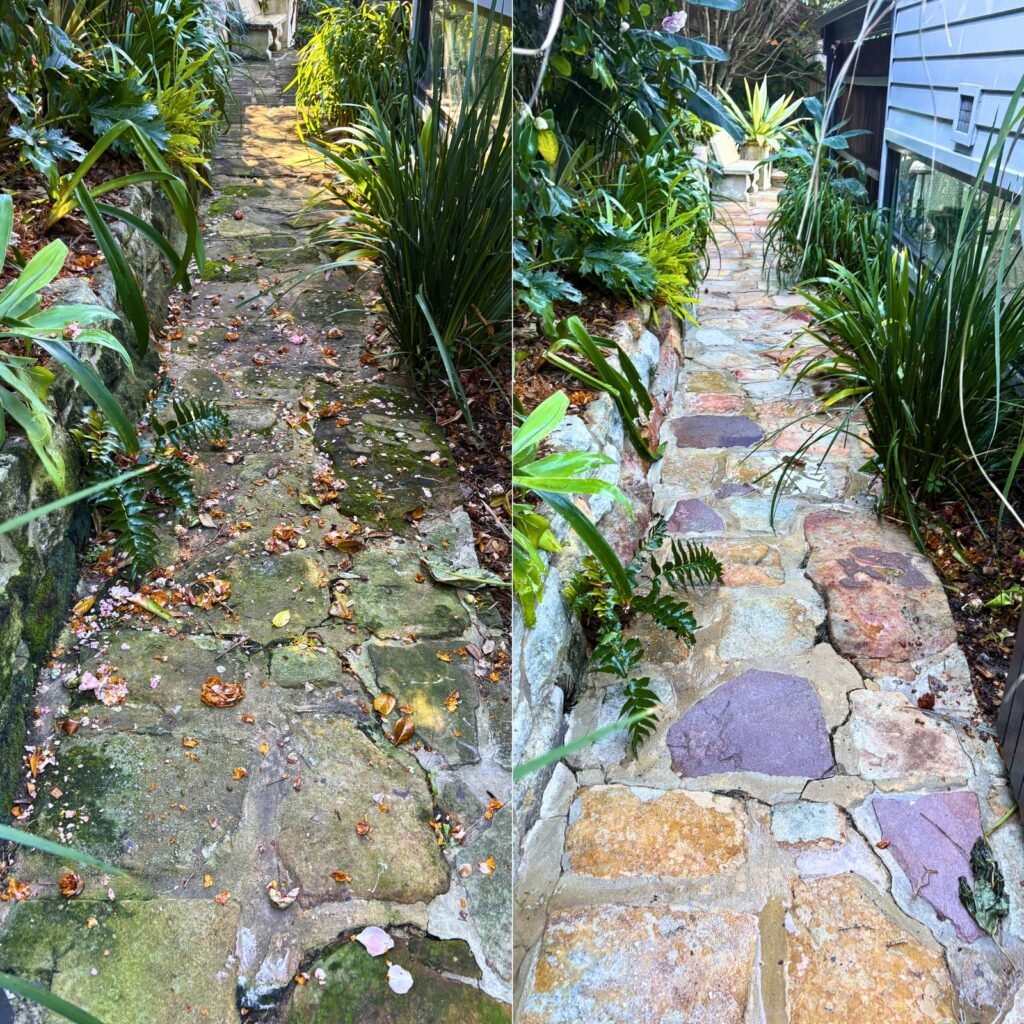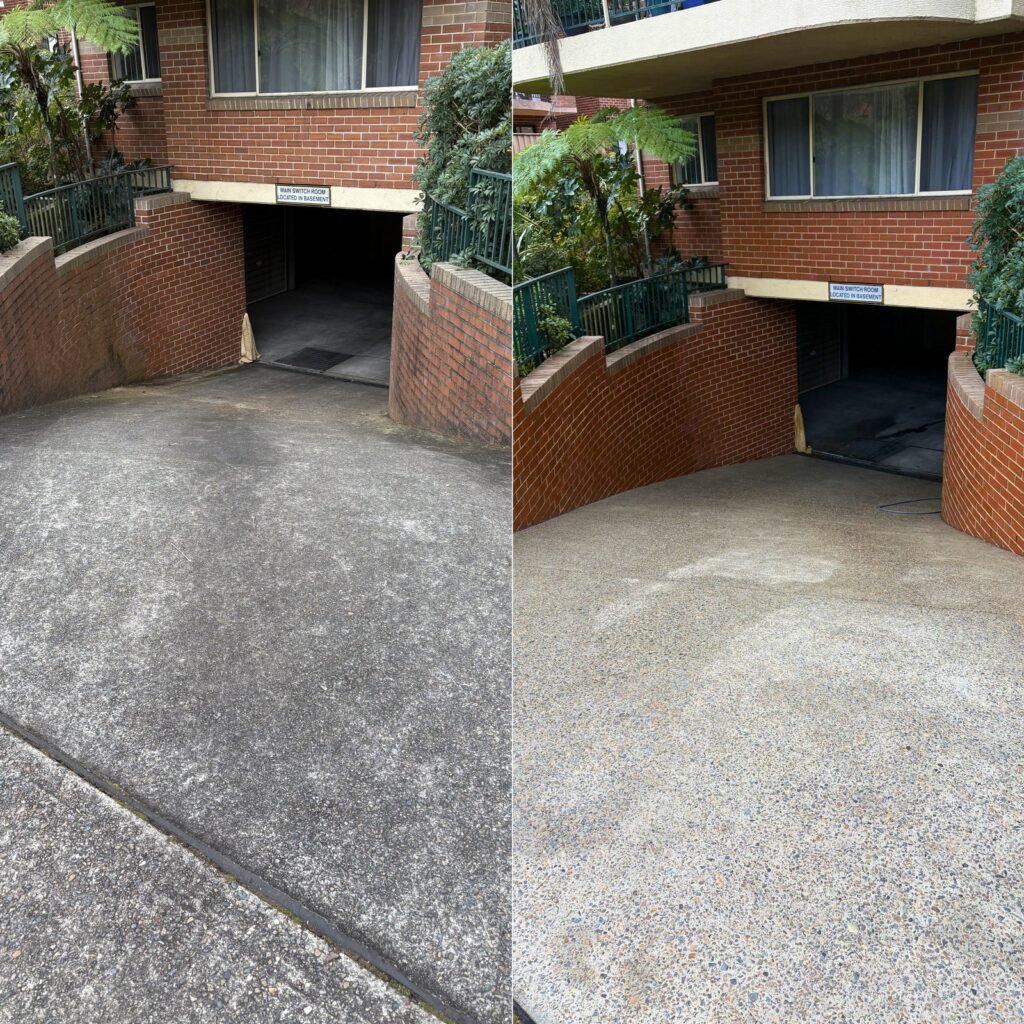
Yes — cleaning is what restores sandstone, but sealing is what protects the investment. If you’re going to pay for a proper clean, sealing afterwards is almost always worth it, and in coastal Sydney it’s close to essential.
What sealing actually does
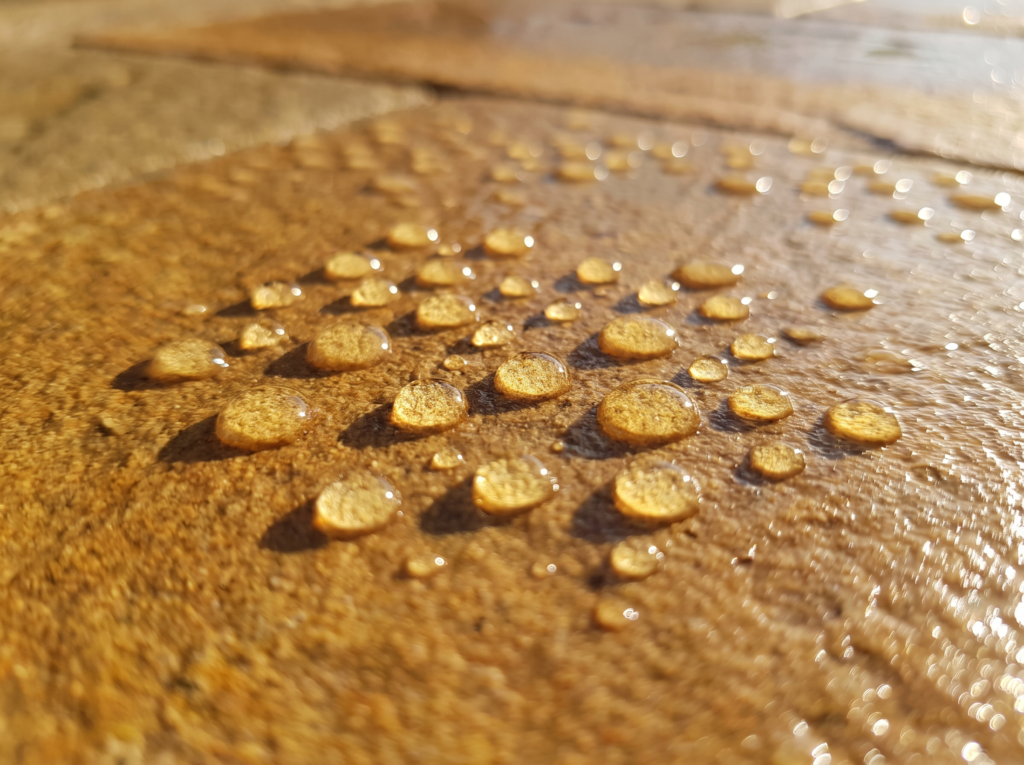
Sandstone is porous. Every pore is a channel for water, salt, oil and biological spores to enter the stone. An impregnating sealer penetrates those pores and lines them, so the stone sheds water and contaminants instead of drinking them.
The practical effects:
- Biological growth returns far slower, because the surface no longer holds the moisture it feeds on
- Salt stays out of the stone, which matters enormously near the coast — salt crystallising inside the pores is what makes sandstone flake and spall
- Stains don’t take. Oil, rust, leaf tannin and wine sit on the surface long enough to wipe off rather than soaking in
- The next clean is easier and gentler, extending the stone’s life
Breathable or nothing
The critical distinction is between impregnating (penetrating) sealers and film-forming coatings. On sandstone, only breathable impregnating sealers should be used.
A film-forming coating traps moisture inside the stone. In a coastal environment, salt-laden moisture trapped behind a surface film crystallises within the stone and pushes the face off from the inside — the flaking, blistering sandstone you see where someone has applied the wrong product. It’s worse than no sealer at all, and stripping a failed coating off soft stone is miserable, expensive work.
A quality impregnating sealer is invisible: no gloss, no colour change unless you choose an enhancing formula, and the stone still breathes.
When to seal
Only after a proper clean, on dry stone, with any efflorescence treated first — sealing over salt locks the problem in. Timing around weather matters, since the sealer needs dry curing time.
How long it lasts
Quality impregnating sealers on sandstone typically protect for several years, longer in sheltered positions, shorter on pool copings and splash zones with constant chemical exposure. The stone tells you when it’s due: water stops beading and starts soaking in.