Slips and falls on wet outdoor surfaces are among the most common personal injury claims in Australia, and pool surrounds, entries, ramps and courtyards are where they happen.
What is not widely understood is that cleaning changes slip resistance — sometimes for the better, sometimes considerably for the worse.
What actually makes a surface slippery
Three separate things, and they need different responses.
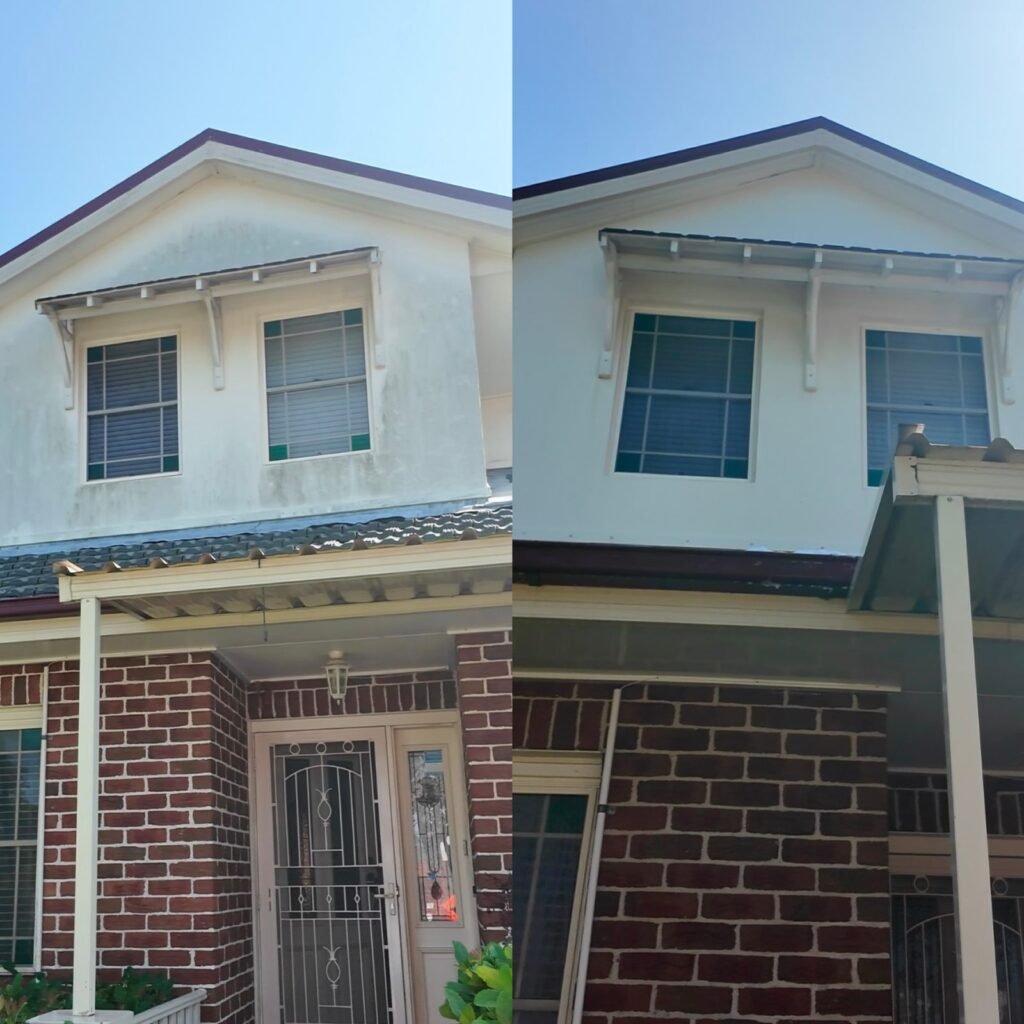
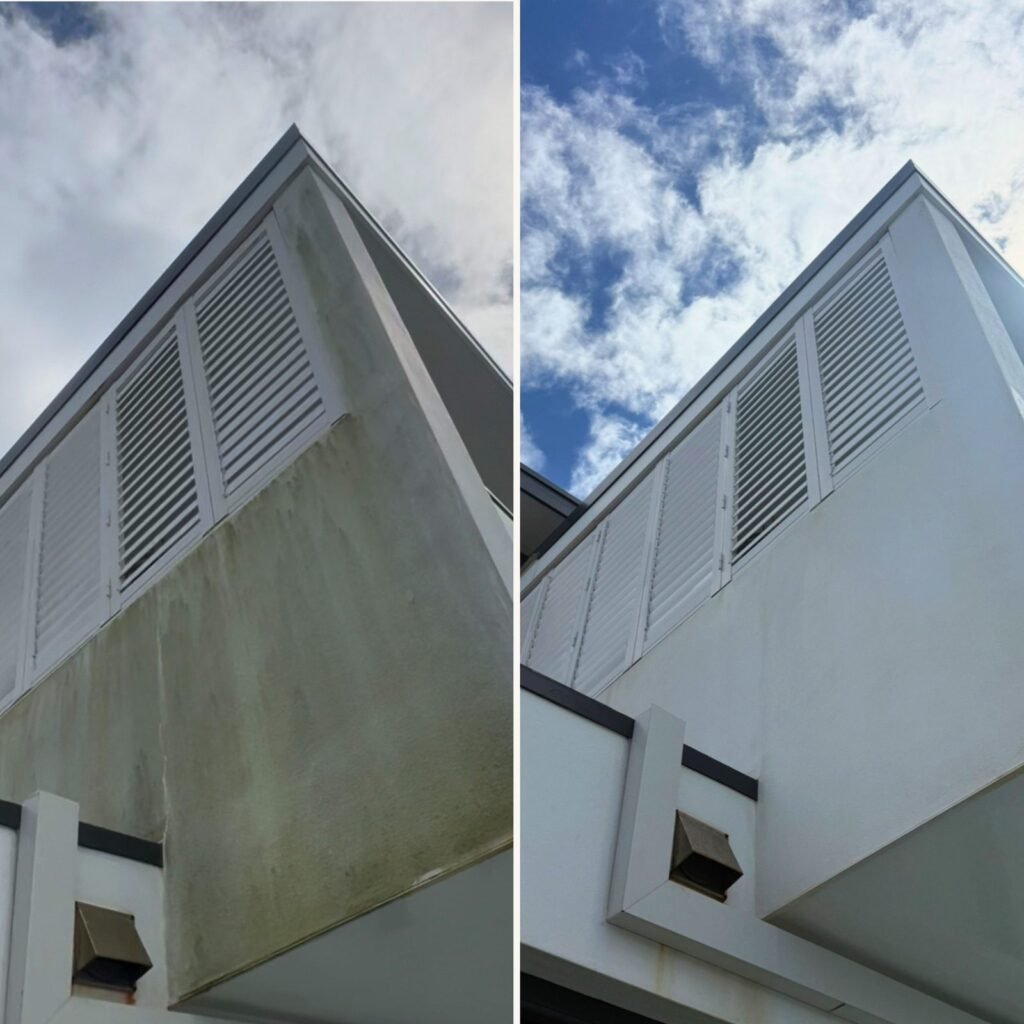
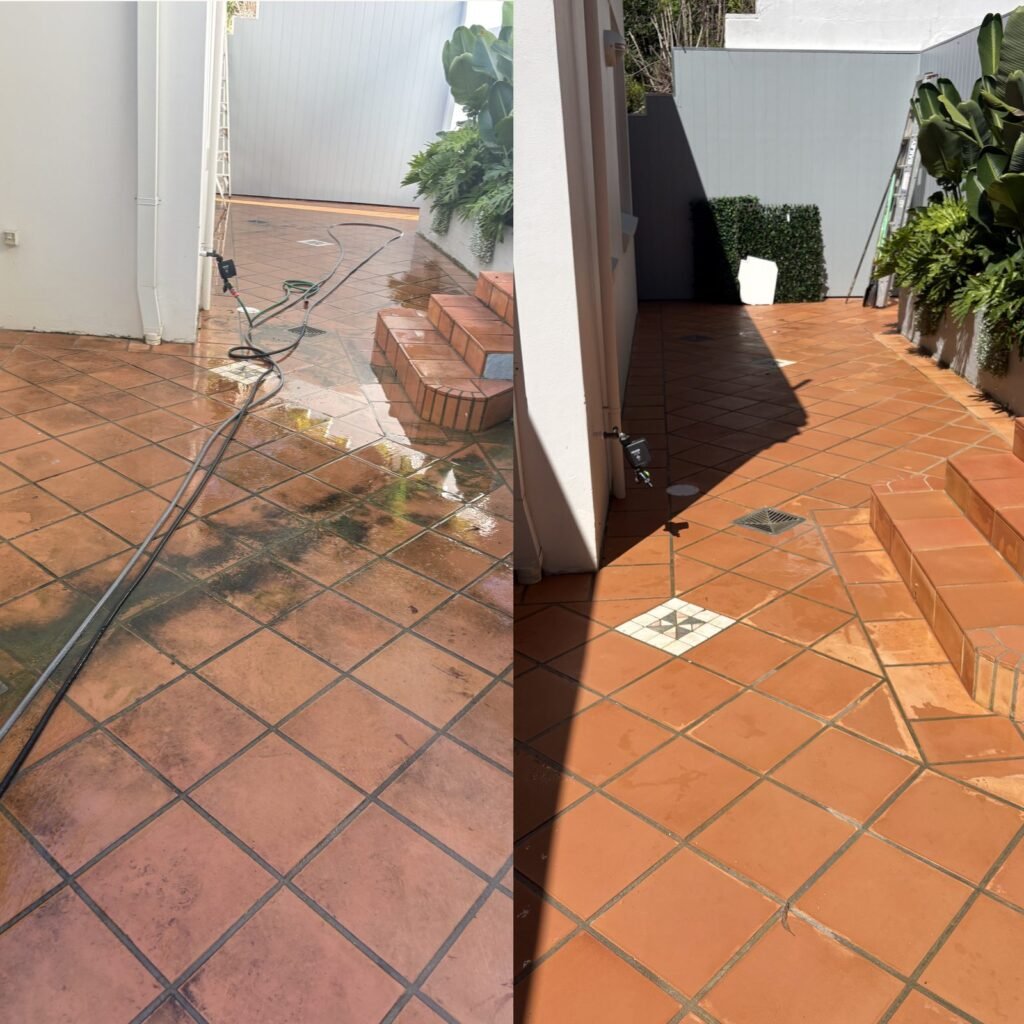
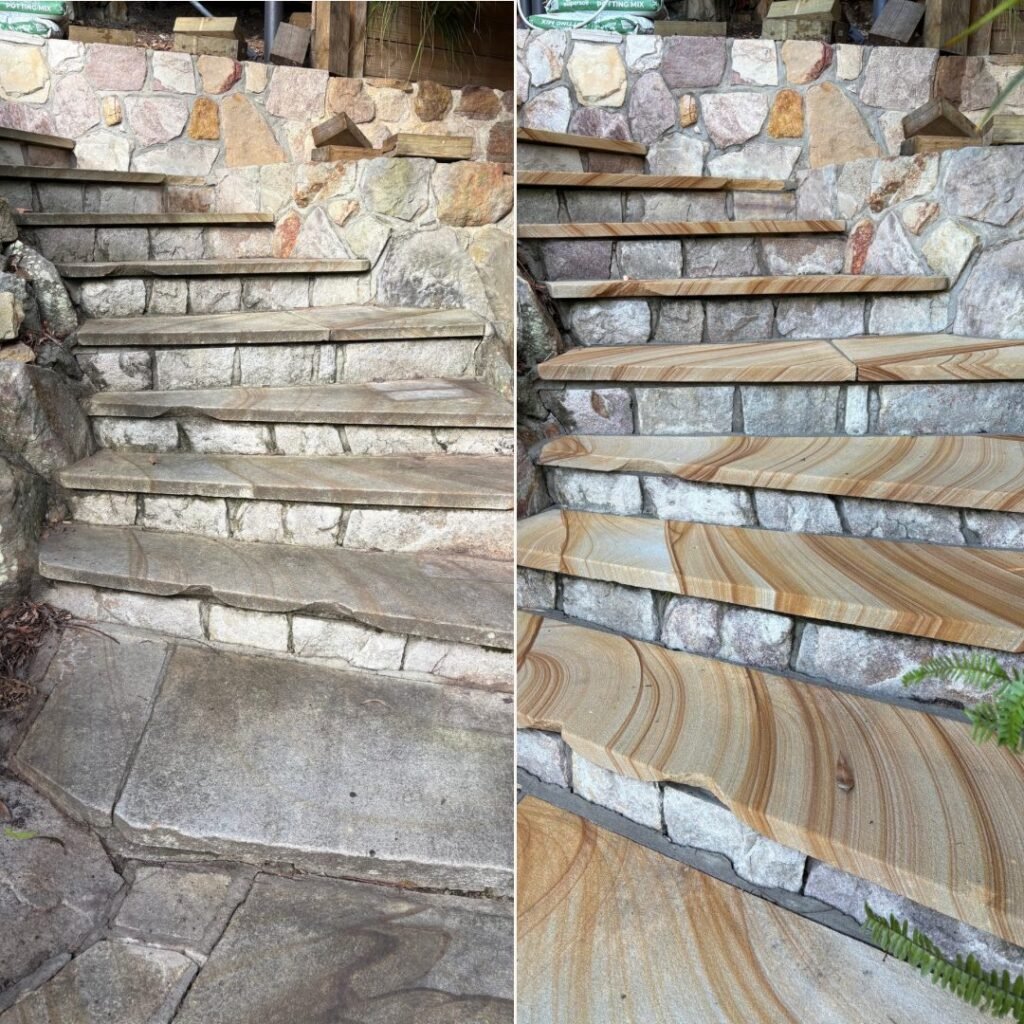
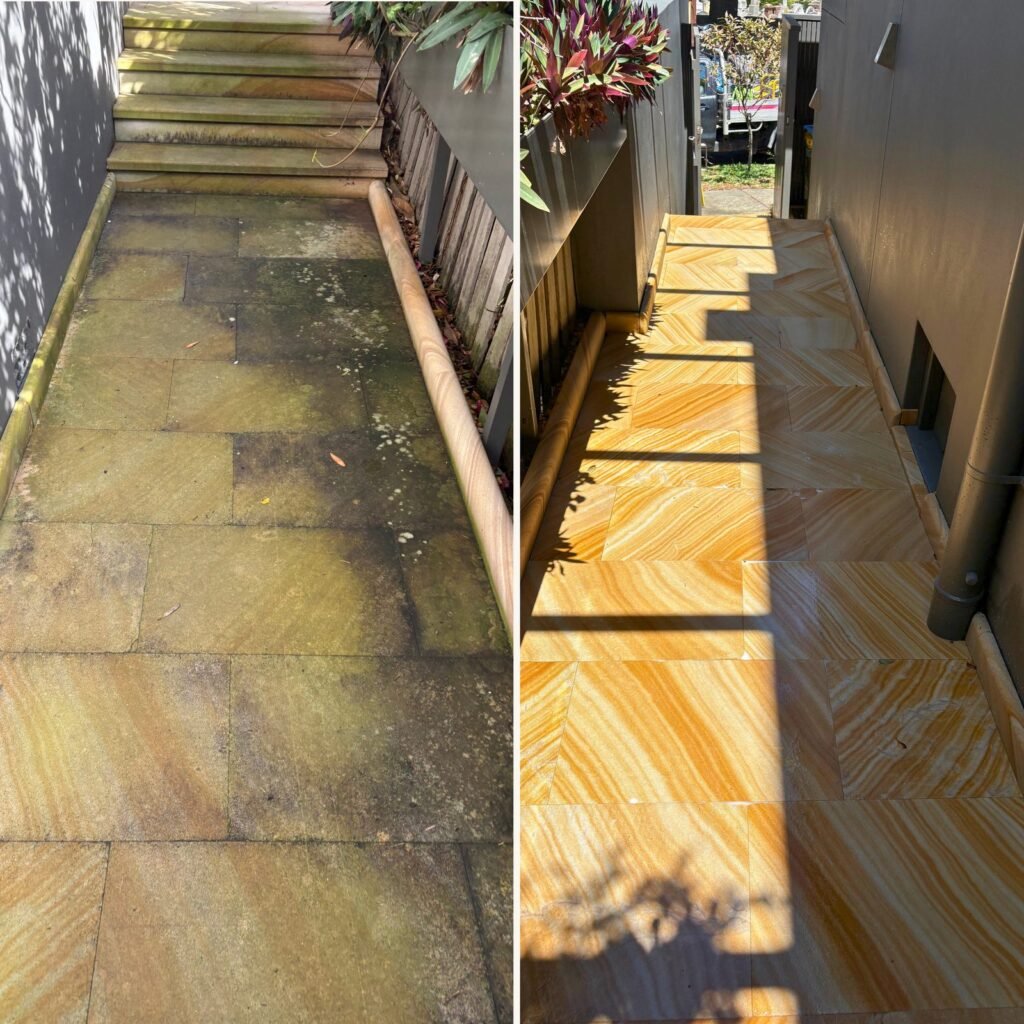
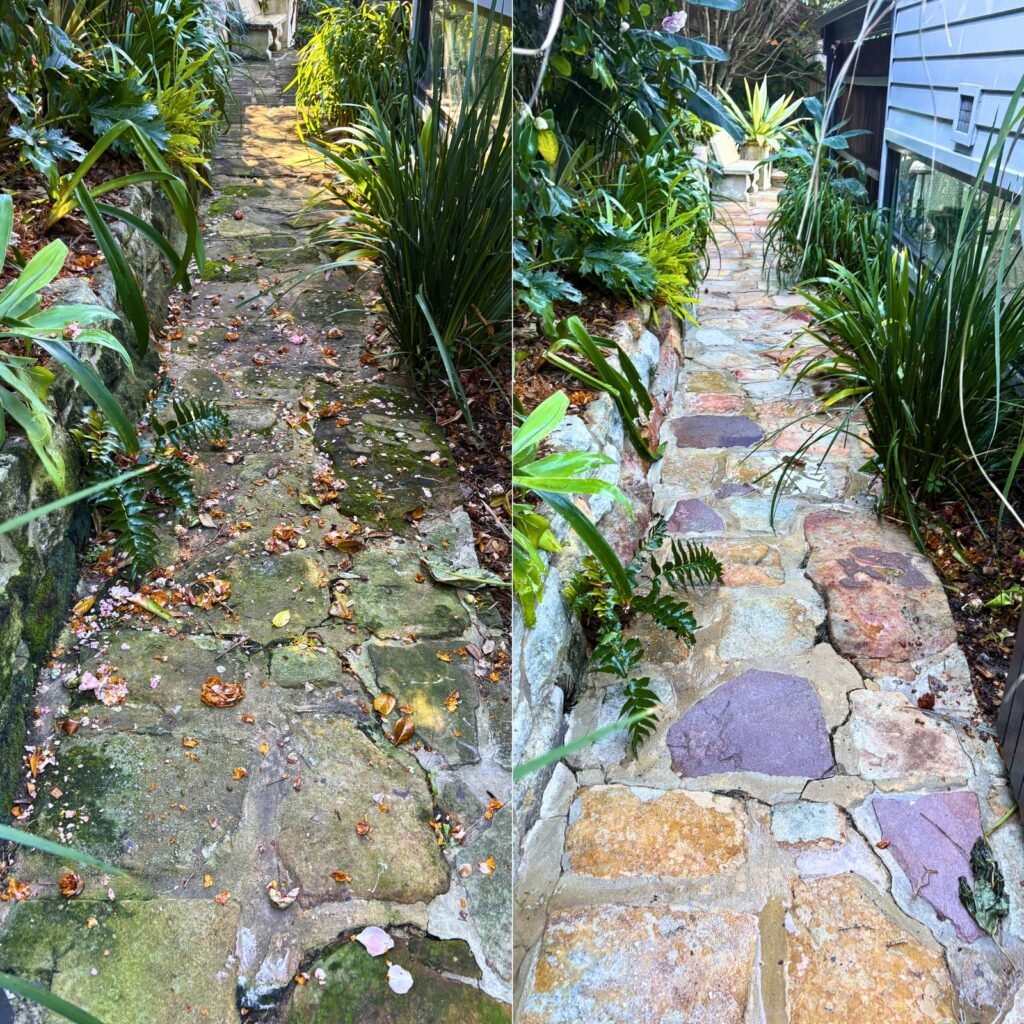
Organic growth. Algae, mould and lichen form a biofilm that becomes extremely slippery when wet. This is the most common cause on shaded Sydney paths and pool surrounds, and it is the one cleaning genuinely fixes.
Contamination. Oils, sunscreen residue, leaf tannin films. Also cleanable.
The surface itself. Polished, honed or worn stone and tile may simply have low slip resistance by design. No amount of cleaning changes that, and this is where people get into trouble.
How cleaning makes things worse
Two mechanisms, both common.
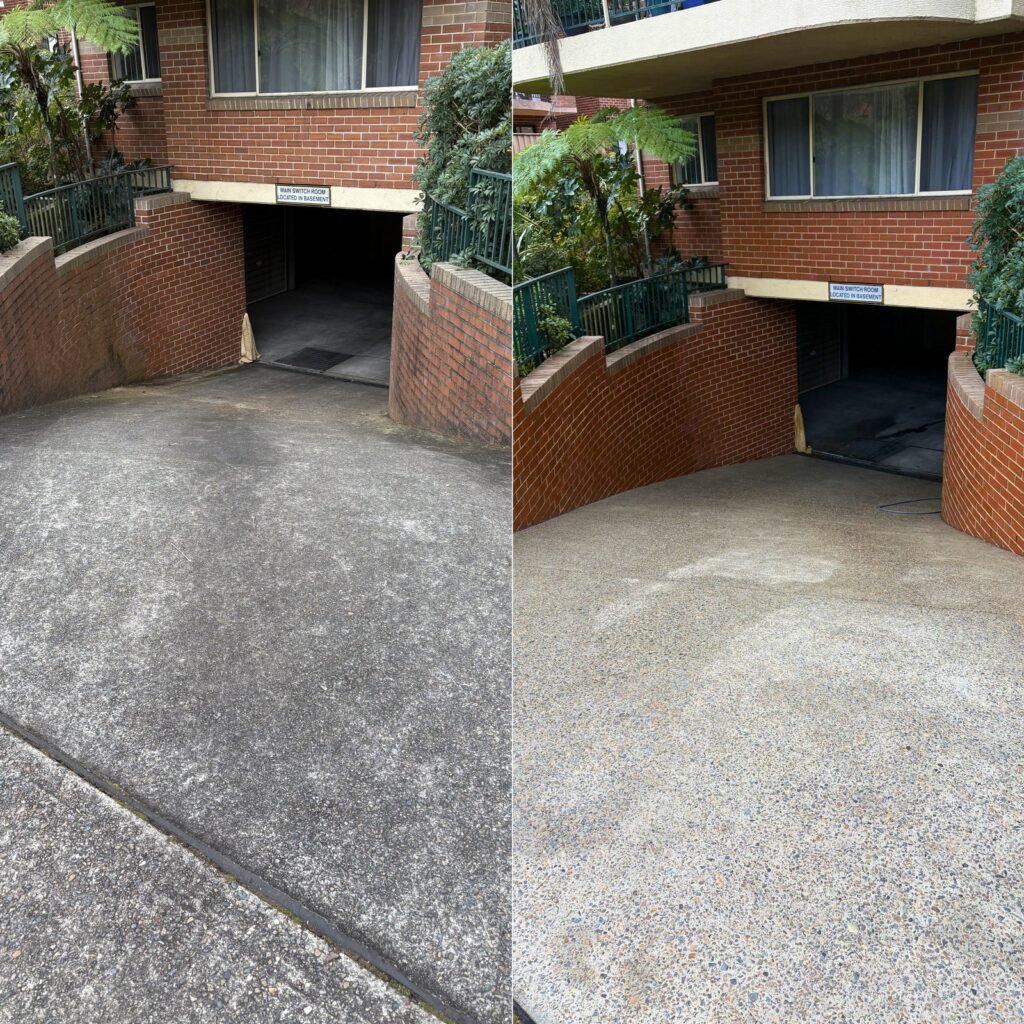
Aggressive cleaning of textured surfaces polishes them. Repeated high-pressure work on exposed aggregate, textured tile or brushed concrete gradually wears down the profile that provided grip. The surface looks better each time and grips less.
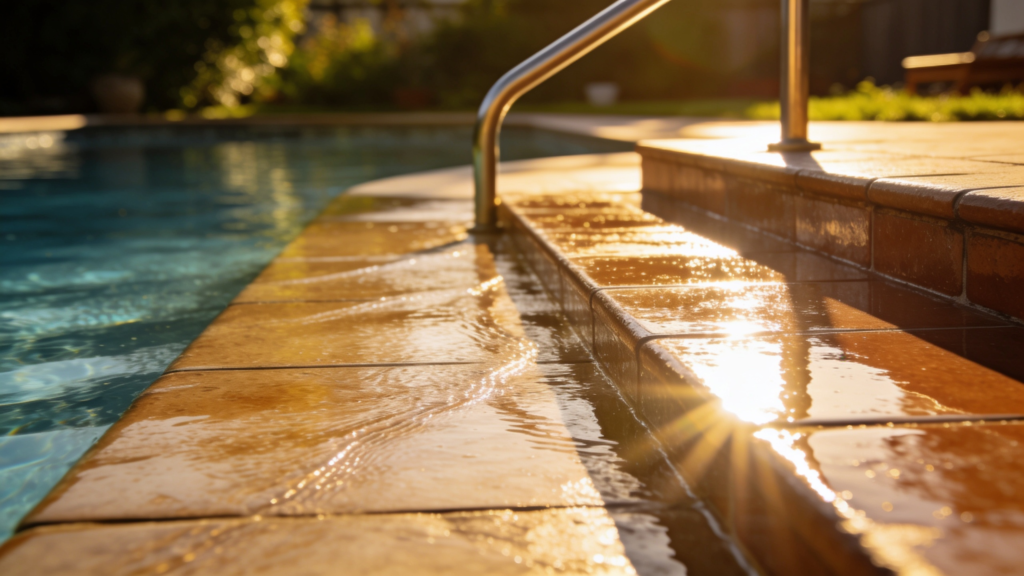
Second, sealers. Applying a gloss or topical sealer to an outdoor surface can drop wet slip resistance dramatically. Sealing a pool surround with a product intended for interior floors is a genuinely dangerous outcome, and it happens because the tin does not always make the distinction obvious.
If a surface is being sealed anywhere people walk when wet, the product needs to be one formulated for external use, and ideally with a slip-resistant additive.
The standard, in plain terms
Australian Standard AS 4586 covers slip resistance classification of pedestrian surfaces, using pendulum and ramp testing to produce a rating. AS 4663 covers testing surfaces already in service.
The practical point for a property owner: these ratings apply to a surface in its actual condition, not as it left the factory. A tile that tested well when new may not perform after a decade of wear and repeated cleaning.
For commercial and strata property, that matters because it is the standard an expert will reference if a claim is made.
Where the liability sits
Under NSW work health and safety law and general duty of care, an owners corporation or business occupier has an obligation to maintain safe common areas. That includes surfaces underfoot.
Two failure modes turn up in claims. Not cleaning — an entry that stayed slippery with algae through winter, with no record of maintenance. And cleaning badly — sealing a ramp with an inappropriate product, or polishing away the surface texture over years.
Documentation matters here. A committee that can show a maintenance schedule, dated photographs and what products were used is in a materially different position from one that cannot.
Practical approach
Treat organic growth as a safety issue with a season, not a cosmetic one. Shaded southern entries and pool surrounds want attention before winter, not after someone comments on the colour.
Soft washing suits this better than pressure. It kills growth at the root without eroding surface profile, so the surface stays clean longer and keeps its texture.
Where a surface is inherently slick — polished stone at an entry, glazed tile on a ramp — cleaning is not the answer. Anti-slip treatments that micro-etch the surface, or applying a slip-resistant coating, address the actual problem.
For strata committees
- Identify the surfaces that get wet and are walked on: entries, ramps, pool surrounds, stairs, car park aprons
- Schedule cleaning by season rather than by complaint
- Keep records — dates, areas, products, photographs
- Ask any contractor whether their method or sealer affects slip resistance, and get the answer in writing
- Where a surface has a history of incidents, consider testing to AS 4663 rather than guessing
We would rather tell a committee that a surface needs an anti-slip treatment than take payment for cleaning that will not fix the underlying risk.
Related: strata exterior cleaning: a guide for committees and pool surrounds and salt systems.