Every brick veneer house in Sydney has deliberate holes in it. Small gaps in the mortar along the bottom course, more of them above windows and doors, and vents through the base brickwork under a suspended floor.
They are not defects and they are not decorative. They are the drainage and ventilation the wall depends on, and they are the openings most likely to be hit by someone washing a house quickly.
What the gaps are for
A brick veneer wall is two skins. The brick outer leaf is not waterproof; it absorbs water in driving rain and lets it through. The cavity behind it is the drainage path, and the timber or steel frame with its insulation sits on the far side of that.
Water that gets through the brick runs down the cavity, lands on flashing, and exits through the weep holes. Air moves through the same openings and dries the cavity out between events.
You find them as open perpends, gaps where the vertical mortar joint has been left out, usually spaced under a metre and a half apart along the bottom course and above every opening. Newer work often has plastic or mesh weep vents fitted instead.
What happens when water goes the wrong way
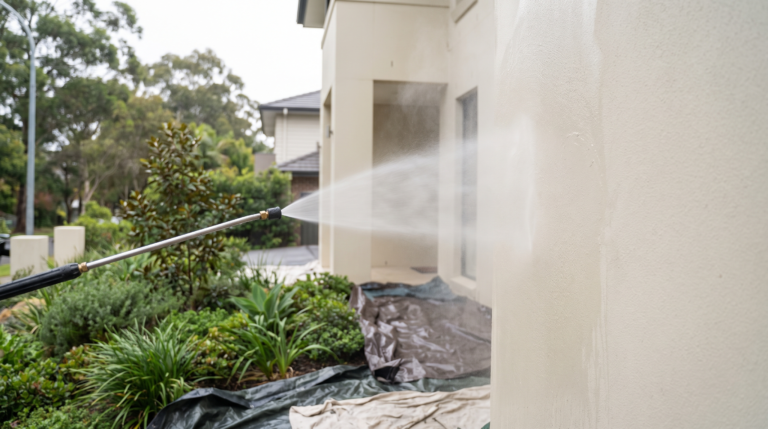
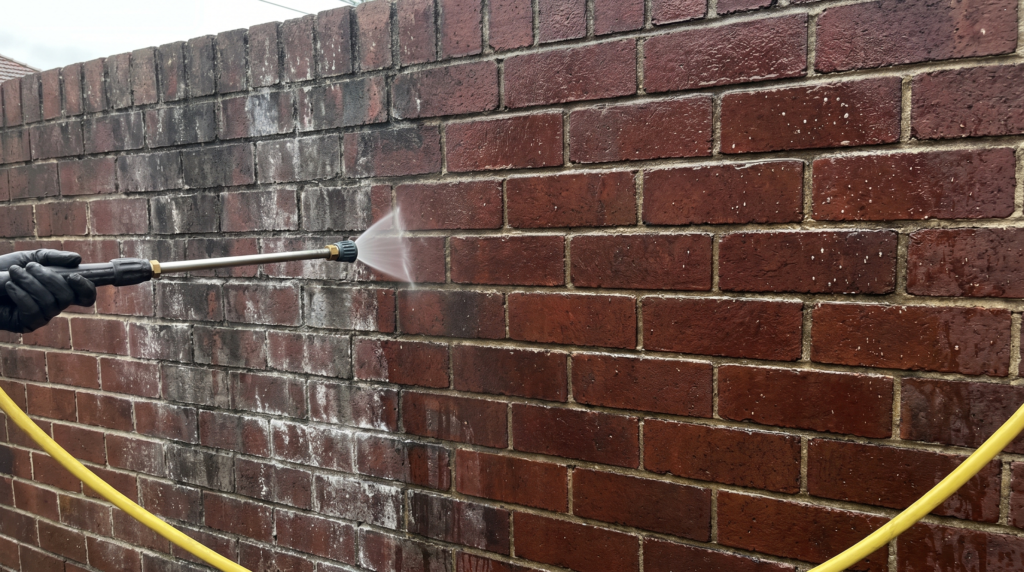
A pressure washer lance held level and close to the base of a wall does not simply clean the brick. It pushes water through those openings, against the direction they were designed to drain, at a rate rain never achieves.
What that water finds inside:
- Insulation. Wet bulk insulation loses most of its value and stays wet, because the cavity is not ventilated well enough to dry a soaked batt.
- The frame. Timber bottom plates sit low in the wall and are the first thing to get wet.
- Termite conditions. Persistent moisture in a wall base is the environment subterranean termites want. This is a slow consequence, not a same-week one.
- Internal finishes. On a bad one it appears as a damp line on the skirting a day or two later, well after the crew has left.
None of it is visible from outside at the time, which is why it keeps happening.
Subfloor vents are worse
Older Sydney housing on a suspended timber floor has vents through the base brickwork to ventilate the subfloor. That space is already the dampest part of the building, and it usually has poor cross-flow and limited clearance.
Water pushed into it does not drain and does not dry. On a job where the paths and the base of the house are being cleaned on the same visit, this is the single easiest expensive mistake available.
The same applies to any other opening at low level: ducted heating and air conditioning returns, dryer vents, gas appliance flues, and the wall penetrations for pool and irrigation equipment.
How it should actually be done
The technique is simple enough that there is no excuse for the alternative:
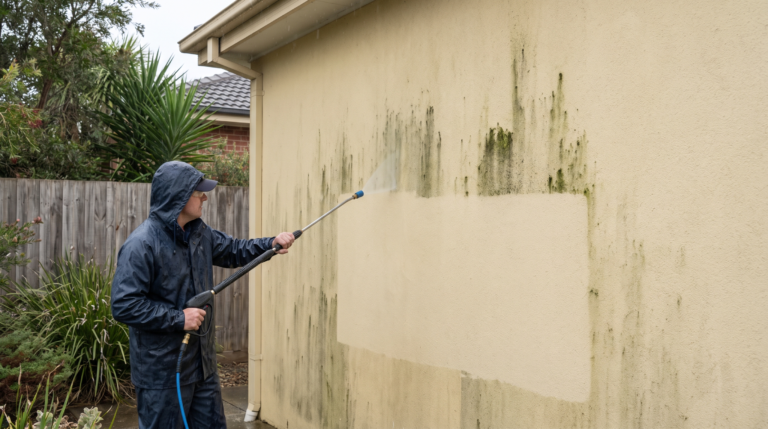
- Work top-down, so water runs the way the wall expects.
- At the bottom course, angle the spray downward, never level or upward into the gaps.
- Keep the distance up and the pressure down at the base of the wall. This is a soft wash, not a pressure wash, and on render or brick that is true for the whole elevation anyway.
- Note the openings before starting, particularly on a house where garden beds or paving have partly buried them.
Blocked weep holes are a separate problem
While someone is down at that level they will often find the drainage is already compromised, and not by them.
The usual causes are mortar squeezed into the gaps during construction, garden beds built up over the base course, paving or concrete poured above the damp proof course, and render carried down across the weep holes when a wall was rendered later.
All of those trap water in the cavity permanently, and they are a common cause of the fretting brickwork and rising damp that people mistake for a cleaning problem. Cleaning will not fix it, and a wash on a wall that already cannot drain makes the underlying situation worse for longer.
If your weep holes are buried, that is a job for a builder or a landscaper before it is a job for us.
What to ask a contractor
Ask what pressure they use at the base of a wall and what they do about weep holes. Anyone who has thought about it will answer immediately. Anyone who has not will tell you the pressure is adjustable, which is not the same answer.
Written by the team at The Prestige Standard, exterior cleaning contractors working across Sydney. Fixed written quotes within 24 hours with every surface itemised, $20 million public liability. See our service areas or call 0494 810 609.