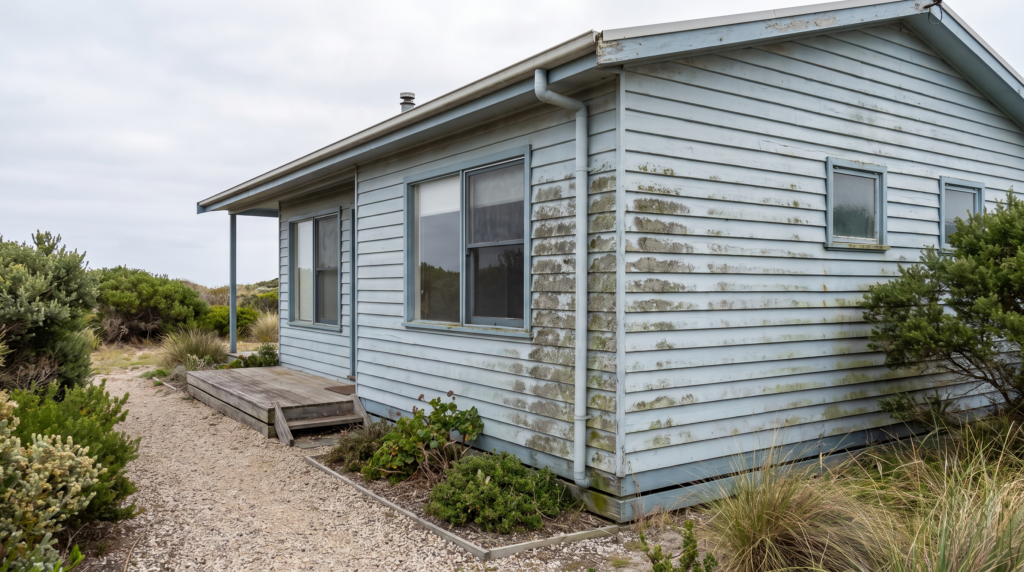
Timber cladding has come back hard on Sydney houses: spotted gum and blackbutt shiplap on new builds and additions, painted weatherboard on everything from Federation cottages to beach houses, cedar on mid-century homes, and charred timber on the architect-designed end of the market.
It gets cleaned like a deck, because it is timber and that is the reference point most people have. The two behave differently enough that the deck method causes damage on a wall.
Why vertical timber is a different problem
A deck holds water on the face, takes foot traffic, and greys from UV and wear together. Cladding sheds water off the face almost immediately, so the face stays comparatively sound while the failures concentrate somewhere else:
- End grain. Cut ends at corners, around windows and at board joints absorb water many times faster than the face. This is where cladding rots first, and it is where a wash does the most harm.
- The underside of the lap. Shiplap and weatherboard profiles have a shadow line that stays damp and shaded. Growth lives there and cleaning has to reach it without forcing water up behind the board.
- The bottom two boards. Splashback from paving and garden beds keeps them wetter than everything above.
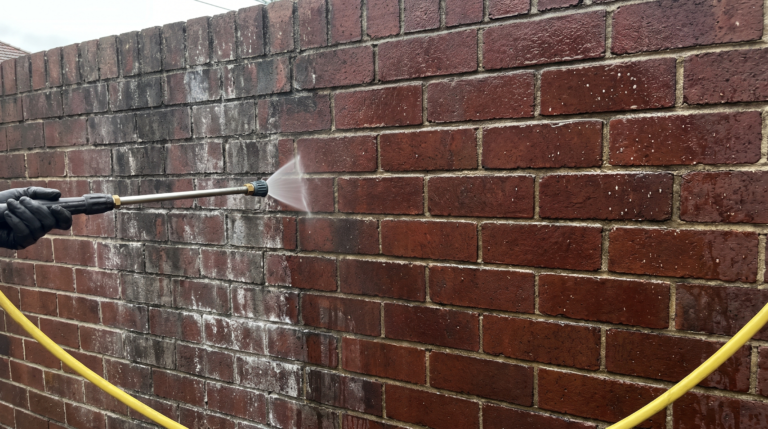
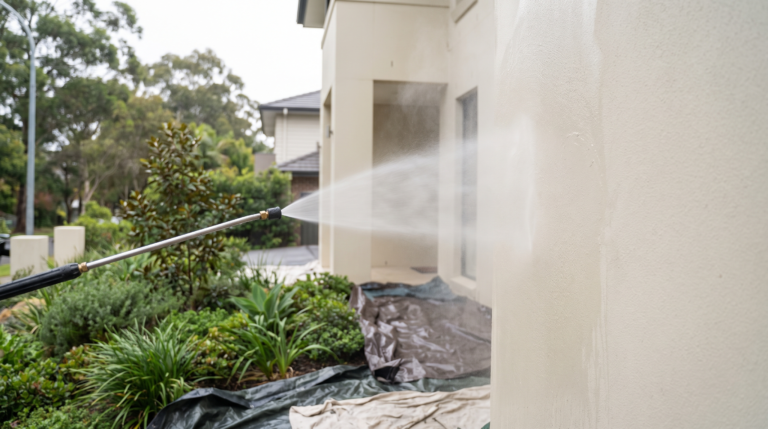
Aiming pressure upward under the boards, which is the intuitive way to get at the shadow line, pushes water into the wall behind the cladding. Same principle as weep holes at the base of a brick wall, different construction.
Painted weatherboard
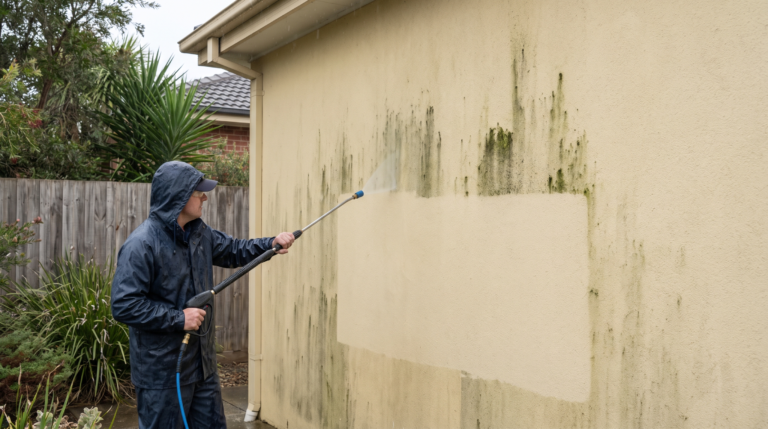
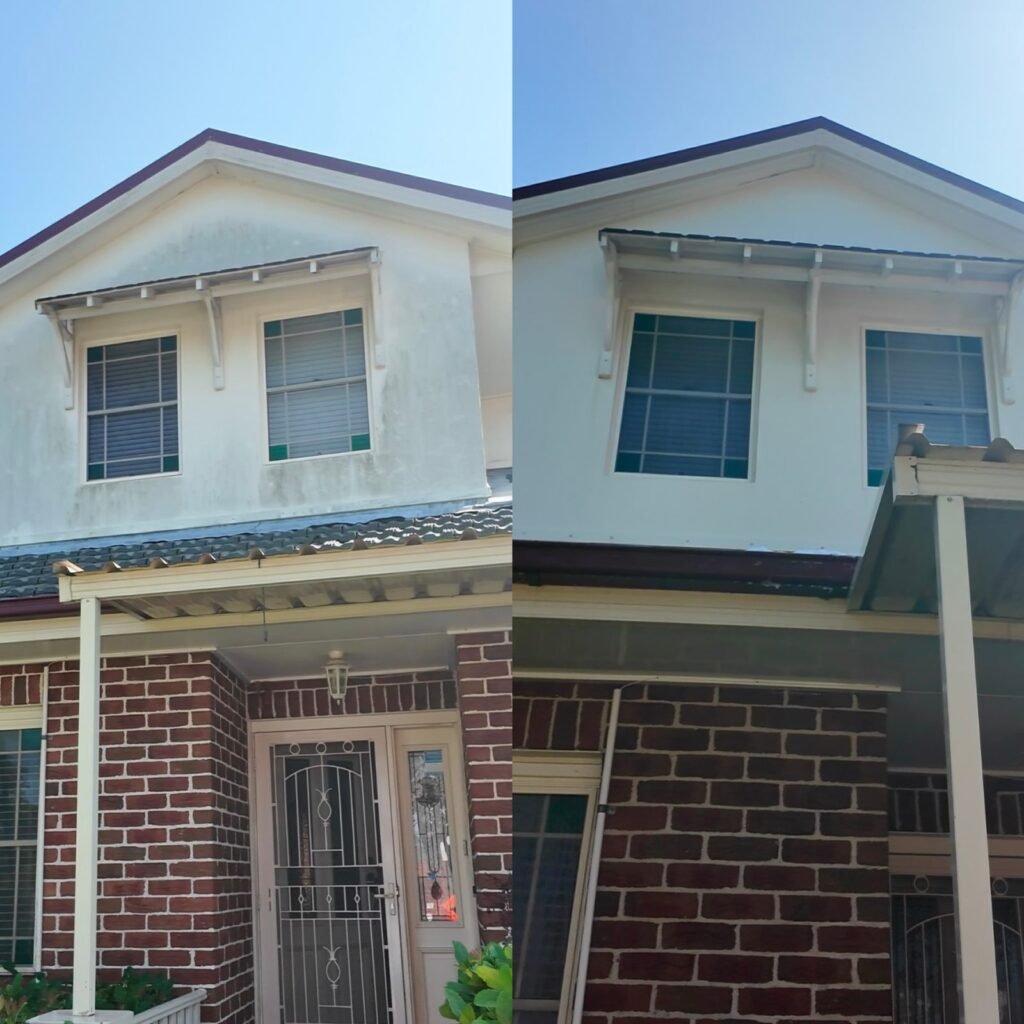
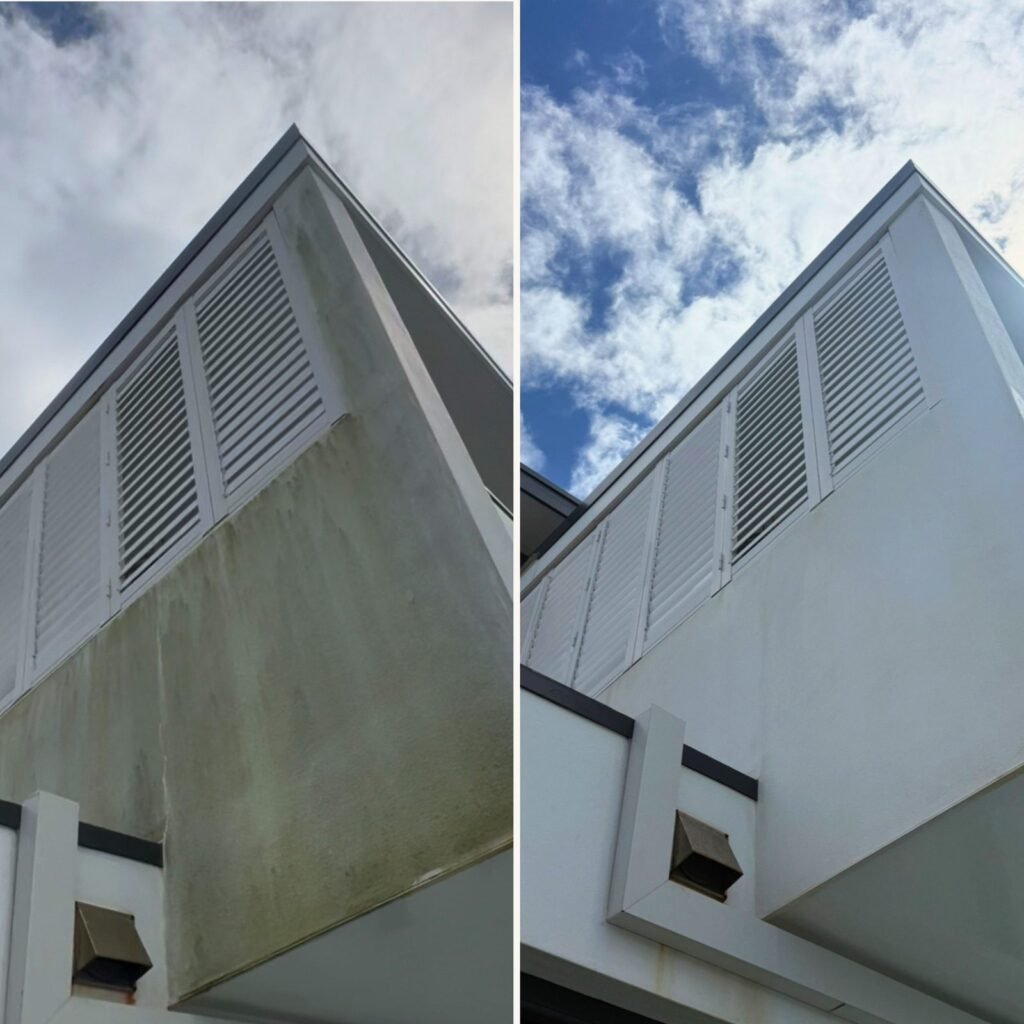
The problem on painted boards is almost always growth on the paint film plus chalking, not dirt in the timber. That is a soft wash job, and it is also the standard prep before repainting, covered in washing before painting.
Two things to establish first. Whether the paint is sound, because washing a wall with failing adhesion will take flakes off and reveal how much was already loose. And the age of the house, because paint on anything built before about 1970 may contain lead, which changes the method entirely. That is a controlled job for good reason, set out in lead paint on pre-1970 Sydney homes.
Oiled hardwood cladding
Spotted gum, blackbutt and merbau cladding is usually finished with a penetrating oil, and the oil is consumed by UV rather than worn off. On a north or west elevation it can be largely gone in two summers while the south elevation still looks fine.
Where the oil has gone the timber silvers and the surface fibres break down, and any growth is sitting in an already-softened surface. Cleaning it aggressively lifts and furs those fibres, which then hold water.
The sequence that works is a low pressure clean with a timber-appropriate product, full drying time, then re-oiling. Cleaning without recoating on an elevation that has lost its oil buys you a few clean months and leaves the timber no better protected than before.
Strong alkaline cleaners and chlorine bleach are the wrong tools on tannin-rich Australian hardwoods. They lighten the timber unevenly and can leave a permanent colour shift that no amount of oil hides.
Charred and pre-weathered finishes
On charred timber the black char layer is the finish, and it is fragile. Scrubbing, pressure or an aggressive chemical takes it off in patches that cannot be blended back. The correct treatment is the gentlest thing that works, usually a rinse and a soft wash, and an acceptance that the surface is meant to change over time.
Pre-weathered and factory-greyed claddings have the same issue. The look is the coating, and cleaning it back to bare timber is a way of removing the product you paid for.
The coastal version
On the Northern Beaches and the eastern coastal strip, timber cladding takes salt as well as UV. Salt does not attack timber the way it attacks metal, but it holds moisture at the surface and it corrodes the fixings.
Rust staining running down from nail and screw heads is the visible sign, and it is not a cleaning failure. Removing the stain without addressing the fixings just resets the clock. This overlaps with rust staining on other surfaces, though the fix on timber is usually replacing or capping the fixings.
When to stop cleaning and do something else
Soft end grain, dark staining that does not lift, boards that give under thumb pressure, and open joints are rot, not soiling. No wash improves them and a wash that soaks them makes the next few months worse.
At that point the useful thing a cleaner can do is tell you which boards are gone and photograph them, so a carpenter can quote before the cladding gets recoated over a problem.
Decks have their own thresholds, set out in when to clean, when to sand and when to leave it alone. On a wall the thresholds arrive later but matter more, because replacing cladding means opening the building.
Written by the team at The Prestige Standard, exterior cleaning contractors working across Sydney. Fixed written quotes within 24 hours with every surface itemised, $20 million public liability. See our service areas or call 0494 810 609.