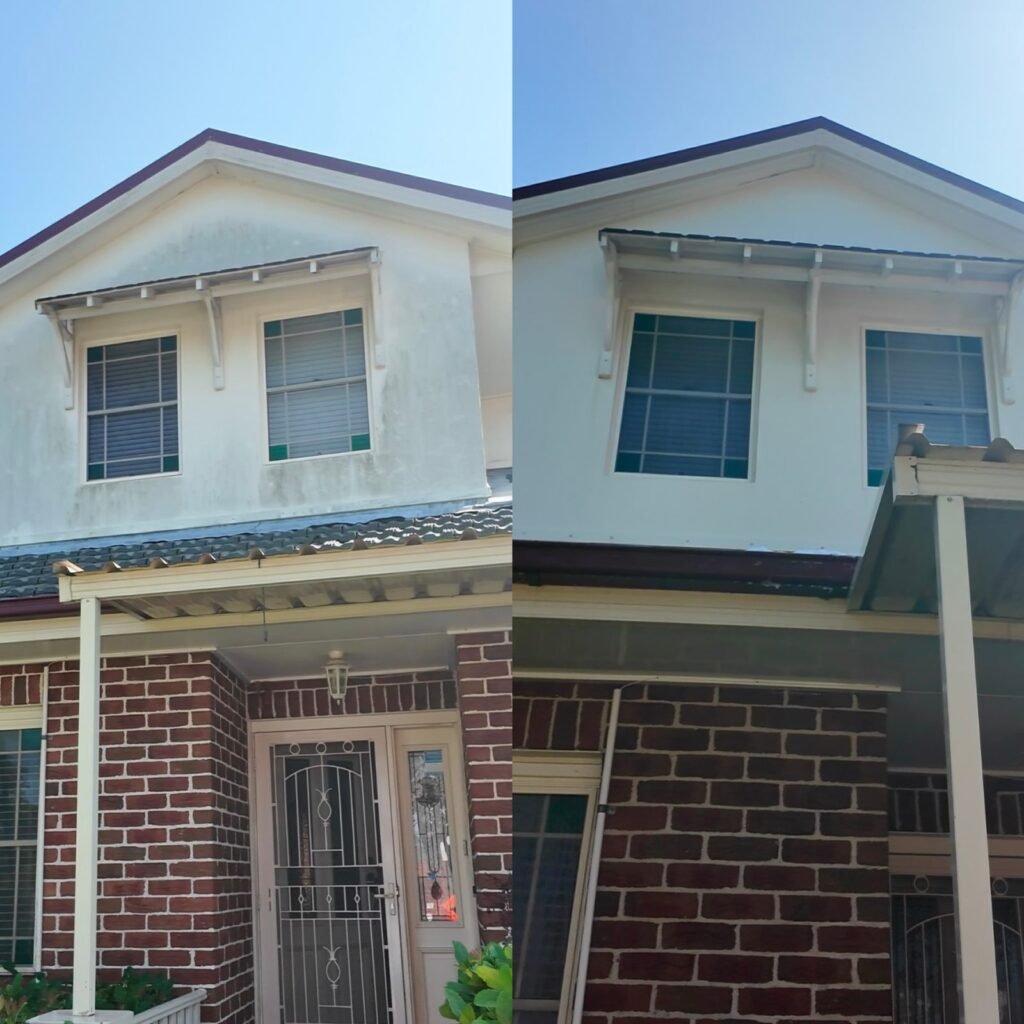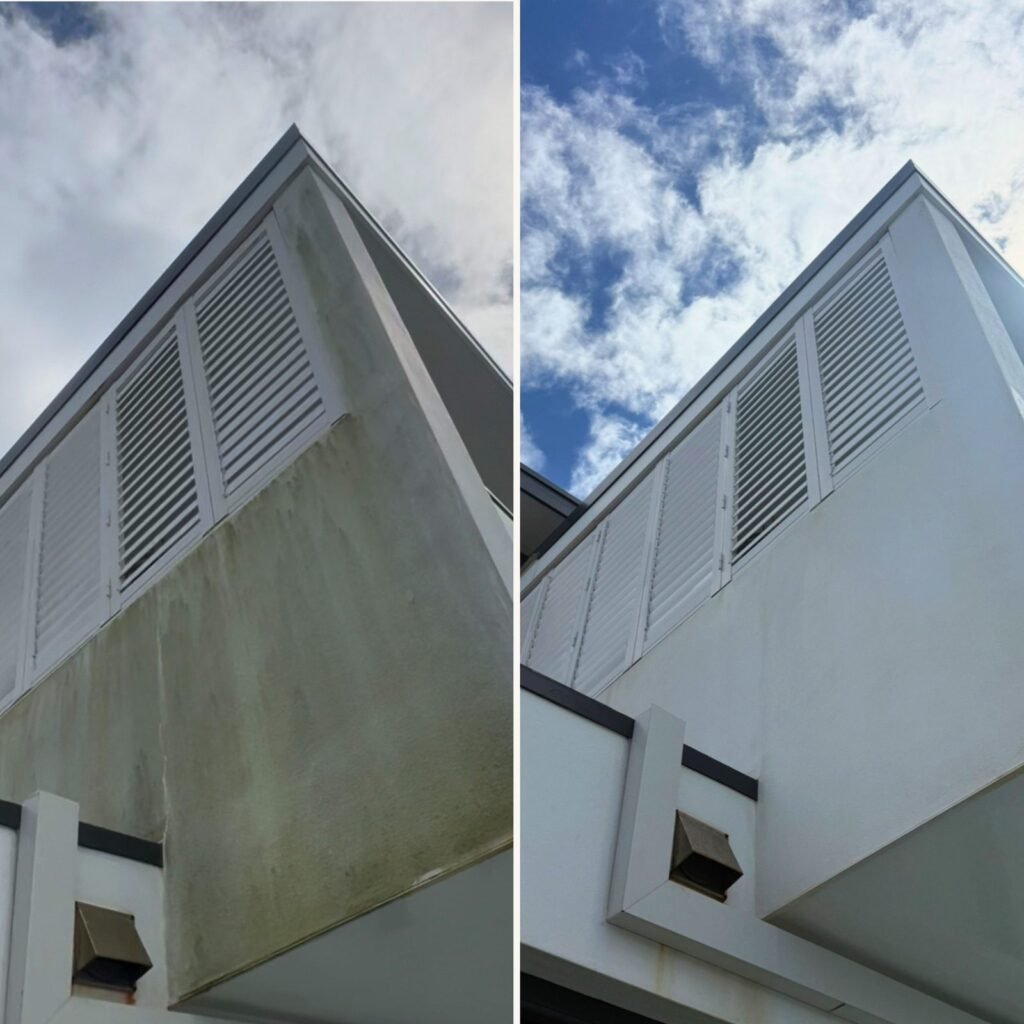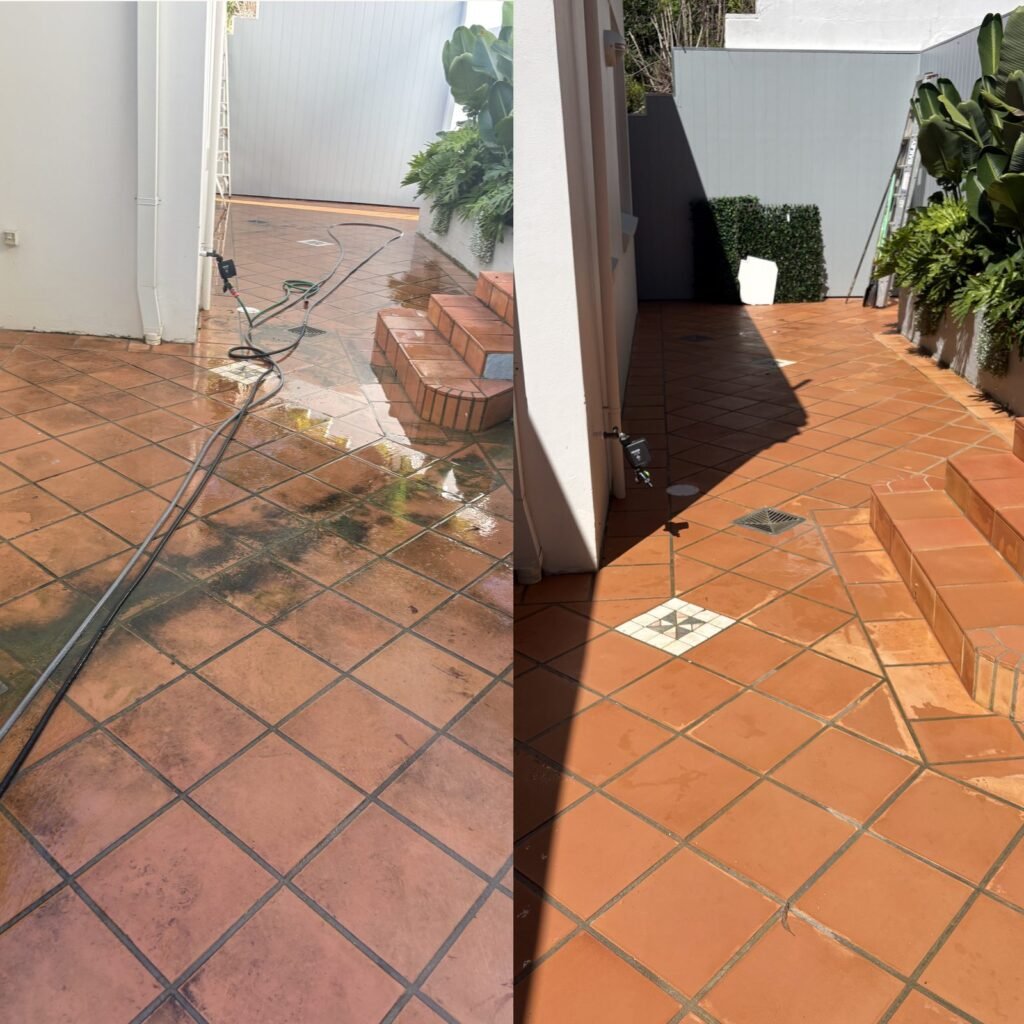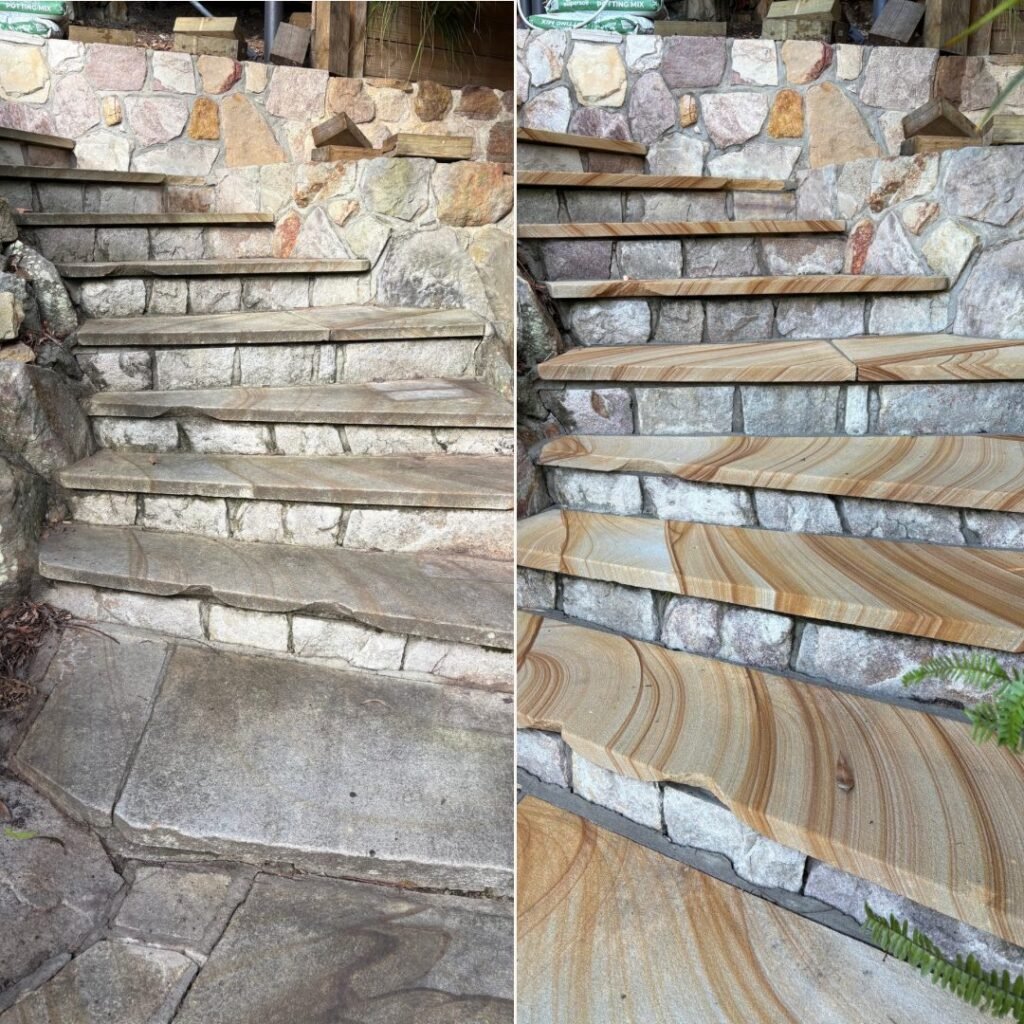
Orange-brown staining on paving is one of the more misunderstood problems we get asked about. People scrub it, pressure wash it, and eventually conclude the concrete is ruined. Usually it is not — but it does need the right chemistry rather than more force.
Rust is inside the surface, not on it
Iron oxide staining forms when dissolved iron reaches a porous surface and oxidises. The colour is a chemical compound bonded within the pores of the concrete or stone.
That is why mechanical cleaning fails. A pressure washer removes the top layer of the surface and whatever loose material sits on it, but the iron compound is distributed through a depth of material. What you usually achieve is a lightened stain with a slightly eroded surface, and a faster return.
Where the iron comes from
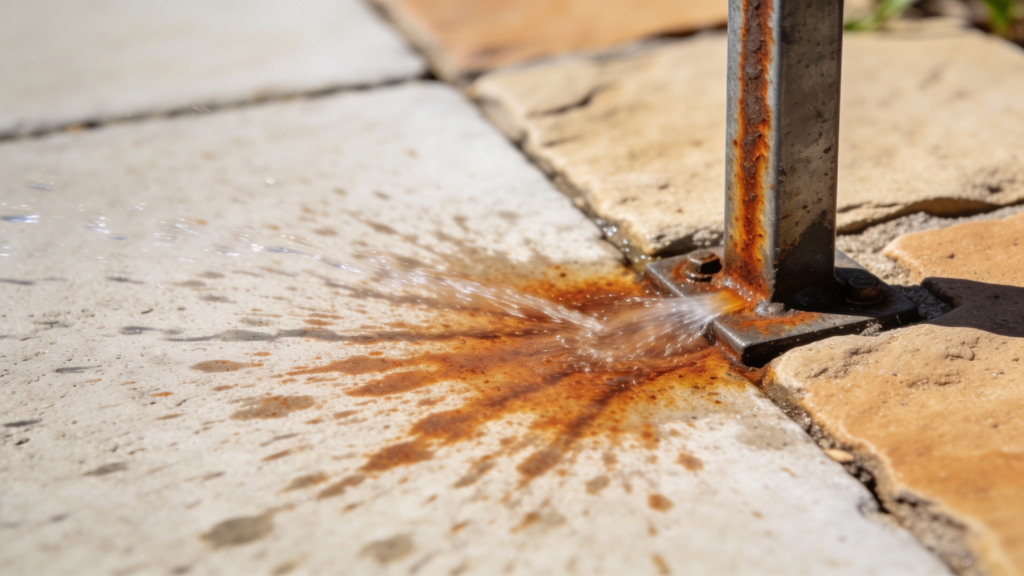
Bore water irrigation. The most common source in Sydney gardens with a bore or spear point. Groundwater carries dissolved iron; the sprinkler distributes it; it oxidises on contact with air. The signature is unmistakable — a fan or arc of staining matching the throw pattern, sharpest at the edge.
Fertiliser. Iron-rich lawn products tracked or splashed onto paving. Typically a scatter of small, intense spots rather than a broad wash.
Steel in contact with the surface. Furniture feet, potted plant stands, a forgotten tool, reinforcing too close to the surface, or corroding fixings. Produces a localised bleed, often with a run.
Sandstone with natural iron content. Sydney sandstone contains iron oxide bands. Weathering can mobilise it, producing staining that came from the stone itself and cannot be removed without removing stone.
Identifying the source matters, because if it is still active, removing the stain buys months.
The acid mistake
The common response is hydrochloric acid, sold widely as brick and concrete cleaner. On rust it is largely the wrong tool.
It attacks the cement matrix rather than the iron compound, so it etches the concrete — leaving a dull, opened, more porous surface that stains more readily next time. On sandstone, limestone or travertine it causes visible damage quickly.
It can also convert the stain rather than remove it, sometimes deepening the colour or spreading it into a wider halo.
Oxalic acid behaves differently — it chelates iron, binding it into a soluble form that can be rinsed away. That is the chemistry that actually addresses rust, and it is why timber deck brighteners, which are typically oxalic-based, also lift tannin and iron marks.
For deeper staining a reducing agent applied as a poultice draws the compound back out of the surface over hours rather than minutes.
What determines whether it comes out
Age. Fresh staining lifts far more readily than a stain that has been through several summers.
Depth. A surface splash is a different job from ongoing bore water saturation over years, which can penetrate several millimetres.
Surface. Sealed concrete holds the stain superficially and cleans well. Unsealed exposed aggregate and porous stone hold it far more stubbornly.
Honest expectation: heavy long-term bore water staining on unsealed concrete rarely comes back to uniform colour. Substantial improvement is realistic; perfection usually is not.
Stopping it recurring
- Adjust sprinklers so bore water does not hit paving — the single most effective fix
- Install an iron filter on bore irrigation if paving cannot be avoided
- Sweep fertiliser off paving rather than hosing it across
- Put pads under steel furniture and pot stands
- Seal cleaned concrete with a breathable penetrating sealer to slow reabsorption
Sealing is worth doing after removal rather than before, and it should be breathable — trapping moisture under a film on a slab creates a different problem.
If you are not sure whether your staining is rust, tannin or something else, a photograph usually settles it. Related: removing oil stains from a driveway and efflorescence explained.