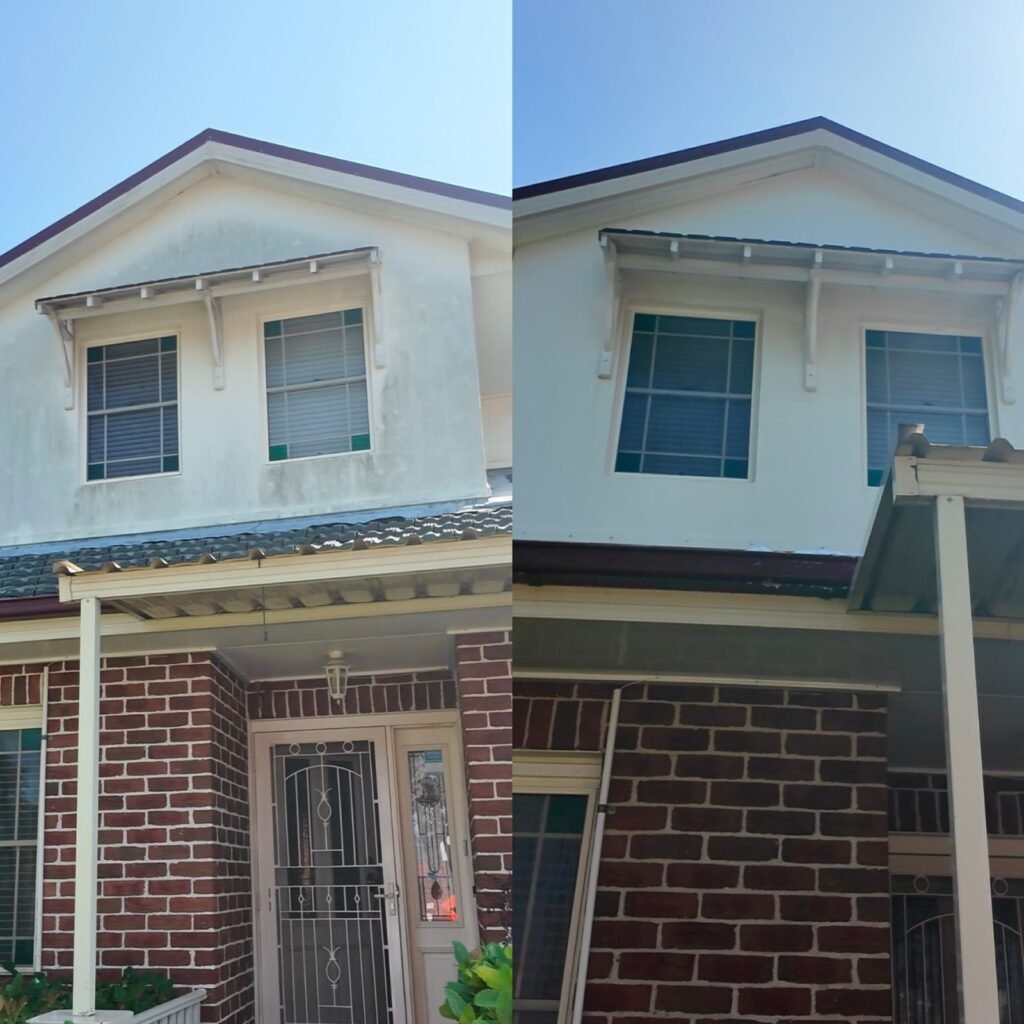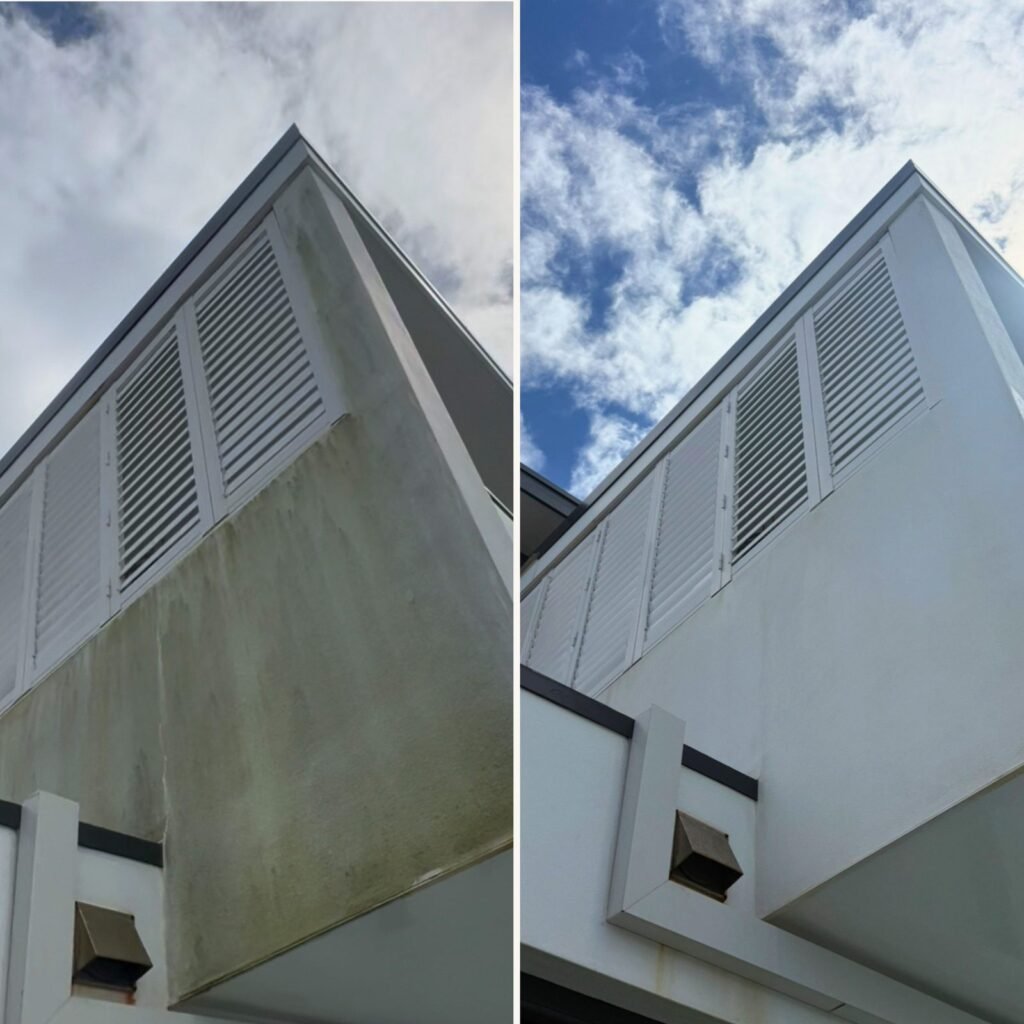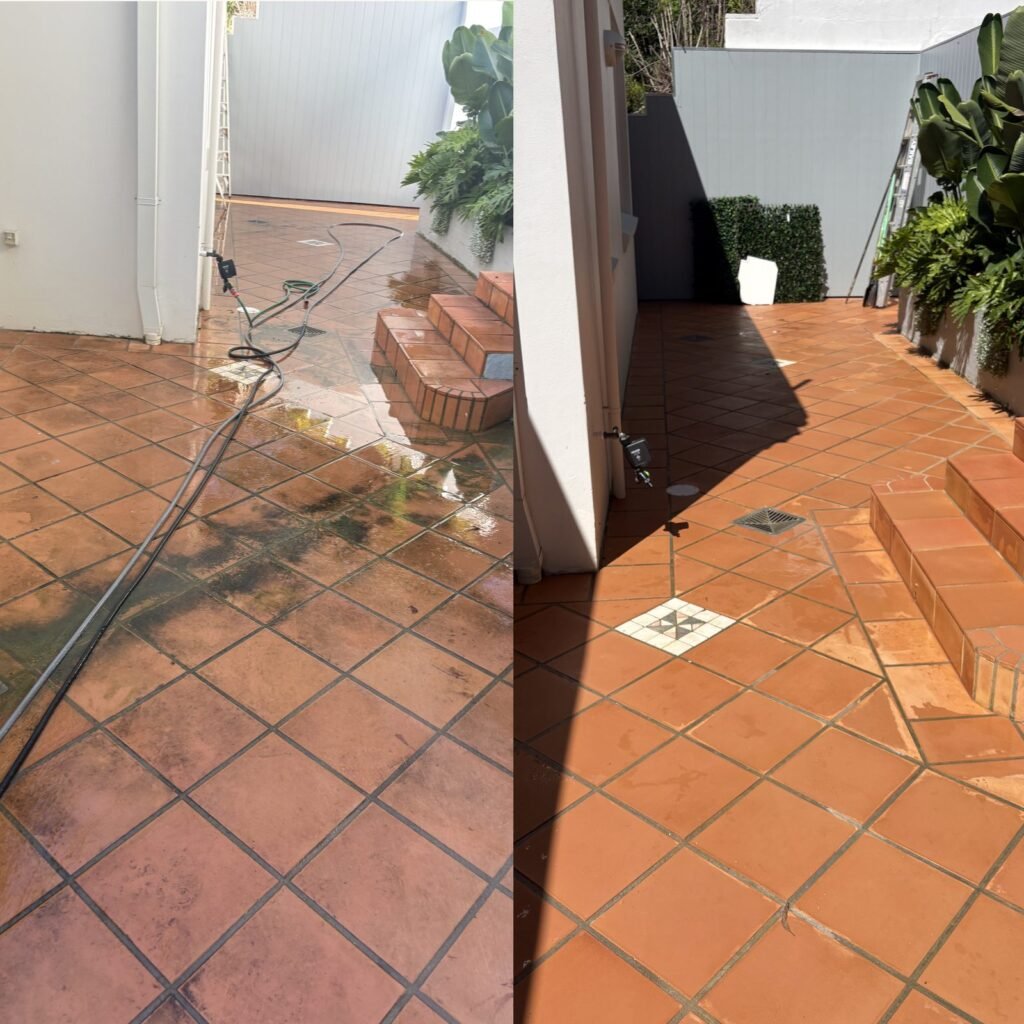
Church Point is the end of the line. The road comes in along McCarrs Creek and stops at the wharf, and from there everything further north and west, Scotland Island and the western foreshore bays, is reached by boat.
That makes Church Point both a residential suburb and a transit hub, and both roles shape what exterior maintenance looks like here.
Steep foreshore blocks
The housing at Church Point clings to a steep slope running down to Pittwater. Many properties are accessed by long stair runs from a road well above the house, and some are accessed from the water.
For exterior work this means equipment is carried rather than wheeled, hose and lead runs are long, and some elevations cannot be reached safely from the ground at all. It is a significant factor in how long a job takes, and the reason site inspection is not optional. More: why we do not price over the phone.
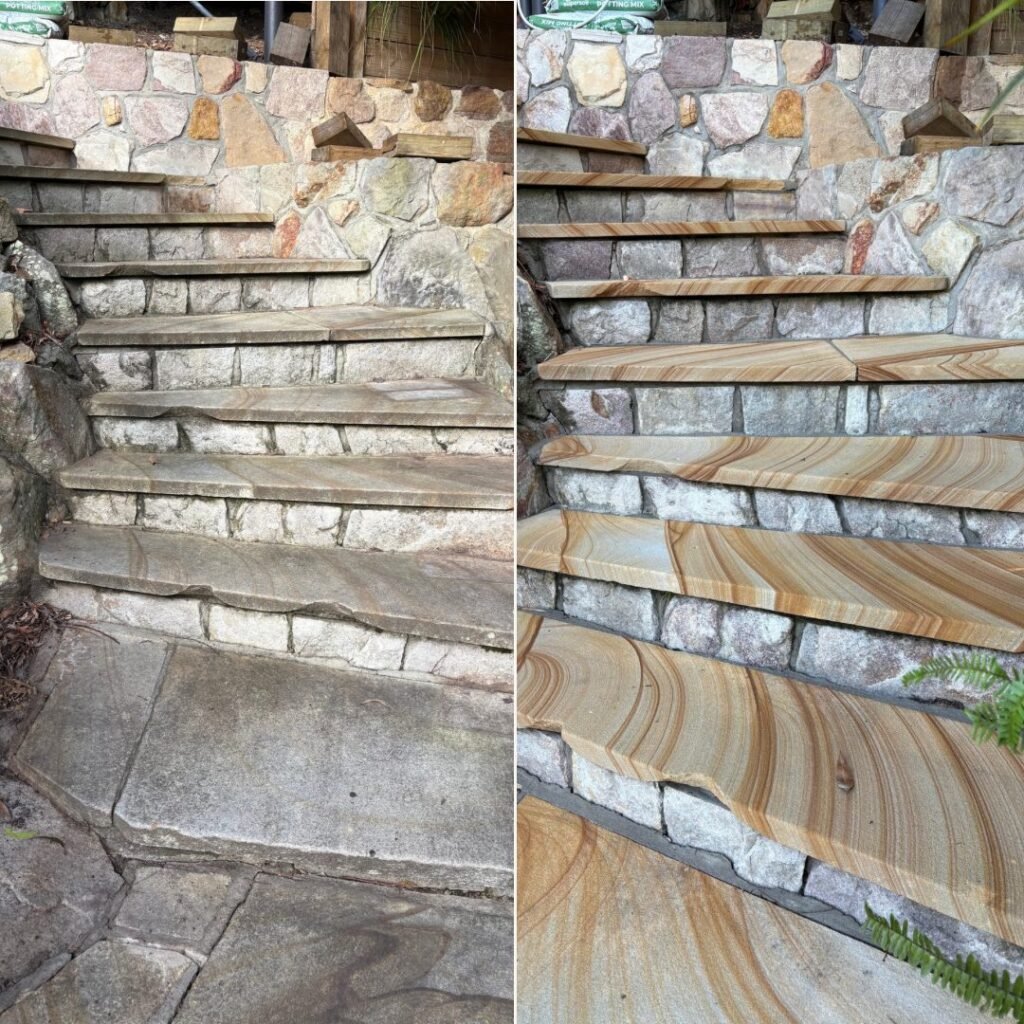
Stairs as the main risk
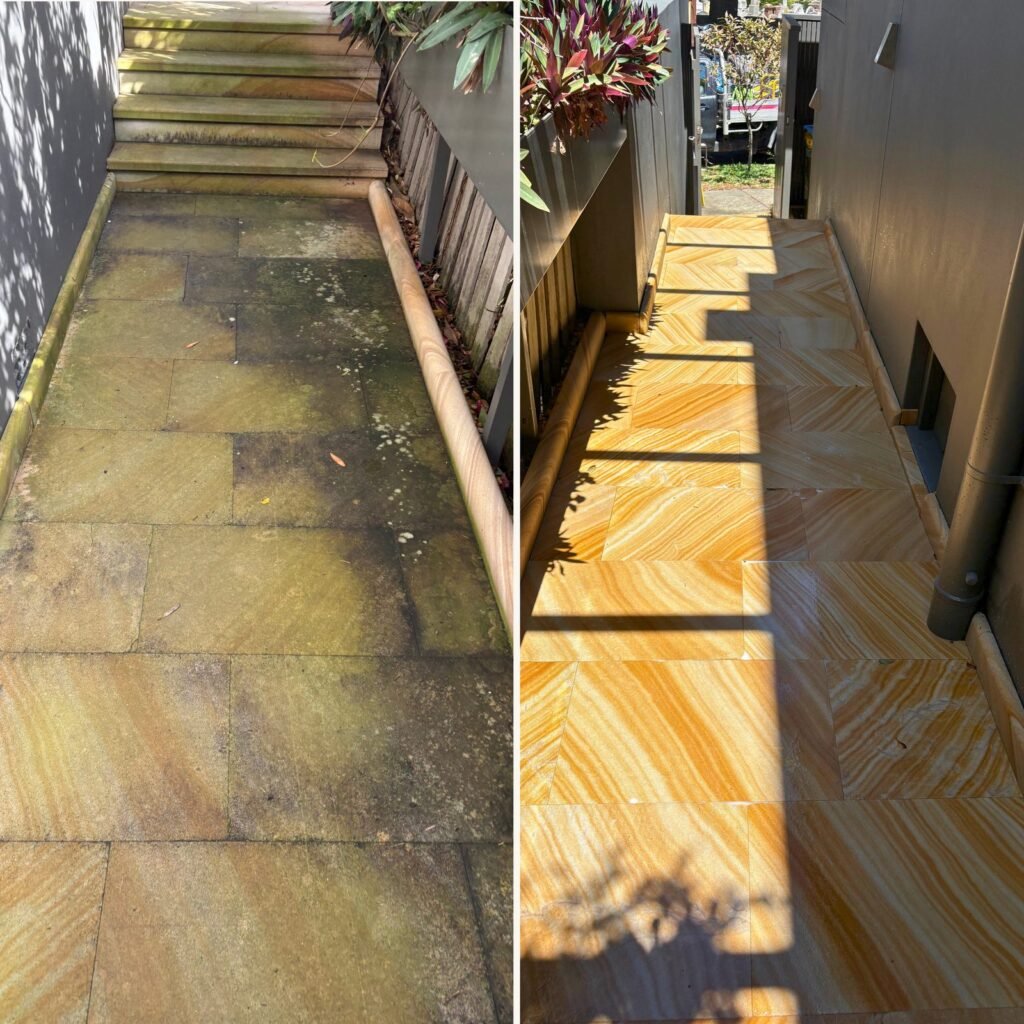
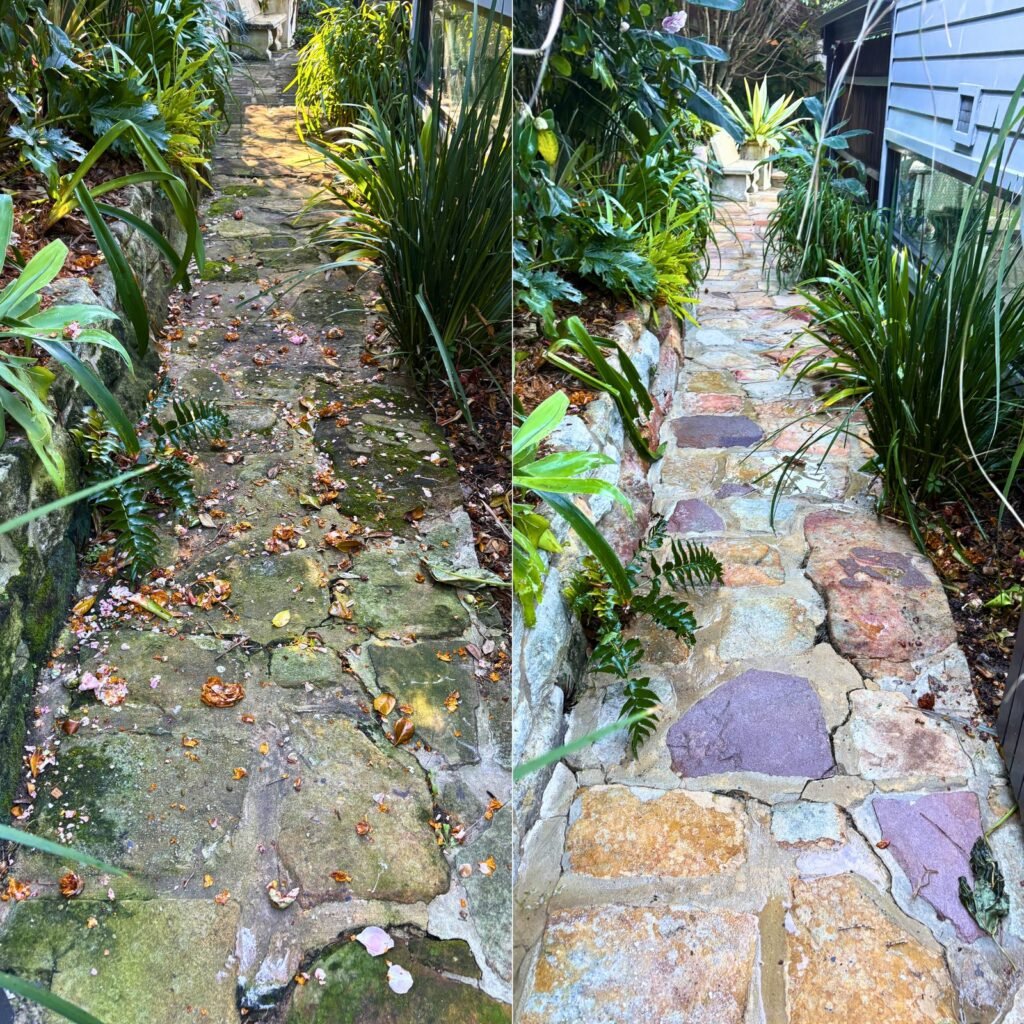
Long external stairs, heavily shaded, running down a steep slope beside a drop. These grow algae and moss persistently in the damp foreshore air, and they are the primary access route for the household.
Cleaning them is a safety task on a schedule, not a cosmetic one when they look bad. Handrails should be checked for movement and corrosion at the same time.
Estuarine salt plus deep shade
Pittwater at Church Point is sheltered, still and surrounded by steep vegetated slopes. The combination produces the Pittwater signature: salt deposition on metal and glass with no wind to disperse it, and persistent biological growth because nothing dries.
Expect tea staining on stainless and corrosion on fixings at the same time as mould on walls and algae on decks. More: tea staining on stainless.
The wharf and commuter parking
Church Point’s commuter car park and wharf area carry constant foot traffic from offshore residents. Surfaces there take a particular kind of load: wet feet, dropped food, fuel and oil from boats and vehicles, and general grime from being a transit point.
Any commercial or community surface cleaning here has to account for what runs off, because it runs straight into Pittwater. Containment and appropriate product selection are not optional on a foreshore site.
Gutters under canopy
The slopes above Church Point are heavily treed. Eucalypt leaf and bark fills gutters, packs around outlets and bridges across them. On a steep block the overflow runs toward whatever is downhill, which is often the house itself or the level below. More: gutter cleaning.
Bushfire
The foreshore slopes are bushfire prone, and access for firefighting is limited by the same gradient that limits everything else. Clearing gutters and roof valleys of dry leaf and bark before fire season is a meaningful risk reduction measure here.
Water runoff
Everything used on a Church Point block ends up heading downhill toward Pittwater. Knowing where runoff goes, and keeping it out of the water, is basic site management on a foreshore property.
A realistic schedule
Stairs, paths and decks: twice a year for slip safety.
House wash: annually on shaded elevations.
Gutters and roof valleys: twice a year, plus a pre-fire-season check.
Metal and marine hardware: rinse regularly, inspect annually.
See the Northern Beaches overview.