Seaforth runs down the slope from Sydney Road to Middle Harbour, with Clontarf below and Balgowlah Heights to the east. The housing ranges from 1950s brick to substantial modern rebuilds, and almost all of it is oriented one way: toward the water.
That orientation is the key to how these houses age.
The view side gets all the attention
The harbour-facing elevation is where the living areas, the deck, the glass and the money are. It is what the owner looks at every day, and it gets cleaned because the view through dirty glass is annoying.
It is also, in maintenance terms, the healthier side. It gets sun, it gets whatever breeze comes off the water, and it dries.
The uphill side gets none
Behind the house, cut into the slope, is a different environment. It is shaded by the bank above it, often has a retaining wall within a metre or two of the wall, gets minimal air movement, and sees very little sun.
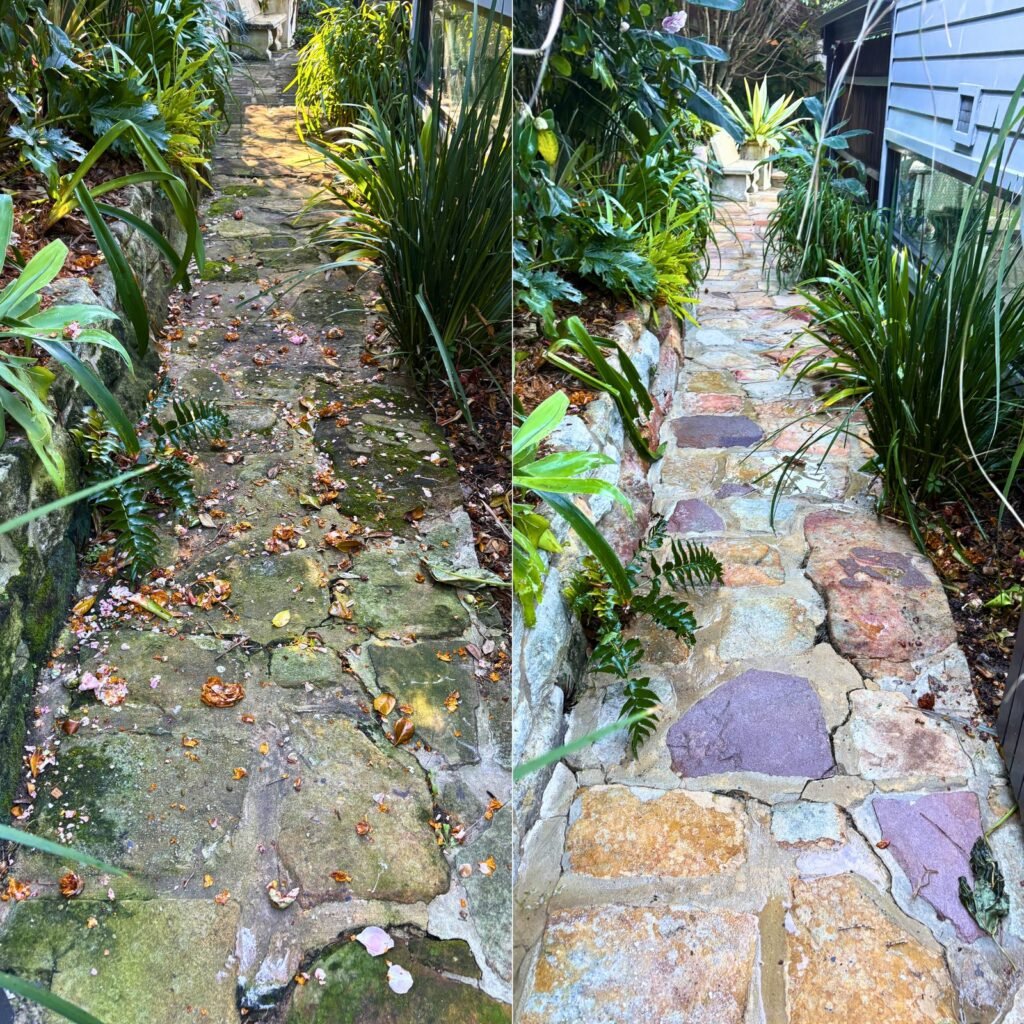
This is where the bins live, where the air conditioning condenser sits, where the side path runs, and where nobody looks for months at a time.
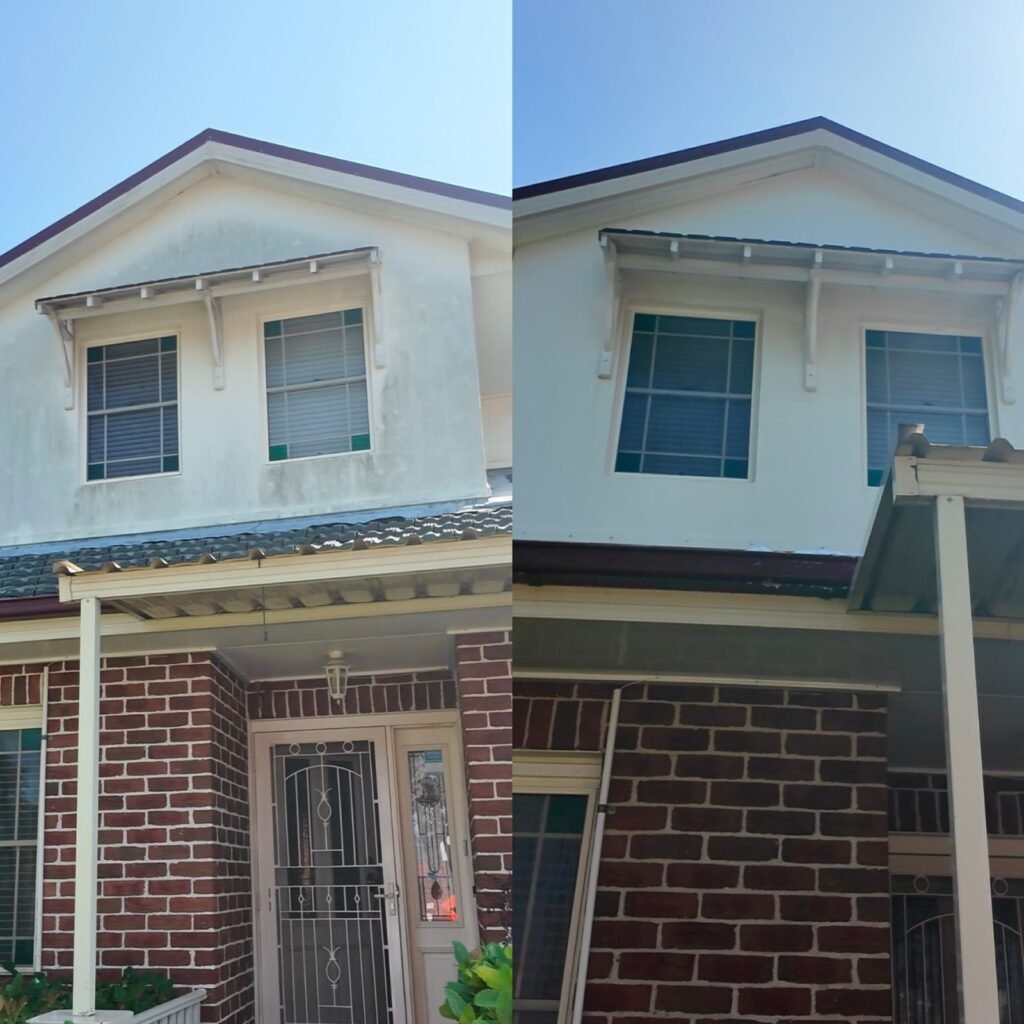
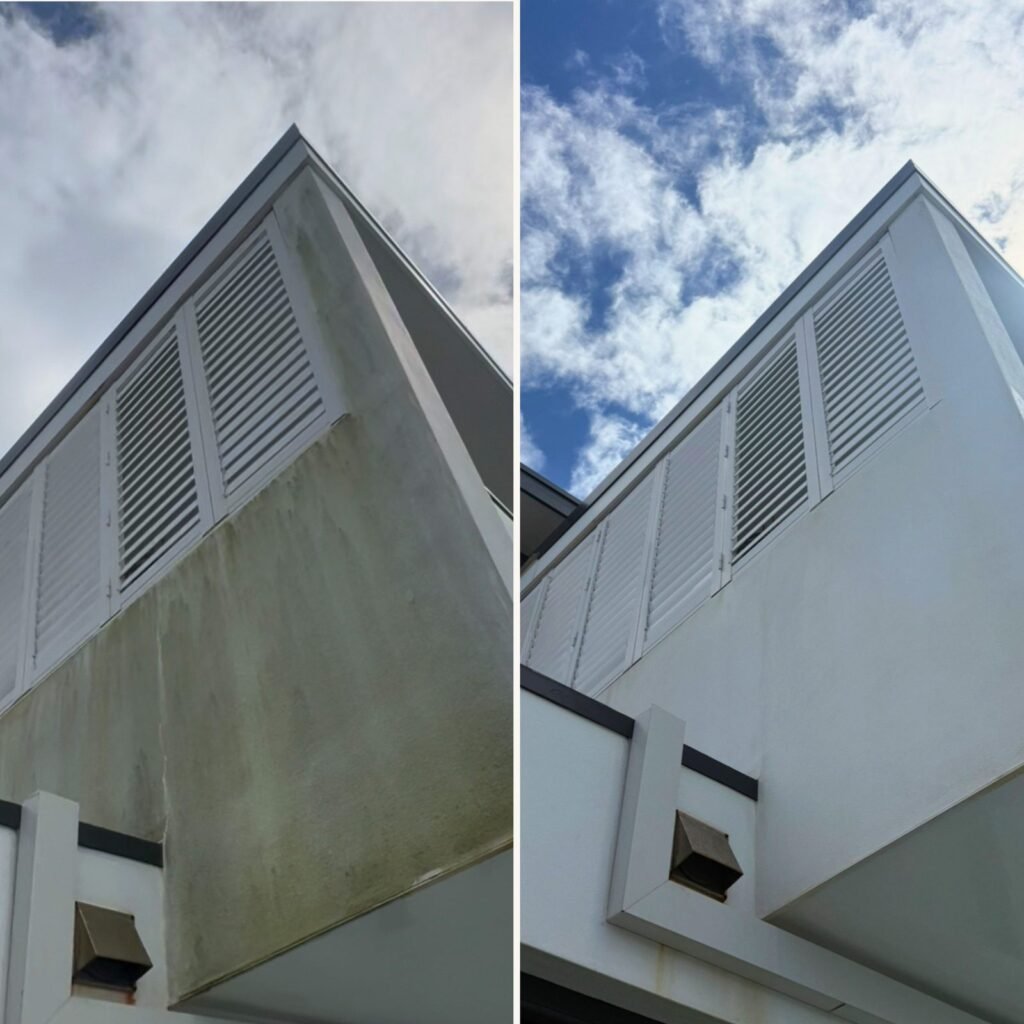
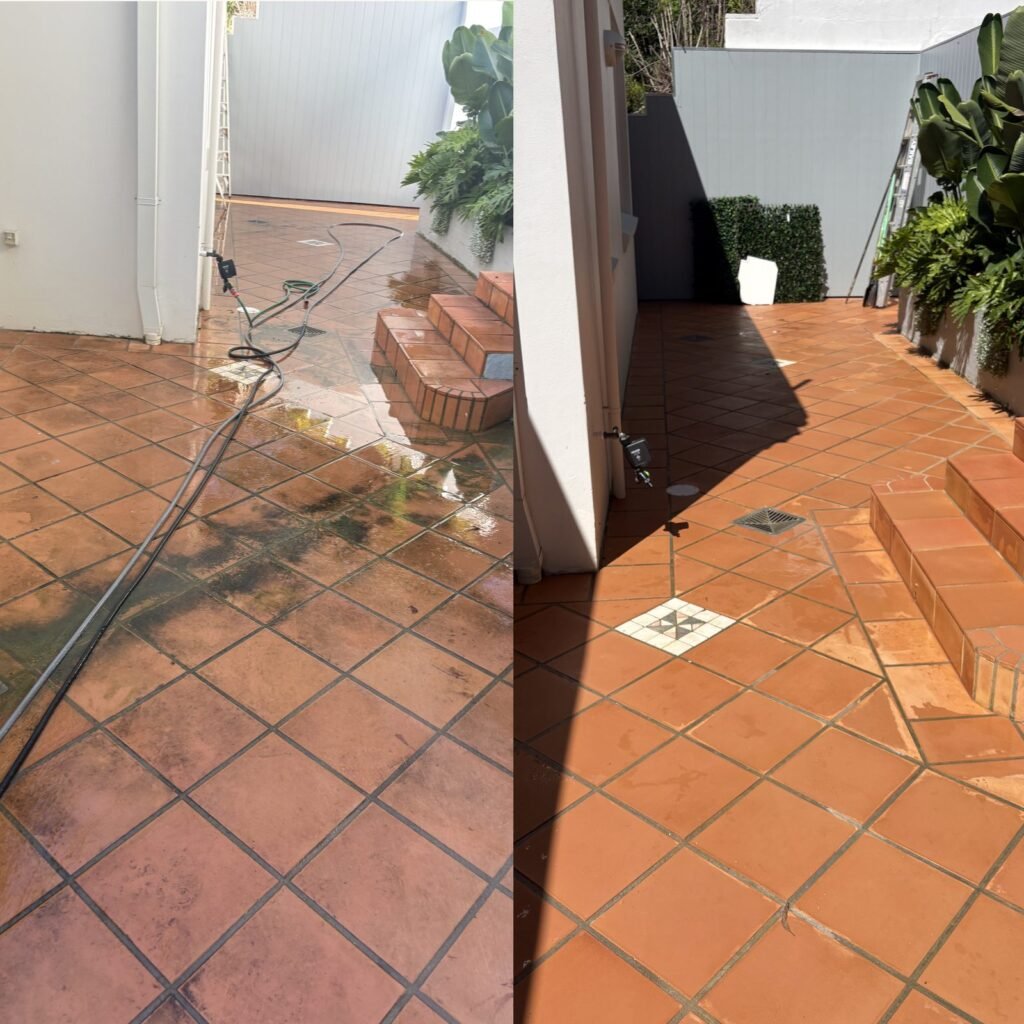
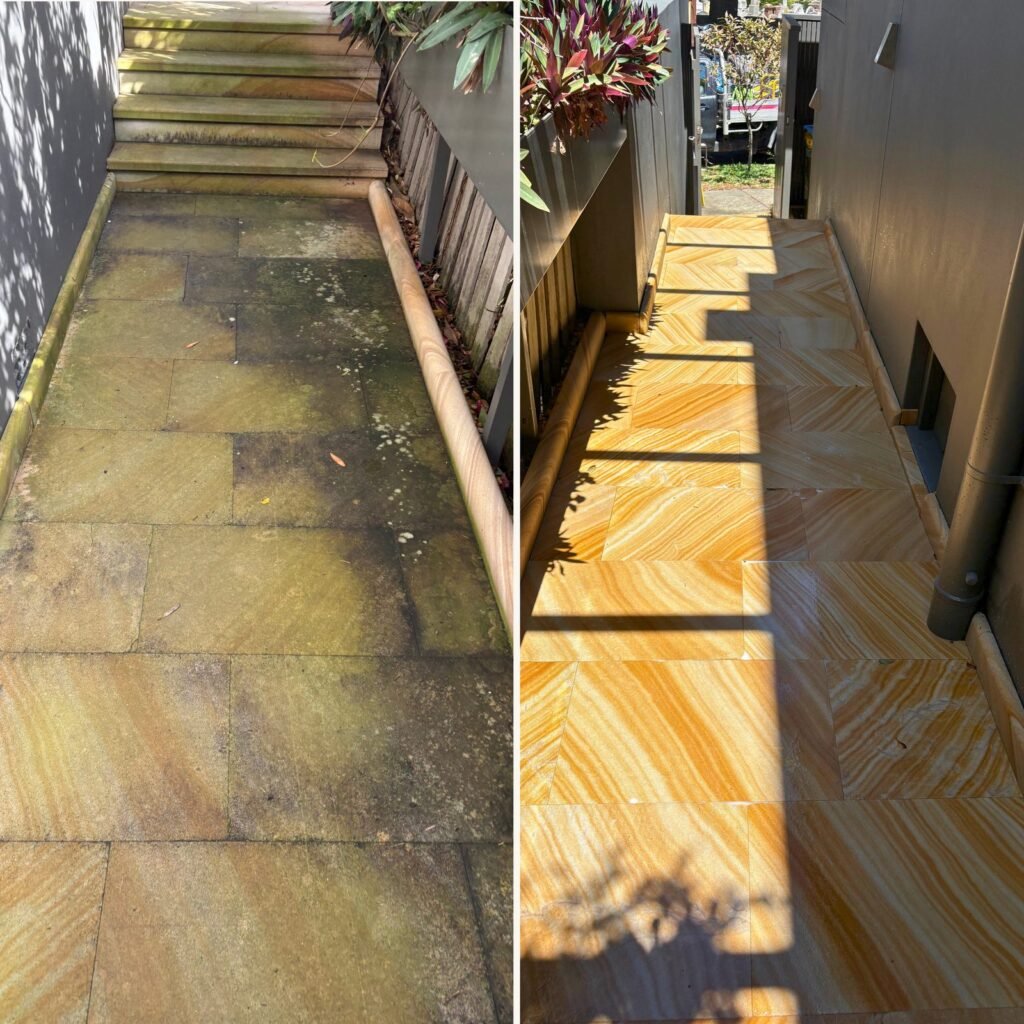
It is reliably the most damaged elevation on a Seaforth house: mould on the wall, algae on the path, moisture held against the brickwork by a retaining wall with poor drainage behind it, and a gutter run that nobody checks because it is hard to get to.
The practical approach is to deliberately schedule the uphill side annually, even though it is the part you never see. More: house washing.
The gap between wall and bank
Where a cut-in retaining wall sits close to the house, the gap between them collects leaf litter, stays permanently damp and is often too narrow for anyone to get into comfortably.
That channel is worth clearing. Wet organic matter packed against a wall at ground level is how moisture gets past a damp course, and it is the usual explanation for rising damp appearing on an internal wall on the uphill side.
Retaining walls
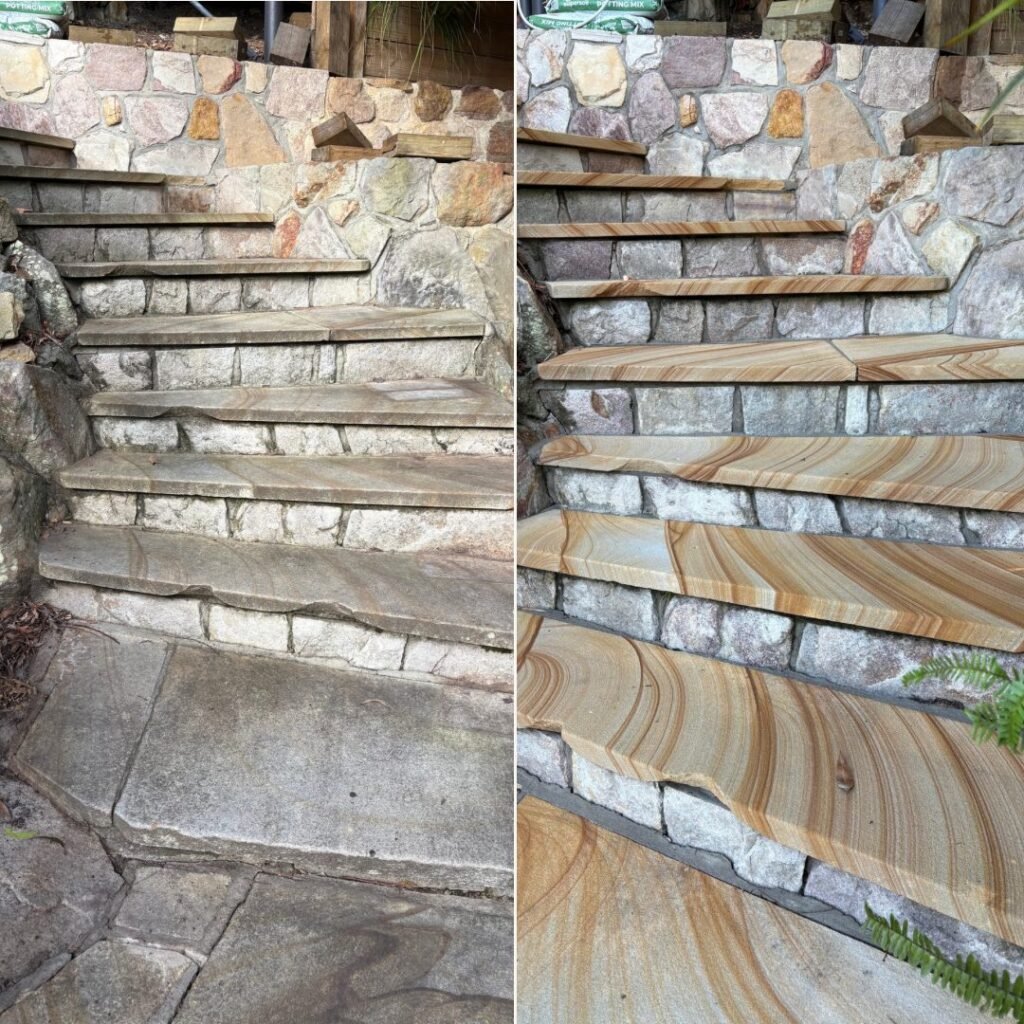
Seaforth is full of them, and they are drainage structures. With a wet hillside above, the pressure behind is real.
Bulging, stepped cracking, constant seepage through the face, or weep holes that run continuously are reasons for assessment before cleaning. More: retaining wall cleaning.
Harbour glass
Middle Harbour salt deposits in still air rather than scouring, and film builds on view glazing. It etches over years if never properly removed. Two to three professional cleans a year is realistic for a harbour-facing wall of glass. More: window cleaning.
Steep driveways
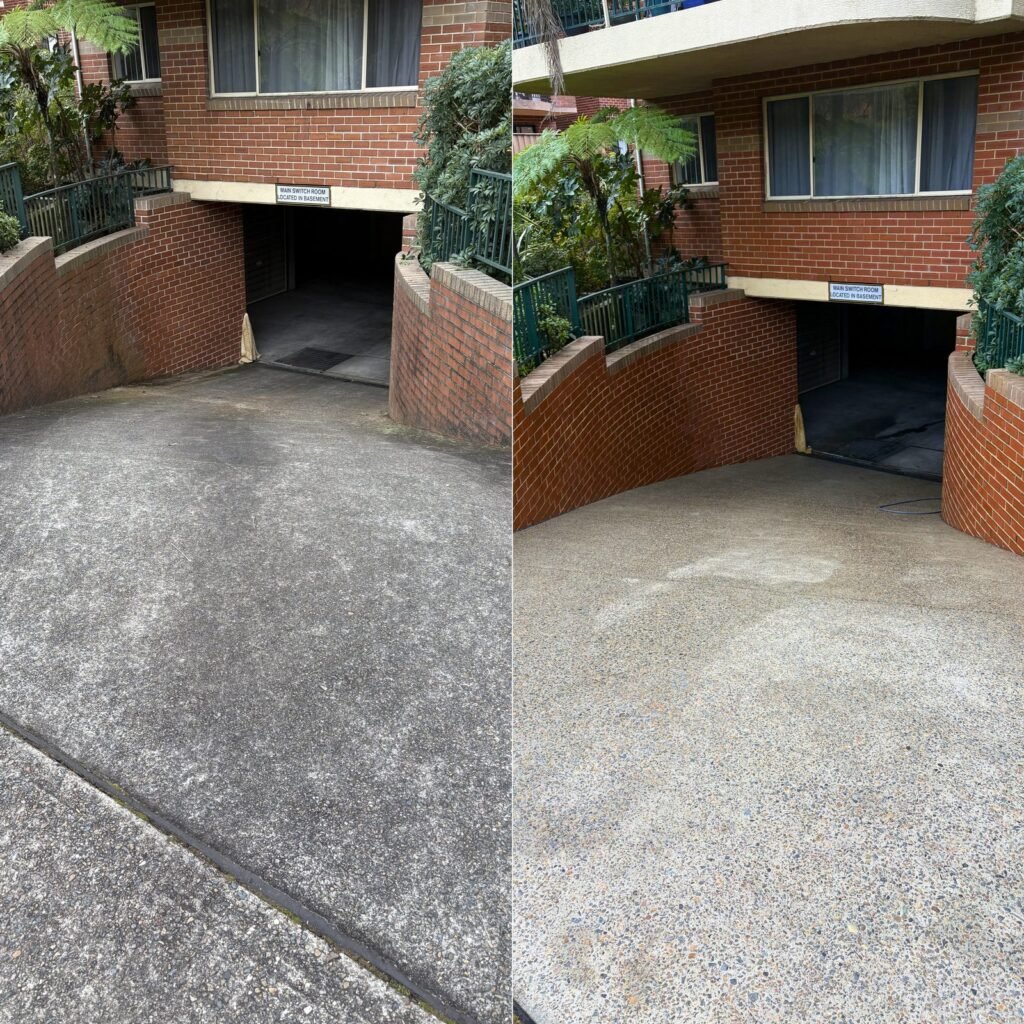
Driveways running steeply down to a garage below street level are a Seaforth signature. Moss on that gradient is a safety matter, and wash water has one direction to go: into the garage unless the drainage at the bottom is clear.
Checking the grate before starting is basic. More: driveway cleaning.
Decks over the slope
Harbour-facing decks on posts are common. The surface gets sun, but the underside is shaded and collects leaf litter and moisture around the post bases.
A realistic schedule
Uphill elevation and side paths: annually.
Harbour-facing elevation: every two years, glass two to three times a year.
Gutters and valleys: twice a year, including the uphill run.
Driveway: annually, drainage checked first.
Retaining walls: inspected annually.
See our Seaforth service page and the Northern Beaches overview.