Forestville sits above the upper reaches of Middle Harbour, bordered by Garigal National Park and the creek gullies that run down toward Bantry Bay and Killarney Heights. A large share of the housing is 1950s to 70s brick on blocks that fall away steeply to the rear.
What makes Forestville distinctive is what happens in those gullies overnight.
Cold air falls
Cold air is denser than warm air, so overnight it drains downhill and pools in the lowest ground. In a gully system like Forestville’s that means the bottom of every block is several degrees colder than the street.
Colder air holds less moisture, so it condenses. Dew forms heavily at the bottom of these blocks and lingers well into the morning because the gully is shaded and the sun arrives late.
The practical result is that the downhill portion of a Forestville property spends far more hours wet per year than the street frontage does, and everything biological runs faster there.
Where it shows
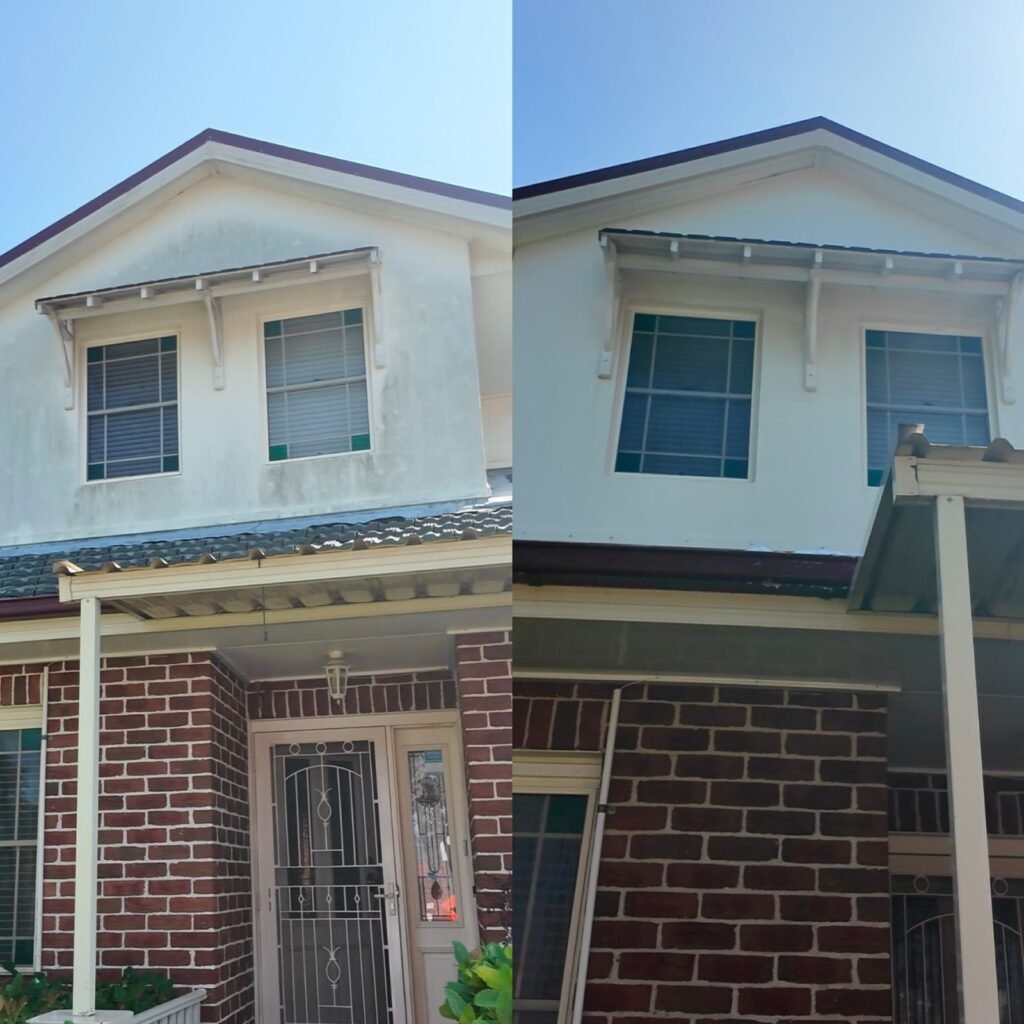
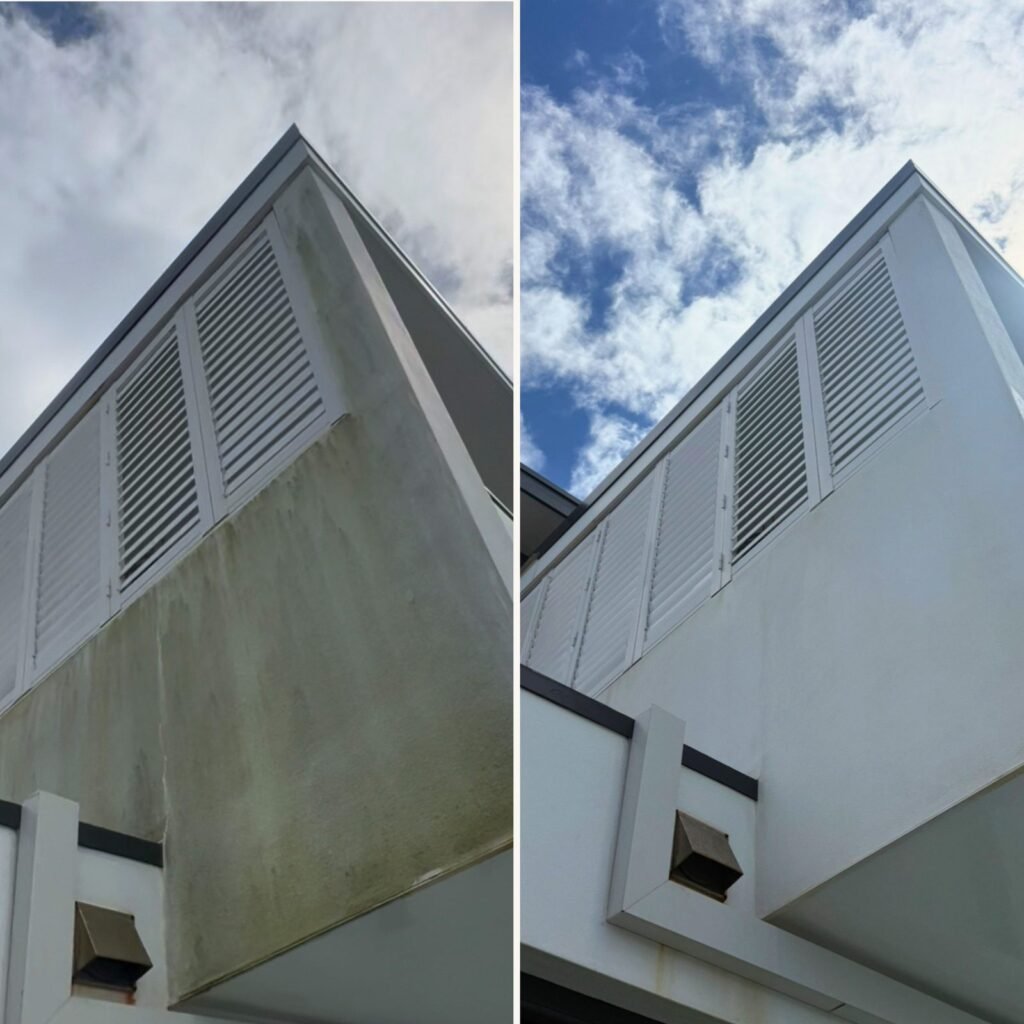
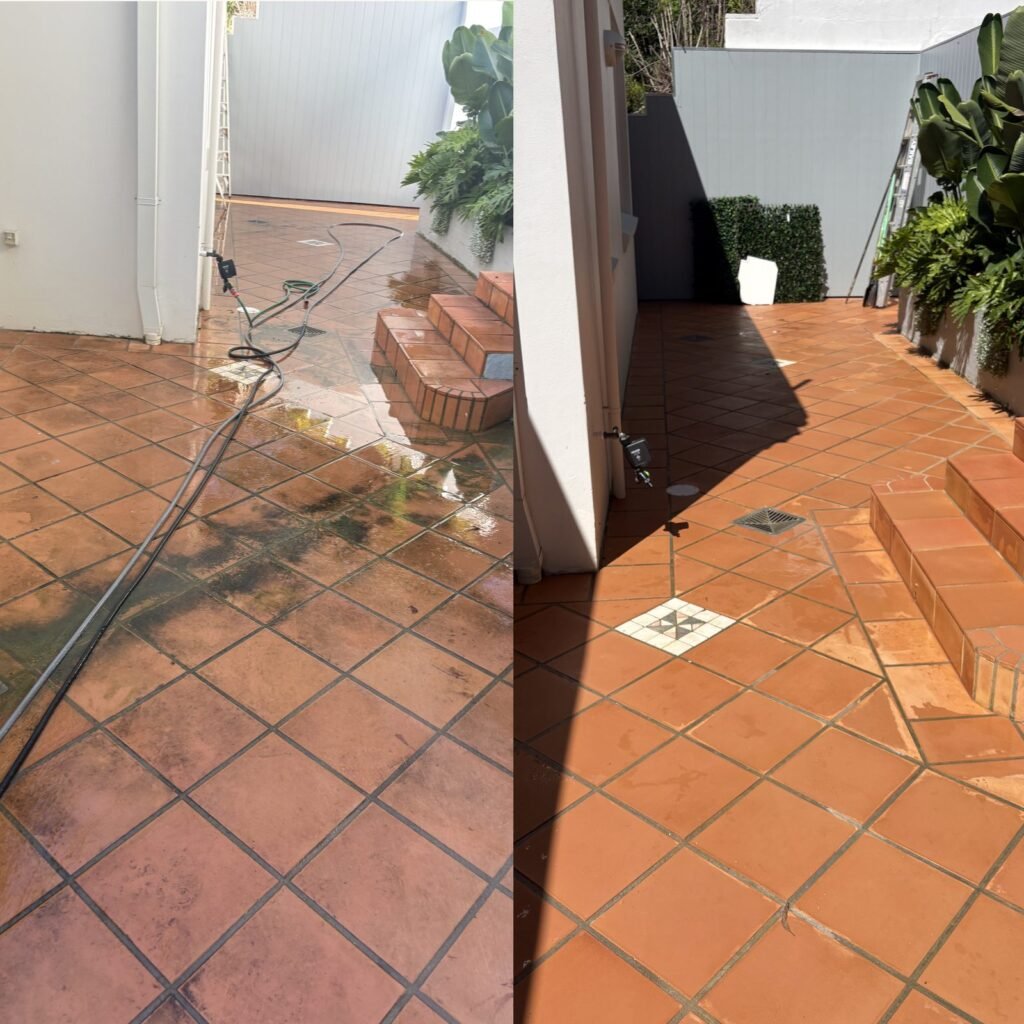
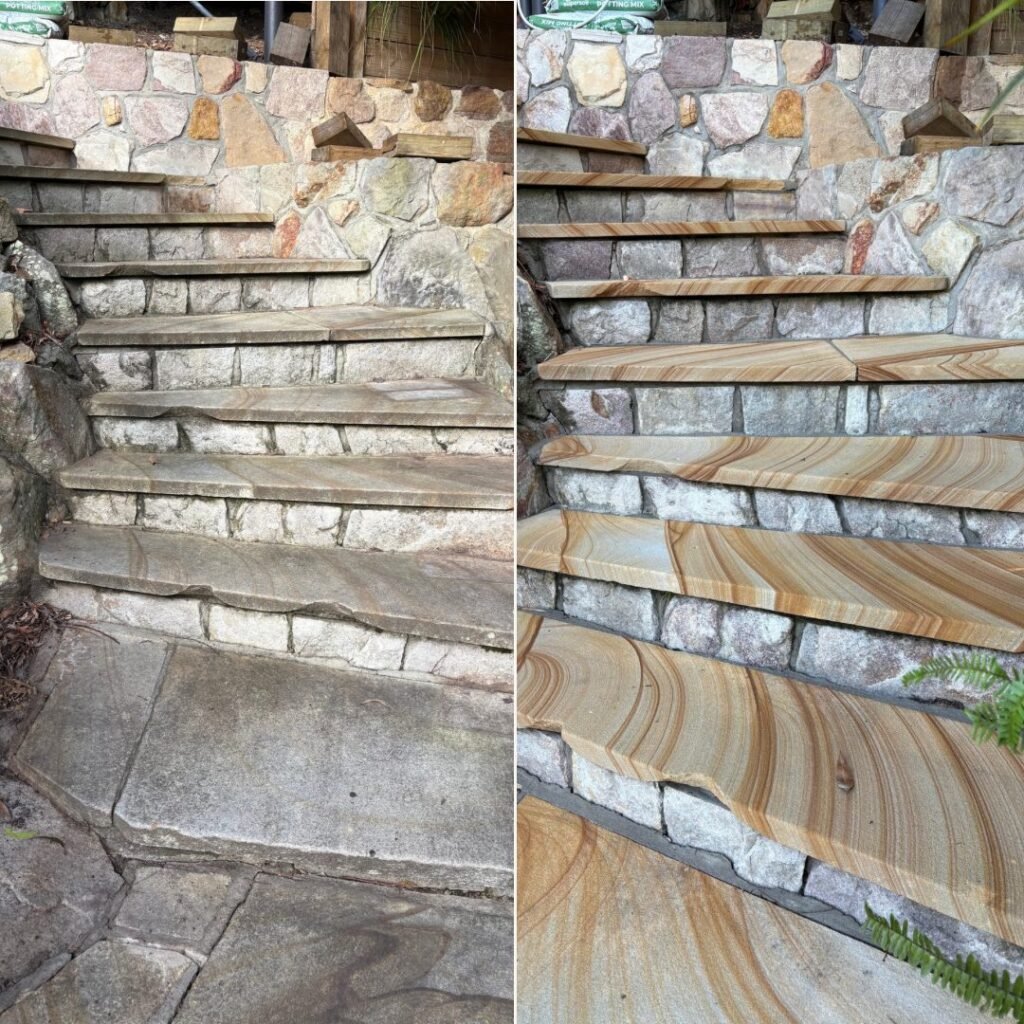
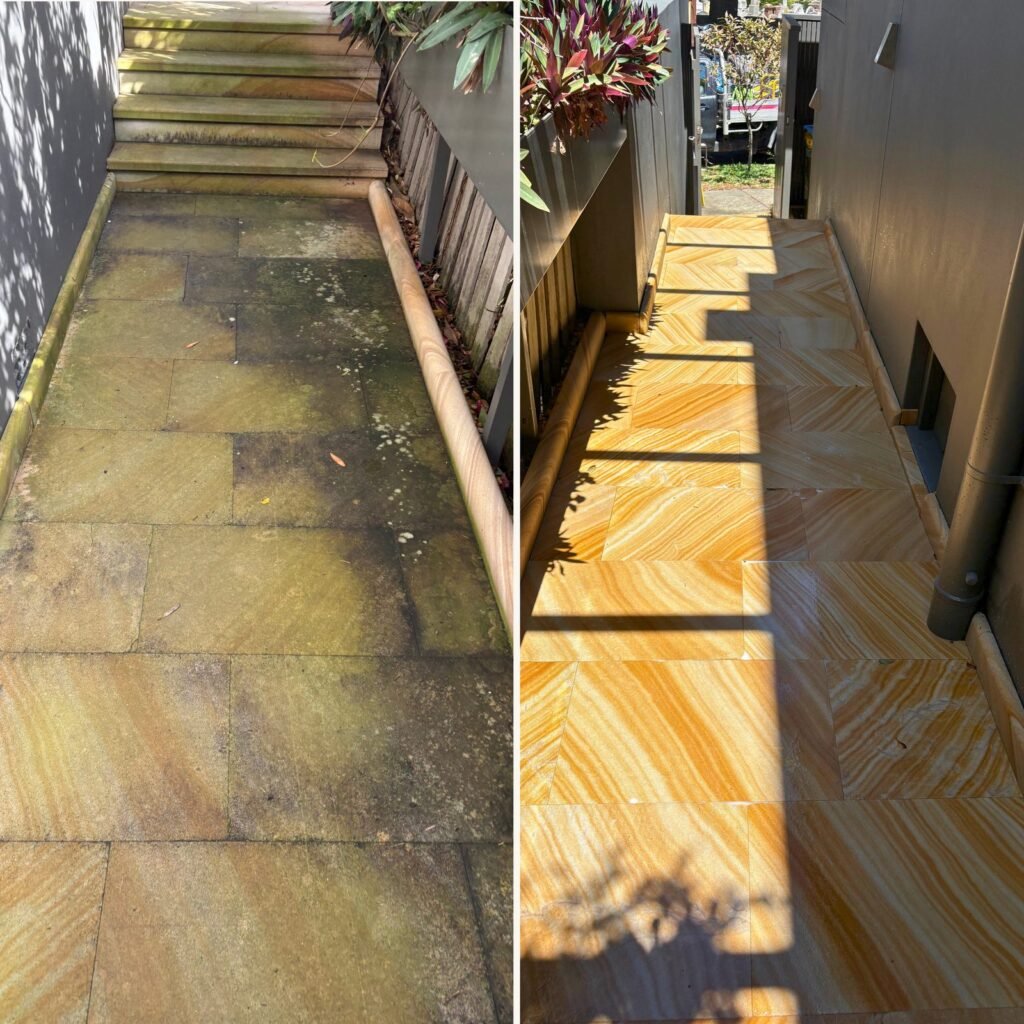
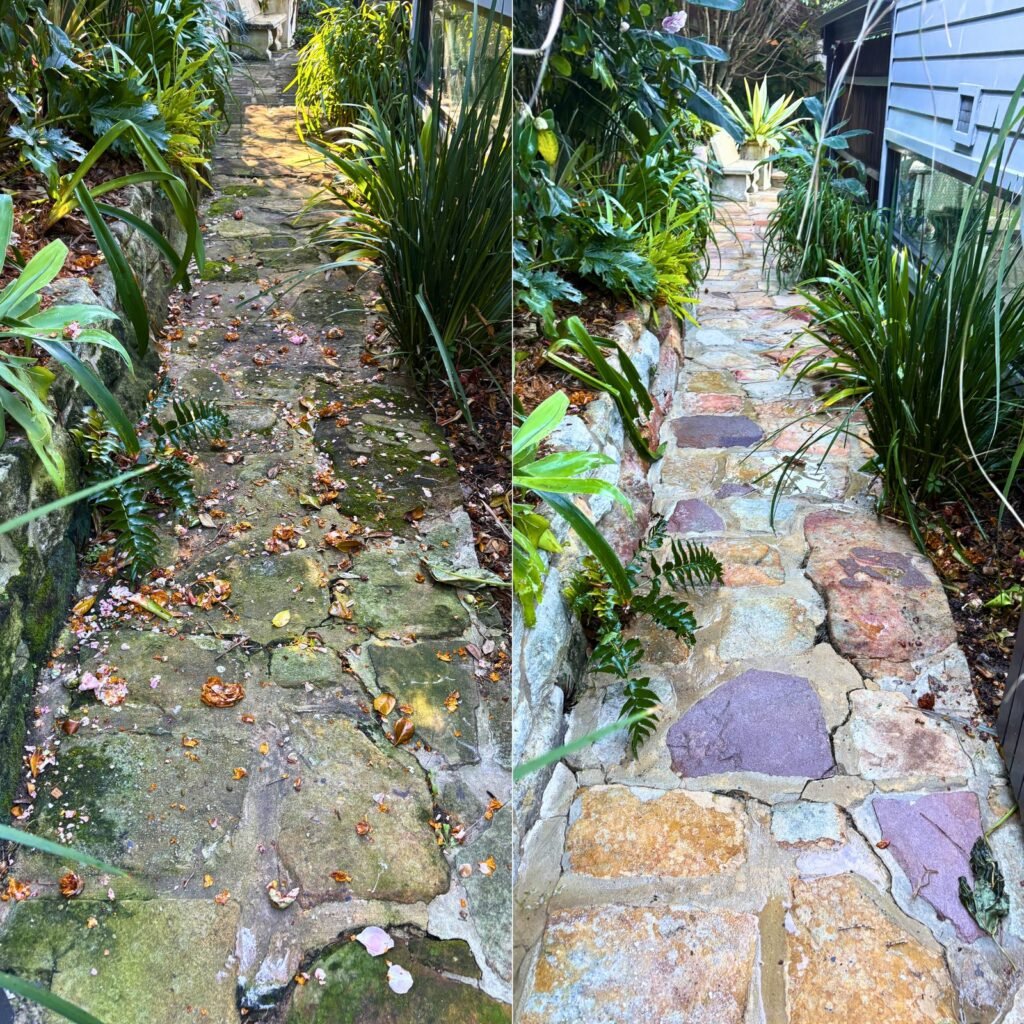
The rear elevation, consistently. Mould on brick and render, particularly in the lower metre. Algae on the rear deck and its stairs. Moss on the path down the side. Lichen on the rear pitch of the roof.
Owners often describe this as the house being dirty on one side, which is accurate but incomplete. It is the aspect and the air drainage, and it will return on the same side every time.
That is not a reason to skip it. It is a reason to clean the rear annually and the front every two to three years, rather than doing the whole house on one compromise schedule. More: house washing.
Decks over the gully
Rear decks on stilts over a falling block are a Forestville signature. They are shaded, damp and often high off the ground at the outer edge.
The surface grows algae and becomes slippery, which matters on a deck with a drop beside it. The structure underneath collects leaf litter that nobody ever clears, and the posts sit in ground that stays wet.
Timber decking needs low pressure. High pressure raises the grain, which roughens the surface, which holds more water and grows faster next time. More: cleaning timber structures.
Gutters and gully leaf fall
Gully vegetation is dense and the trees are tall. Rear gutters fill considerably faster than front ones, and on a falling block the overflow runs down toward the house’s own foundations or the deck below.
Roof valleys on the rear pitch fill the same way and are invisible from anywhere an owner can stand. More: gutter cleaning.
Bushfire
Garigal National Park and continuous gully vegetation, with fire running uphill toward the houses. Gutters, valleys and under-deck debris all need clearing before the season, timed for spring.
Retaining walls
Falling blocks mean retaining structures, and with a wet gully below and water moving through the site, drainage behind those walls matters. Bulging, stepped cracking or constant seepage means assessment before cleaning. More: retaining wall cleaning.
A realistic schedule
Rear elevation, deck and stairs: annually.
Front and sides: every two to three years.
Rear gutters and valleys: three times a year; front twice.
Clear under decks before fire season.
See the Northern Beaches overview.