For most Sydney homes the answer is twice a year — but the timing of those two cleans matters more than the number, and some properties genuinely need more.
The schedule that works
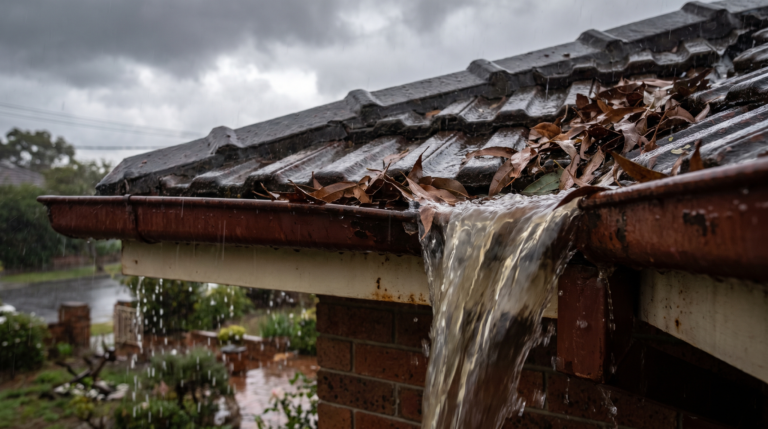
Late autumn, after the main leaf drop, so gutters go into winter clear. And late spring, before the summer storm season — because a blocked gutter‘s moment of truth is the first serious downpour, when water that can’t get down the downpipe goes backward under the roofline, into the eaves and down the wall cavity instead. Ceiling damage from that path routinely runs into five figures.
Properties that need more than two
Under heavy canopy. Homes beneath the mature figs and plane trees through Woollahra, Queens Park, Randwick and Centennial Park can fill a gutter in a couple of months during the drop. Three or four cleans a year isn’t excessive there.
Coastal homes. Salt accelerates gutter corrosion, and the combination of salt with wet, compacted leaf litter is dramatically worse — it holds a corrosive damp mat against the metal year-round. Keeping coastal gutters clear and dry is the single biggest factor in whether they last a decade or three.
Flat and low-pitch roofs. Less fall means debris sits rather than washing through; check more often.
The part most people miss: the downpipe
A gutter can look immaculate and still overflow, because the blockage is at the downpipe bend or in the stormwater line below. Compacted litter and silt form a plug that no amount of gutter scooping touches. A proper clean flushes and flow-tests every downpipe — if yours doesn’t include that, it’s half a job.
Signs you’re overdue right now
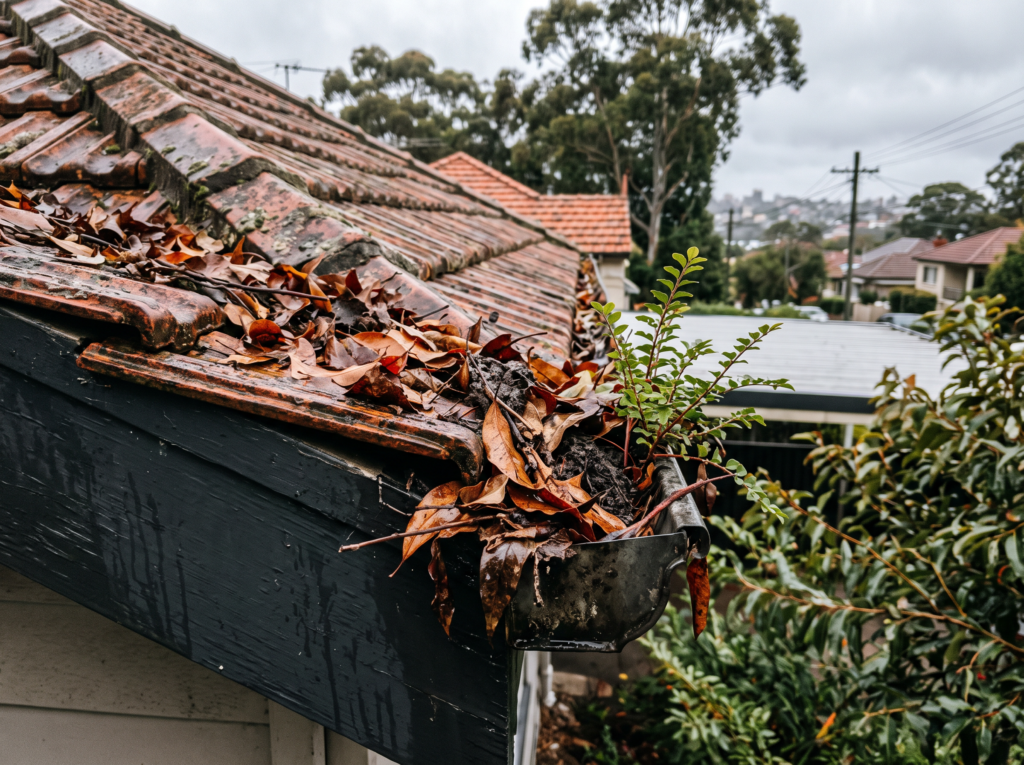
Plants sprouting from the gutter line, water sheeting over the edge in rain, tiger-striping down the gutter face, sagging sections, or birds working the roofline. Any of those means the gutters are past due, not approaching it.
Worth doing while someone’s up there
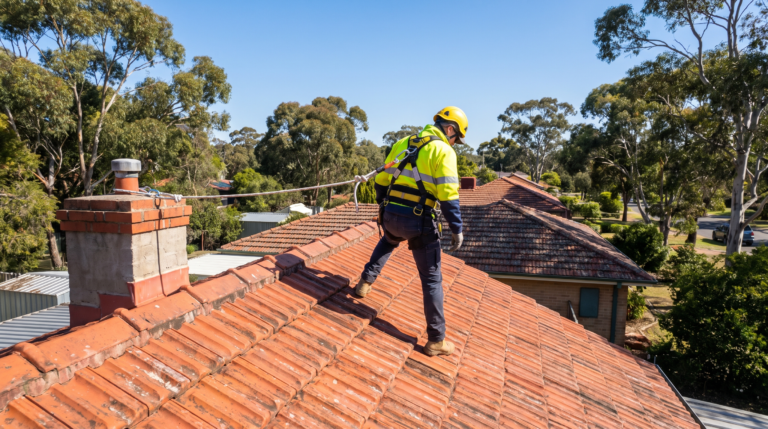
Gutter cleaning is also an inspection: rust, failed brackets, cracked tiles, damaged flashing and lifted pointing are all visible from the gutter line and cheap to fix early. We photograph and report anything we find — it’s the most valuable ten minutes of the job.