Pressure Washing
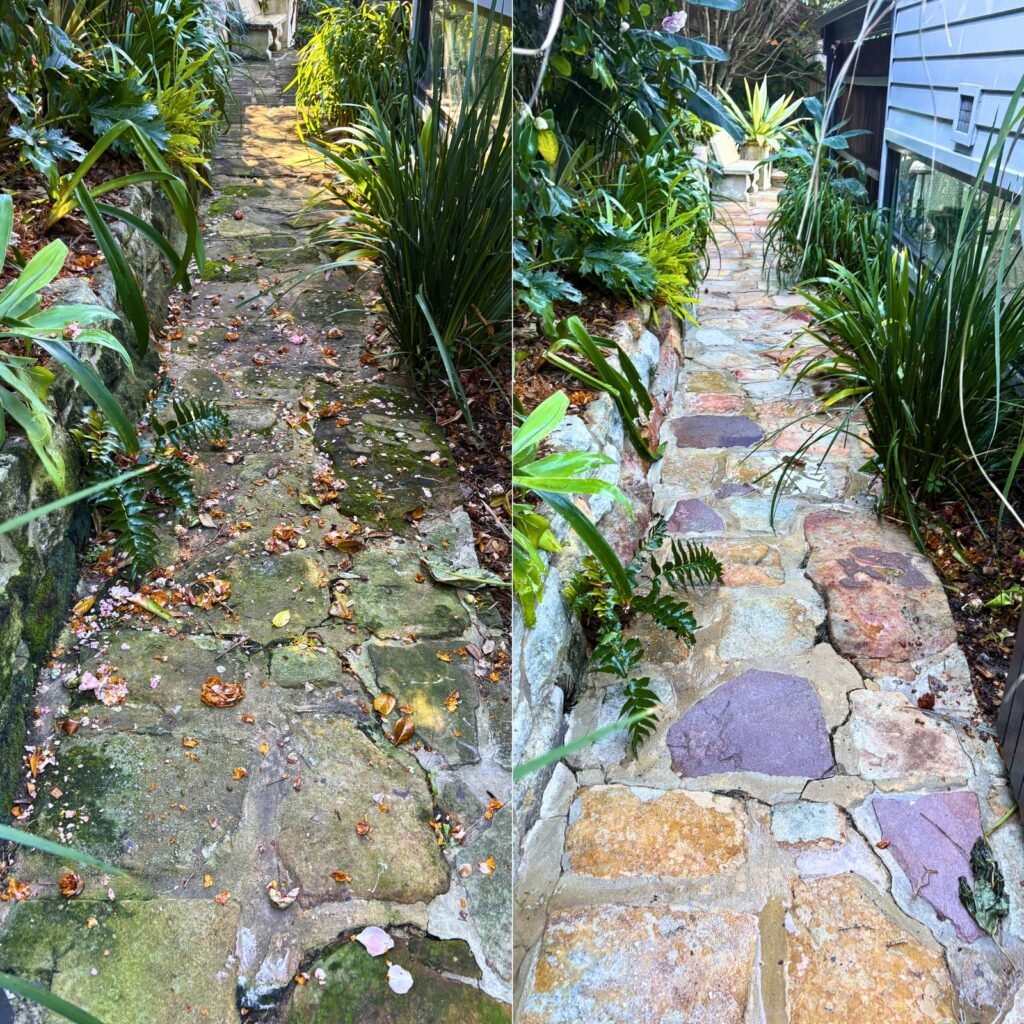
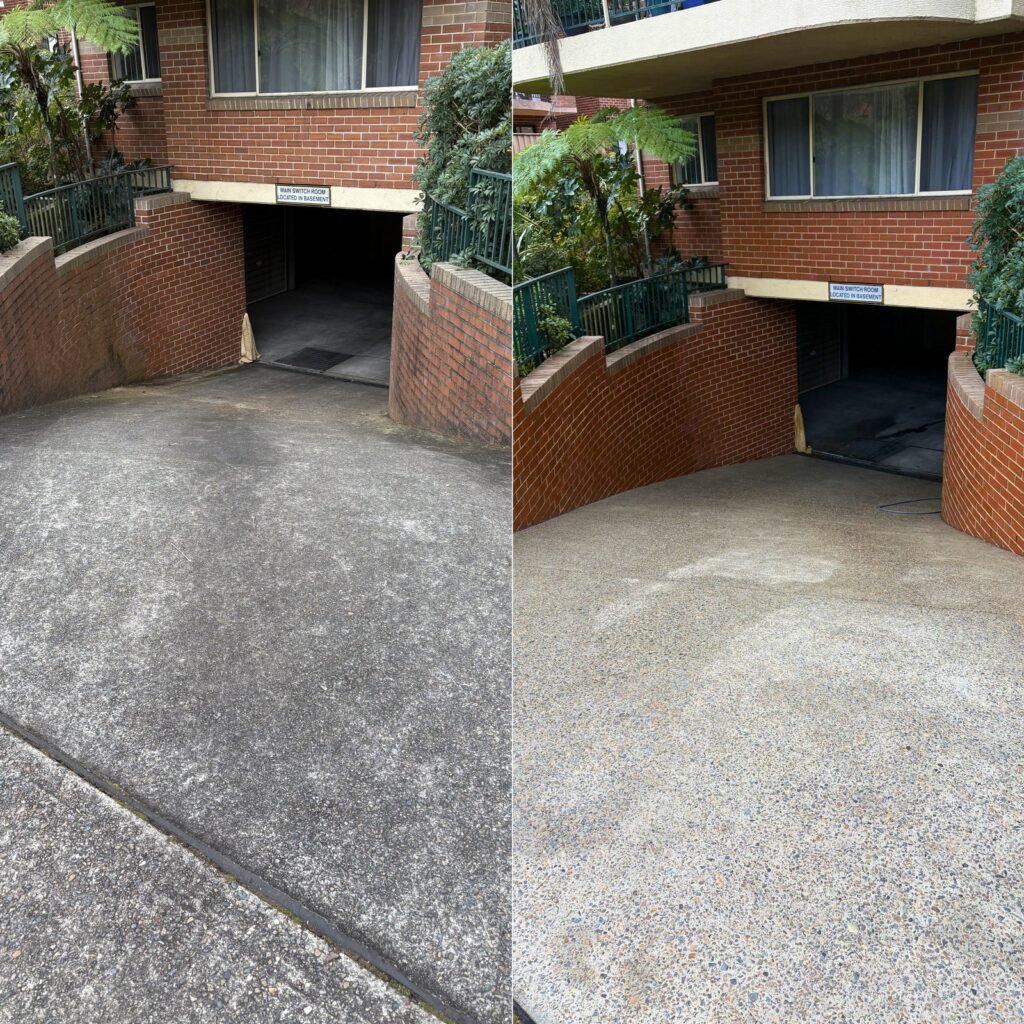
Pressure washing Sydney: driveways, paths, pool surrounds and hard surfaces cleaned evenly with surface cleaners and pre-treatment — never wand-striped, never over-pressured. Fixed written quotes.
Pressure washing is the fastest way to pull years of grime, algae and traffic staining off hard surfaces — when it’s done at the right pressure. Too much force permanently etches soft stone and strips the surface off aged concrete, and it’s the single most common damage we’re called in to fix after someone else’s job.
What we pressure clean
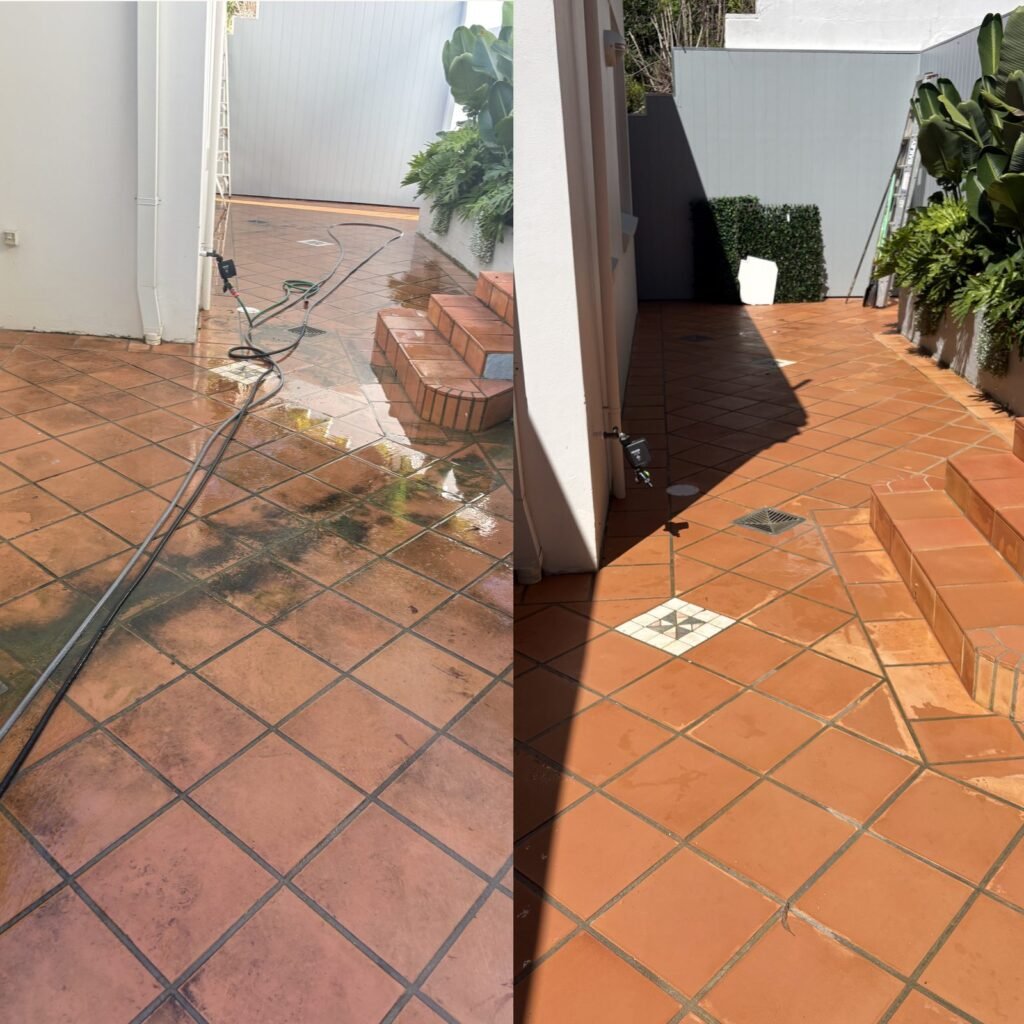
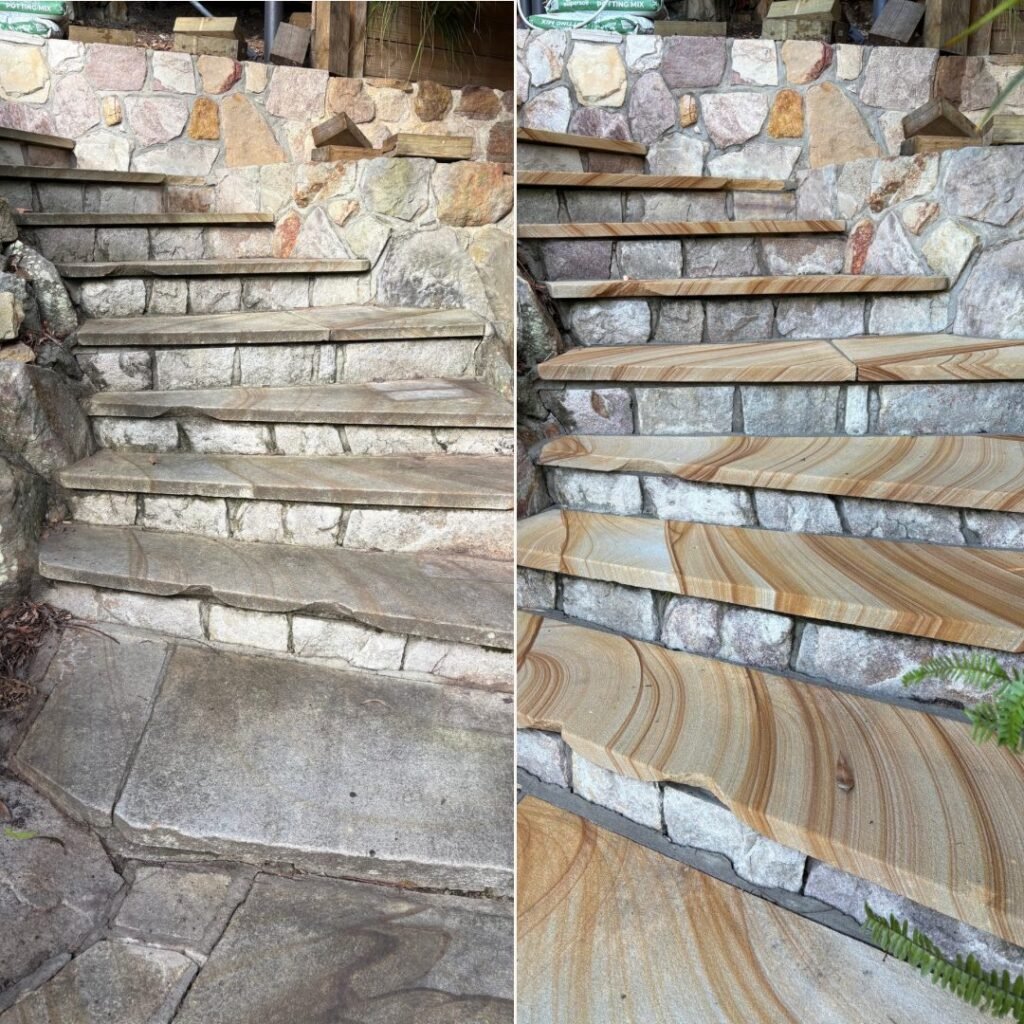
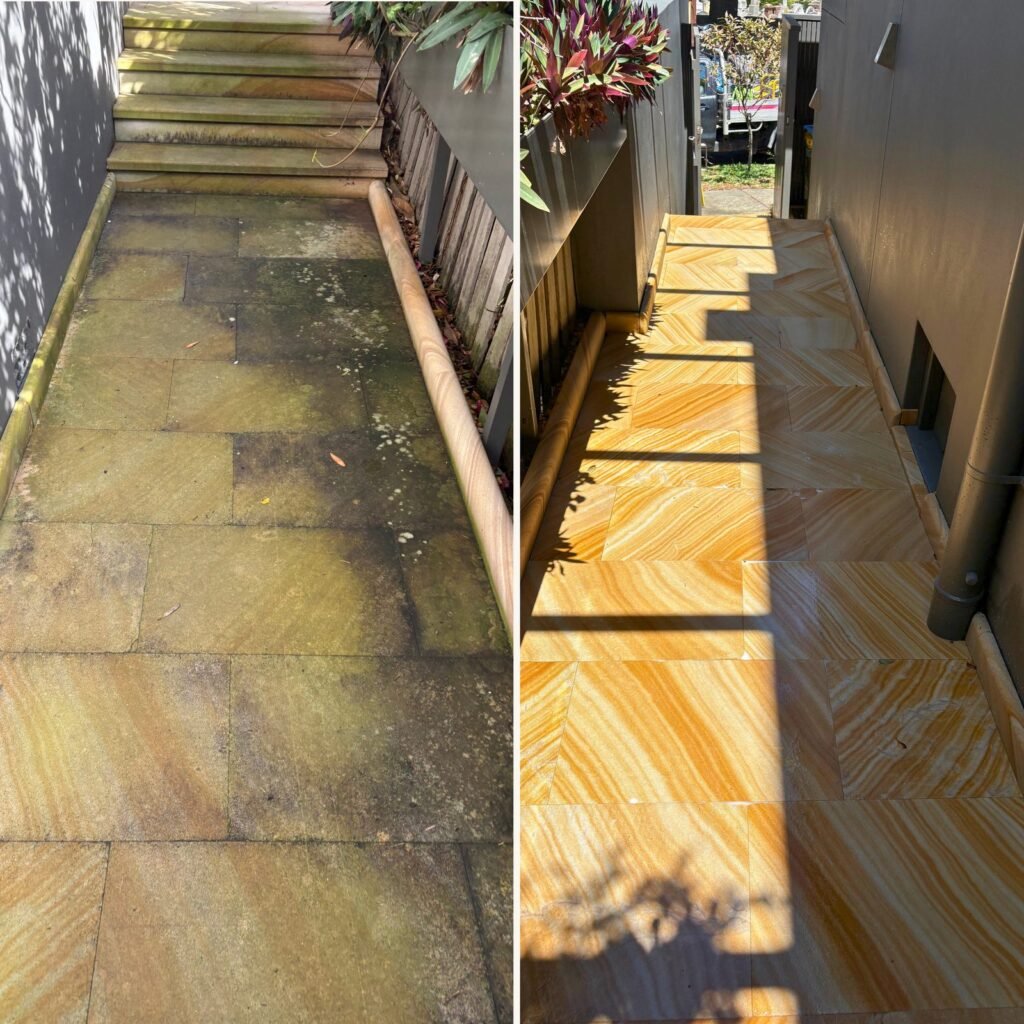
Driveways, garage aprons, footpaths, entertaining areas, pool surrounds, retaining walls, stairs, garden edging and commercial forecourts. Concrete, bluestone, exposed aggregate, brick paving, porcelain and tile.
Why Eastern Suburbs surfaces get dirty faster
Homes between Bondi and Vaucluse sit in a band of high humidity and constant salt-laden air. That combination feeds black algae and lichen in shaded, south-facing areas, while salt crystallises in the pores of paving and slowly breaks the surface down. Older Paddington and Woollahra terraces add a second problem: much of the paving is soft, heritage-era brick or sandstone that cannot take the pressure a modern driveway handles without complaint.
How we work
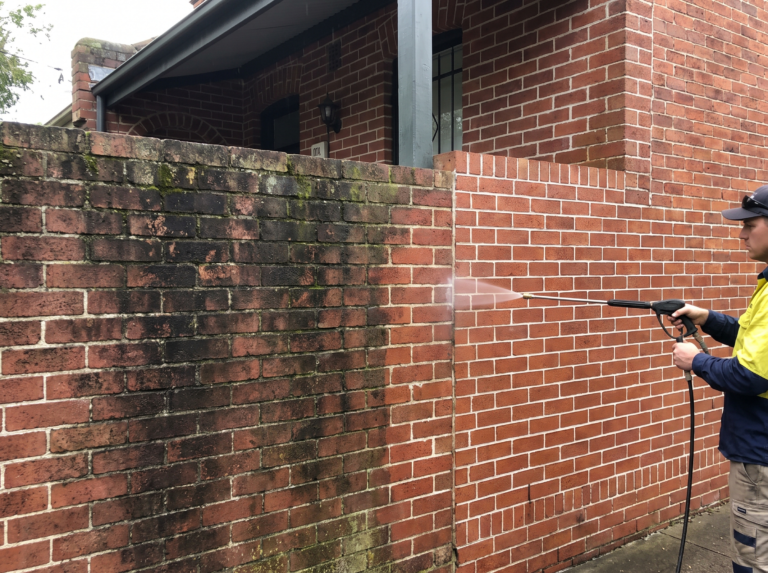
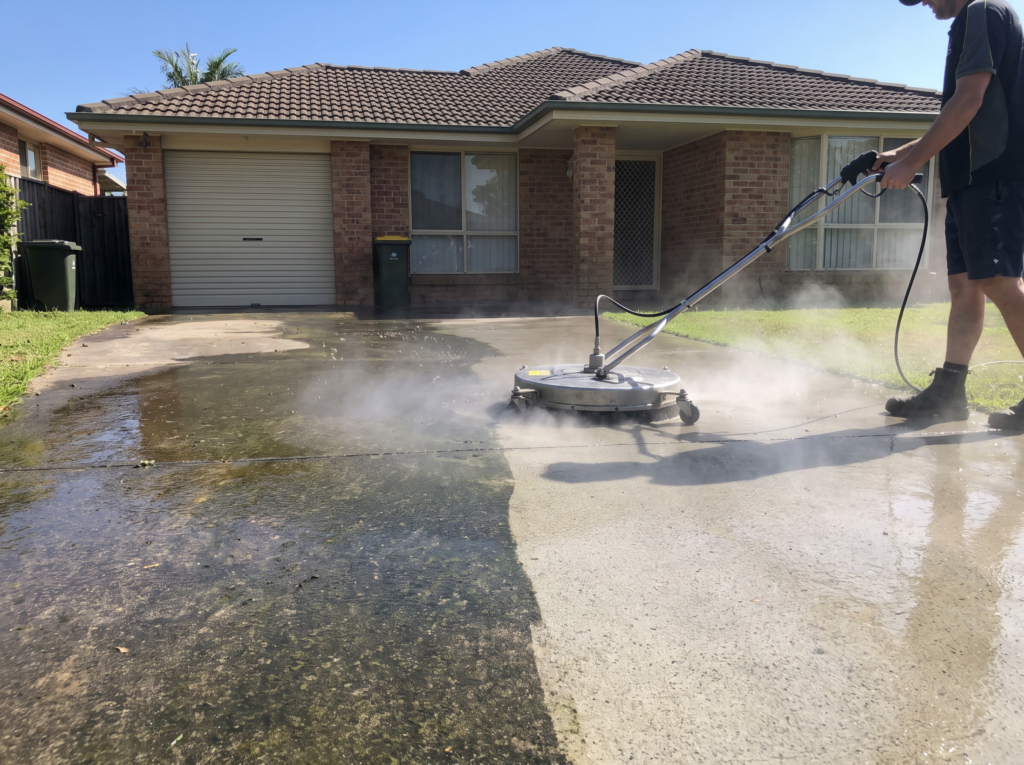
We test an inconspicuous section first, then pre-treat organic growth so it’s killed at the root rather than just blasted off the top — untreated lichen returns within months. Surface cleaners give an even finish without the wand striping you see on rushed jobs, and every surface is neutralised and rinsed before we leave.
Sealing is available on completion for paving and stone, which keeps the result far longer in coastal conditions.
Pressure washing questions
Which surfaces should never be pressure washed?
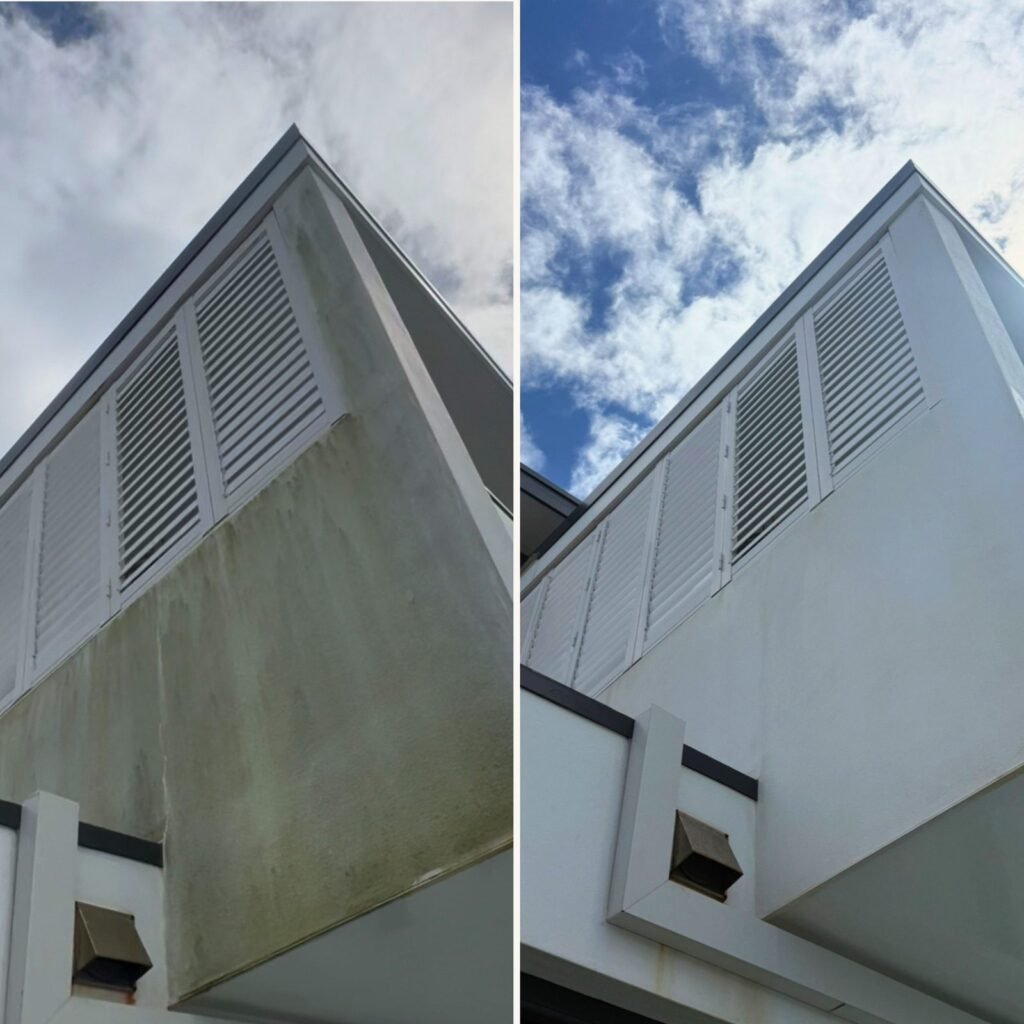
Render, painted brick, weatherboard, fibre cement and most cladding — those get soft washed instead. On hard surfaces the list of exceptions is longer than people expect: aged sandstone, soft heritage-era brick common through Paddington and Woollahra, lime mortar joints, older tuckpointing, and any concrete where the surface has already started to spall. Timber decking needs a different approach again, because pressure follows the grain and raises the fibres. The general rule is that if a surface is soft, aged, or the binder holding it together has begun to fail, pressure will accelerate the failure rather than clean it.
Why do some cleaned driveways go green again within months?
Because the growth was blasted off rather than killed. Lichen and black algae anchor into the pores of the surface, so removing what is visible leaves the root structure intact and it regrows from the same points. That is why we pre-treat with a biocide and let it dwell before cleaning — the surface comes up the same either way on the day, but the difference shows at the six-month mark. A pre-treated surface stays clean roughly two to three times as long in Eastern Suburbs conditions.
What causes the stripes on a badly cleaned driveway?
Wand marks. A pressure wand cleans in a narrow arc, so the operator has to overlap each pass perfectly to avoid leaving a lighter band where the jet concentrated and a darker one where it didn’t. On a large area that is nearly impossible by hand, which is why we use rotary surface cleaners for open expanses — they hold a constant distance and speed across the whole width. Once striping is etched into concrete it cannot be washed out; the surface has to be cleaned down past that depth to even it up.
Do I need to be home during the work?
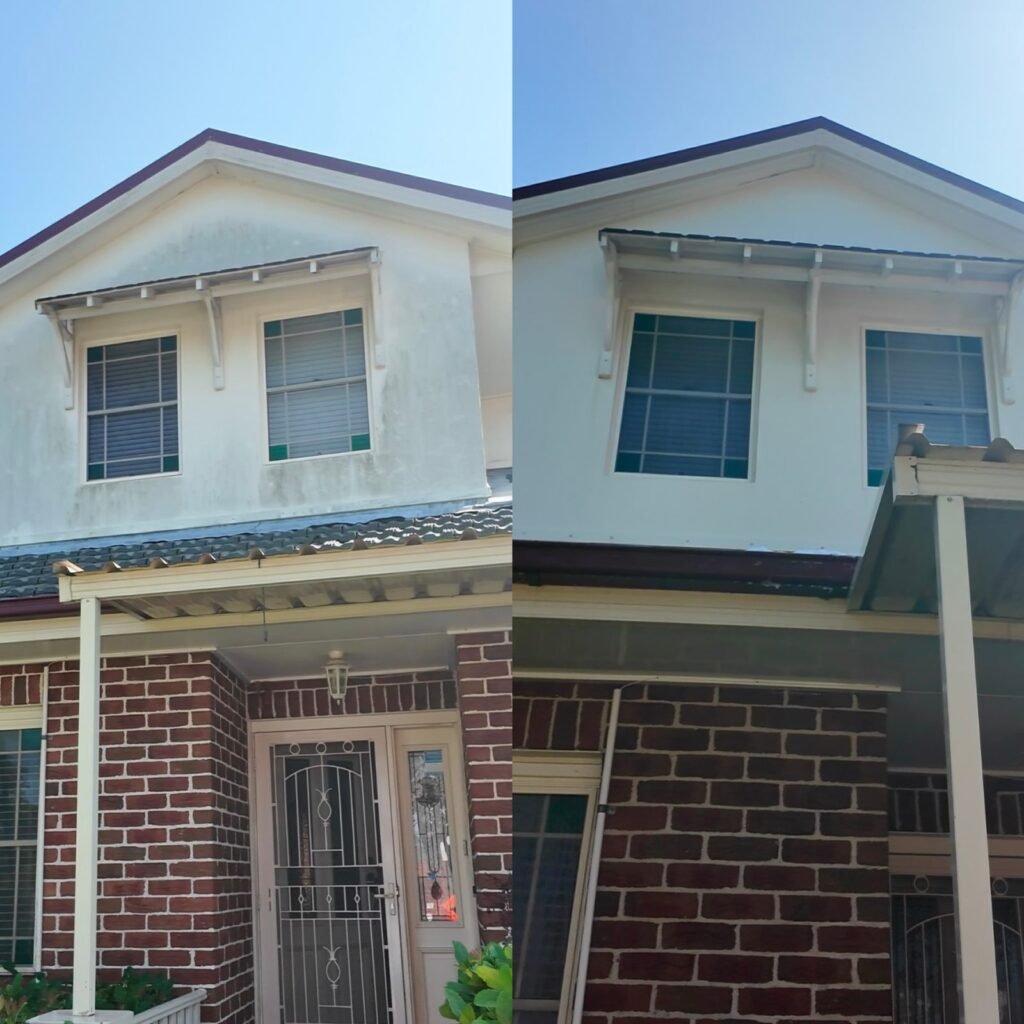
No, provided we have access to the area and a water point. Most driveway and pathway work happens without the owner present. What we do need to know in advance is anything sensitive nearby — delicate planting, unsealed timber, a pond, or garage door seals that have already perished — so we can protect it. You get before-and-after photos regardless of whether you were there.
Does pressure washing use a lot of water?
Less than a garden hose over the same period, because the pressure does the work instead of volume. A typical driveway clean uses a fraction of what most people assume. We also capture and direct runoff appropriately rather than letting slurry run into stormwater, which matters more in the Eastern Suburbs than inland given how directly most streets here drain toward the beaches.
Is sealing afterwards worth the extra cost?
On porous surfaces near the coast, generally yes. Sealed paving stops absorbing the salt-laden moisture that crystallises inside the pores and pushes the surface apart, and it makes every subsequent clean quicker because nothing has bonded into the stone. On dense, modern, non-porous surfaces the case is weaker and we will tell you so. Sealing is worth doing properly or not at all — a seal applied over a surface that hasn’t fully dried traps moisture underneath and clouds.
Get a fixed written quote
Itemised by surface, priced before we start, and never finished until you've walked the property with us.
Request a Free Quote