Solar Panel Cleaning
Solar panel cleaning Sydney: salt film, dust and droppings removed with deionised water and soft brushes — panels cleaned cool, systems isolated, with a photo report of the array.
Solar panels only make money when light reaches the cells — and in coastal Sydney, a surprising amount doesn’t. Salt film, dust, pollen, bird droppings and the sticky fallout from overhanging trees build into a layer that cuts real output. Industry testing consistently puts the loss from soiled panels at 5–20%, and higher where droppings shade individual cells — because on many systems, one shaded cell drags down the whole string.
Why Eastern Suburbs panels soil faster
The same salt-laden air that films your windows films your panels, and it’s hygroscopic — it holds moisture that then binds dust and pollen to the glass. Rain doesn’t fix this; it redistributes the grime and dries in streaks, which is why “the rain cleans them” panels still measure down on output. Add the fig and gum canopy over Woollahra, Randwick and Queens Park dropping organic debris, and gulls along the coast, and panels here need cleaning more than almost anywhere in the country.
How we clean — and why the method matters
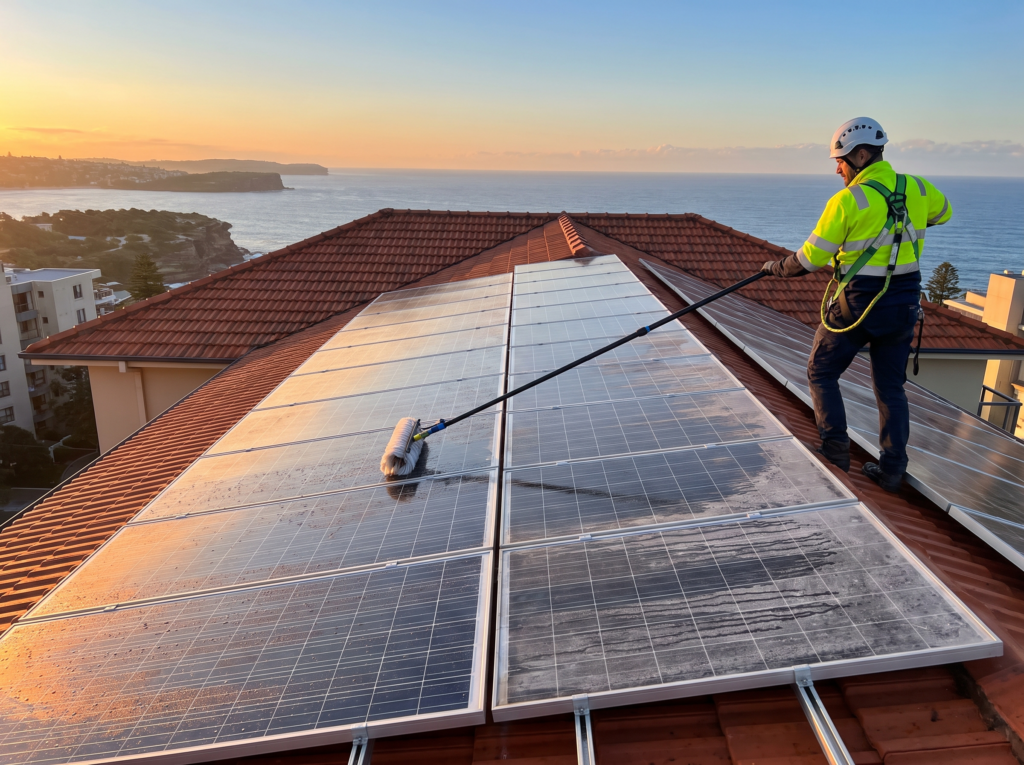
Solar glass and its anti-reflective coating are easily damaged by the wrong approach. We use deionised water and purpose-made soft brushes only — no detergents (they leave a film and can void manufacturer warranties), no high pressure (it can crack cells, force water into junction boxes and delaminate panel edges), and no abrasives.
Panels are cleaned cool, scheduled early morning, because cold water on hot glass is a thermal-shock crack risk. Deionised water dries spot-free, leaving nothing on the glass for the next round of dust to stick to.
And because this is roof work, it’s rigged like roof work: harness and anchor points on pitched roofs, proper edge awareness on flat ones.
What you get
Every panel cleaned and rinsed, frames wiped down, and a photo report noting anything we see up there — cracked glass, lifted cable connections, corrosion on mounting hardware, or growth encroaching under the array. It’s the inspection your system otherwise never gets.
How often
Coastal and under-canopy systems: every 6 months. Elsewhere: annually is usually enough. If your monitoring shows generation drifting down year-on-year with no fault flagged, soiling is the most common culprit — and the cheapest one to fix. Solar cleaning pairs naturally with roof cleaning and gutter clearing in a single visit.
Get a fixed written quote
Itemised by surface, priced before we start, and never finished until you've walked the property with us.
Request a Free Quote