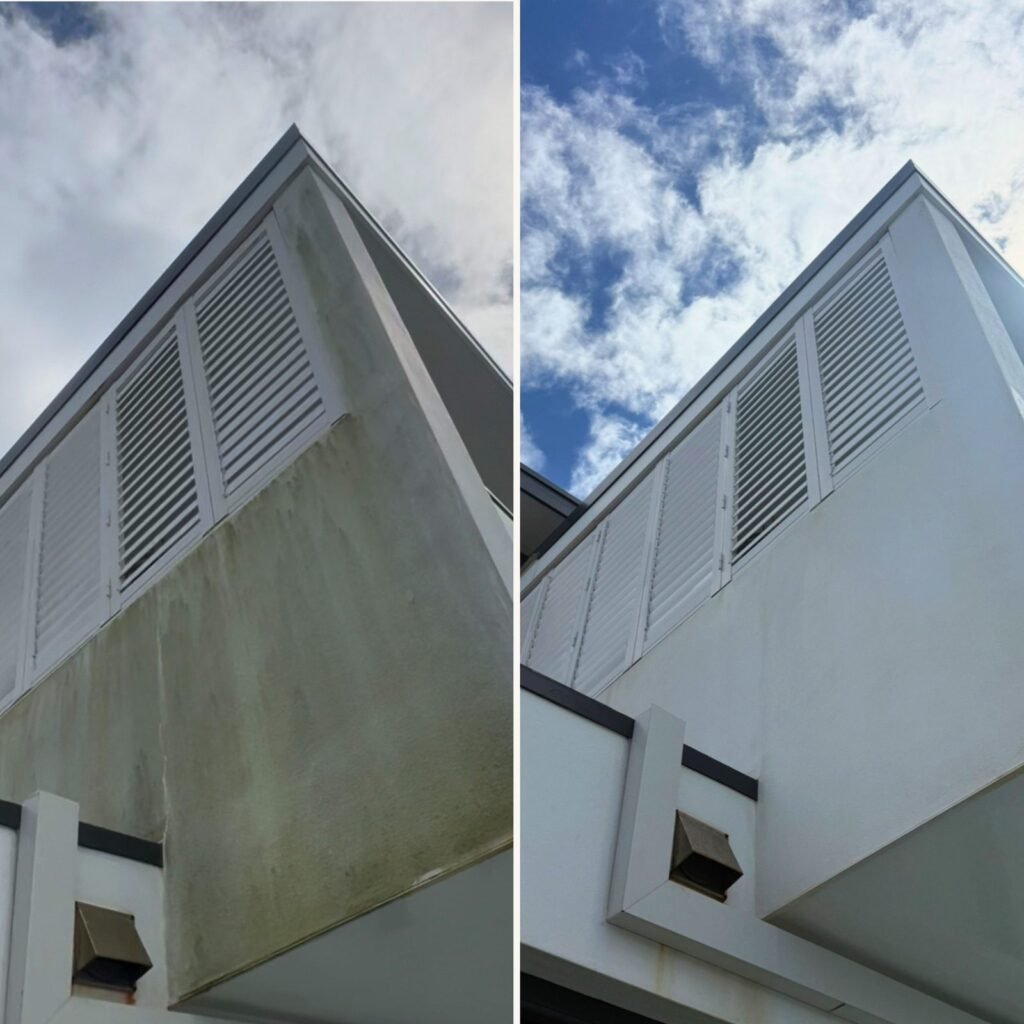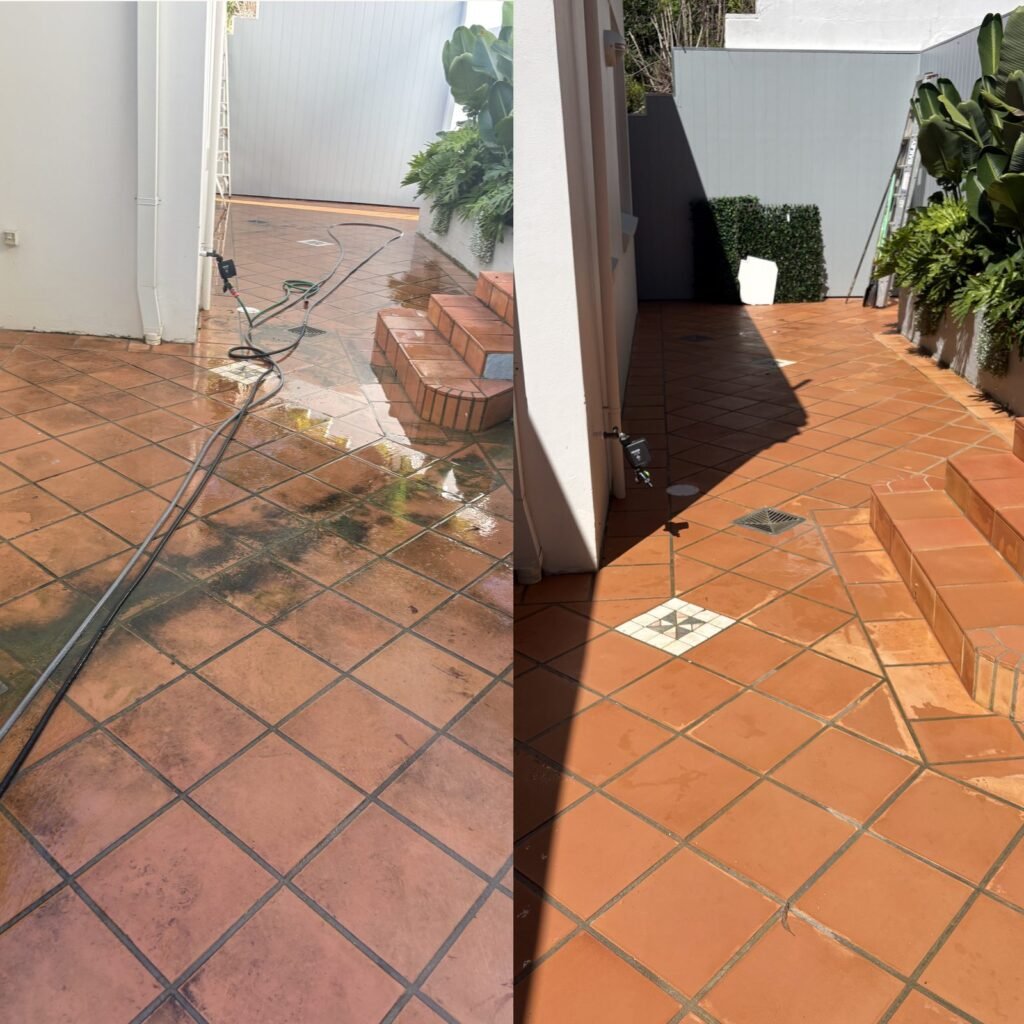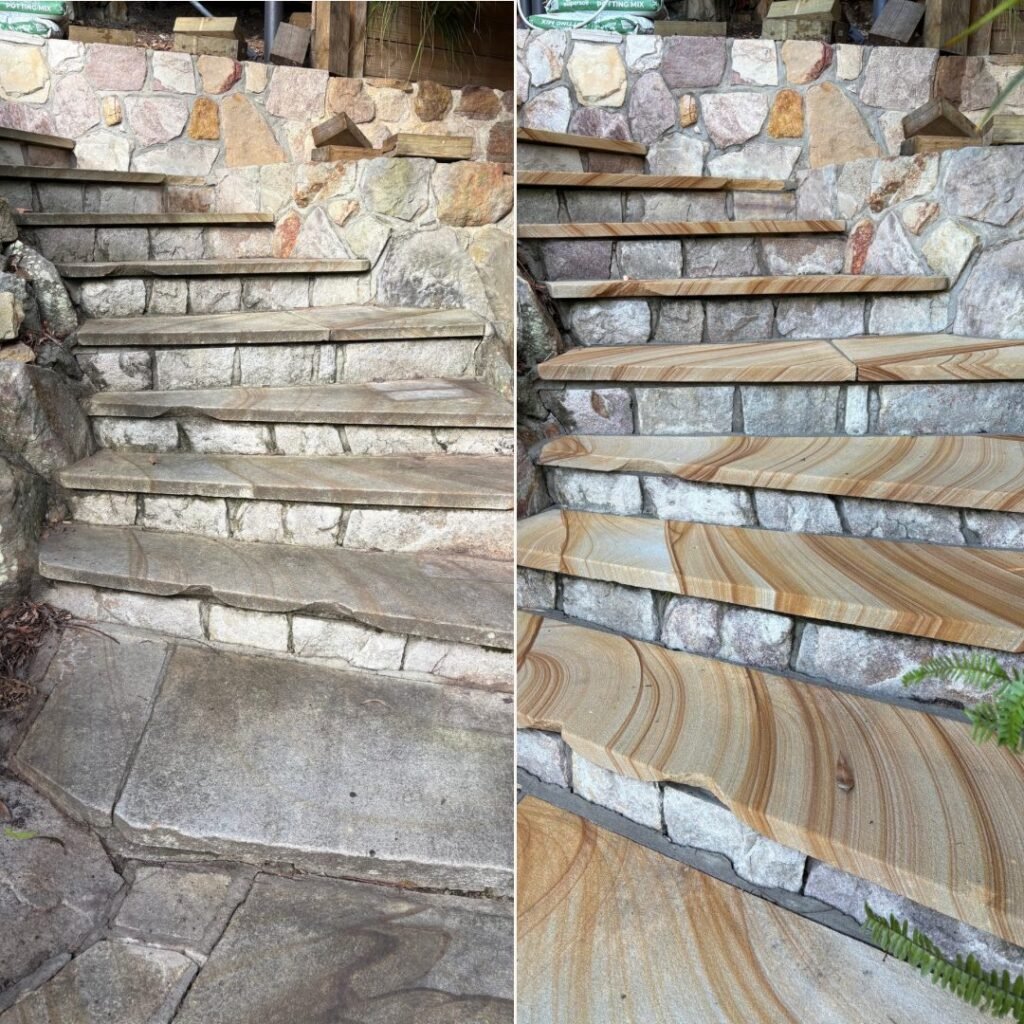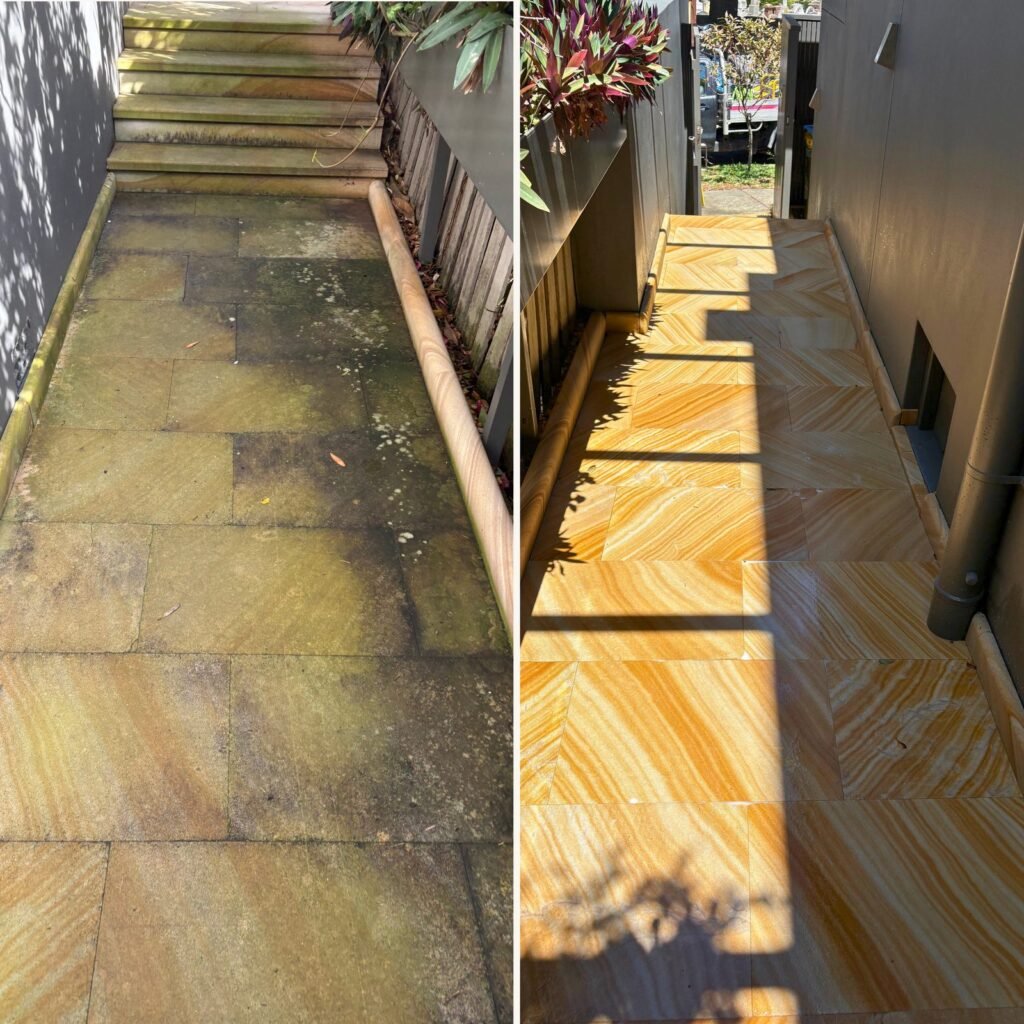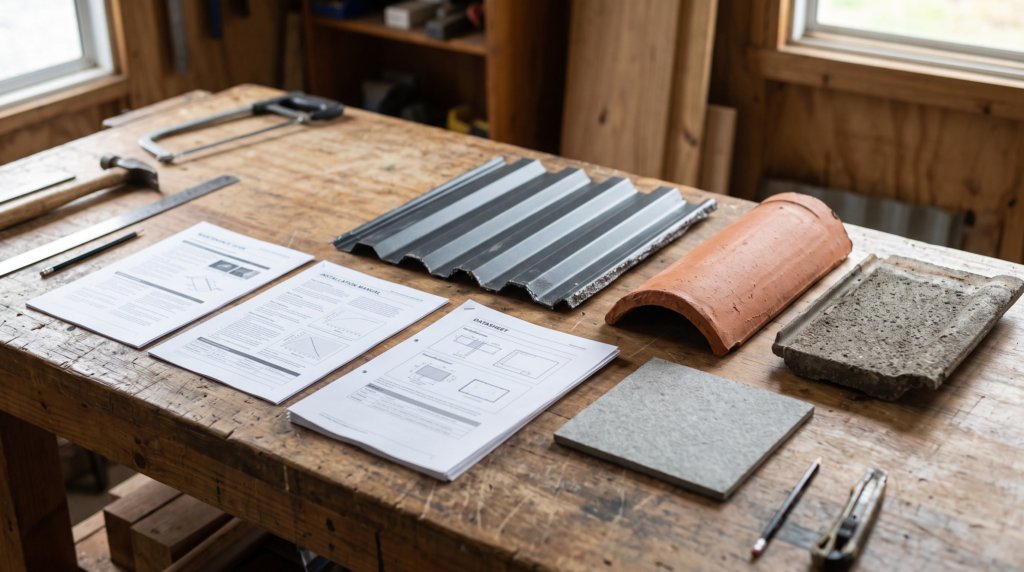
Most arguments about exterior cleaning method are settled, in writing, by the people who made the product. BlueScope, Monier and James Hardie all publish maintenance guidance, and most of it is freely available.
Very few contractors read it. Fewer still tell you when it disagrees with what they want to sell you. So here is what the documents actually say, with links so you can check every claim yourself.
This matters beyond method. Product warranties are generally conditional on maintenance, and damage caused by incorrect cleaning is normally excluded.
COLORBOND steel: the six-month rule almost nobody follows
BlueScope’s position is clearer and more demanding than most homeowners realise.
Rain does the work on most of a roof. The problem is what BlueScope calls unwashed areas — wall cladding under eaves, the top of garage doors, the underside of eave gutters, carports and patios. These never get rinsed naturally.
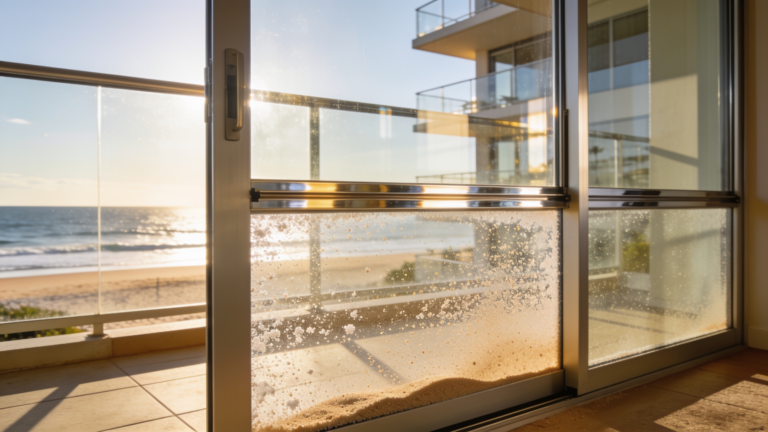
Their guidance is that unwashed areas should be hosed with fresh water at least every six months, and every three months in coastal areas where marine salt spray is prevalent or where industrial fallout occurs. In Bondi, Vaucluse, Collaroy or Palm Beach, that is the three-month figure, not the six.
Where hosing does not shift the dirt, BlueScope specifies a mild solution of pure soap or non-abrasive dishwashing detergent in warm water, applied with a sponge, soft cloth or soft-bristle nylon brush. No abrasive scourers, no steel wool. Rinse with fresh water immediately afterwards to remove detergent traces.
They are explicit that abrasive and solvent cleaners — turps, petrol, kerosene, paint thinners — should never be used.
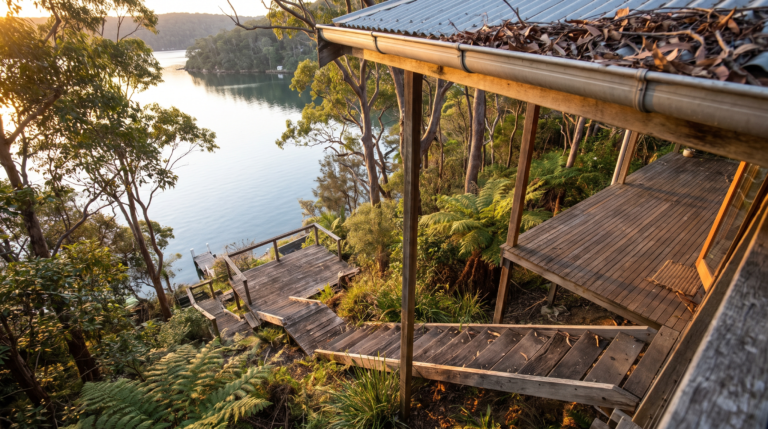
Two more points that get missed. Debris such as soil and mulch should not be allowed to build up against COLORBOND surfaces. And contact with incompatible materials, including copper, lead, bare steel and chemically treated timber, can drive accelerated corrosion.
Sources: COLORBOND steel maintenance, Technical Bulletin TB-04, Maintenance of exterior BlueScope coated steel products and TB-40 for walling applications.
The solar bulletin most solar installers never mention
BlueScope publishes a separate bulletin on steel roofing and photovoltaic panels, and it contains the single most useful thing on this page.
Panels shield the roof beneath them from sun and, critically, from rainfall. BlueScope therefore classifies the roof area directly under an array as an unwashed area, subject to accelerated corrosion as dirt, salt and leaves accumulate and hold moisture for extended periods.
Their recommendation is to clean those areas with fresh water at least every three months in coastal or industrial locations and at least every six months elsewhere, and to inspect roofing fasteners and sheet surface condition at the same time. They suggest timing it with scheduled panel cleaning.
In practice this means a coastal Sydney house with solar on a COLORBOND roof has a maintenance obligation under the panels that most owners have never been told about.
Source: Technical Bulletin TB-36, steel roofing and photovoltaic/solar panels.
Monier: where the guidance contradicts itself
This one is worth reading carefully, because Monier’s own website says two different things.
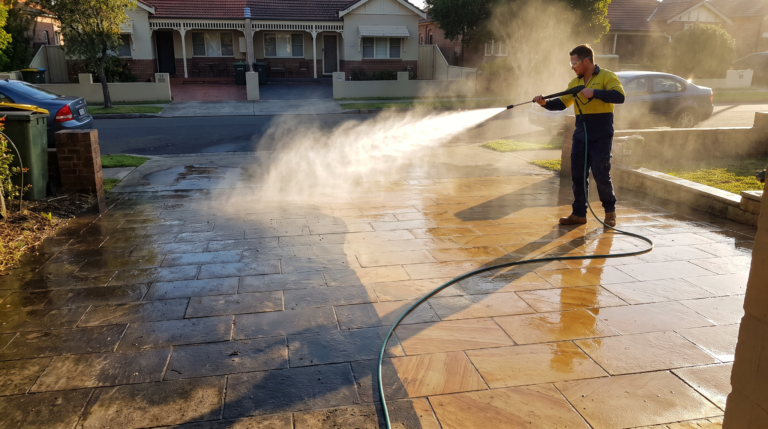
Their roof cleaning and maintenance page states that Monier strongly advises against the use of pressure washers for roof cleaning, on the basis that they pose a significant risk of tile damage, and recommends a qualified roofing professional perform tile cleaning instead.
Their FAQ page, on the same site, says moss and lichen can be easily removed with high pressure water jet cleaning or other commercially available cleaning products.
Those cannot both be good advice. Our reading is that the maintenance page reflects the current position and the FAQ is older text that has not been revised, but we are inferring that rather than being told it. If your roof is under warranty and you are relying on either statement, ask Monier directly and get the answer in writing.
The rest of their guidance is consistent and useful. Walking on roofs can cause injury, damage tiles, and may void warranties. They recommend a qualified professional inspect the roof roughly every five years. Gutters, downpipes and valleys should be cleared annually at minimum, and more often where trees surround the roof — Monier calls blocked gutters, downpipes and valleys the most common source of leaks.
On coatings: repainting concrete tiles refreshes appearance but needs redoing every five years or so, and does not improve waterproofing. Terracotta is different, because the colour is fired into the tile rather than applied, so it does not need respraying. Monier does not recommend painting terracotta tiles.
Sources: Monier roof cleaning and maintenance, Monier FAQs and Monier warranty.
James Hardie: low pressure, and never acid
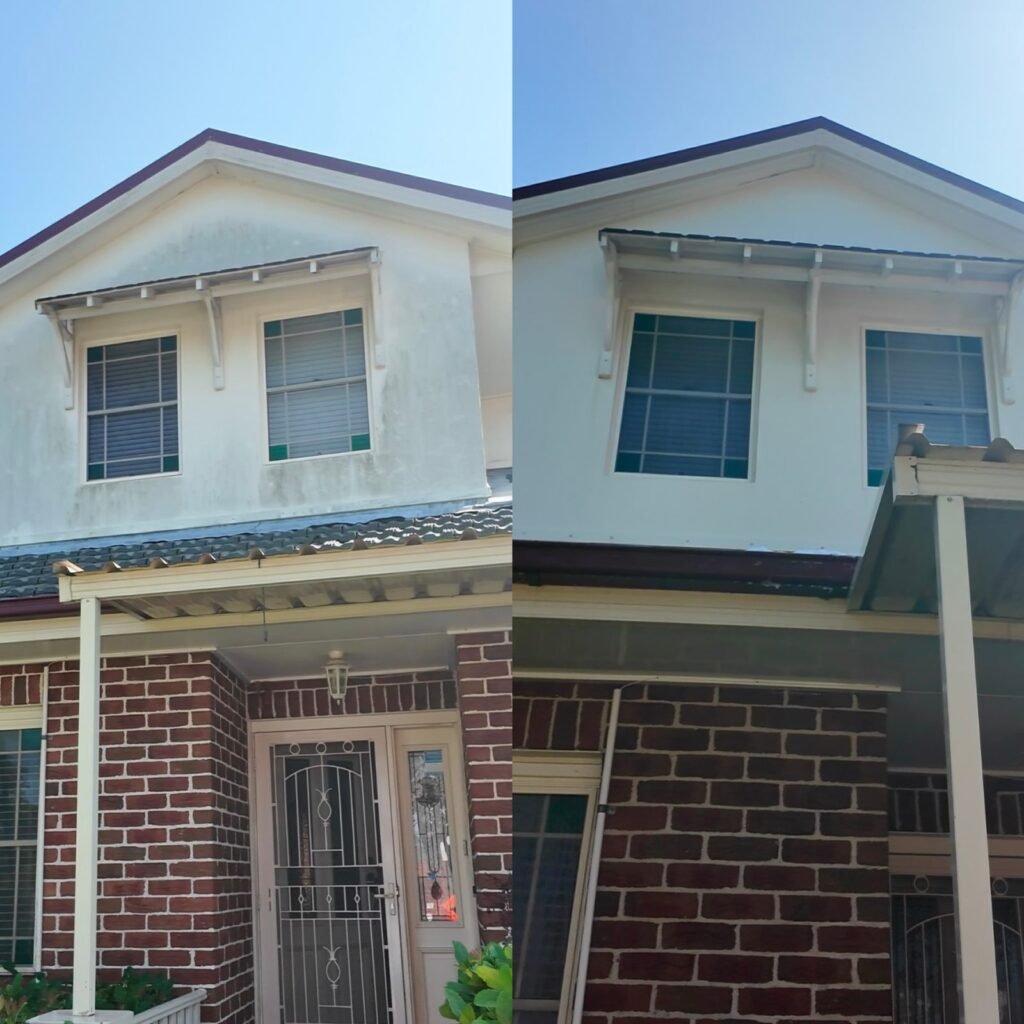
James Hardie’s Australian guidance is an annual clean using non-abrasive products and a soft cloth, working with the grain where the product has one, and hosing off before the solution dries. Where a pressure cleaner is used, they say to keep it on a low setting.
Their international technical documentation is more specific and worth knowing. It states that high pressure water blasting and sand blasting may damage the surface of fibre cement, that low pressure water spray with a soft medium-bristle non-metal brush is most suitable, and that acid washing can damage the fibre cement surface and is not recommended.
The practical takeaway on a Sydney render-and-cladding job: the acid-based cleaners commonly used to brighten masonry are the wrong product on fibre cement, and the damage is to the surface itself rather than just the coating.
Sources: James Hardie Australia exterior care and the James Hardie cleaning and maintenance technical bulletin (international document — confirm the Australian equivalent for warranty purposes).
How we approach it
Our method is not built around a favourite technique. It is built around identifying the substrate first and then applying whatever that manufacturer specifies.
- We identify the material before quoting. Colorbond, Zincalume, concrete tile, terracotta, slate, fibre cement and render are five different jobs, not one.
- We default to the manufacturer’s stated method, and where guidance conflicts we take the more conservative reading. On Monier, that means we do not pressure wash tile.
- We use mild detergent and soft application on coated steel, as BlueScope specifies, and rinse immediately rather than letting product dry on the surface.
- We treat the area under solar arrays as an unwashed area, because BlueScope classifies it as one.
- We never use acidic cleaners on fibre cement, lime-mortared masonry or tuckpointed brickwork.
- We check fasteners, flashings and cut edges while we are on a metal roof, because that is where corrosion starts and where the manufacturer directs attention.
- We clear gutters, downpipes and valleys as standard rather than as an upsell, since every manufacturer here names blocked drainage as the primary failure point.
- We tell you when the manufacturer’s advice rules out what you asked for, and show you the document.
Every link in one place
- COLORBOND steel — maintenance
- COLORBOND steel — frequently asked questions
- BlueScope TB-04 — maintenance of exterior coated steel products
- BlueScope TB-36 — steel roofing and photovoltaic solar panels
- BlueScope TB-40 — coated steel in exterior walling applications
- Monier — roof cleaning and maintenance
- Monier — FAQs
- Monier — warranty
- James Hardie Australia — exterior care
- James Hardie — cleaning and maintenance technical bulletin
Guidelines are revised without notice. Everything above was checked against the manufacturers’ published material at the time of writing, but confirm current documentation before relying on it for a warranty claim.
Related: how to clean a Colorbond roof, soft washing vs high pressure on tiles, cleaning solar panels on a roof and our soft wash method.