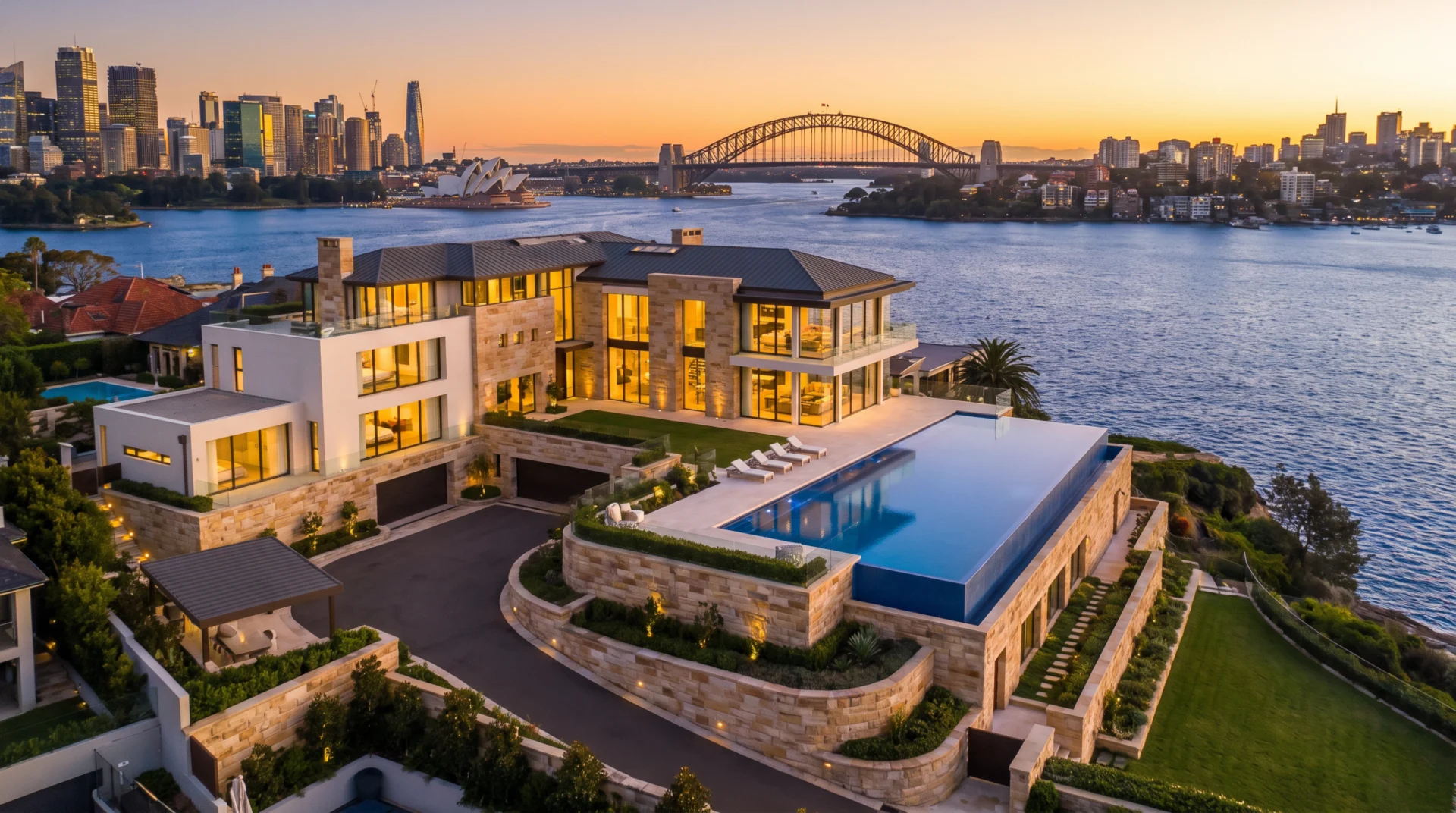
Bluestone has become common in newer Sydney landscaping — pool surrounds, entries, steps and feature paving — and it behaves differently from the sandstone and travertine most people are used to.
It is harder, which helps. It is also prone to one specific and permanent-looking problem that catches owners out.
What bluestone is
In Australia, bluestone generally means basalt — a dense volcanic rock, grey to near-black, often with the small round gas holes known as cat’s paws.
Most of what is sold in Sydney is imported basalt. Australian bluestone, particularly from Victoria, is denser and harder than much of the imported product, and the difference shows up in how readily it stains.
It also comes in several finishes, and the finish changes everything about how it cleans:
Honed — smooth, matte, shows marks readily, and the finish can be etched.
Sawn — slightly textured from the cut, more forgiving.
Flamed — heat-treated to a rough, grippy surface, the usual choice around pools. Holds dirt in the texture.
Sandblasted — similar in behaviour to flamed.
The iron spotting problem
This is the one that generates calls.
Basalt contains iron minerals. In contact with water and oxygen, those minerals oxidise and produce rust-coloured spotting that appears to come from within the stone, because it does.
It shows up as small orange-brown spots or a general rusty tinge, usually within the first year or two after installation, and it is most common where the stone stays damp — poorly drained paving, stone laid on a wet bed, or anywhere water sits.
The important point: this is not surface staining and it does not clean off. Standard rust removers address iron on the surface. Here the iron is in the stone.
What reduces it: good drainage, laying on a well-drained bed, and sealing with a breathable impregnating sealer before the stone has a chance to stay wet for extended periods. Prevention is the whole strategy.
It is also a reason to be careful about which product you buy. Lower-grade imported basalt with higher iron content spots more readily, and it is not obvious at the showroom.
Acid is still the enemy
Bluestone is harder than limestone, and people take that as licence to use stronger products. It is not.
Acidic cleaners etch basalt, dull the finish — particularly on honed stone — and can accelerate the iron oxidation by mobilising the minerals.
The things to keep off it are the same list as for limestone: hydrochloric brick cleaner, most tile and grout cleaners, vinegar, standard rust removers, and pool acid.
Pool acid is again the common culprit. Dose into the water, not over the coping.
What to use
pH-neutral stone cleaner for routine work. Soft brush, rinse thoroughly.
Mildly alkaline degreaser for oil, sunscreen and barbecue marks.
Dilute sodium hypochlorite for organic growth, which bluestone gets readily in shade because the dark colour hides it until it is well established.
Low to moderate pressure. Bluestone tolerates more than sandstone, but flamed and sandblasted finishes will erode under a concentrated jet, and the texture is what gives the grip.
Oxygen bleach as a gentler alternative on organic staining.
Efflorescence and picture framing
Two installation-related problems worth recognising, because neither is a cleaning fault.
Efflorescence — white bloom from the bedding mortar working up through the joints and onto the stone. Common on new work, brush off dry, diminishes over time. See efflorescence on brick for the mechanism.
Picture framing — a darker border around each paver, caused by moisture or adhesive migrating from the joints into the edge of the stone. It is an installation issue and it is largely permanent. Sealing before laying reduces it, which is another argument for sealing early.
Sealing
Worth doing on bluestone, mainly to limit iron spotting and to resist oil.
Breathable impregnating sealers only, as with all natural stone. A film traps moisture, and trapped moisture is exactly what drives the iron oxidation.
A colour-enhancing impregnator is popular on bluestone because it deepens the grey considerably and restores the look of wet stone. Make sure it is a breathable impregnator rather than a topical enhancer — the distinction matters and the marketing blurs it, as covered in sandstone sealer.
Around a pool, keep the finish grippy. A film-forming product on flamed bluestone fills the texture and removes the slip resistance you paid for — see slip resistance and who is liable.
Seal before or immediately after installation if you can. Retrofitting a sealer to stone that has already started spotting does not reverse what has happened.
For cleaning and an assessment of whether what you are seeing is surface staining or iron in the stone, see stone cleaning.






