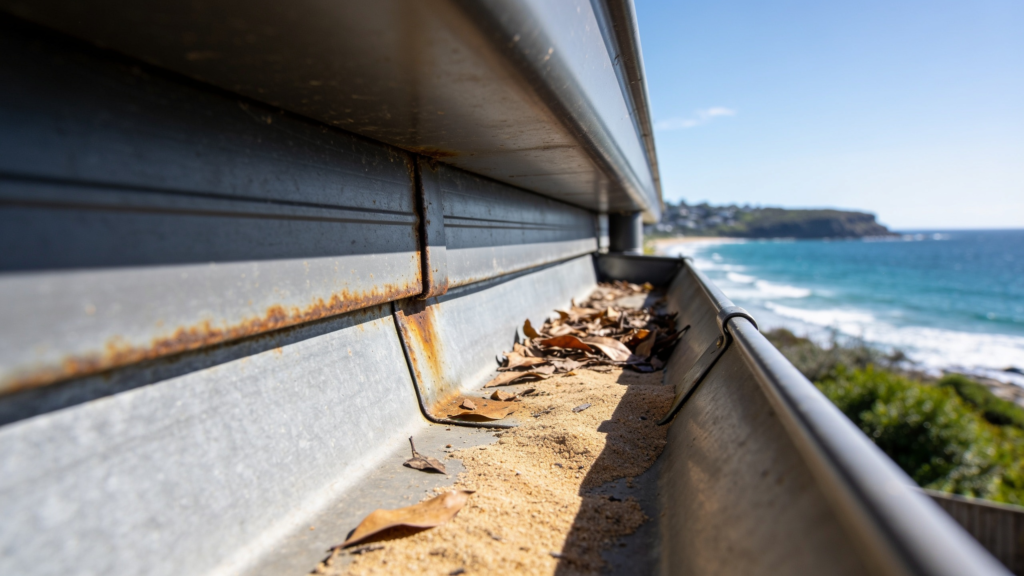
After a Sydney storm the instinct is to clear the mess immediately. It is worth pausing for half an hour first, because the cleanup can remove the only evidence of what happened.
We are exterior cleaners, not insurance advisers, and nothing here is a substitute for reading your policy or speaking to your insurer. But we clean up after a lot of storms, and the pattern of what goes wrong is consistent enough to be worth setting out.
Photograph before you touch anything
Once debris is cleared and surfaces are washed, the damage is a description rather than a record. Before cleanup begins:
- Wide shots of each elevation, so the position of everything is clear.
- Close shots of specific damage: cracked or displaced tiles, dented gutter, split downpipe, torn flashing.
- Debris where it landed, before it is moved.
- Any water ingress inside, including ceilings and cornices.
- Overflow marks and staining on walls below gutters.
Keep the original files rather than social media copies, since the embedded date and time are part of what makes them useful.
The distinction insurers care about
Policies generally distinguish sudden storm damage from gradual deterioration and lack of maintenance. That distinction is where most disputes sit.
A gutter that tore off in high wind is one thing. A gutter that had been full for three years, corroded through and finally gave way during rain is often treated differently. The physical evidence at the site is what an assessor uses to tell those apart.
This is the practical reason to keep records of routine gutter cleaning and roof maintenance. Dated invoices and before-and-after photos from previous visits establish that the property was maintained, which is a materially better position than asserting it.
Make safe, then stop
Most policies expect you to prevent further damage, and doing so does not prejudice a claim. Tarping an exposed section, clearing a blocked gutter that is pushing water inside, or moving a fallen branch off a roof are reasonable immediate steps.
What is worth avoiding is full repair or a complete cleanup before the insurer has had the chance to assess. Photograph the make-safe work as well, and keep receipts for it.
What we do differently on a storm job
When a clean follows storm damage, we photograph the roof and gutter line before starting and provide those images with the invoice. Owners running a claim generally want that record, and it costs nothing to produce.
We also flag what we find rather than quietly cleaning around it. Cracked tiles, lifted ridge capping, corroded gutter sections and split downpipes get reported, because they are usually the difference between a cleanup and a repair. Where the finding is structural, the referral is to a roof plumber or builder rather than to more cleaning.
What cleaning cannot fix
Hail bruising on a metal roof, cracked tiles, and water already inside a ceiling cavity are repairs. Washing the roof afterwards makes the damage easier to see, which is occasionally useful for an assessment and is never a substitute for it.
The genuinely useful post-storm cleaning work is clearing the debris load that causes the next overflow, and dealing with the mud, salt and organic staining left on render, paths and paving before it sets in.
The record that pays for itself
A simple folder with dated invoices and photos from each maintenance visit takes no effort to maintain and is worth having before you need it. Whether it changes the outcome of any particular claim is between you and your insurer, but arriving with evidence is a better starting point than arriving without it.
Written by the team at The Prestige Standard, exterior cleaning contractors working across Sydney. Fixed written quotes within 24 hours with every surface itemised, $20 million public liability. See our service areas or call 0494 810 609.
General information only. We are not insurance advisers. Check your policy wording and speak to your insurer about your specific circumstances.






