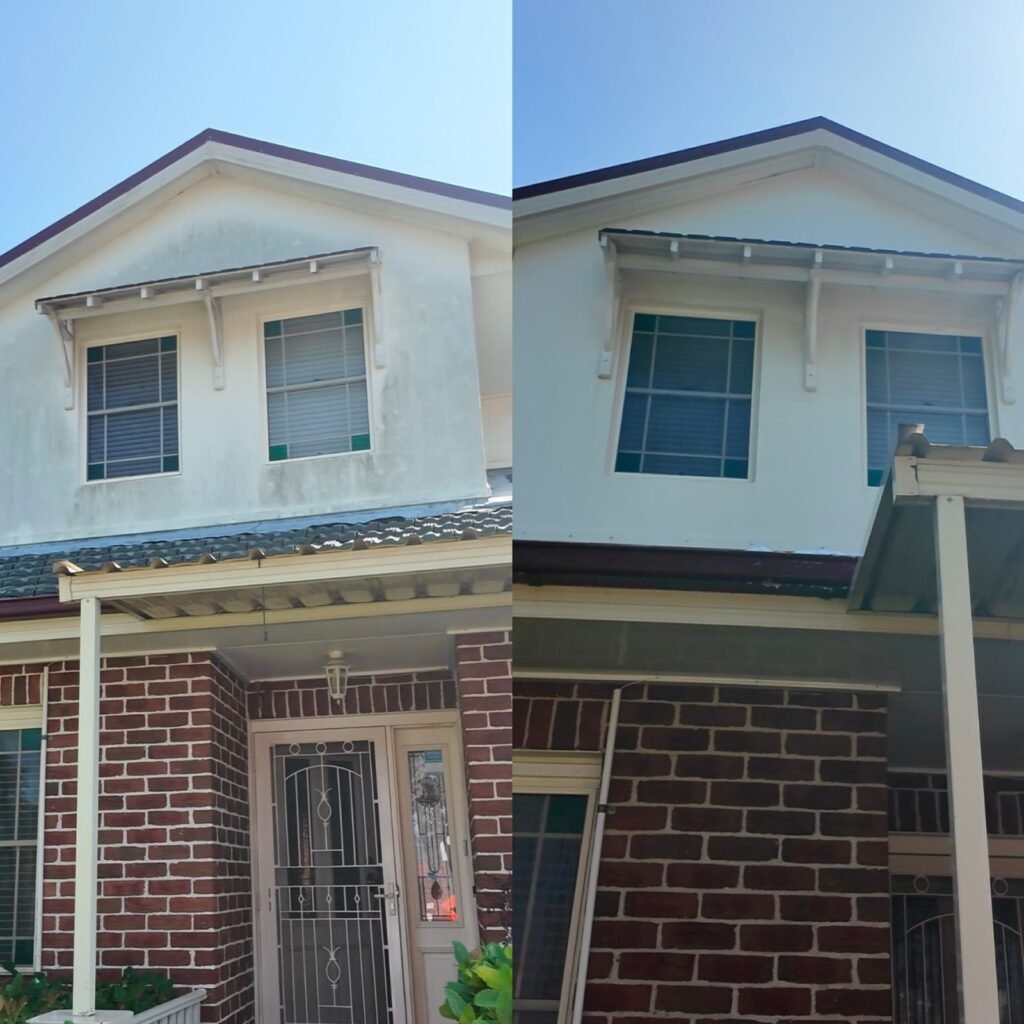
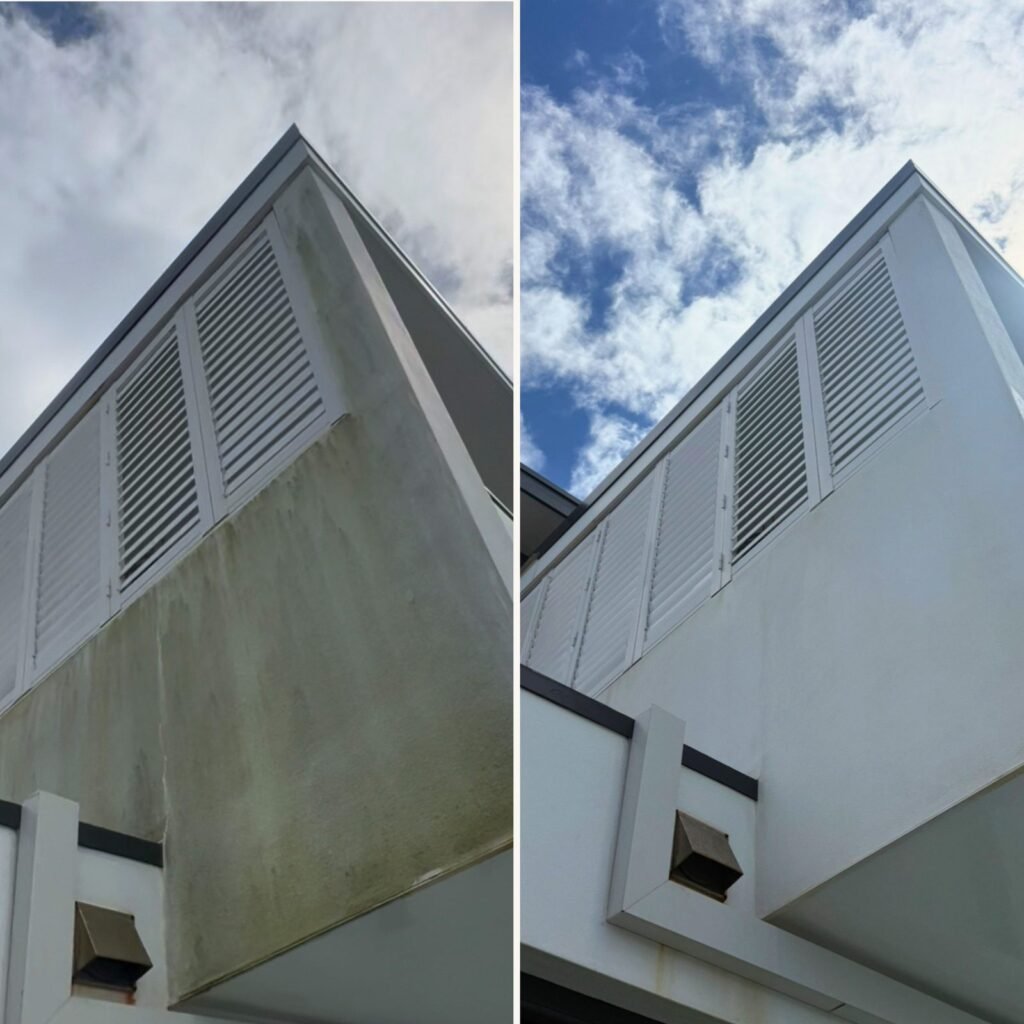
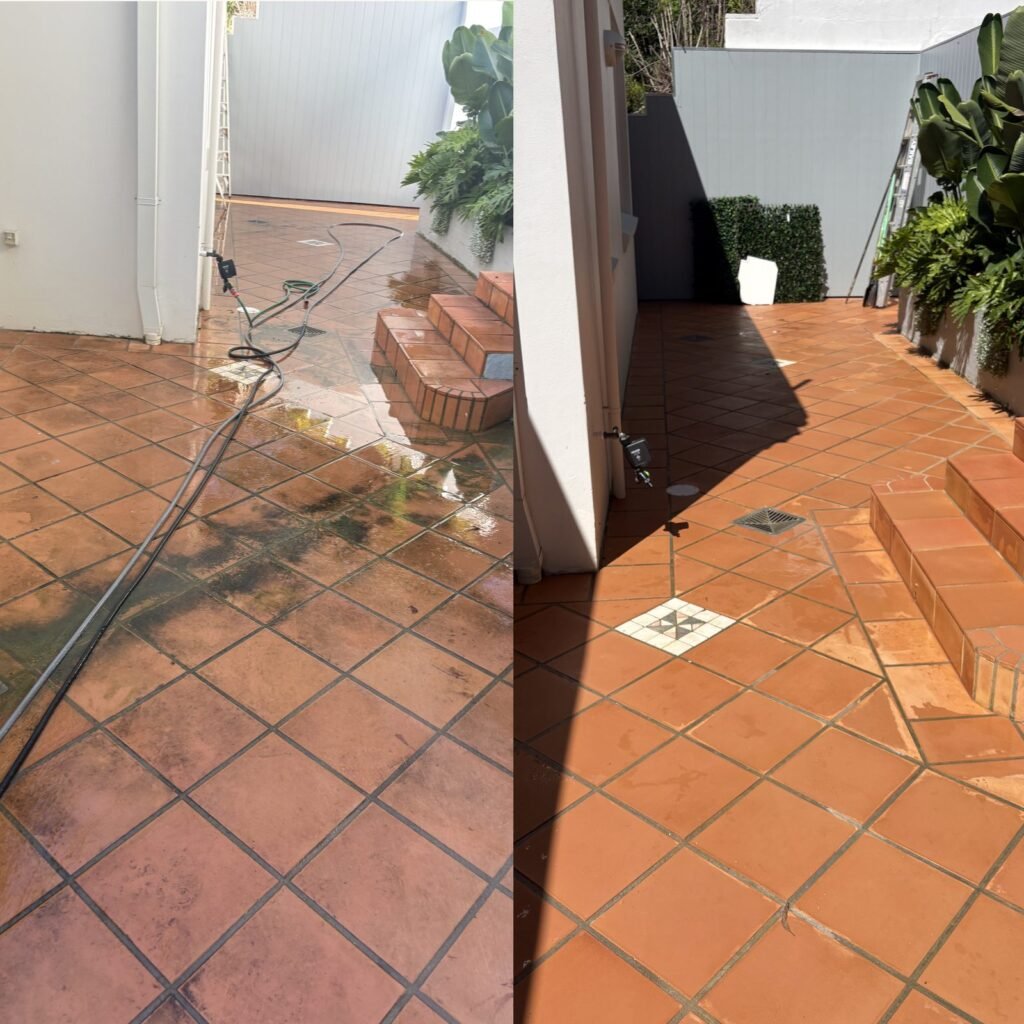
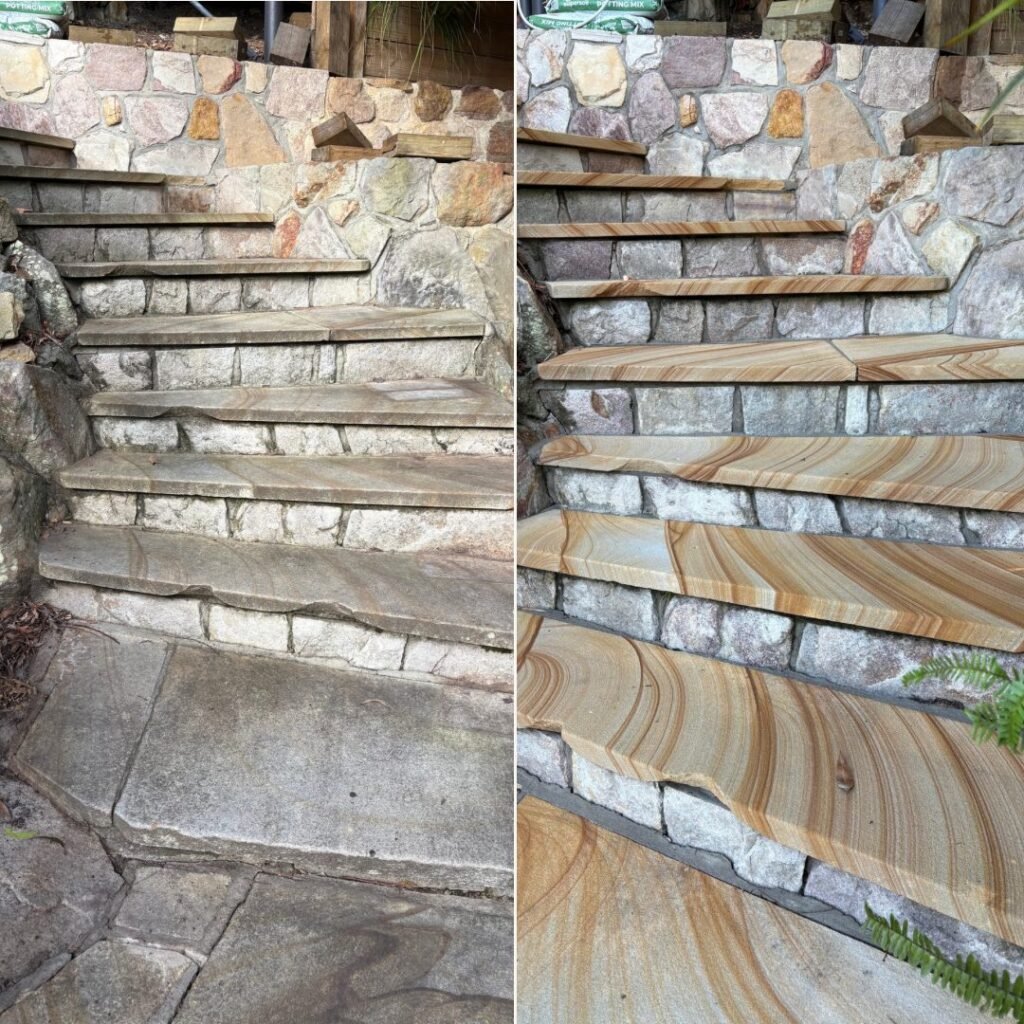
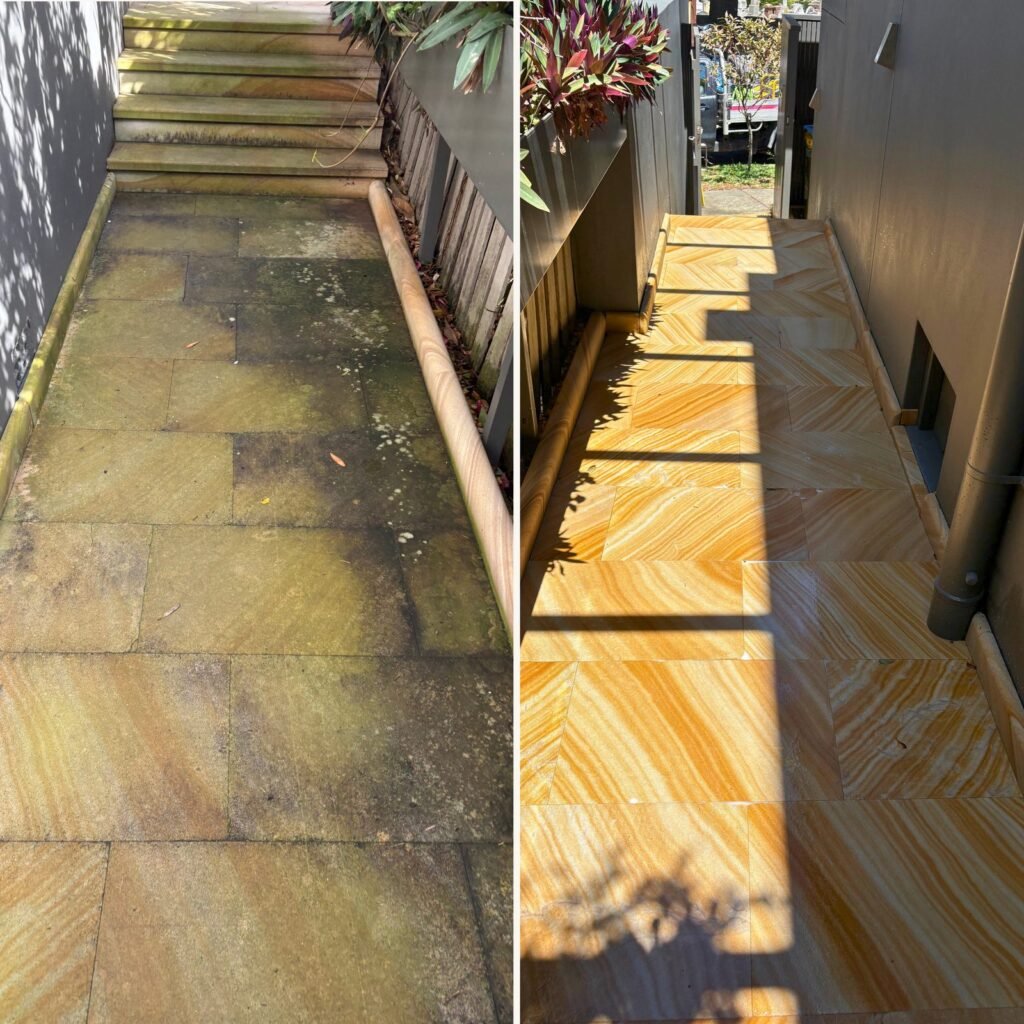
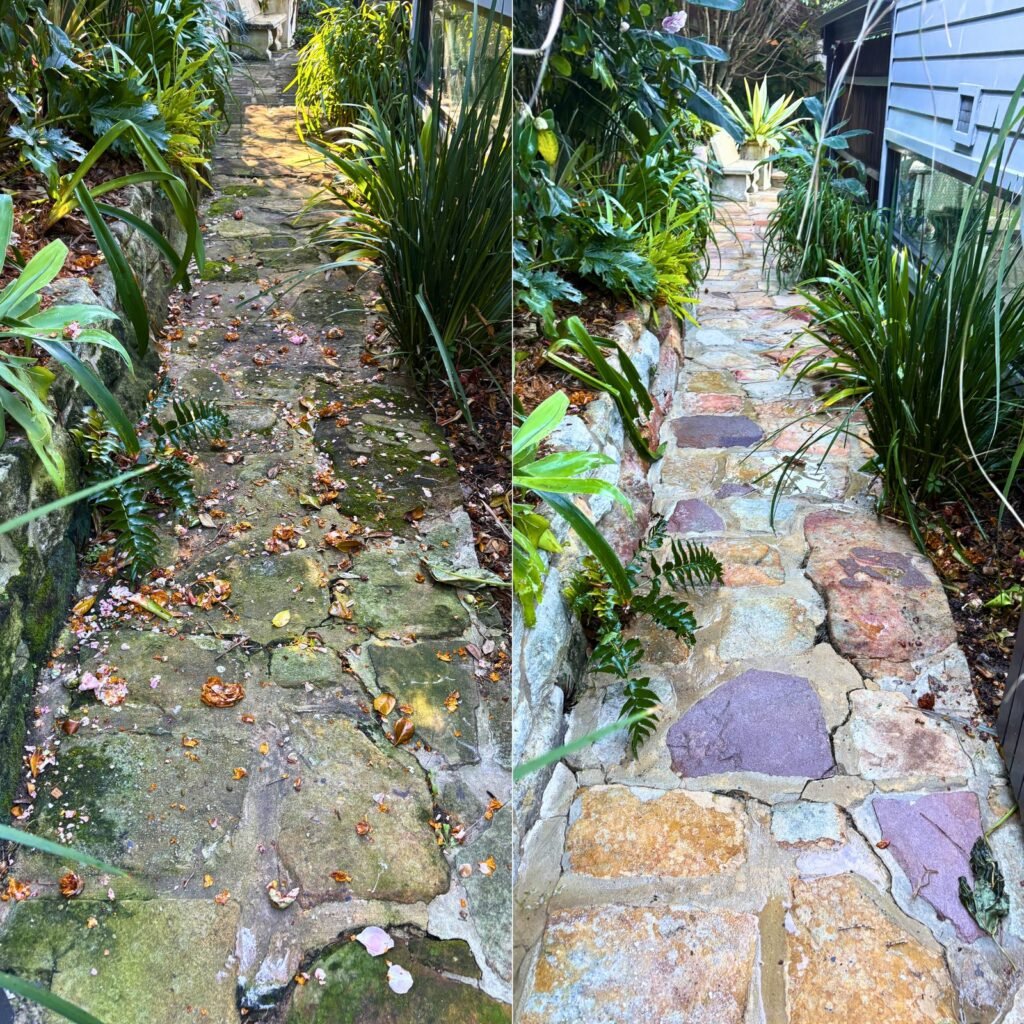
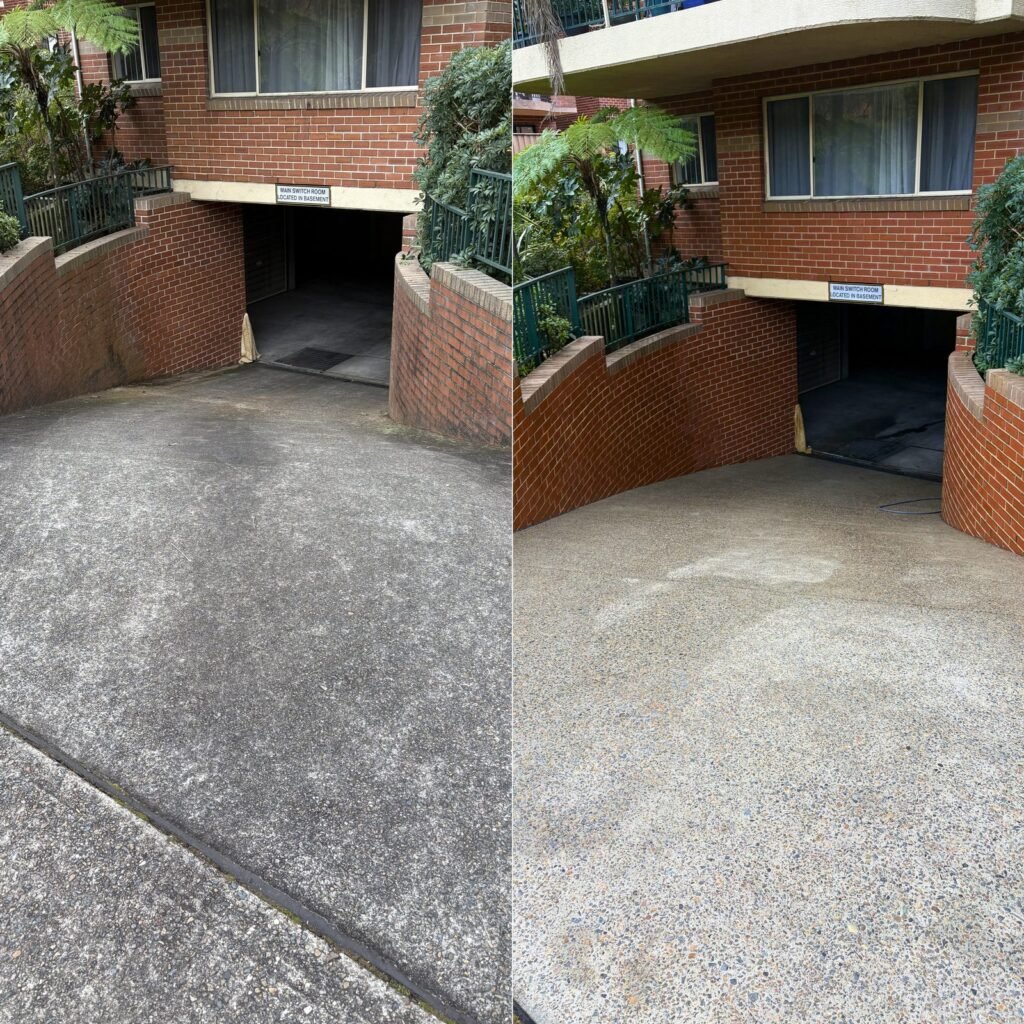
Most of what makes a house look tired from the street is not dirt at all. It is biological growth — algae, mould and lichen — and treating it as dirt is why so many houses look tired again a month after they were washed.
How to tell the difference
Dirt is deposited by wind and rain and lands more or less evenly. Biological growth follows moisture and shade, so the pattern gives it away:
- Worst on southern and south-eastern walls that get the least sun.
- Heaviest under eaves, behind downpipes, and anywhere a wall stays damp.
- Concentrated near garden beds, dense planting and overhanging trees.
- Often a distinct grey-green or black tint rather than a neutral grey.
If one wall of your house looks noticeably worse than the others and it happens to be the shaded one, that is growth, not grime.
Why hosing it off backfires
Growth is alive and it reproduces by spores. Blasting a colony with water does three unhelpful things: it disperses spores across surfaces that were previously clean, it leaves the root structure embedded in the substrate, and it drives moisture into the wall, which is precisely the condition the organism needs.
The wall looks better for a fortnight. Then it comes back, frequently across a wider area than before, because the wash effectively seeded the surrounding surfaces.
Why pressure is the wrong tool here
Beyond spreading the problem, high pressure damages most of the materials it is aimed at. Painted render and weatherboard lose paint and take water behind the cladding. Fibro is worse — older fibro sheeting is a genuine hazard when disturbed, not merely a bad finish.
The pressure needed to remove growth mechanically is well above what these surfaces tolerate. That is the fundamental problem: there is no pressure setting that removes the growth and leaves the wall intact.
What soft washing does instead
A treatment is applied at low pressure, kills the organism at the root, and the wall is then rinsed. Two things follow. The wall returns to its actual colour rather than a lightened, partially stripped version of it. And because the growth is dead rather than relocated, it stays clean substantially longer than a rinse would deliver.
This is the method behind our house washing, and the same logic applies to roof cleaning and sandstone cleaning. Detail on the technique itself is under soft washing.
The full envelope is usually cheaper
Growth does not respect boundaries. If it is on the walls it is generally also on the eaves, the fascia, the garage door, the paths and the shaded side of the driveway.
Doing the walls alone often produces an odd result — a clean house sitting on a dark, streaked path. Since setup and access are a large share of the cost, adding driveway cleaning and a gutter clean to the same visit usually costs less than booking them separately later.
Before selling
Exterior washing is one of the few pre-sale jobs where the cost is small and the visual difference is immediate. It matters more than it should because of how buyers actually behave: the first photo decides whether anyone books an inspection, and a washed house photographs as a different property.
Walls, driveway and windows together is the standard pre-sale combination for that reason.
Managing recurrence
You cannot prevent growth in a climate like Sydney’s, but you can slow it. Cut back planting touching the walls, keep gutters clear so overflow is not running down the render, and treat rather than rinse when it does appear. Shaded, bush-backed and coastal properties will still need attention periodically — that is exposure, not neglect.
Written by the team at The Prestige Standard, exterior cleaning contractors working across Sydney. Fixed written quotes within 24 hours with every surface itemised, $20 million public liability. See our service areas or call 0494 810 609.
Photo by T on Unsplash.