A gutter packed with dry eucalypt leaf is one of the most common ignition points on a house during ember attack. Embers travel well ahead of a fire front, land in the one place on the property that is full of dry fuel, and start a fire on the roofline rather than at the fence.
The NSW Rural Fire Service lists clearing gutters as a standard part of preparing a property. It is also the part most people leave until the smoke is already visible, which is the worst possible time to be on a ladder.
Timing matters more than frequency
Eucalypts do not drop in a single autumn fall the way deciduous trees do. They shed leaf and bark through spring, which means a gutter cleared in July is often full again by October — right as the fire danger period begins.
For bush-boundary properties, two clears a year is realistic. The important one is the second, and it needs to land before the danger period rather than during it. Booking in November because the forecast looks bad means competing with everyone else who had the same thought.
Properties set back from the interface can usually manage one annual clear, though anything under heavy gum canopy will still fill faster than the owner expects.
Rainwater tanks change the job
A large share of Hills properties run rainwater tanks off the roof, and that changes how gutters can be cleaned. Two things must not happen:
- Debris cannot be flushed down the downpipe. Sending a season of rotting leaf into the tank contaminates the water supply.
- Cleaning products cannot enter the catchment. Anything applied to the roof or gutters has to be kept out of the system entirely.
The correct sequence is to isolate or divert before starting, clear gutters and leaf diverters by hand, and only flush once the tank is out of the line. If nobody has asked about your tanks before quoting, they have not thought about the job properly. The same caution applies to any roof cleaning on a tank-fed roof.
What a proper clear-out includes
Clearing the visible leaf out of the gutter is the easy half. The parts that get skipped are the parts that flood you:
- Every downpipe flushed and flow-tested, not just looked at. A downpipe that half drains is the one that overflows in a downpour.
- Valleys and roof gullies cleared, since these hold the deepest build-up and feed everything else.
- Leaf diverters and rainheads checked and cleared.
- Debris bagged and removed, not blown onto the roof or into the garden beds.
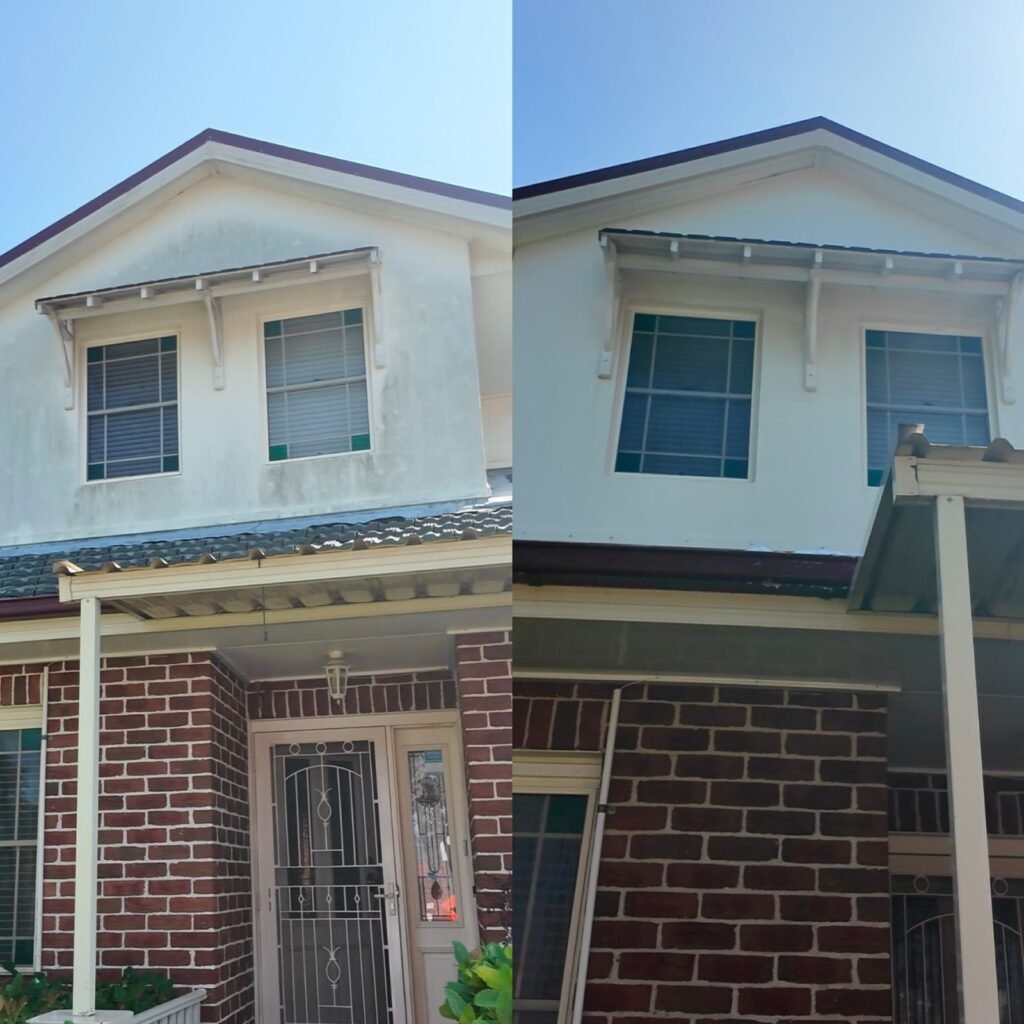
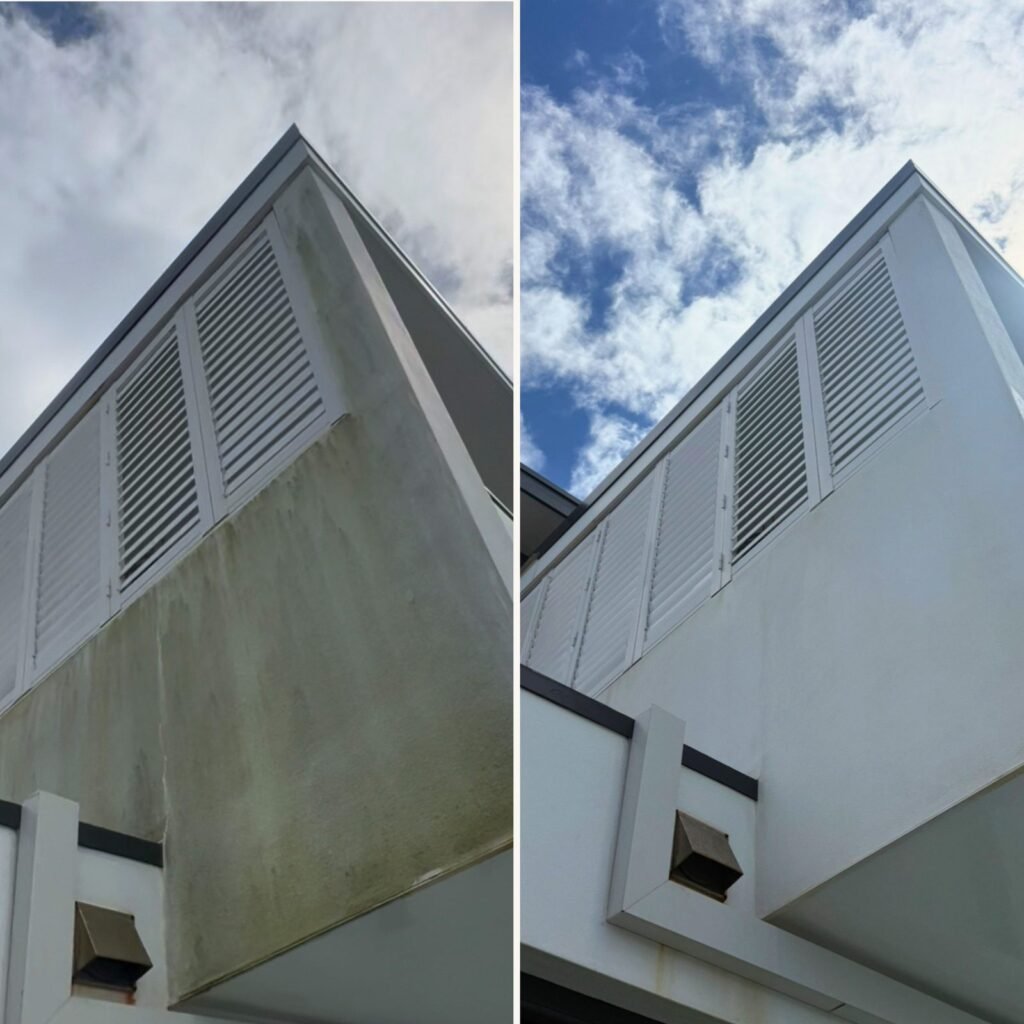
We finish with a photo report so you can see the state of the gutters before and after without going up a ladder yourself. On a two-storey Hills house with long runs and steep pitch below, that matters more than it sounds.
Height and access are the real risk
Hills houses are large and gutter runs are correspondingly long, frequently at two-storey height. Falls from ladders are a serious injury category, and the reason to bring someone in is safety rather than convenience. We carry $20 million public liability and are set up for height and steep-pitch work.
What else is worth doing at the same time
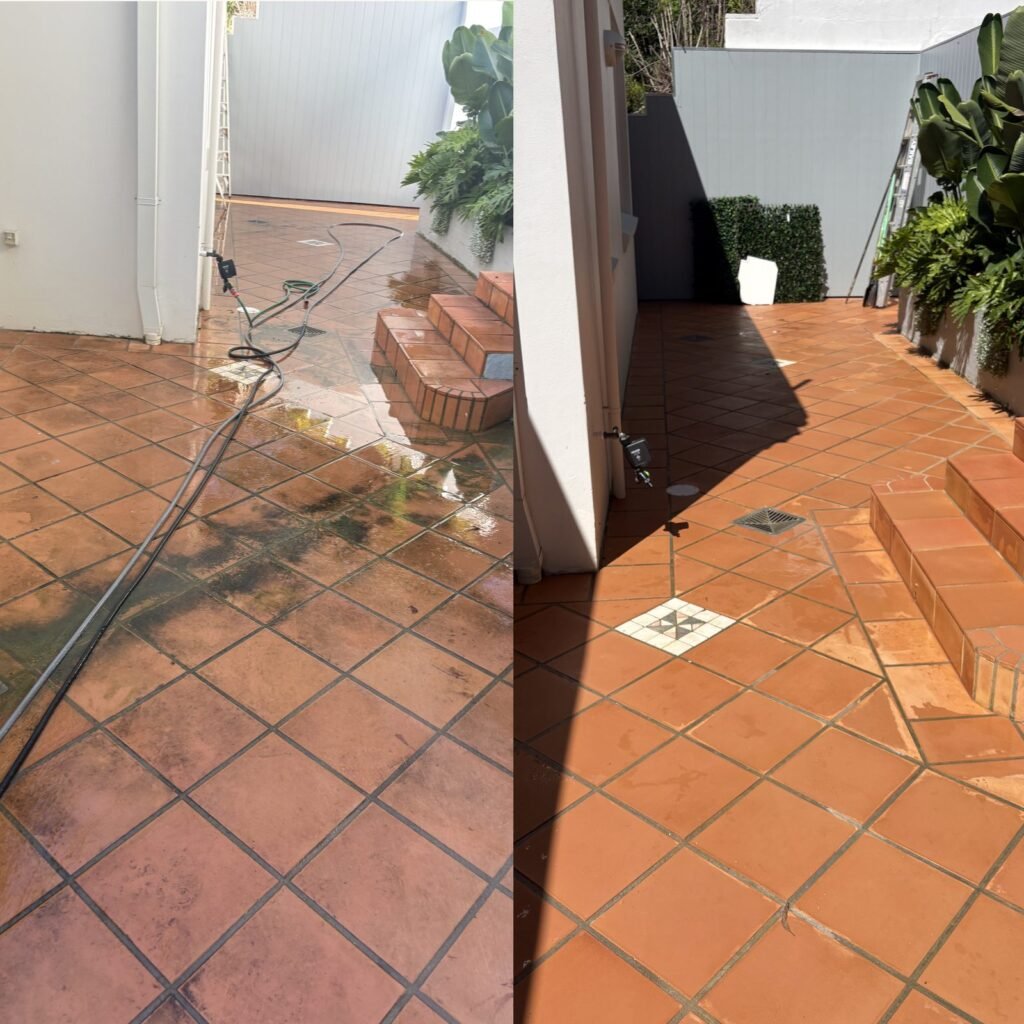
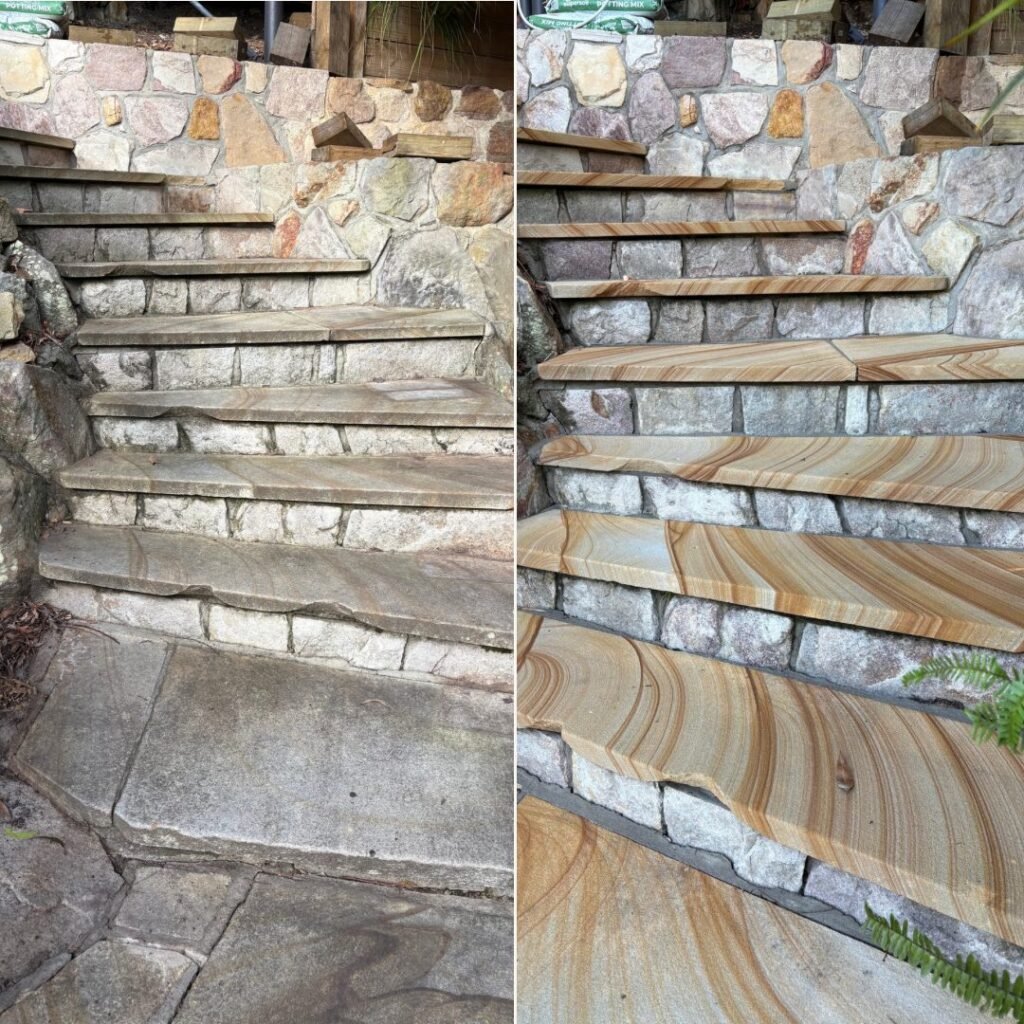
If the crew is already on site, the marginal cost of doing more is small. Long acreage driveways, shed walls and machinery hardstand are covered under Hills District pressure cleaning, and full details of the gutter service are on the Hills District gutter cleaning page.
Book the pre-season clear early. The week the fire danger rating jumps is the week every contractor in the district is already committed.
Written by the team at The Prestige Standard, exterior cleaning contractors working across Sydney. Fixed written quotes with every surface itemised, $20 million public liability. See our service areas or call 0494 810 609. For current bushfire preparation advice, check the NSW Rural Fire Service.
Photo by Angie J on Unsplash.