North Balgowlah sits between Balgowlah, Manly Vale and the bushland running up toward Manly Dam and Garigal National Park. It is a quiet, largely 1950s to 70s brick suburb on blocks that are generous by Northern Beaches standards, with a substantial number backing onto reserve.
It has almost no salt exposure and almost no commercial activity. What it has is trees.
The bush boundary
Properties on the reserve edge have tall eucalypts immediately behind them that are not going anywhere. Leaf is waxy and slow to break down; bark sheds in long strips that lie across gutter outlets and dam everything behind them.
Because the trees are on public land, the owner has no ability to reduce the source. The only controllable variable is clearing frequency, and on these blocks twice a year is a minimum with a third check in late spring after the bark shed. More: gutter cleaning.
Roof valleys, again
Under canopy, valleys fill faster than gutters and are completely invisible from the ground. Blocked valleys push water sideways under the tiles, and the first indication inside is a ceiling stain after heavy autumn rain.
On a bush-backed block, valleys belong in every roof visit rather than being an occasional extra. More: roof cleaning.
Shaded rear elevations
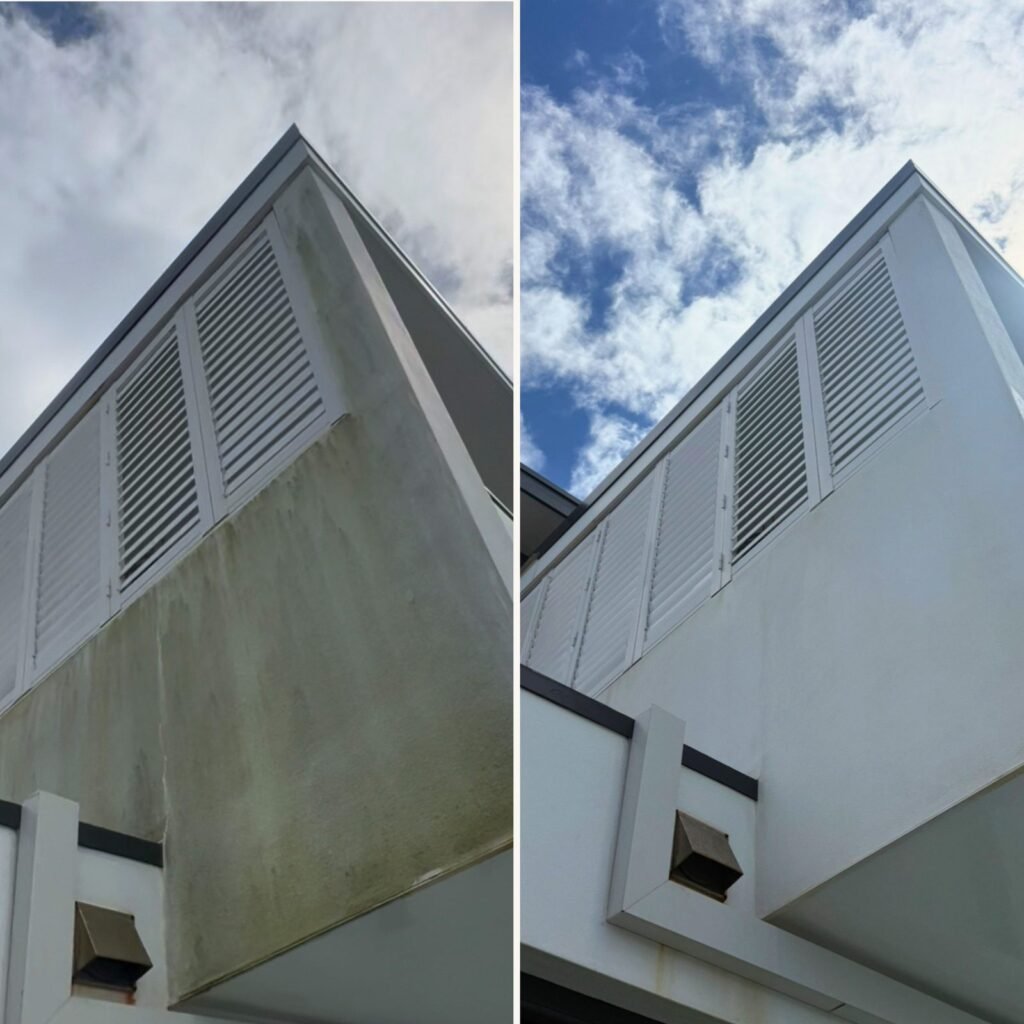
Canopy on the back boundary means the rear of the house gets limited direct sun. That elevation stays damp, grows mould and algae steadily, and is the side the owner sees least and accesses least.
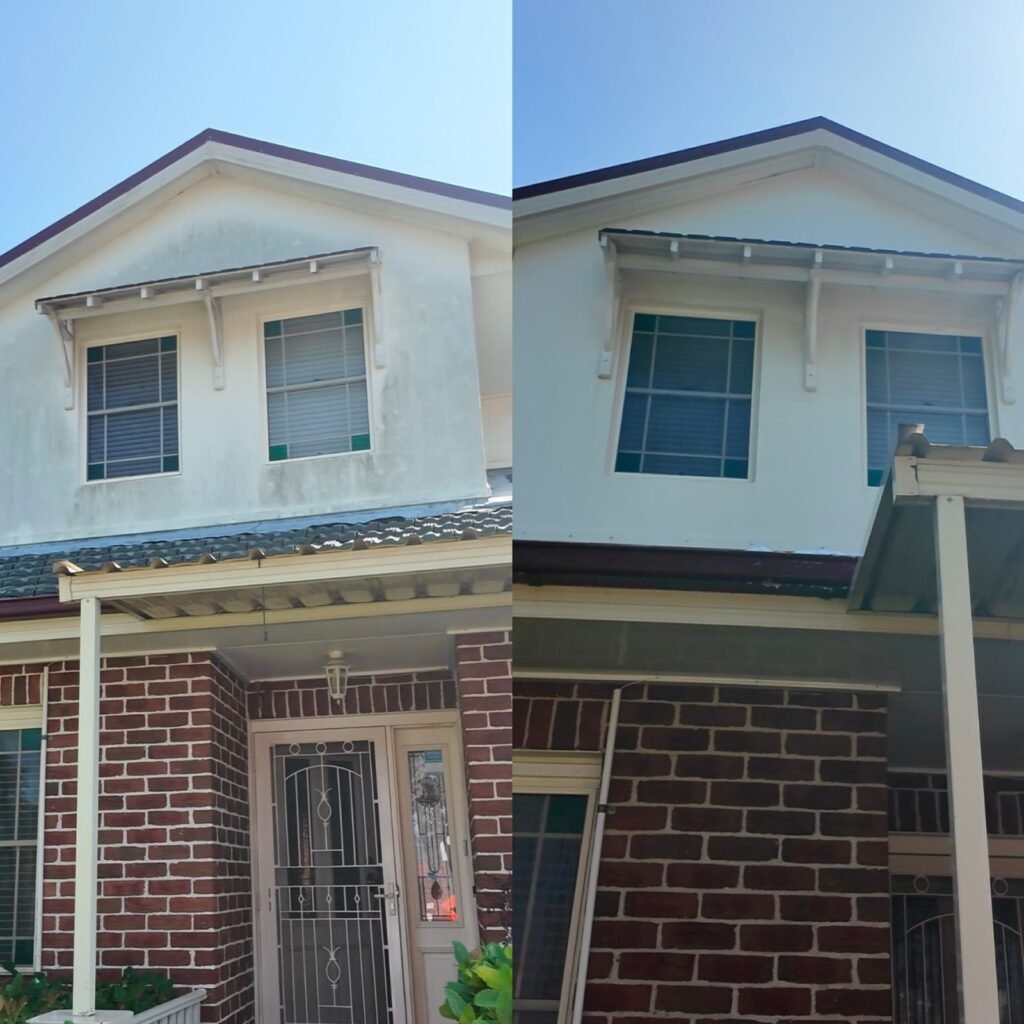
Treating the rear annually and the street-facing elevations every two to three years makes more sense than one compromise schedule for the whole house. More: house washing.
Face brick
Unpainted face brick on most of the stock, which needs soft washing rather than pressure. High pressure erodes mortar joints faster than brick, and once a joint is back-raked the wall takes moisture. Chemistry removes the growth and leaves the mortar intact.
Bushfire
Reserve boundary means bushfire prone land, with fuel continuous up to the back fence on some streets. Gutters and valleys clear before the season, debris cleared from under decks and along the building line, and timing for spring after the bark shed rather than an autumn clean.
Backyard structures
Generous blocks here mean sheds, pergolas, carports and garden structures, each with their own roof and gutter and each tending to be forgotten.
A shed gutter that has been blocked for five years has usually rotted the fascia behind it. Timber pergolas under canopy grow algae and need low pressure, because high pressure raises the grain and makes the surface hold more water next time. More: cleaning a pergola.
Older sheeting
As with much of the post-war Beaches, some properties retain original fibro in eaves, garages or sheds. Pre-1990 sheeting is treated as asbestos unless tested, and it is never pressure washed. Identification comes before any decision about cleaning.
A realistic schedule
Gutters and valleys: twice a year, three times on reserve-backing blocks, with a spring pre-season clear.
Rear elevation: annually. Street and sides: every two to three years.
Roof: annual inspection with early lichen treatment.
Outbuildings: included in the gutter cycle, not treated as optional.
See our Balgowlah page and the Northern Beaches overview.