The North Shore has the opposite problem to the coast, and it catches people out because it looks so benign.
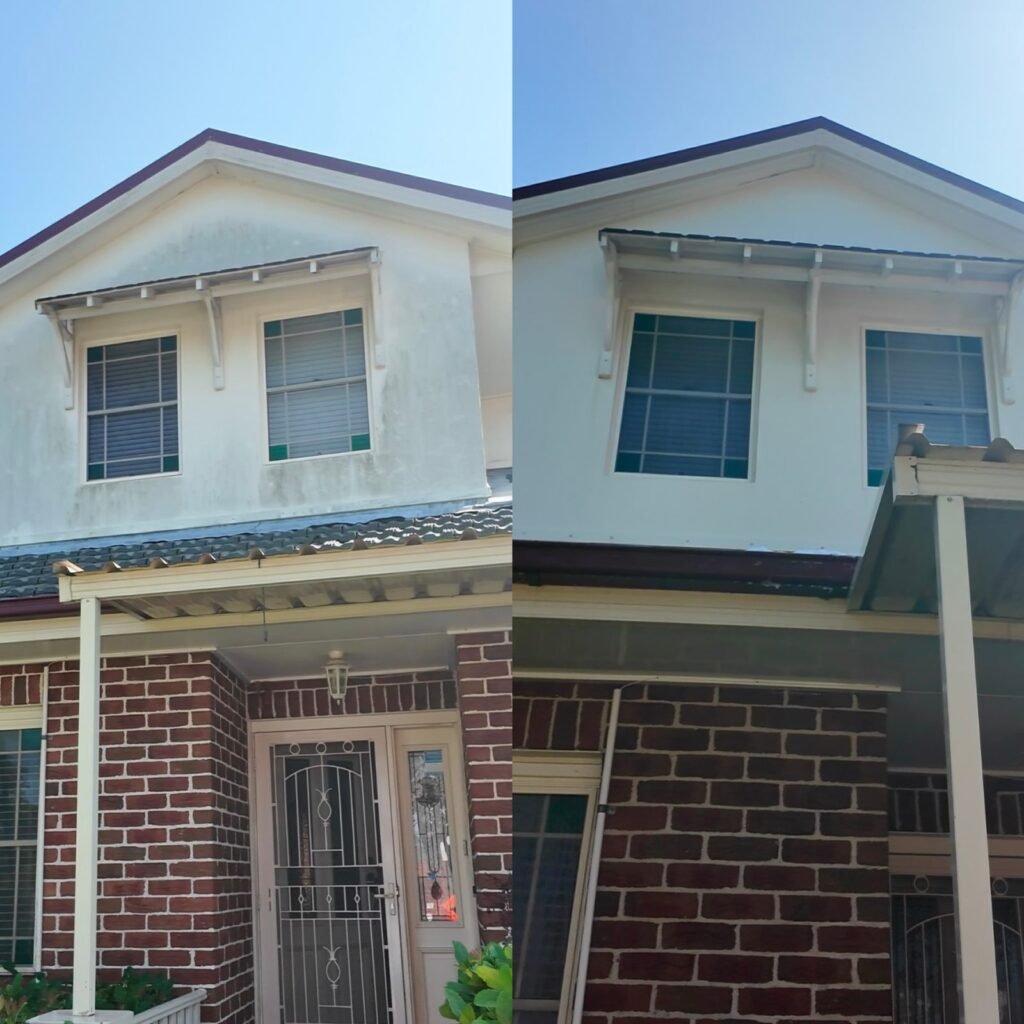
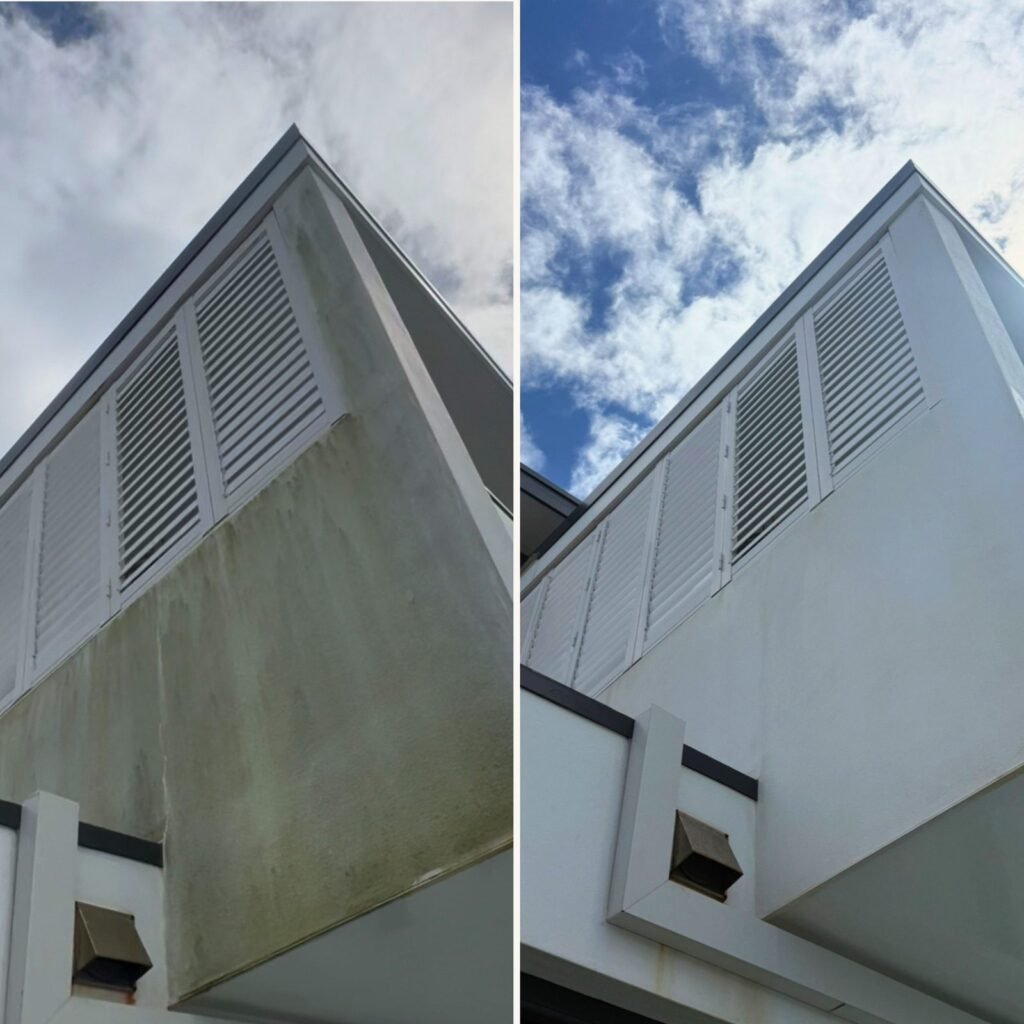
There is no salt here worth worrying about. What there is instead is shade, moisture and organic matter — a combination that grows things. Mould, algae, moss and lichen establish on North Shore homes faster than anywhere else we work, and the same canopy that makes Killara and Pymble beautiful is what feeds them.
Owners often read the greening as a cleaning failure. It is not. It is an environment, and it needs managing rather than fixing.
Why it grows here
Biological growth needs three things: moisture, shade, and something to feed on. The Upper North Shore supplies all three simultaneously.
Mature canopy means large parts of a wall or roof never see direct sun, so surfaces that get wet overnight stay wet through the morning. Under heavy cover they may not properly dry for days after rain. That extended wet time is the single biggest driver.
The canopy also drops constantly. Leaf litter, bark, seed and pollen land on the roof and in the gutters, break down into organic matter, and become the food source. Tannin from the leaf litter stains as it goes.
And the air holds more moisture here. Cool damp mornings in the Ku-ring-gai valleys are noticeably different from the same morning ten kilometres east.
The pattern on a North Shore house
It is highly predictable, once you know to look.
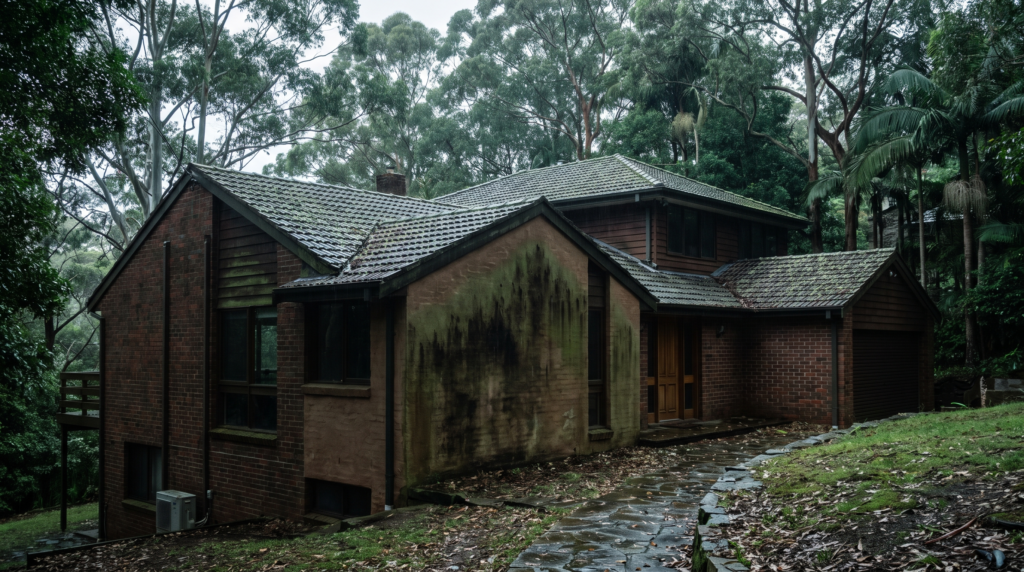
The southern elevation goes first, always — it gets the least sun and dries slowest. Then anywhere shaded by a specific tree, which is why greening often appears as a distinct patch rather than an even spread. Then the roof, particularly the southern pitch and the valleys where litter collects.
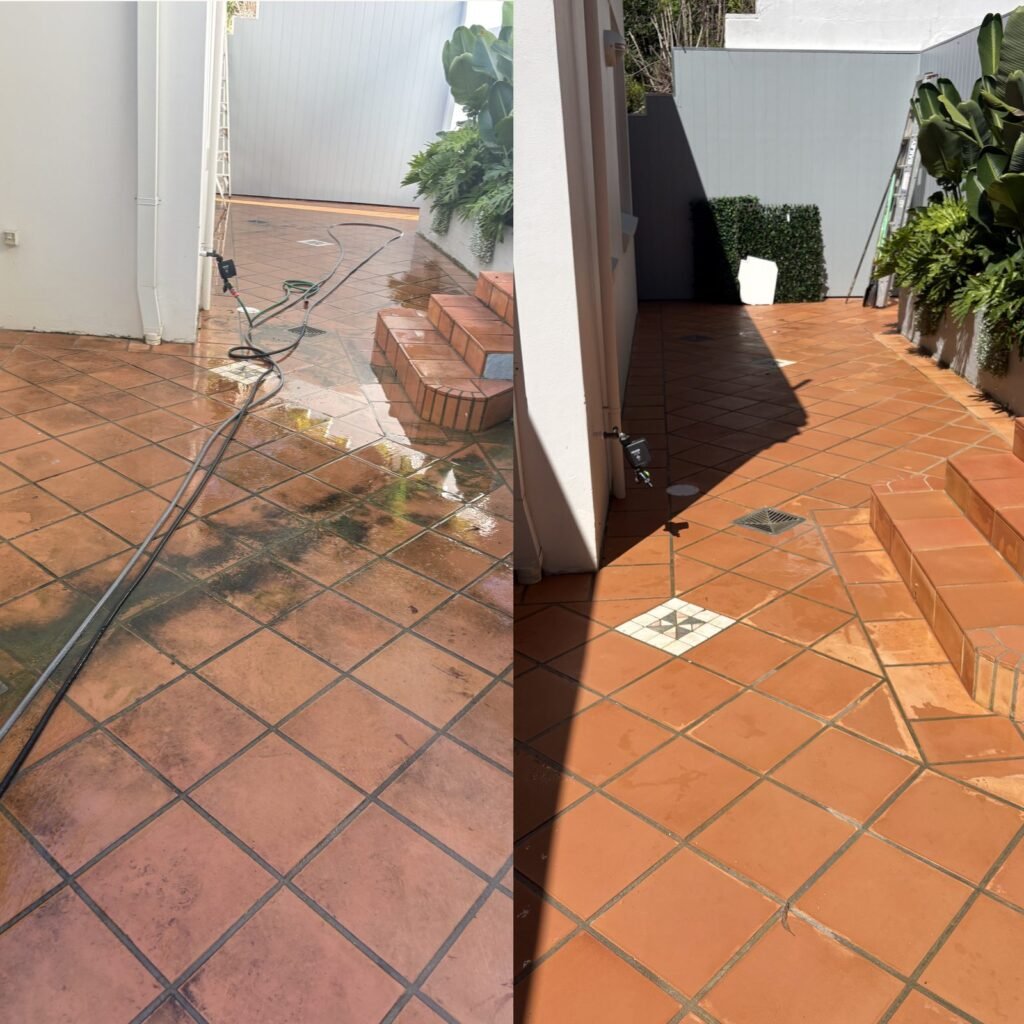
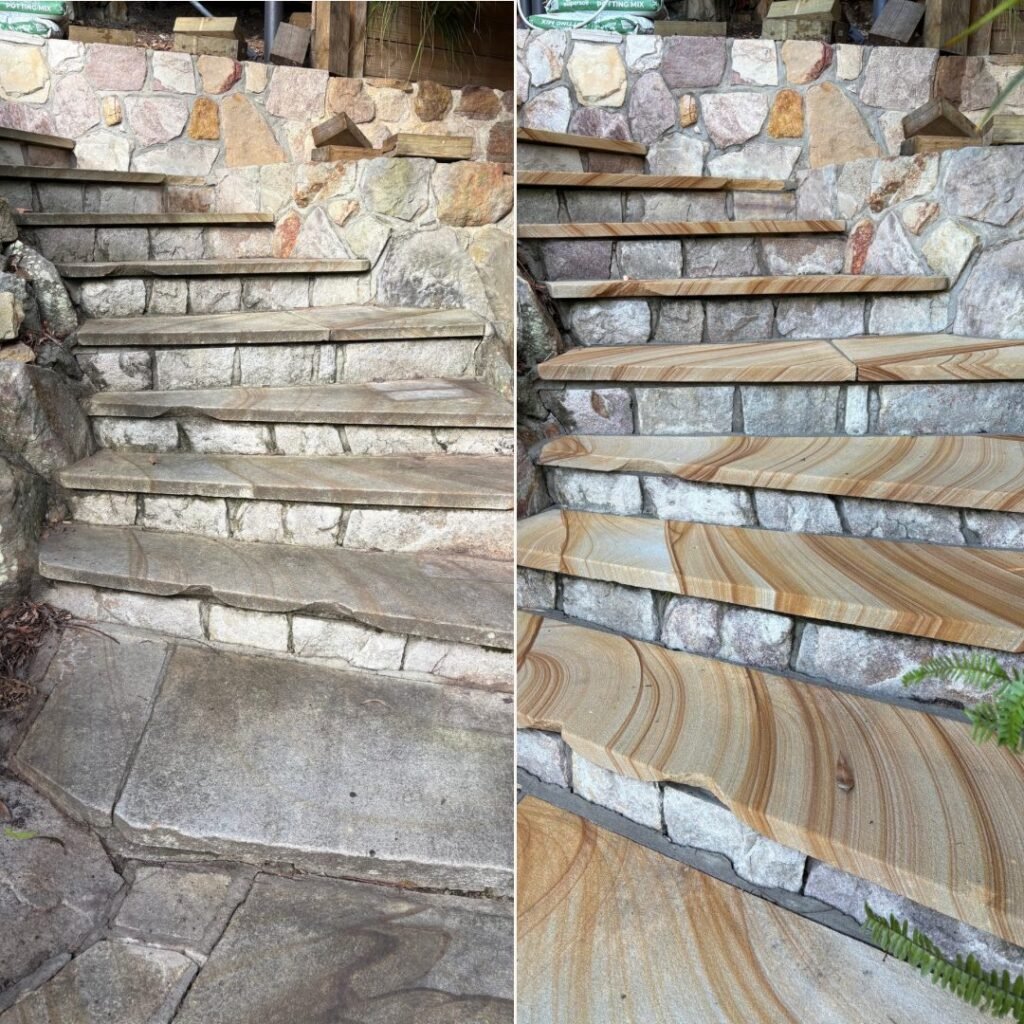
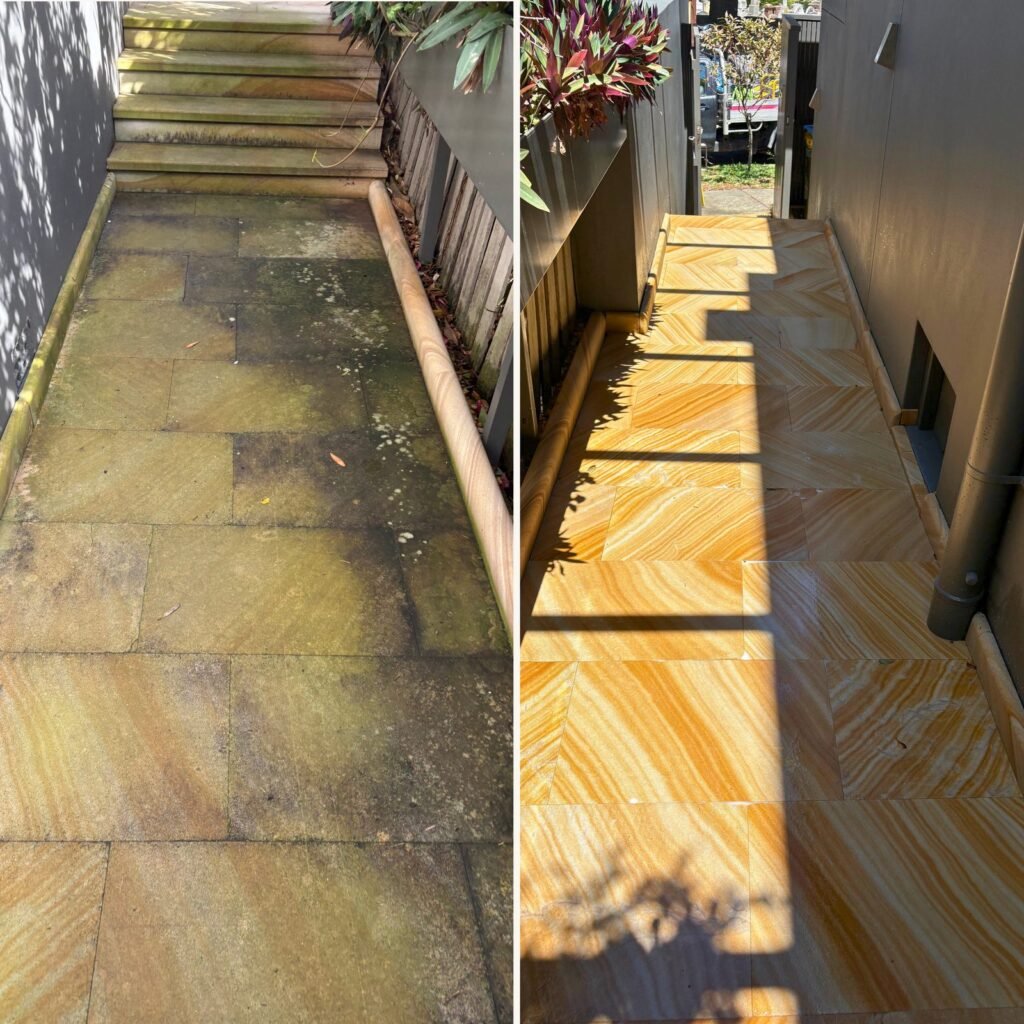
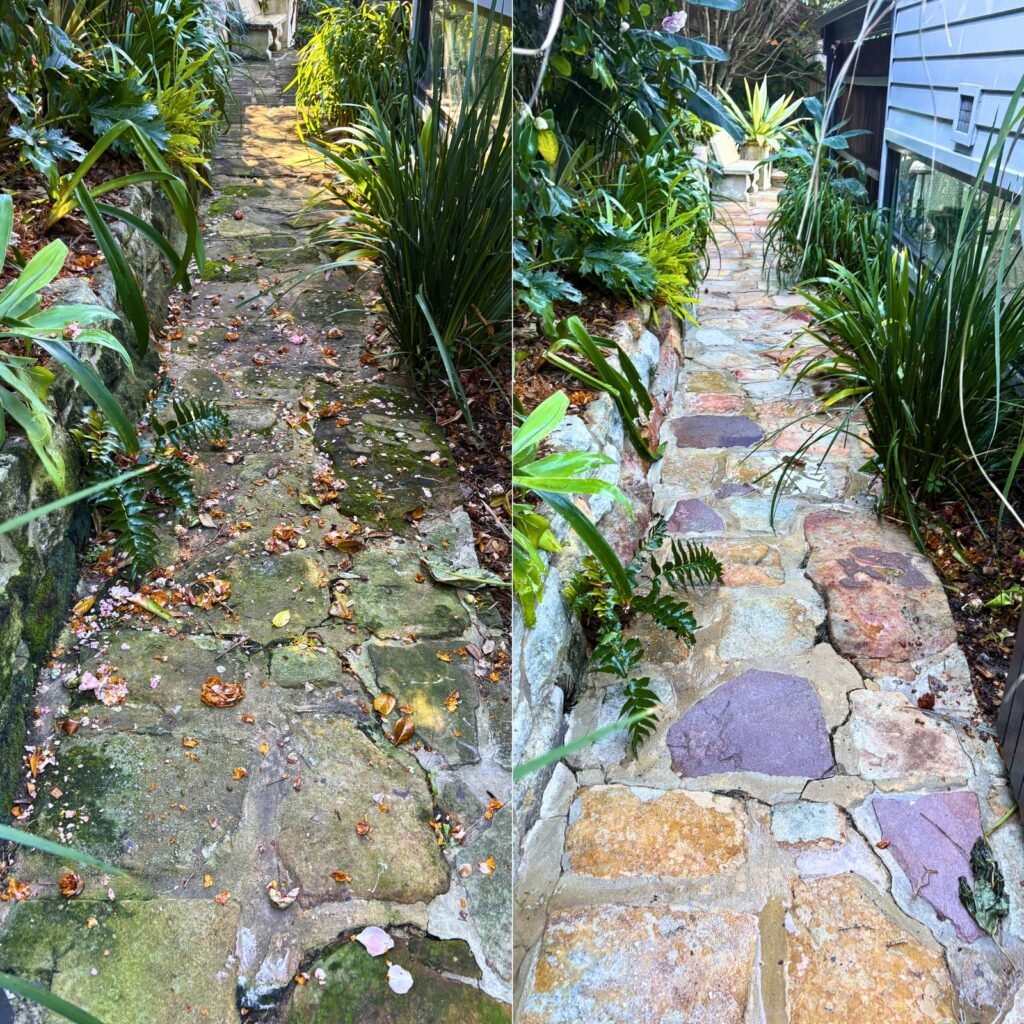
Retaining walls, steps and paths under trees green up fastest of all, and that one is a safety issue rather than a cosmetic one. Algae on sandstone steps in a shaded garden is genuinely slippery, and North Shore blocks tend to be steep with a lot of steps.
Timber decks and pergolas hold moisture and grow mould in the grain. Fibre cement and rendered surfaces in permanent shade develop the black spotting that people mistake for dirt.
Why pressure washing makes it worse
This is the most important thing in this guide, so I will be blunt about it.
Mould, algae and lichen are living organisms with root structures that go into the surface. High pressure removes what is visible and leaves the roots. The surface looks clean for a few weeks and then comes back, often faster than before — because the pressure has also opened up the surface, making it more porous and giving the regrowth a better foothold.
So the owner pressure washes again. And again. Each round makes the substrate more absorbent and the cycle shorter, until the render is chalky, the paint is thin, and the mould returns within a season.
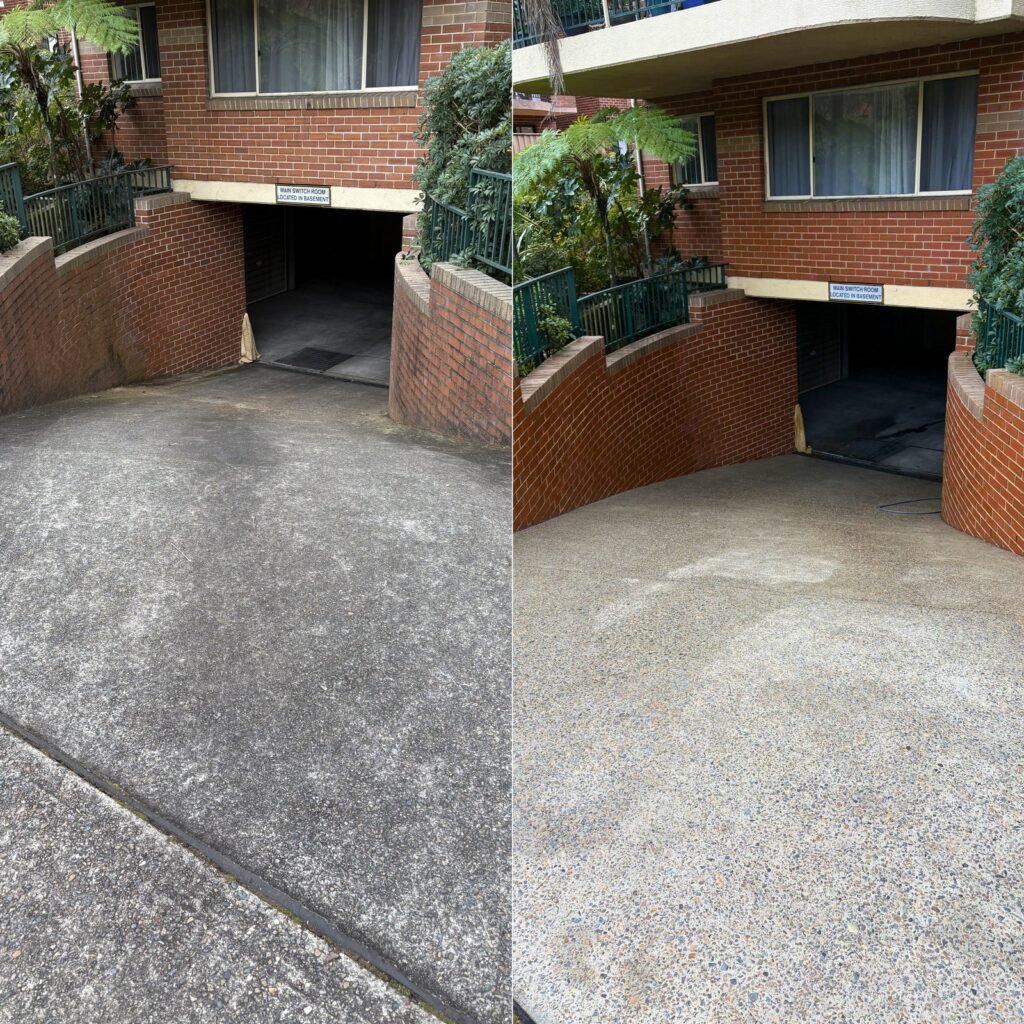
The alternative is soft washing: correct chemistry, low pressure, and enough dwell time to kill the growth at the root. It takes longer on the day and lasts several times longer afterwards. We explain why North Shore homes go green in more detail if you want the biology.
Gutters are the real risk up here
Salt is the Beaches problem. Gutters are the North Shore problem, and they are the one that actually costs money.
Constant canopy drop means gutters fill continuously rather than seasonally. A full gutter overflows against the fascia, and on the older brick-and-timber homes common through Wahroonga, Warrawee and Roseville that means rotted fascia, rusted gutter, and water tracking into the eaves.
Valleys matter more here than almost anywhere. Where two roof planes meet, litter packs in hard, and a blocked valley pushes water sideways under the tiles rather than off the roof. Most of the North Shore ceiling leaks we get called about start in a valley, not a gutter.
Twice a year is the minimum under mature canopy. Directly under heavy droppers, three times. And it is worth clearing after the autumn drop rather than before it — timing beats frequency.
The bushfire overlay
Parts of the North Shore back onto bushland reserve, and those properties carry an ember risk that the leafier suburban streets do not. If your block adjoins reserve, the pre-season gutter clear is not just maintenance — dry litter sitting in a gutter against a timber fascia is fuel at the roof edge. Check your Bushfire Attack Level with council and read the NSW RFS property preparation guidance directly.
A realistic North Shore schedule
Gutters: twice a year minimum, late winter and late autumn. Three times under heavy canopy. Include valleys and downpipes, not just the eaves runs.
House wash: annually for most homes. Southern elevations and shaded walls may want a targeted treatment in between — you do not always need the whole house done.
Roof: every two to three years, depending on how much lichen establishes. Under dense canopy it will be sooner.
Paths, steps and retaining walls: annually, or whenever they start feeling slippery underfoot. Do not wait on this one.
The tree conversation
Owners sometimes ask whether they should just take the tree out. Occasionally, if it is overhanging the roof and dropping directly into a valley, thinning or removing a limb genuinely changes the maintenance picture.
But most of the time the answer is no — and not only because Ku-ring-gai and Willoughby have strict tree preservation controls and you will likely need council approval. The canopy is the reason people live here. Cleaning a house twice a year is a smaller price than the street losing its character.
What does help: keeping branches off the roof itself, clearing litter before it composts, and accepting a schedule rather than reacting when it looks bad.
What I would tell a North Shore owner
Stop pressure washing it. That is genuinely the highest-value change most people here can make. The greening is not dirt and it will not respond to force — it responds to chemistry and patience, and every round of high pressure makes next year worse.
Beyond that, treat gutters as the priority and everything else as presentation. A green wall is unattractive. A blocked valley is a ceiling.
We work across the North Shore and the Hornsby corridor: gutter cleaning, house washing and roof cleaning. Request a fixed written quote — 24-hour turnaround, $20 million public liability, photo report on every job.