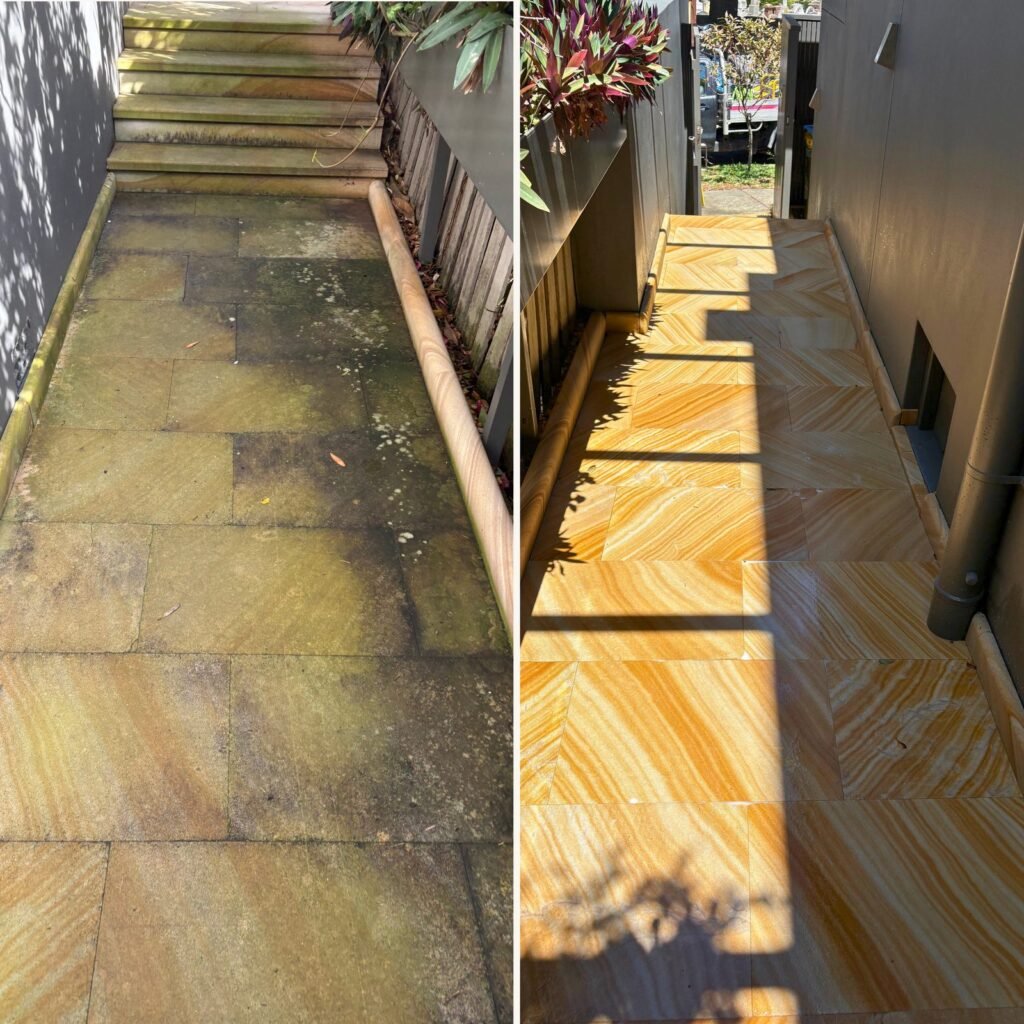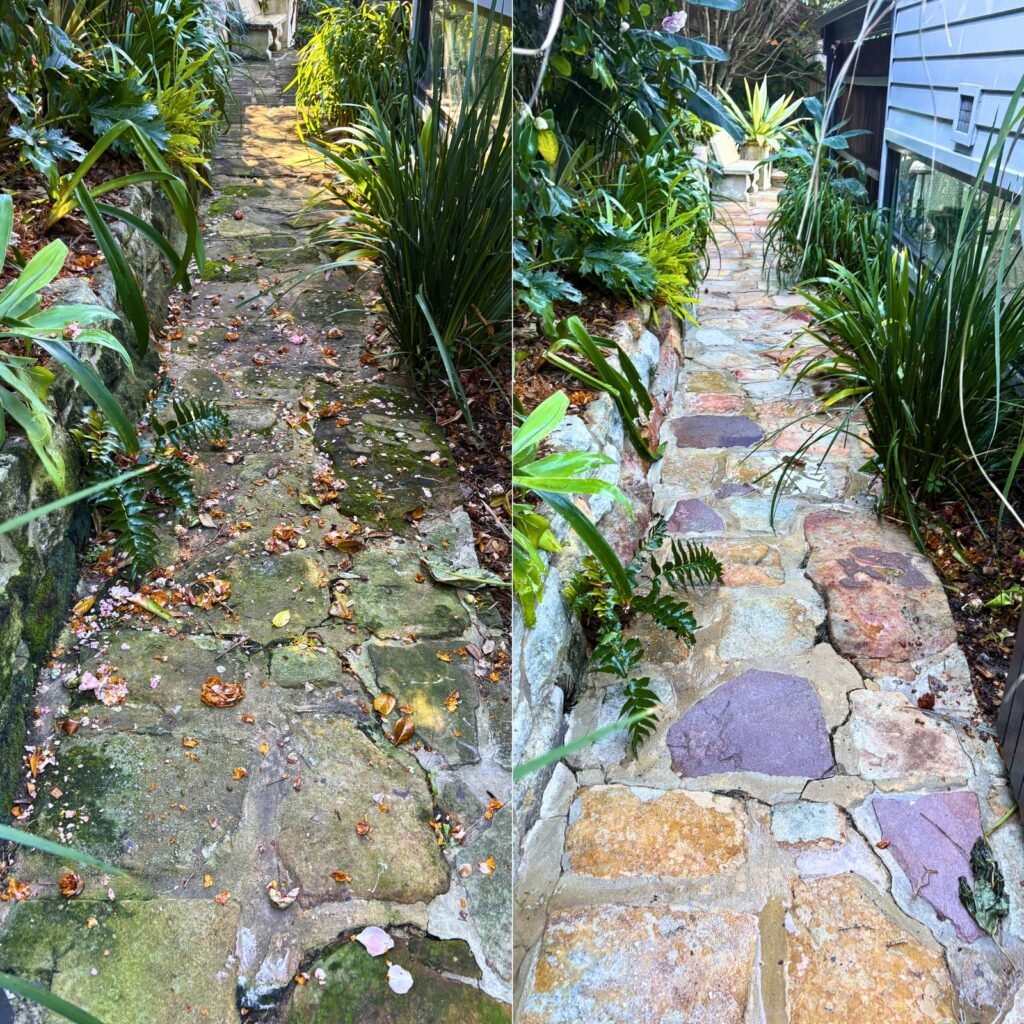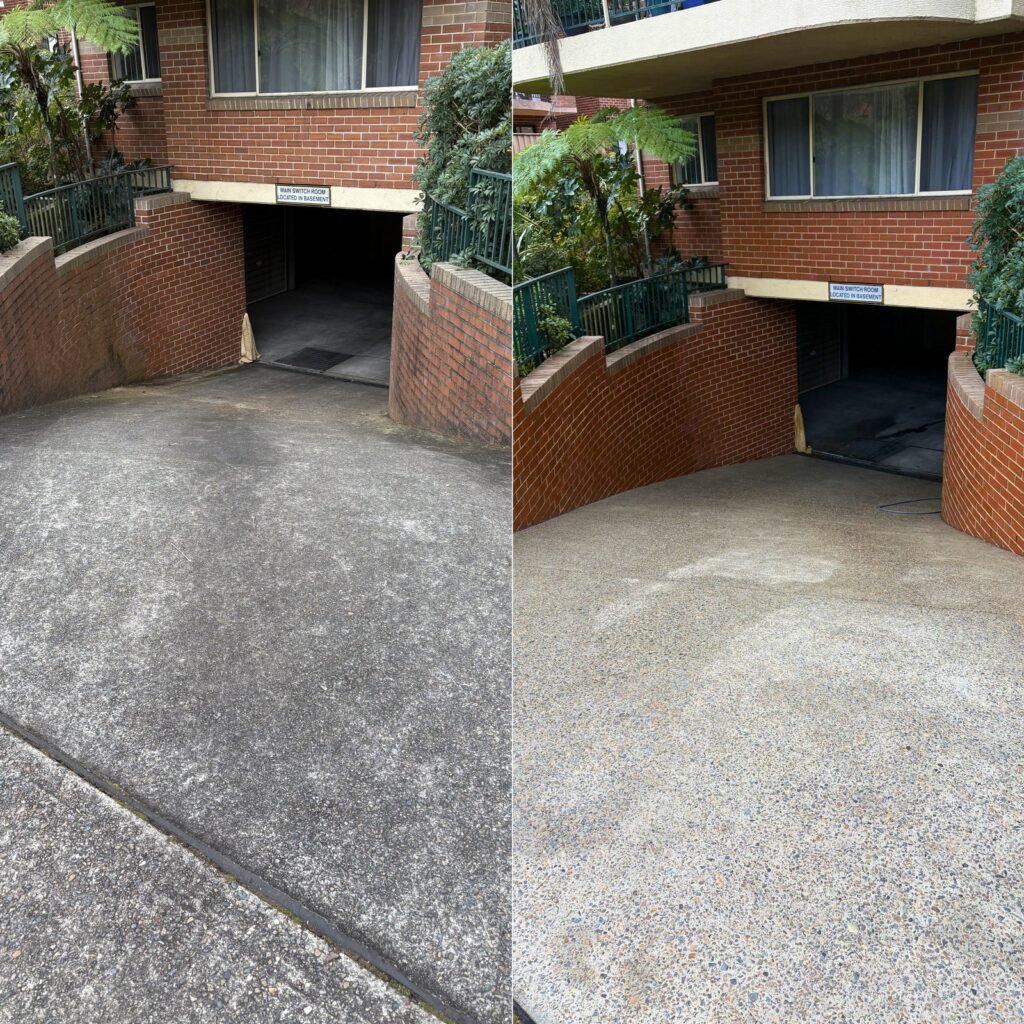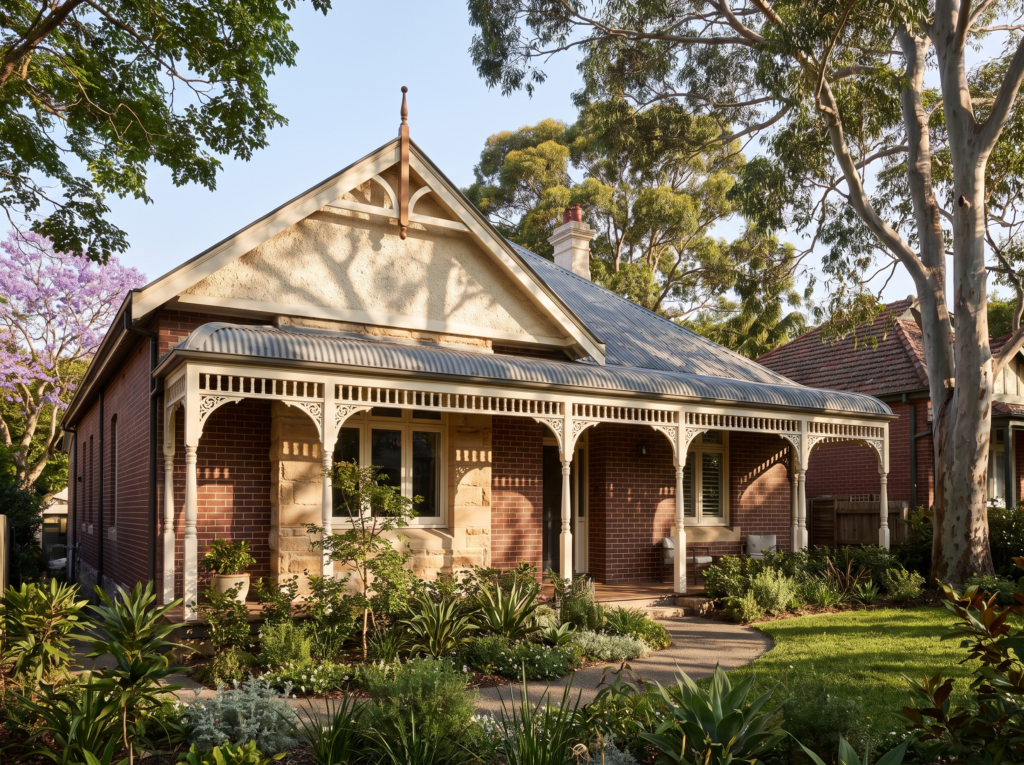
The streets between Mosman Bay and Balmoral hold one of Sydney’s richest runs of Federation and Queen Anne homes — built roughly 1895–1915, and full of surfaces that reward careful cleaning and punish careless work.
Know your surfaces
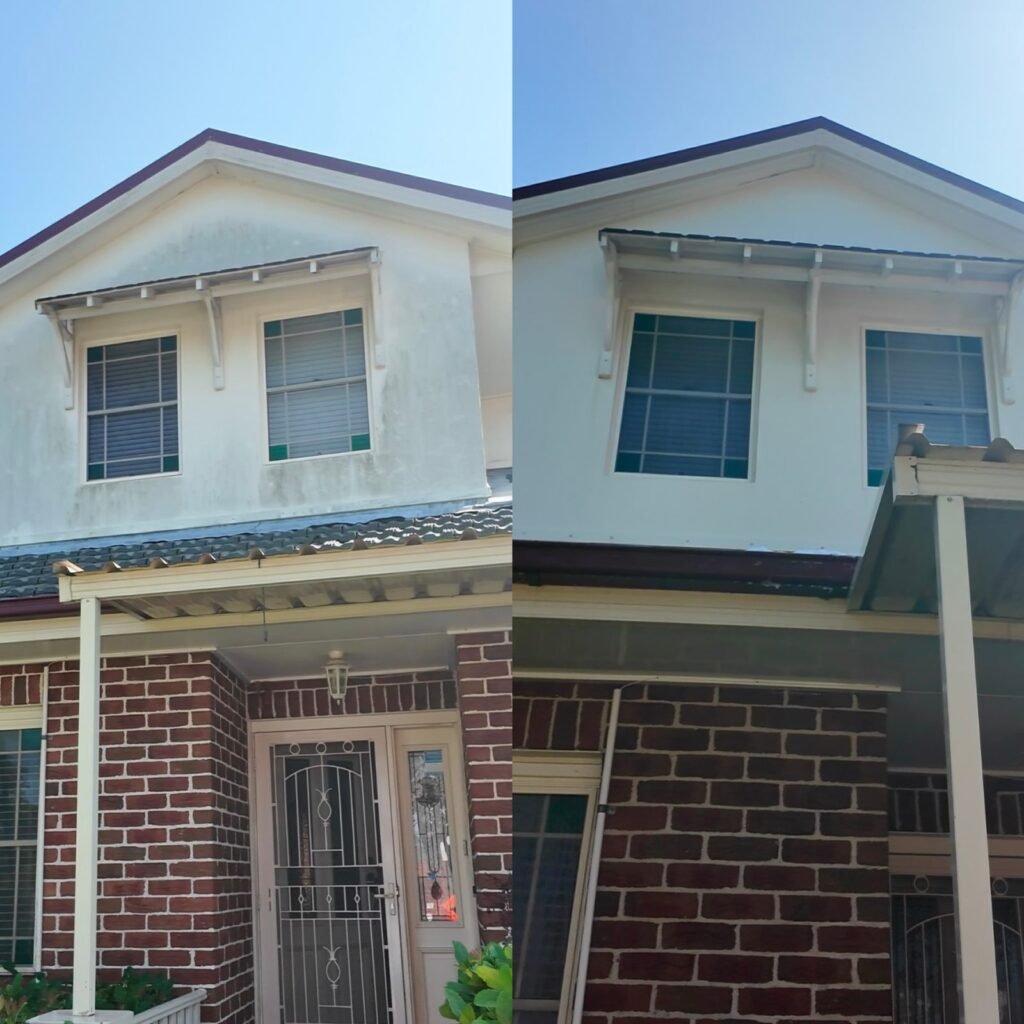
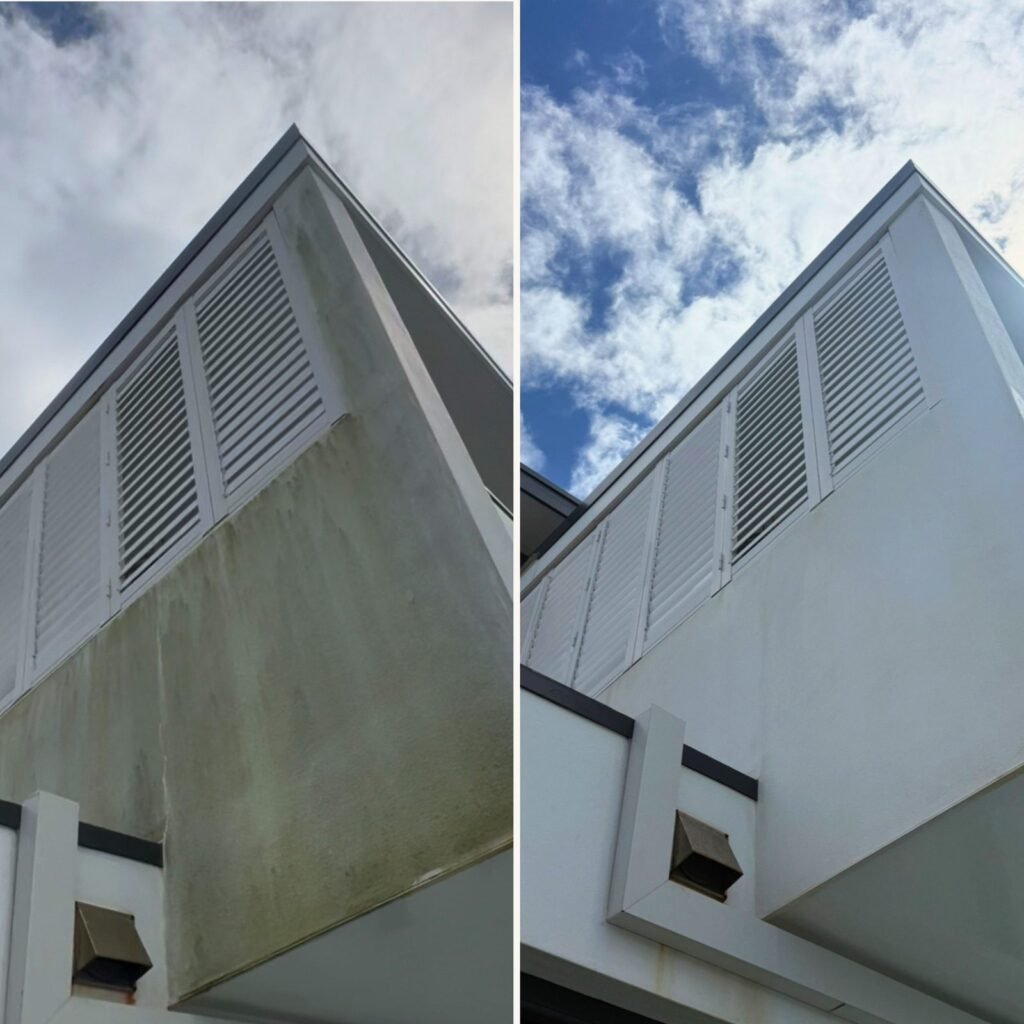
Roughcast render — the pebbly textured render on so many Mosman gables — is a pressure washer’s nightmare. Its texture traps grime deep in the profile, tempting operators to step the pressure up, and that’s exactly how chunks of hundred-year-old render end up on the garden bed. Roughcast needs a soft wash with real dwell time so the chemistry does the work the pressure can’t.
Tuck-pointed brickwork is the detail most owners don’t realise they’re at risk of losing. Those crisp white lines over the mortar joints are a decorative putty ribbon, applied by hand over a century ago and increasingly expensive to restore. High pressure strips tuck pointing instantly. We clean tuck-pointed facades at low pressure, working across the wall rather than into the joints.
Timber fretwork, verandah posts and window joinery carry decades of paint layers that hide early rot. Blasting them opens seams and forces water in behind the paint. Hand-washing with a soft brush is slower and simply correct.
Marseille-pattern terracotta roofs — the classic red Federation roof — grow lichen enthusiastically on the harbour side. The tiles are unglazed and porous, so growth comes off with treatment and patience, never with pressure that erodes the fired surface.
The general rule
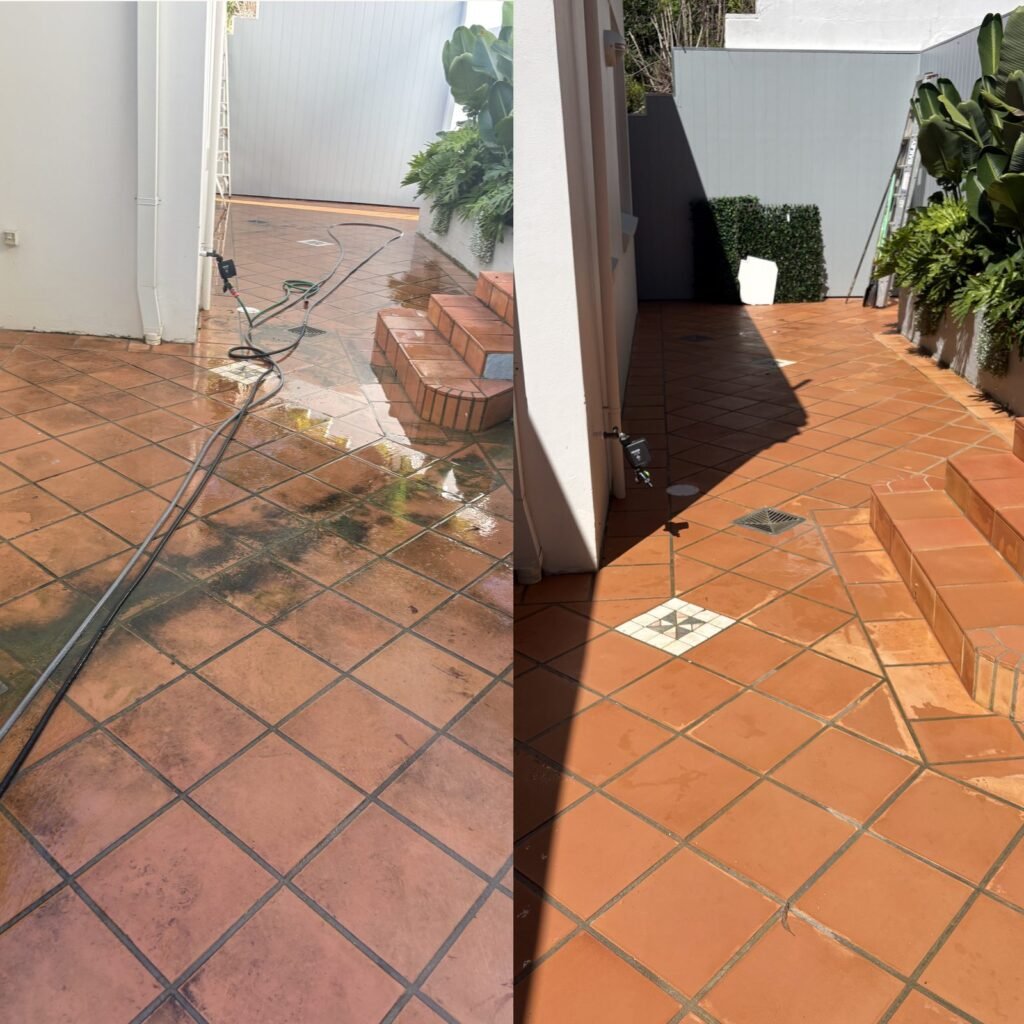
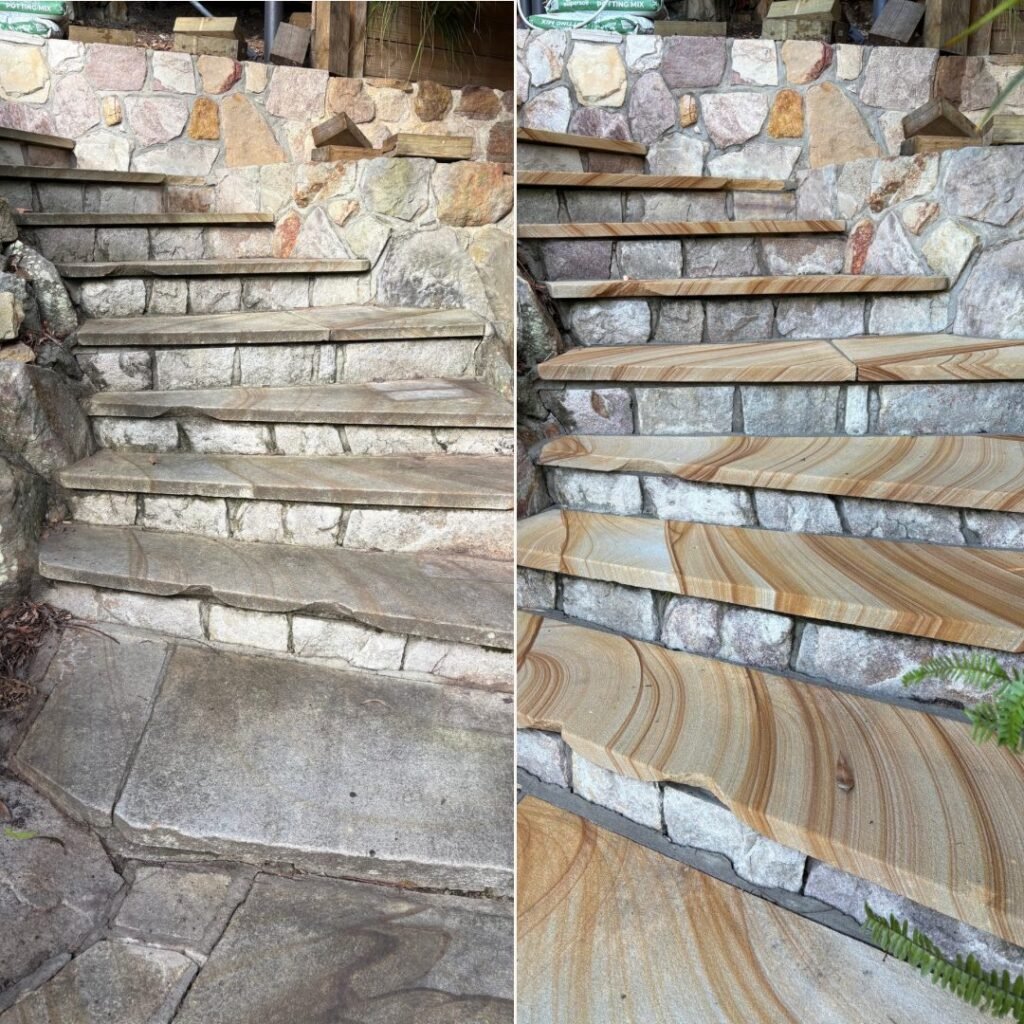
If a surface predates World War I, assume it can’t take modern pressure until proven otherwise. The good news: soft washing done right gets these homes genuinely clean — and because it kills growth at the root, they stay clean longer.
We care for period homes across Mosman, Cremorne, Neutral Bay and Northbridge. If yours is due, ask us for a fixed written quote — we’ll walk the facade with you and explain exactly how each surface will be treated.