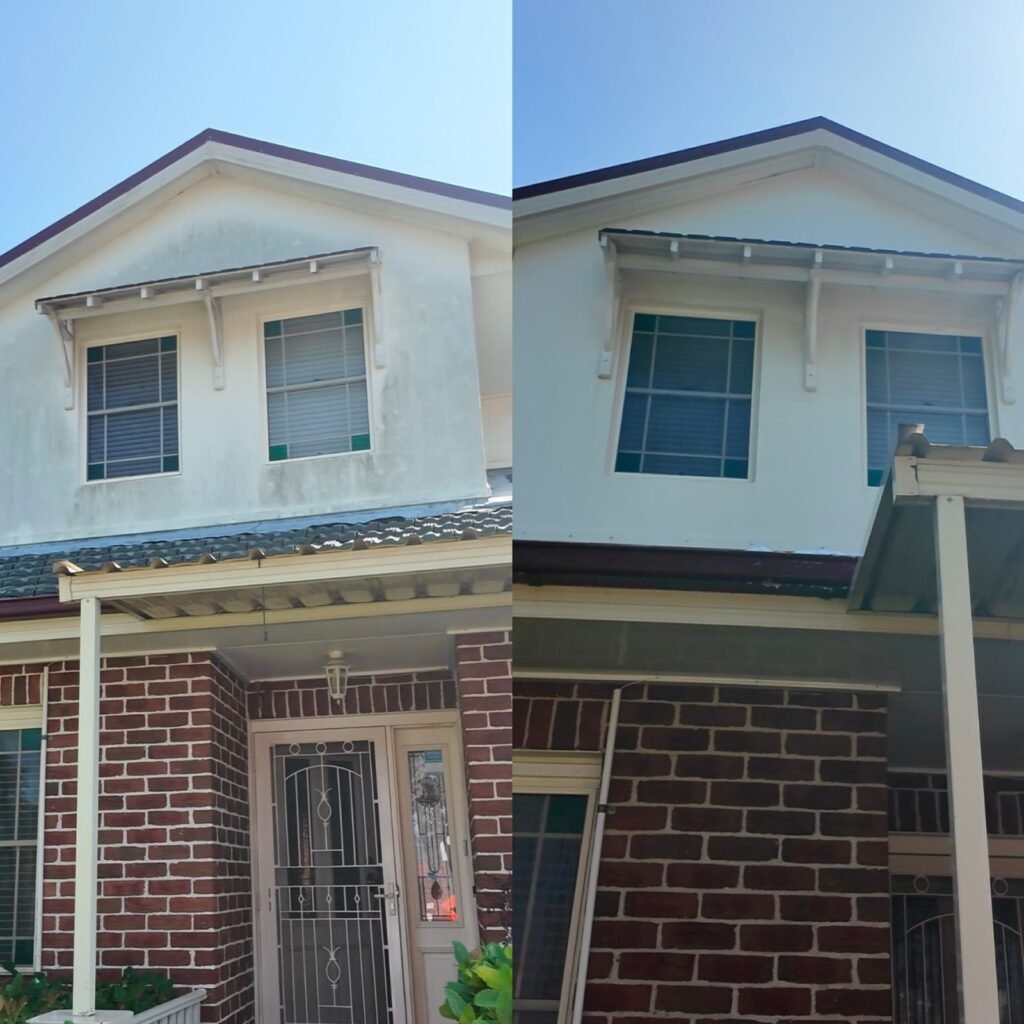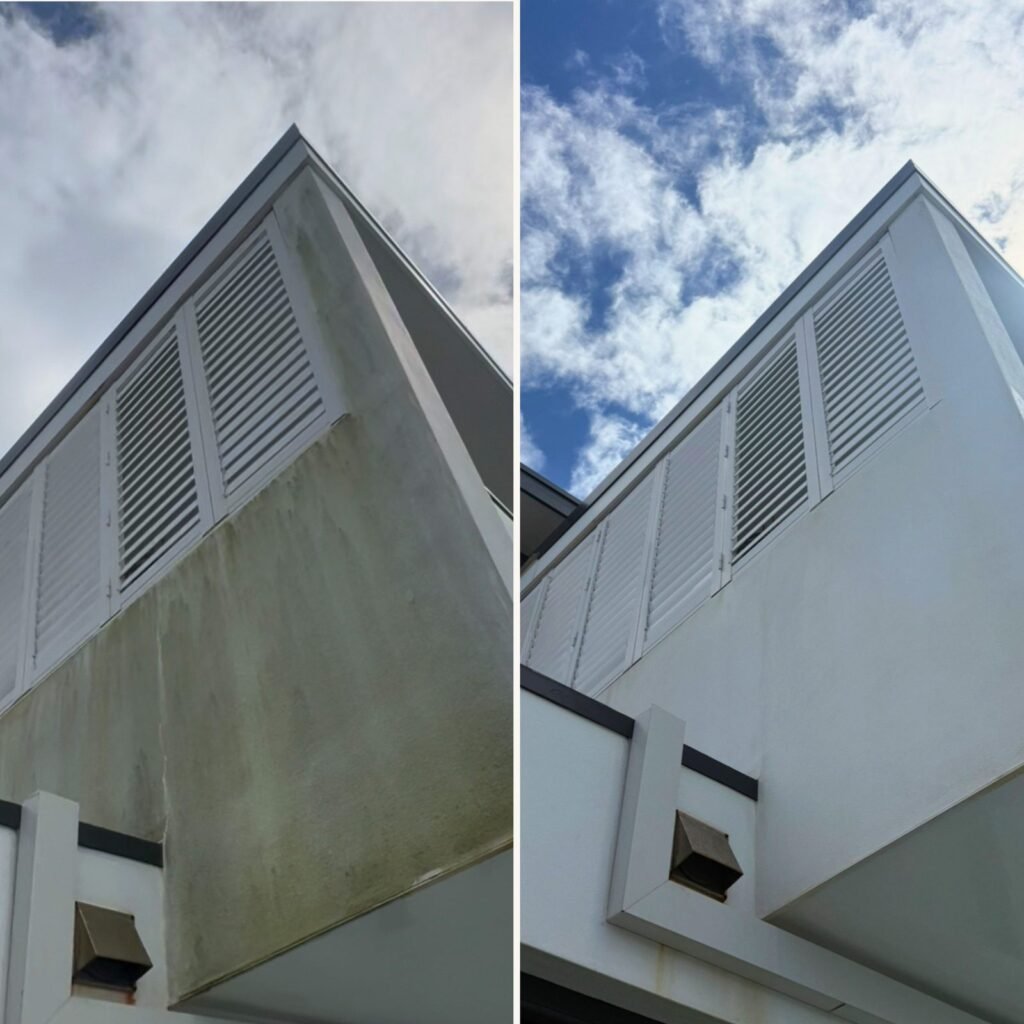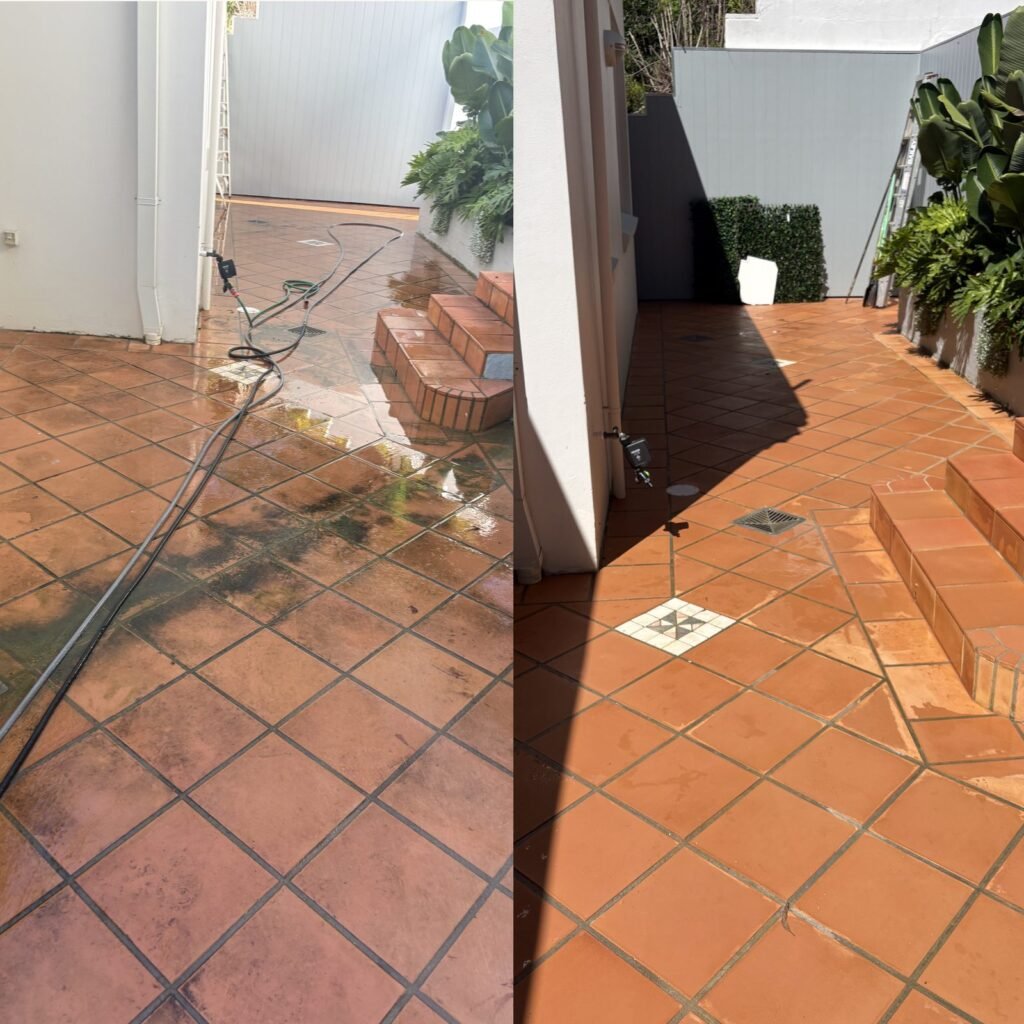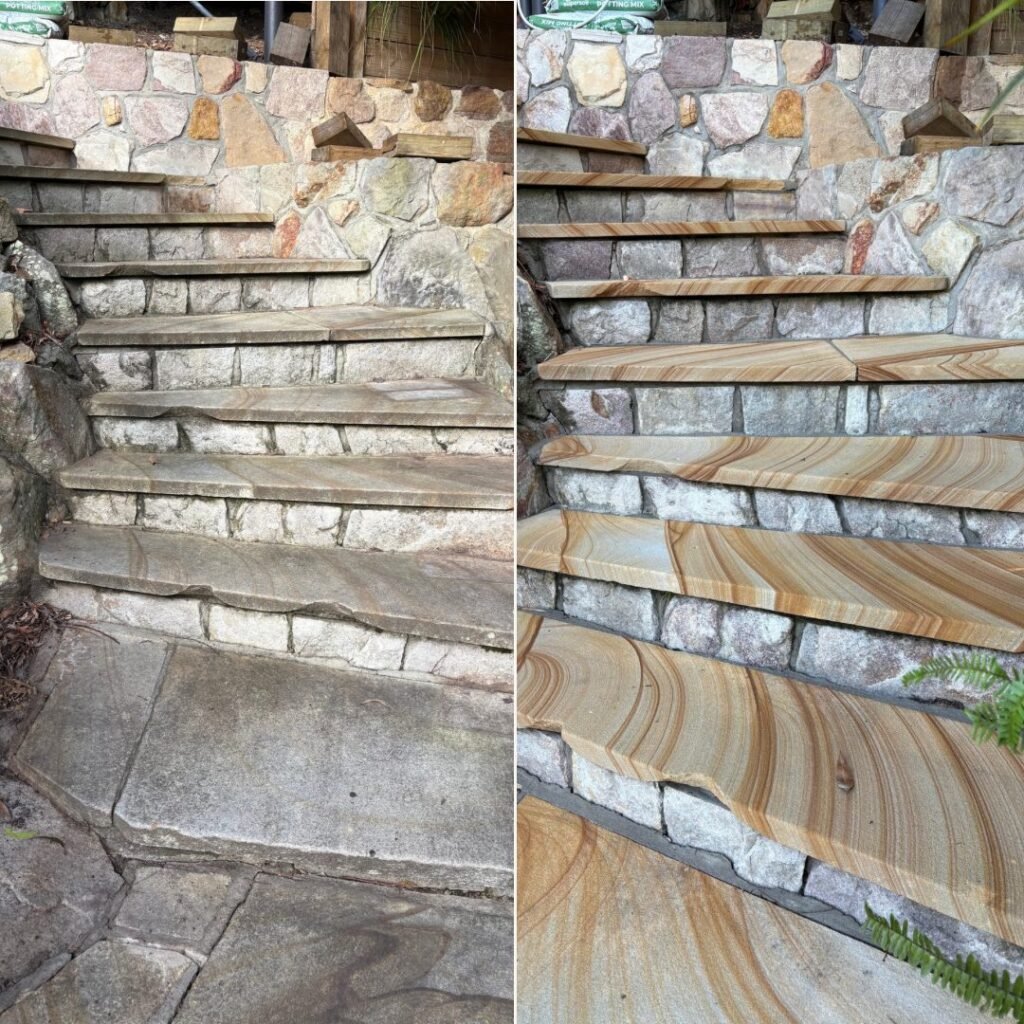
Most delays on an exterior cleaning job happen in the first hour, and almost none of them are about cleaning. A locked gate, a tap that will not run, a car in the driveway, nobody home to answer a question about the side passage.
None of it is the homeowner’s fault — nobody told them. So here is the list.
Water, and a tap that actually works
We need access to a tap with reasonable pressure and flow. One tap is usually enough; two is better on a large job.
Worth checking the day before: that the tap turns, that the washer is not shot, and that the hose fitting is intact. A tap that has not been used since the last tenant is a surprisingly common hold-up.
If the property is on tank water only, tell us when booking, because that changes the setup entirely — we bring our own rather than draw down your supply. More: how much water the work uses.
Power
An external outlet for some equipment. If the only outlet is inside a garage that will be locked, or on a circuit that trips, that is worth saying in advance.
If any external power point or garden light is damaged, cracked or hanging loose, tell us before the day. We will not wash near it until it is dealt with, and knowing in advance means it can be sorted rather than stopping the job. More: the electrical check.
Parking, which matters more in Sydney than anywhere
Somewhere to put the vehicle, as close to the work as possible, for the duration.
In the Eastern Suburbs and the lower North Shore this is often the single biggest variable in how long the job takes. Every extra fifty metres is hose pulled by hand, repeatedly, all day.
If your street is permit zone or two-hour parking, tell us when booking. If you have a driveway we can use, clear it. If there is a resident permit or a visitor permit available, that genuinely helps.
Access, including the parts you forget
Gates unlocked, side passages clear, and anything blocking an elevation moved.
The forgotten one is the neighbour. If an elevation can only be reached from next door — standard on terraces and narrow blocks — that permission needs arranging before the day, by you, because it is your relationship and it goes better coming from you. More: cleaning a house with no setback.
If there is a key safe, an alarm, or a code for a gate, we need it in advance rather than at 7:30 on the morning.
Pets
Inside, or somewhere secure away from the work, for the whole visit.
Three reasons, in order of importance. Gates get left open while gear is carried in and out, and a dog that bolts in an unfamiliar street is the worst thing that can happen on a job. Machines are loud and frighten animals. And treated surfaces should be dry and rinsed before paws are back on them.
Tell us if there is a dog, even a friendly one, and tell us where the cat hides. More: pets, ponds and gardens.
Windows, doors and skylights closed
All of them, including the bathroom louvre, the laundry window and the one in the room nobody uses.
We check as well, but we cannot check a window on the inside of a locked room. If a frame is known to leak, say so — the method changes around it.
Clear the surfaces
Outdoor furniture, cushions, pot plants, rugs, bins, toys, bird baths, door mats and anything on the driveway.
We will move what is left, and we are careful, but we do not know which pot is the heirloom one. Anything fragile or sentimental is better moved by you.
Take the washing in, and leave it in for the day.
Tell us about the rainwater tank
If the roof drains to a tank, and particularly if the tank supplies drinking water, we need to know at booking rather than discovering it on site.
The tank comes off before the work starts and stays off through the first substantial rain. It is non-negotiable and it needs planning. More: tank-fed properties.
Tell us about the building’s history
A few things change the method entirely, and you are the only one who knows them.
Whether the house was built or clad before 1990, which raises the fibro question. Whether it was painted before the 1970s, which raises lead. Whether it is heritage listed or in a conservation area. Whether anything has been recently painted, sealed, rendered or repointed, and when.
Recent work is the one people forget. Fresh paint, new pointing and recently applied sealer all need curing time before anything is washed over them. More: fibro, lead paint and heritage approvals.
Strata and apartment jobs
If it is a unit or a townhouse, approval needs to exist before the day, and for common property that usually means the owners corporation rather than you.
The building manager generally wants notice to residents, and often has set hours. Balconies are the recurring problem, because the drainage usually goes somewhere that affects the unit below. More: cleaning a balcony without flooding the unit below.
Do you need to be home?
Not for the whole job, but ideally for the start.
Ten minutes at the beginning is worth more than anything else on this list: a walk around together, agreement on what is in scope, a look at anything we have found, and a decision on the things that need one.
After that you can leave. The photo report covers what you did not see. More: what is in our photo report.