Stain Removal
Stain removal Sydney: oil, rust, tannin and gum drawn out of concrete, paving and stone with stain-specific chemistry — extracted from the pores, not blasted deeper.
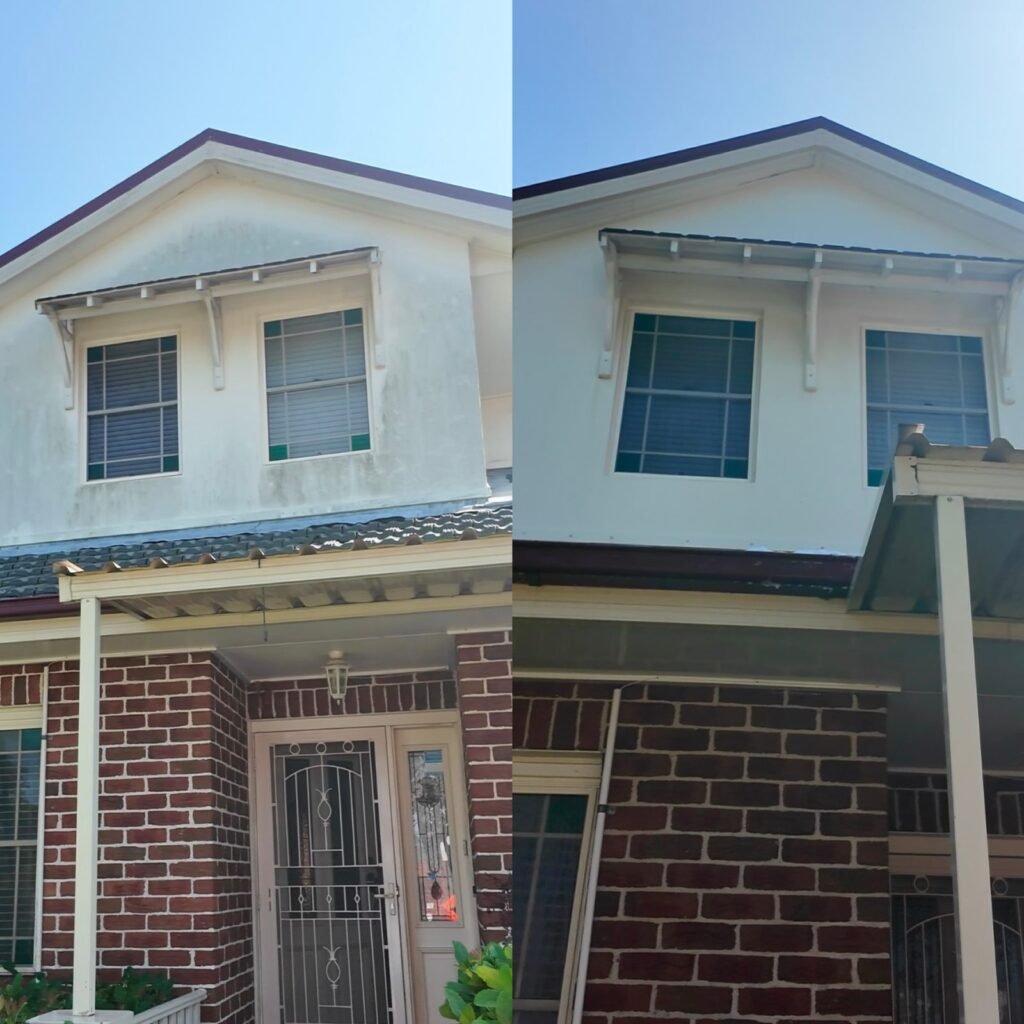
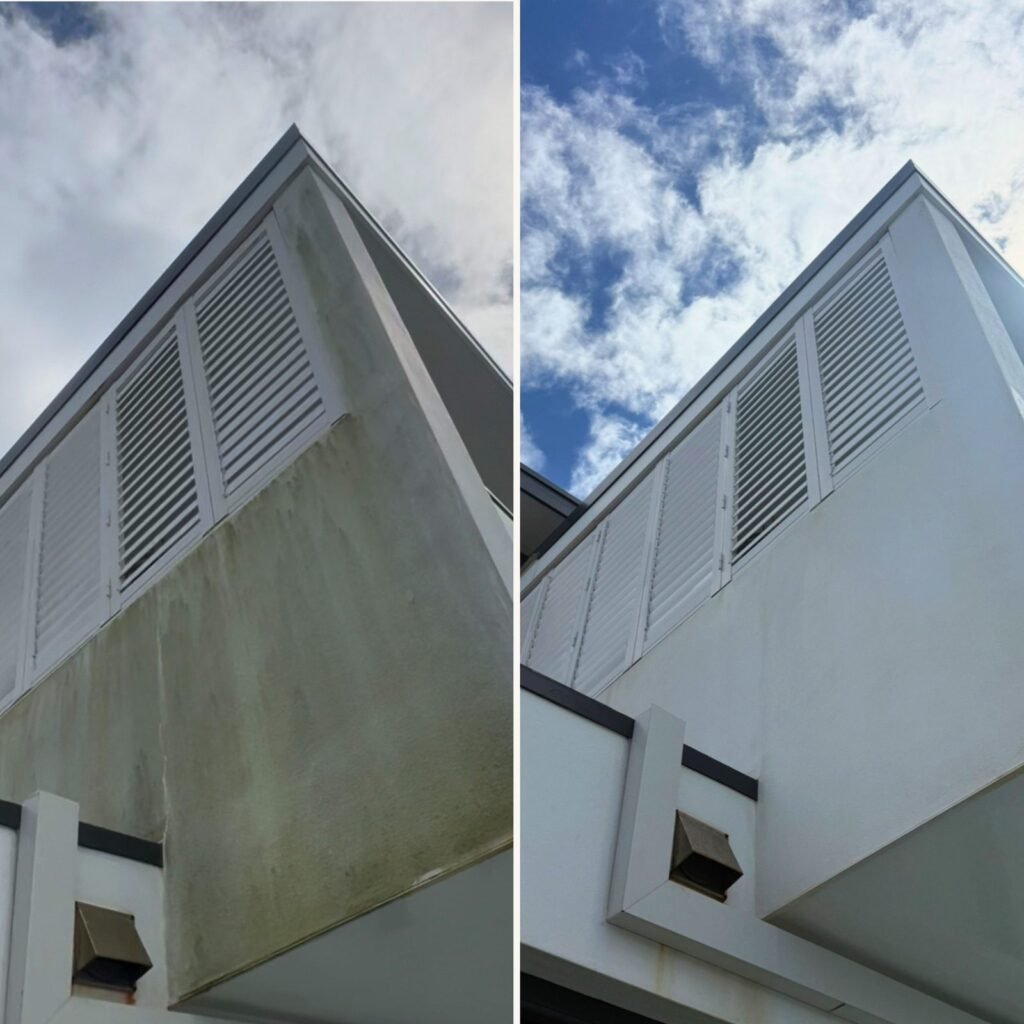
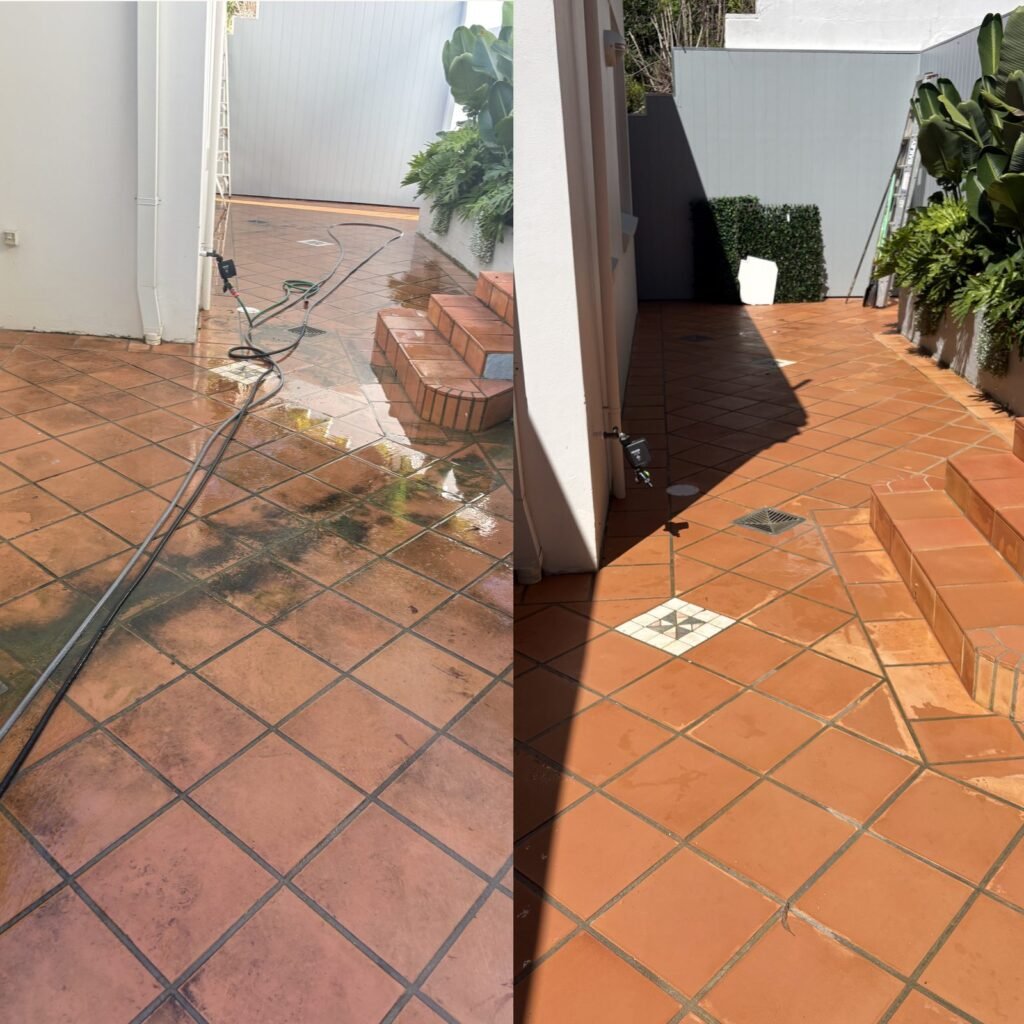
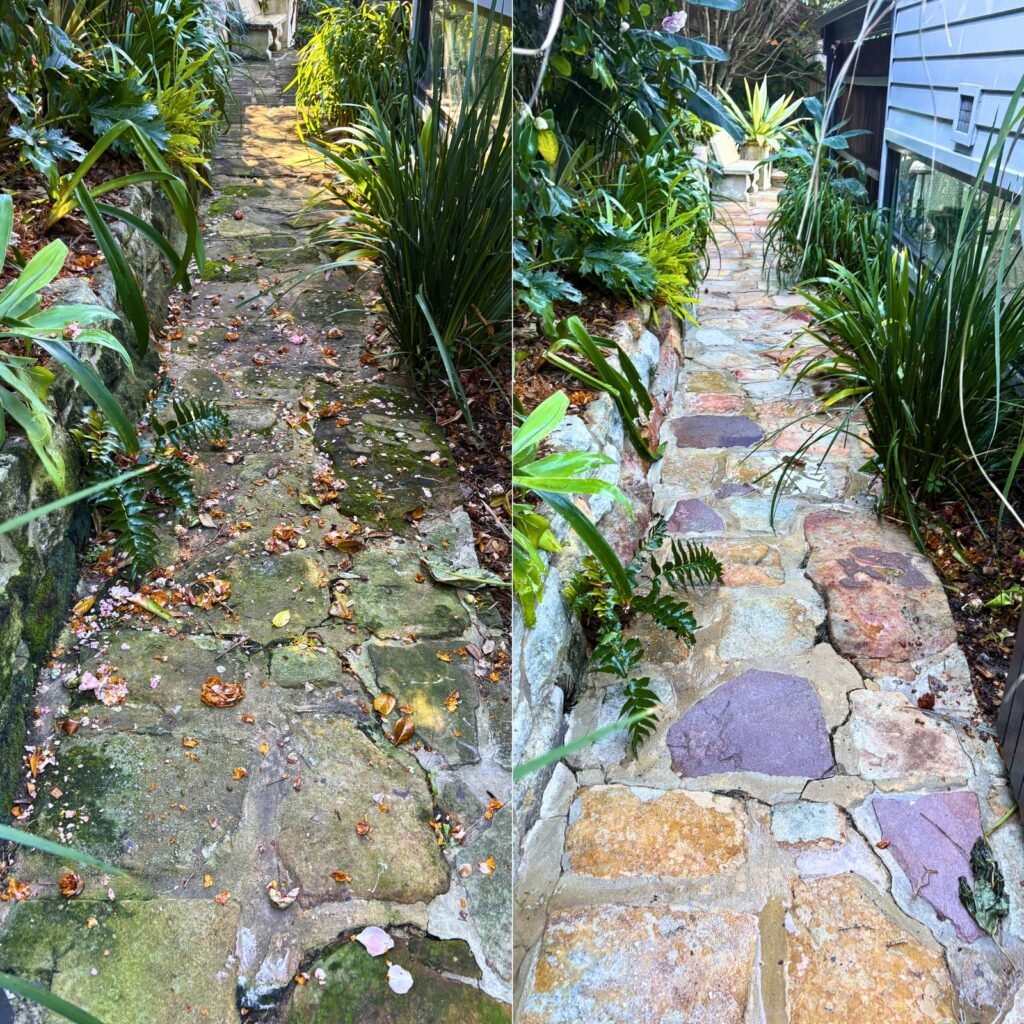
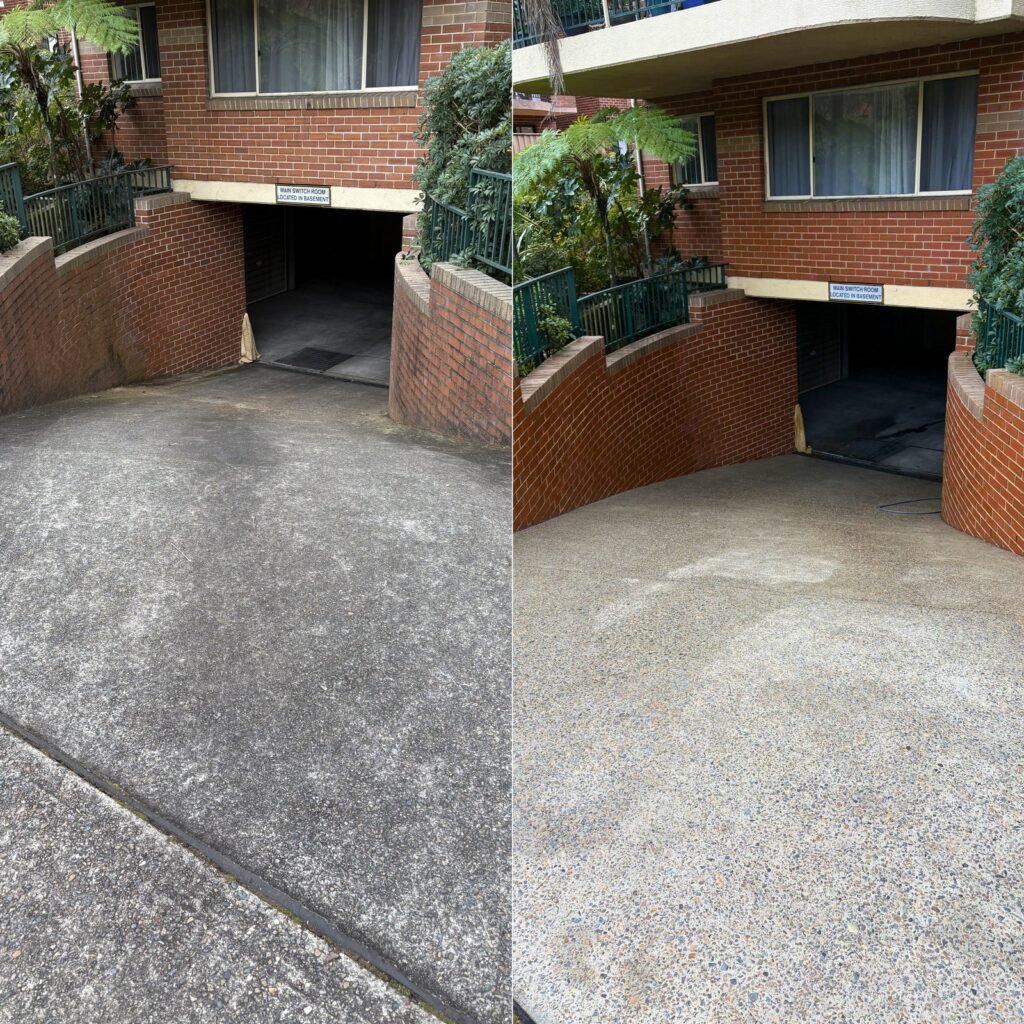
Pressure washing removes the general film of grime from a surface. The marks people actually ring us about — the black oil patch where the car parks, the orange rust bleed under the tap, the brown tannin shadow under the frangipani — don’t respond to pressure at all, because they aren’t sitting on the surface. They’re in it. Stain removal is extraction work: the right chemistry drawing the contaminant back out of the pores.
Oil and grease
Engine oil, transmission fluid and BBQ fat soak into concrete and paving within hours and keep migrating deeper for weeks. Blasting the surface removes the top of the stain and polishes the rest. We treat hydrocarbons with degreasers matched to the surface and the age of the stain, worked in with dwell time, then extracted with hot water. Fresh spills usually come out completely; a stain that’s been fed by the same drip for five years may only fade 80–90% — and we’ll tell you that honestly before you spend anything.
Rust
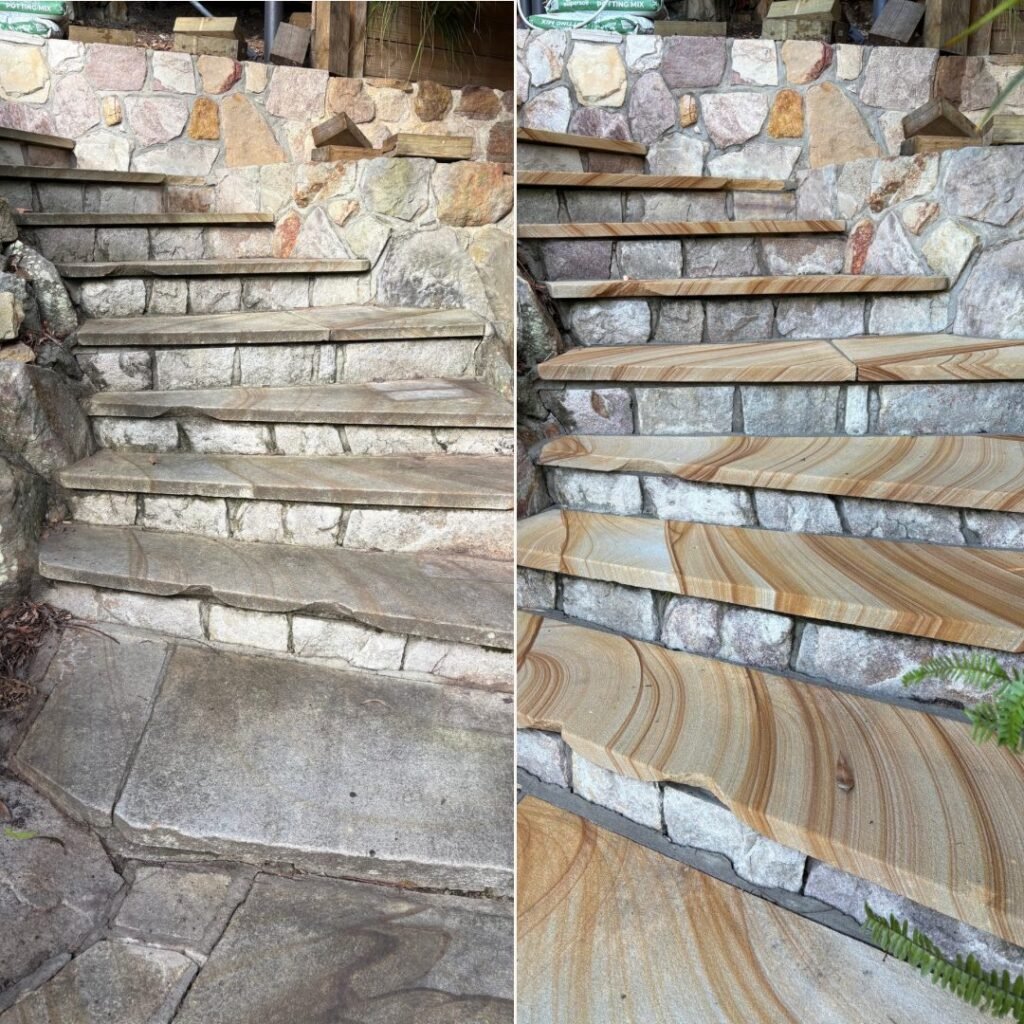
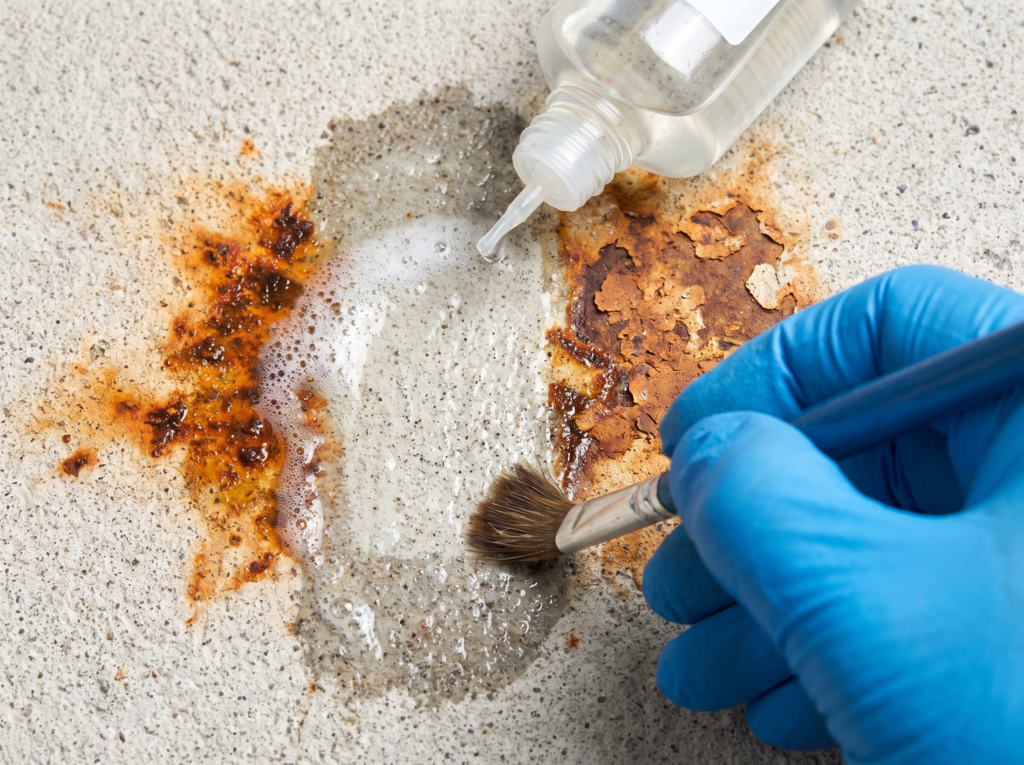
Rust staining — from irrigation bore water, garden furniture, metal planters, fertiliser granules or reinforcement bleeding through — is iron oxide bonded into the surface. It needs a dedicated oxalic or specialist rust treatment, carefully neutralised afterward; the hardware-store hydrochloric shortcut removes rust and burns the surface around it, and on sandstone, limestone or travertine, acid of any kind etches the stone permanently. Rust on soft stone is treated with stone-safe chemistry only, the same discipline as our sandstone restoration work.
Leaf tannin, gum and the rest
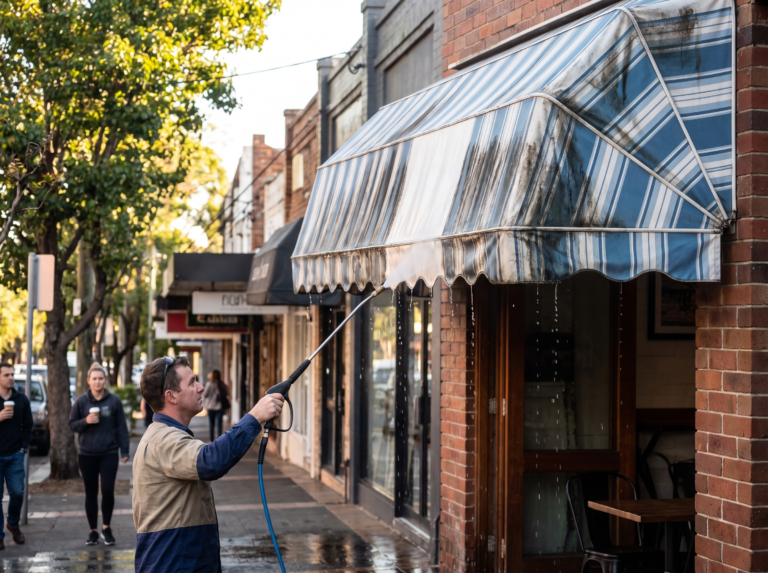
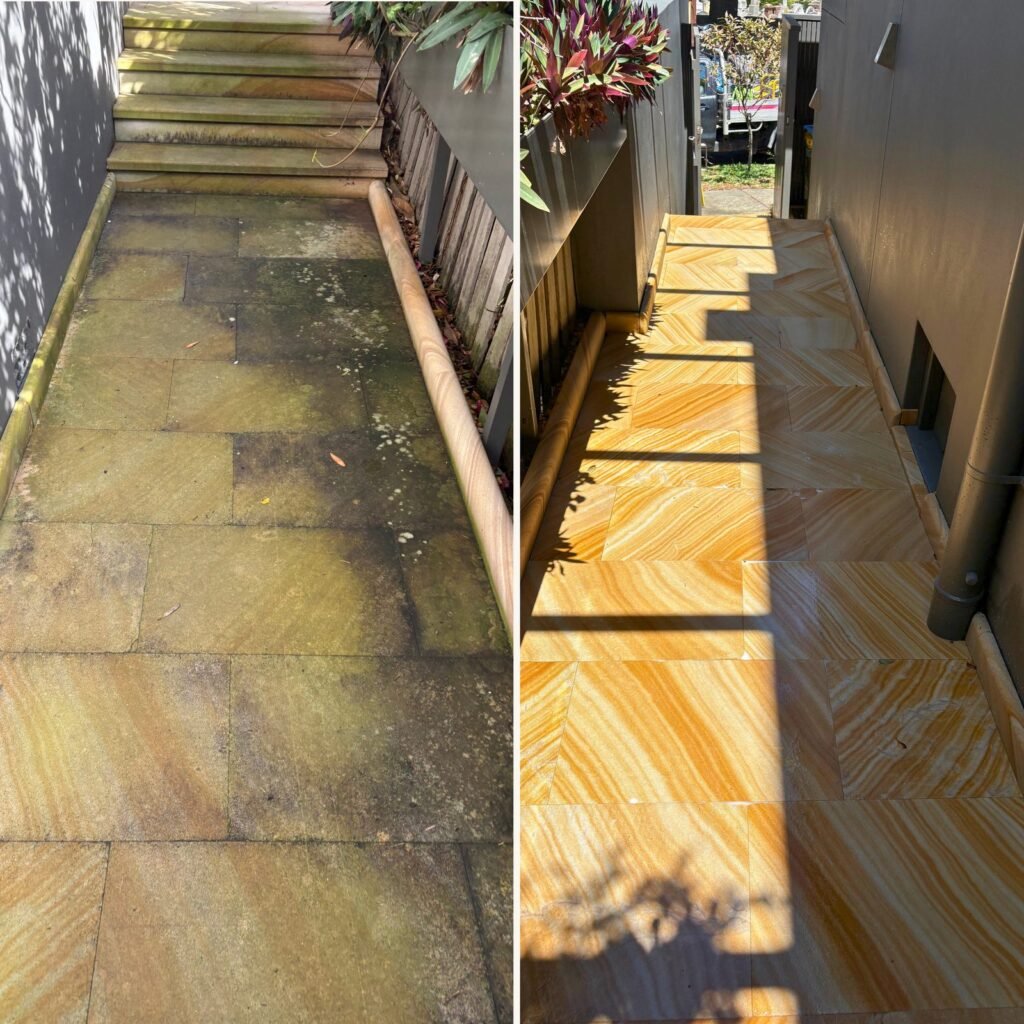
Tannin staining — the brown halos under figs, jacarandas and frangipanis all over the Eastern Suburbs — lifts with alkaline treatment. Chewing gum on shopfront aprons needs heat: steam lifts it clean where cold pressure smears it (that’s part of our commercial cleaning kit). Paint spatter, fertiliser burns, pot-plant rings, sunscreen on pool surrounds, red wine on terraces — each has its own answer, and the first step of every job is identifying the stain and testing an inconspicuous patch.
Seal it so it doesn’t happen again
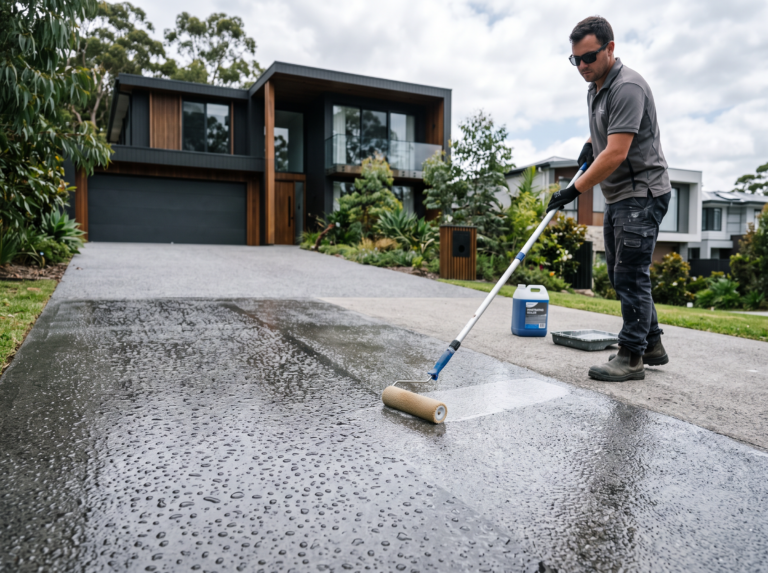
A stain that came out of unsealed concrete will happen again the next time something drips. After stain removal, sealing the surface closes the pores that made the stain possible — the next spill beads and wipes instead of soaking. It’s the difference between owning a stain-removal problem and having owned one.
Send us a photo of the stain and where it is — we’ll quote it fixed within 24 hours, and tell you straight if it’s one you can handle yourself.
Get a fixed written quote
Itemised by surface, priced before we start, and never finished until you've walked the property with us.
Request a Free Quote