South Coogee runs along the headland between Coogee and Maroubra, taking in Lurline Bay. It sits high, faces open ocean, and has very little of the tree cover that softens conditions further north.
The housing is mostly post-war brick and later rebuilds, with a lot of modern glass and rendered walls added over the past two decades. That combination — heavy exposure and relatively modern materials — produces a specific set of problems. The neighbouring conditions are covered in our piece on Coogee and Randwick.
Salt reaches everything
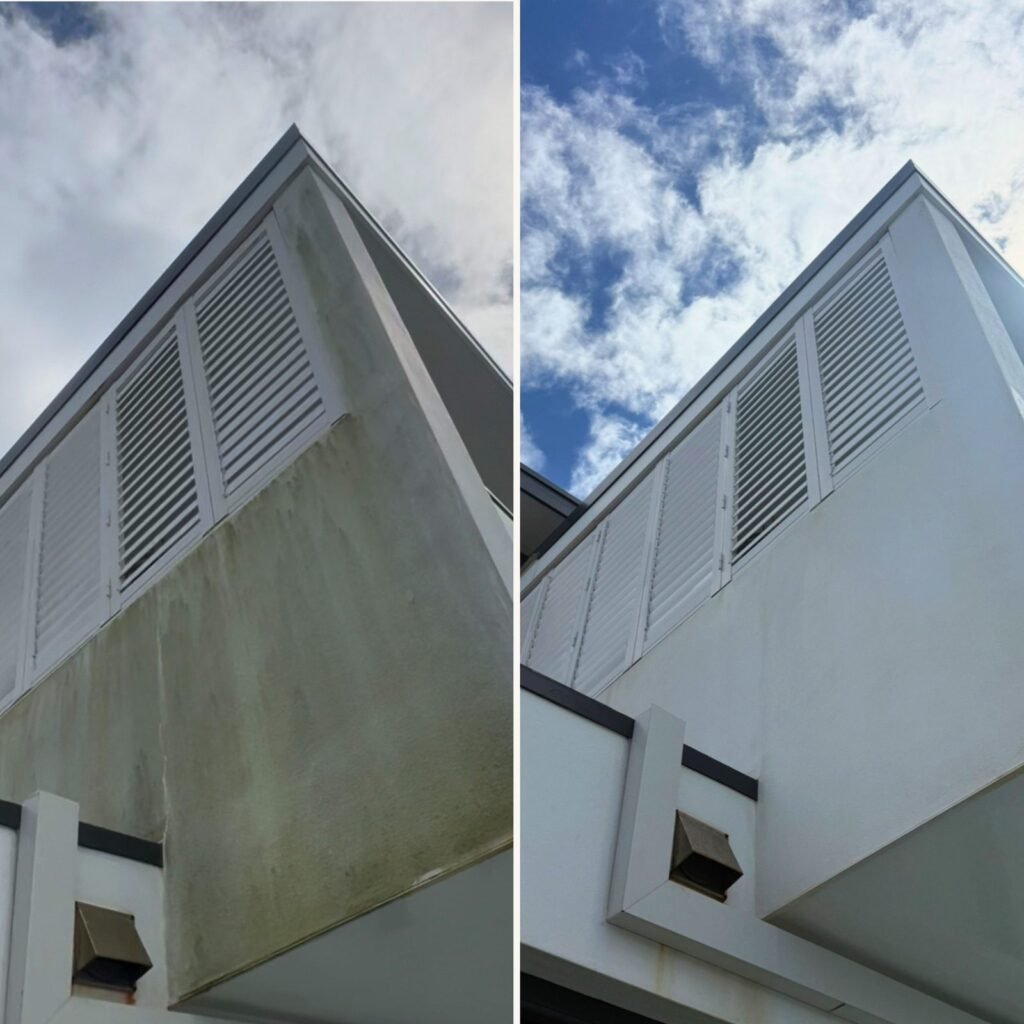
On this headland salt is not seasonal and it is not confined to the seaward elevation. It carries around the building and settles in every sheltered spot that rain never rinses: soffits, reveals, under balconies, behind downpipes.
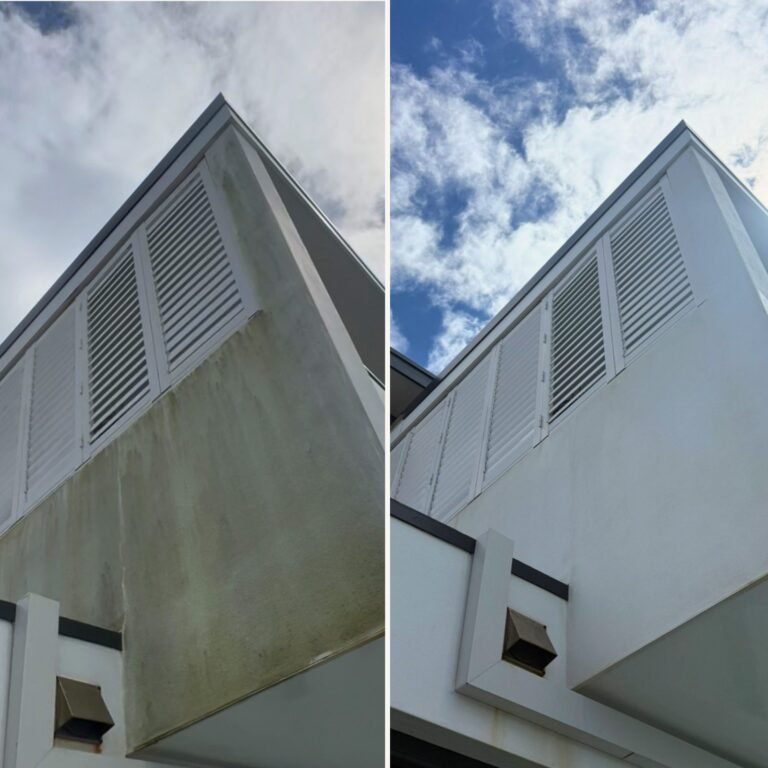
Because salt draws moisture from the air, these surfaces stay damp and grow algae even in full sun. Owners often read that as a drainage or plumbing fault when it is simply exposure.
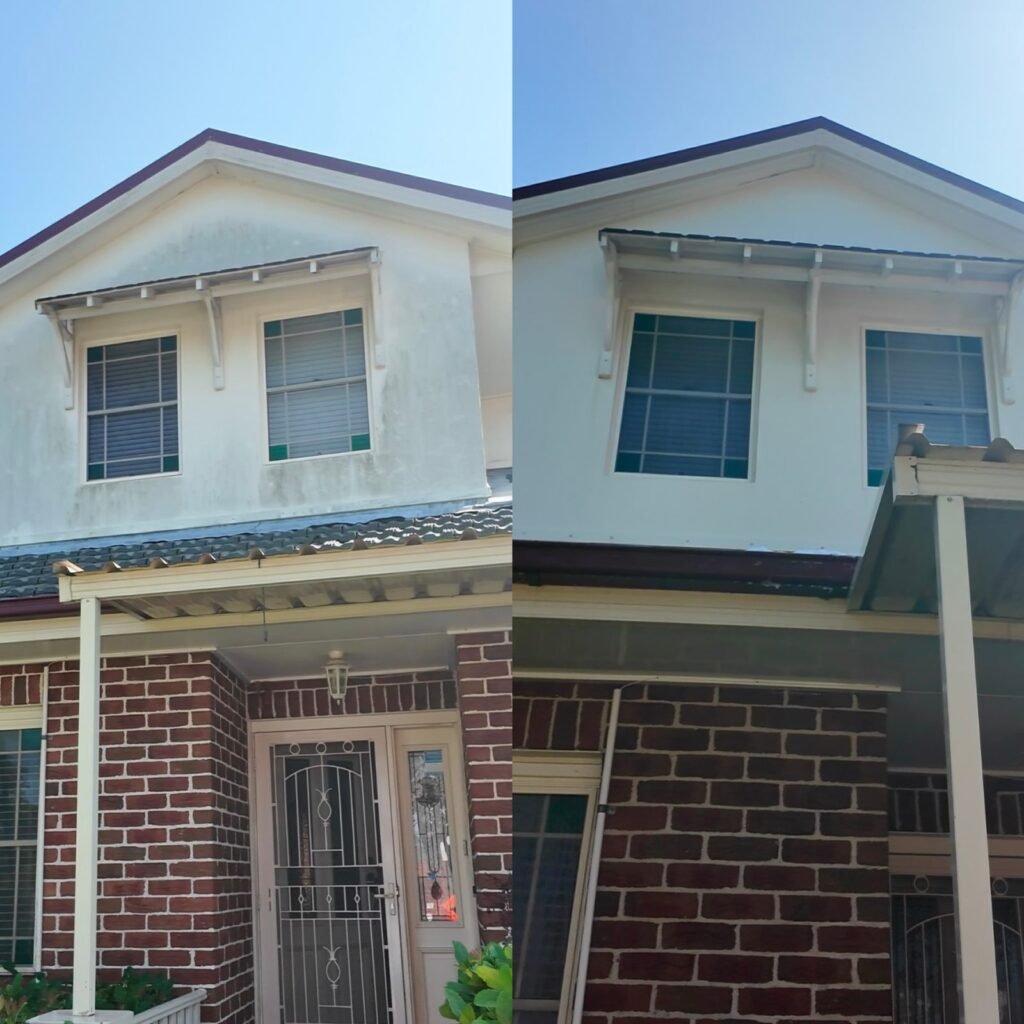
House washing and soft washing handle it, and the thoroughness of the rinse is what decides how long the result holds. Render cleaning and mould removal run alongside it.
Modern glass is the biggest single complaint
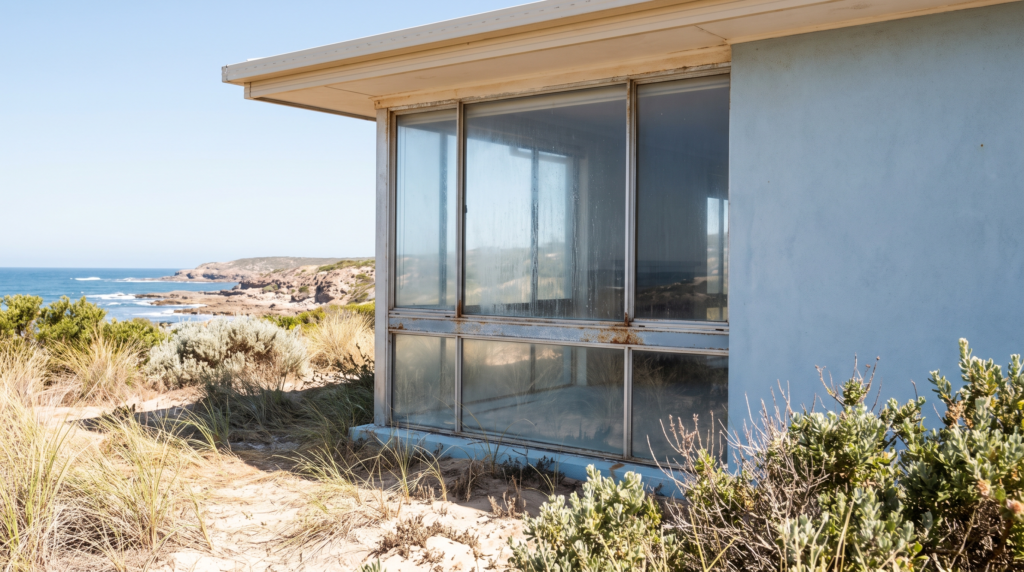
The rebuilds here favour large ocean-facing glazing, which is exactly the wrong material for this exposure without a maintenance plan. Salt film comes off; salt and mineral etching into the pane does not.
By the time a window looks permanently cloudy, cleaning is no longer the answer. Window cleaning on a sensible interval is materially cheaper than replacing etched glass, and frameless balustrades and their stainless fittings deteriorate first.
Roofs, gutters and corrosion
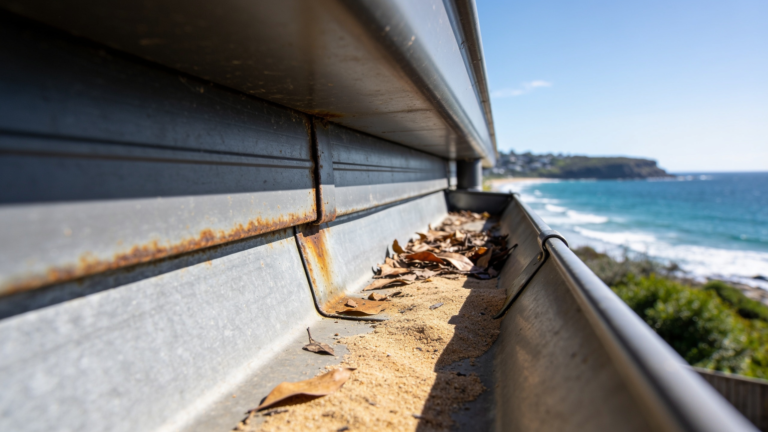
Metal corrodes quickly in this air. Gutter cleaning is therefore an inspection as much as a clean, and perished brackets and thinning gutter bases are routine finds.
Roof cleaning and roof moss treatment are treatment-led rather than pressure-led. Solar panel cleaning pays back faster here than inland because salt film measurably reduces output, and roof painting applies where a coating has chalked past recovery.
Stone and paving under salt attack
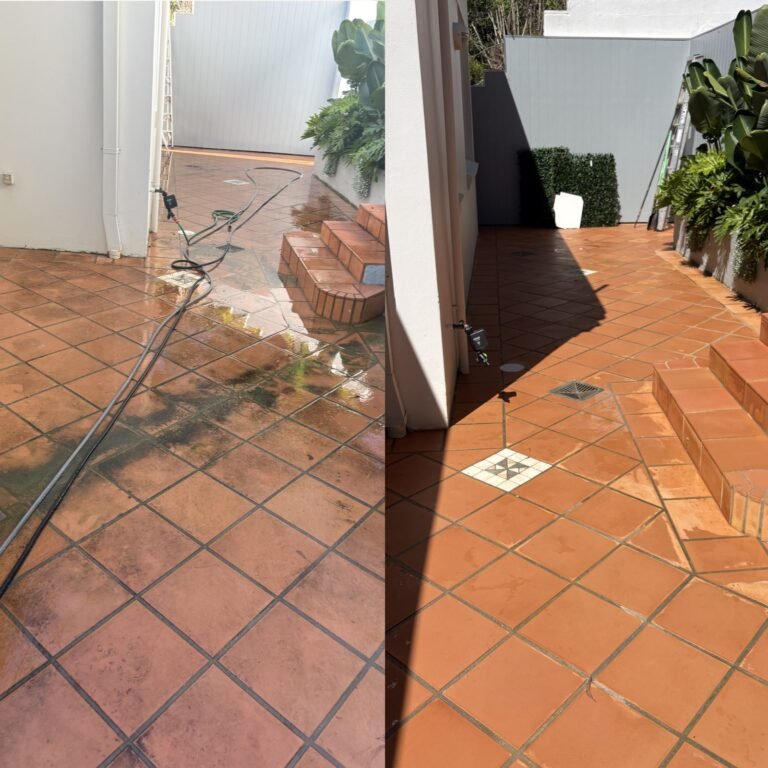
Salt crystallising inside porous stone is what destroys paving and pool surrounds on this headland. Limestone and travertine are the most vulnerable, and pool surrounds take salt from the chlorinator as well as the air.
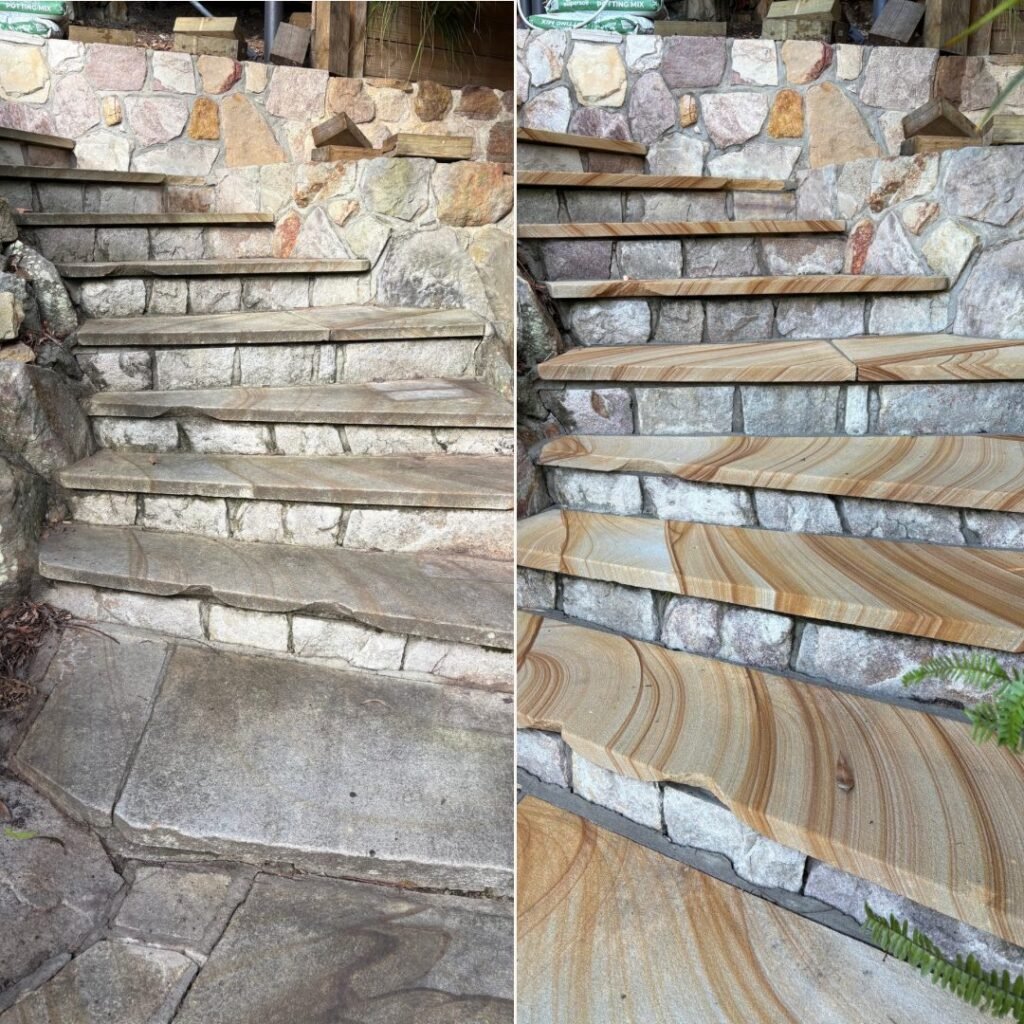
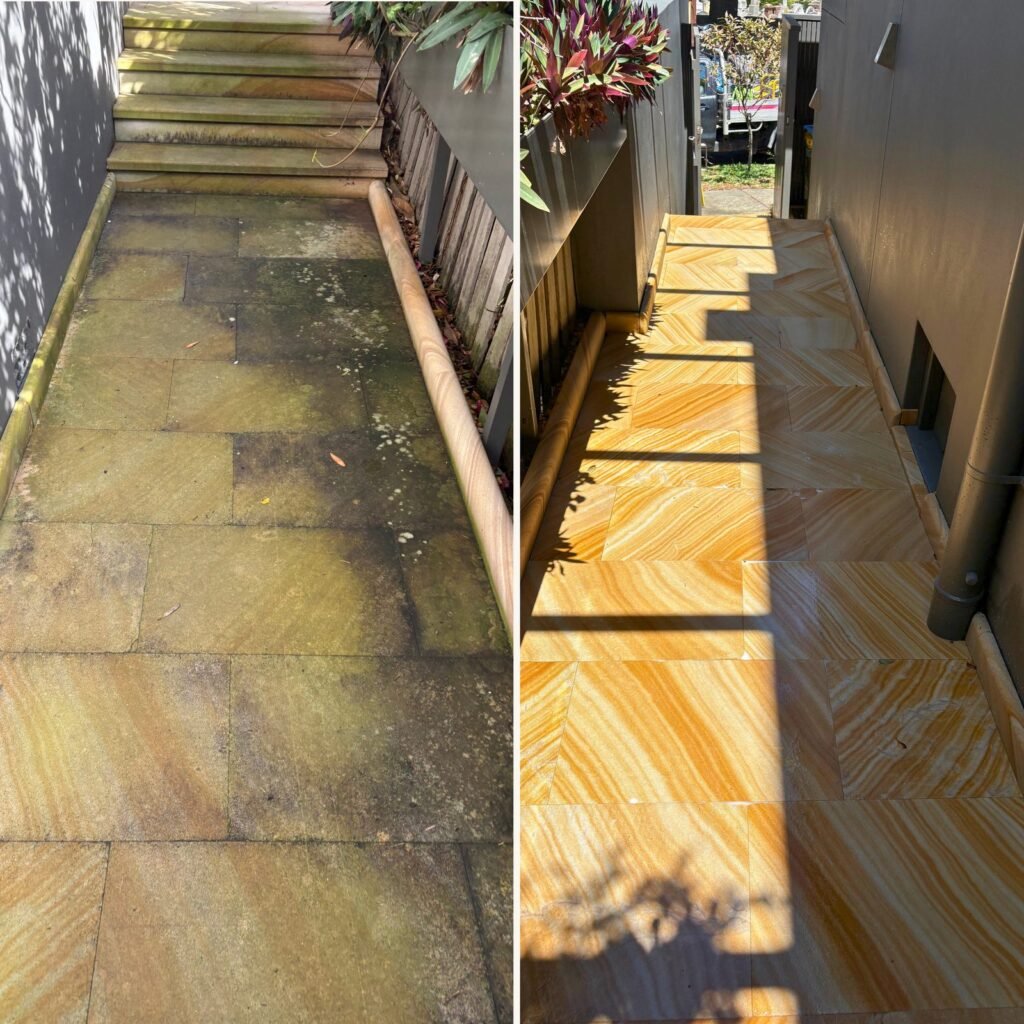
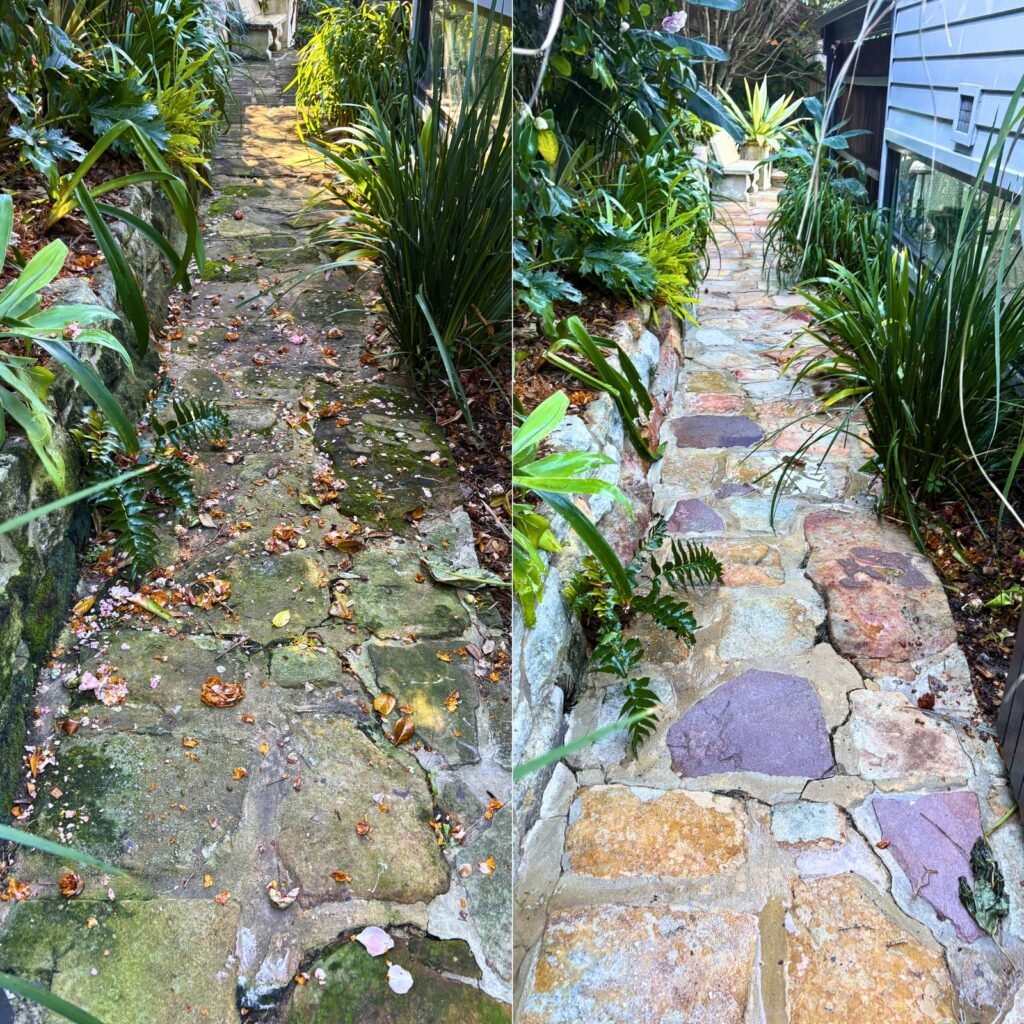
Sealing genuinely helps, but only after the salt is out and the stone is dry. Sealing over salt traps it and speeds the damage up. That applies to sandstone sealing, paver sealing, concrete sealing and driveway sealing alike.
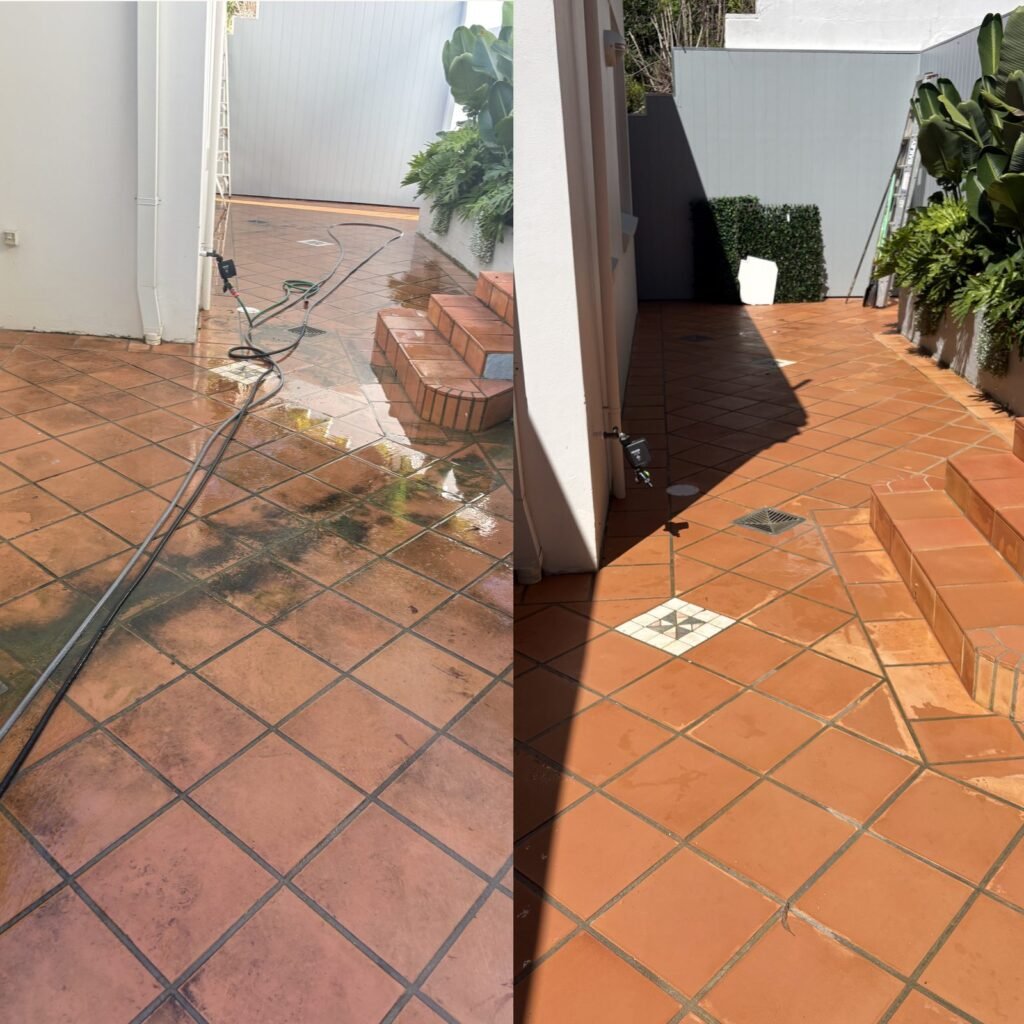
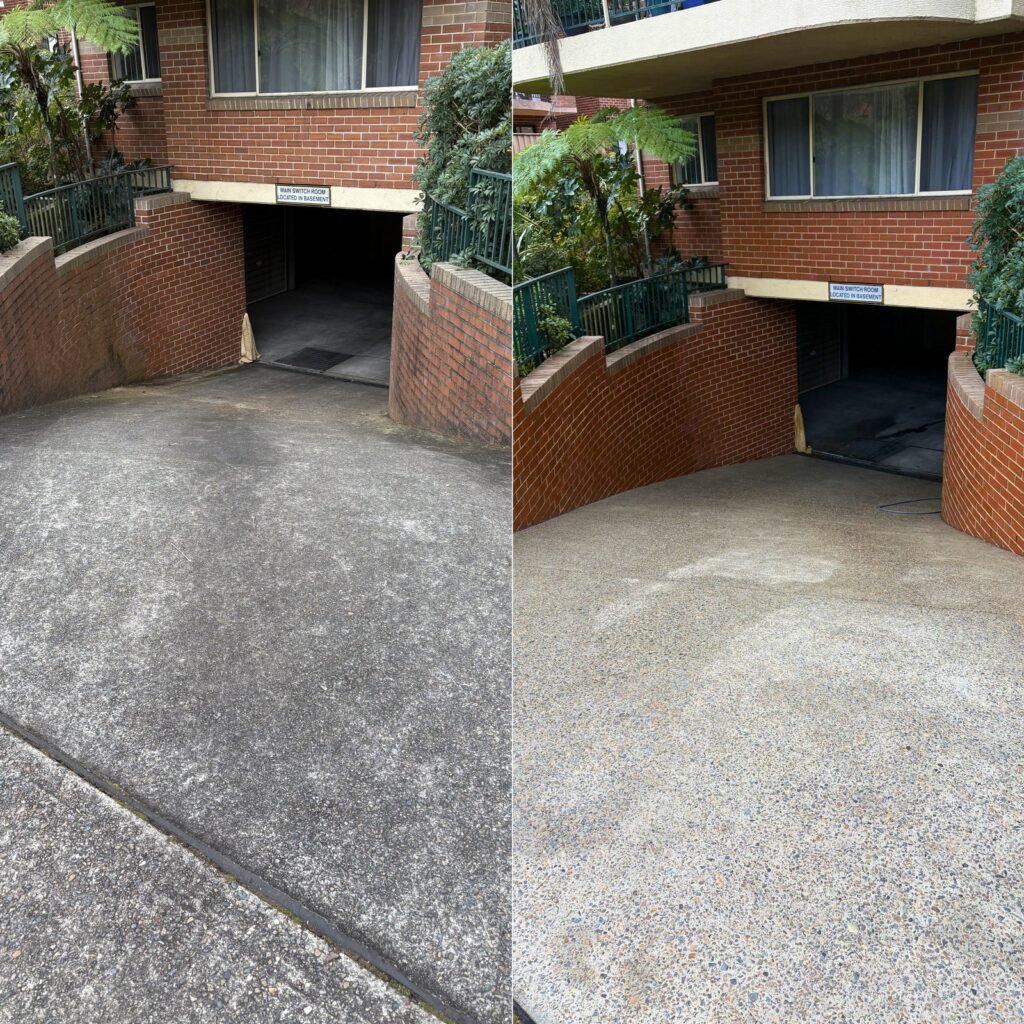
The surfaces themselves run through sandstone cleaning, driveway cleaning, paver cleaning, concrete cleaning, patio cleaning and tile and grout cleaning.
Steep streets change the job
The fall from street to house on much of this headland is severe, and many properties are entered from above with the living areas below. That means long hose runs, equipment carried down, and rinse water that has to be managed rather than allowed to run.
It is a genuine cost input, and it is why an accurate quote needs a site visit rather than an address and a floor area.
Brick, white bloom and the rest
Post-war brickwork is common and cleans well at moderate pressure. Newer render and paving often show white bloom during curing, handled by efflorescence removal once curing has run its course.
Deck cleaning, fence cleaning, graffiti removal, strata pressure cleaning for the blocks, commercial pressure cleaning, and whole-property exterior cleaning complete the list.
Written by the team at The Prestige Standard, exterior cleaning contractors working across Sydney’s Eastern Suburbs. Fixed written quotes within 24 hours with every surface itemised, $20 million public liability. See our service areas or call 0494 810 609.