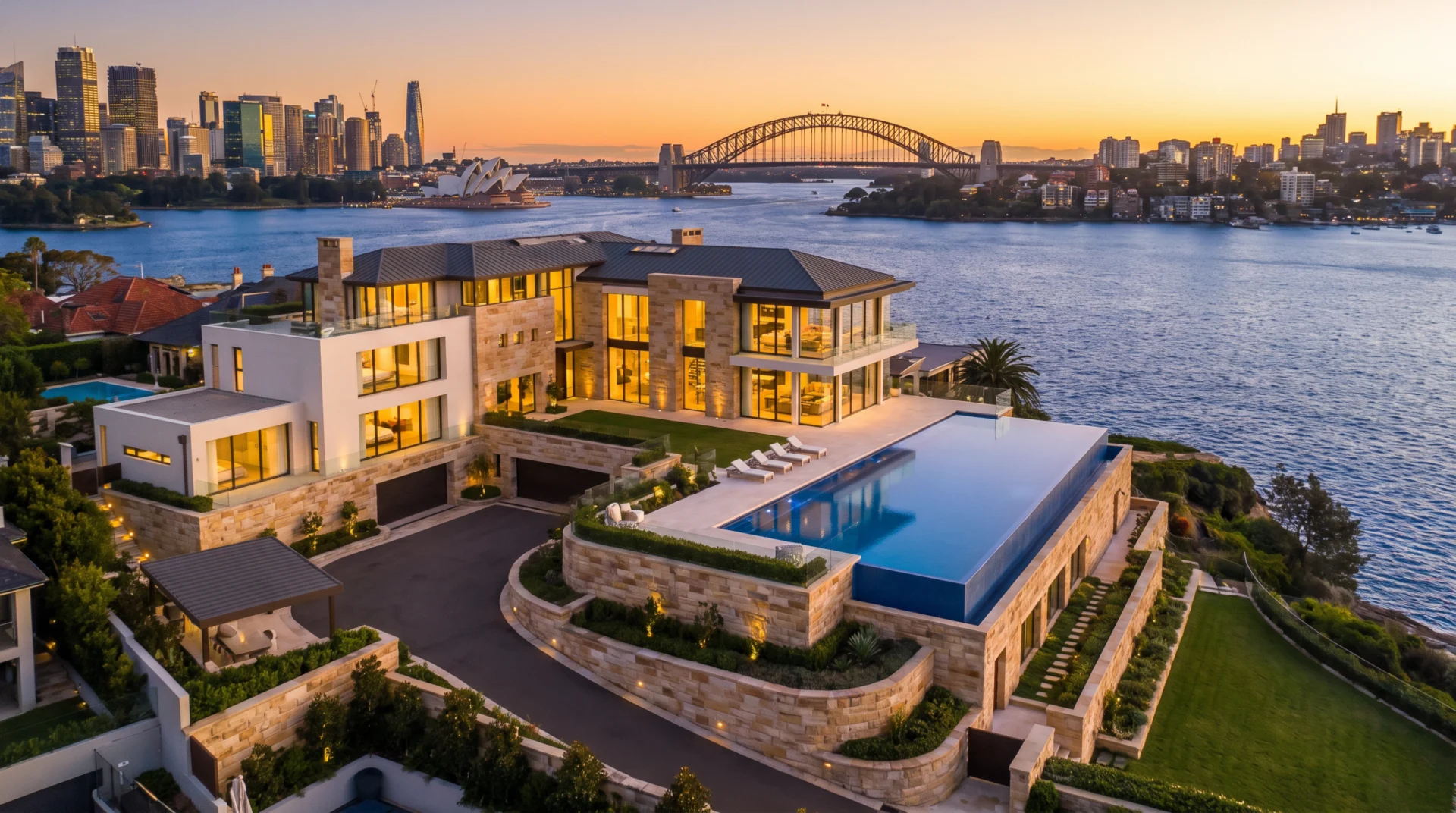
Point Piper is a small peninsula with the harbour on three sides, and almost every property on it has at least one elevation looking straight at the water. That single fact decides most of its maintenance. Dirt is a minor problem here. Salt is the schedule.
This is the year as it plays out on a Point Piper waterfront property, built around Sydney’s long-term weather record rather than a generic checklist.
What the weather data says
The Bureau of Meteorology’s Observatory Hill record, which runs back to 1858, puts Sydney’s mean annual rainfall at about 1,213 mm. It is not spread evenly. March and June are the wettest months at over 130 mm each, and September is the driest at around 68 mm.
For a harbour property that pattern cuts both ways. Rain is the only free rinse a salt-loaded facade ever gets, so the dry spring months are when salt builds fastest on glass and metal. The wet autumn is when shaded, sheltered elevations go green.
Spring: September to November
The driest stretch of the year and the busiest for exterior work, for good reason. Surfaces dry quickly, wind is usually manageable in the mornings, and the property is about to be used hard all summer.
Wash the facade and glass now. Salt has had the whole dry spell to build on the harbour elevations, and a spring wash takes it off before summer heat bakes it into frames and seals. Check stainless fixings at the same time, while the brown speckling is still surface staining rather than pitting. More: stainless steel and metal fixings on the harbour.
Clean and reseal pool terraces before the swimming season if the sealer is due. Sealing needs a run of dry days, which spring reliably provides. More: travertine and pool terraces.
Summer: December to February
Use the property, rinse it often. A fresh-water rinse of glass balustrades and window frames every few weeks does more for them than one heavy clean a year, because salt that never accumulates never etches.
Gutters deserve a check before February. Point Piper has less tree litter than the leafier ridge suburbs, but what it does have, combined with salt, sits wet against the metal. A gutter that holds water through the wet season corrodes from the inside.
Autumn: March to May
The wet season. Watch the sheltered and south-facing elevations, boat shed walls, and anything under an overhang, because that is where algae and mould establish when humidity sits around 74 percent at 9am, as it does from February to June.
This is also the right time to look at the seawall and the jetty, after summer use and before winter swell. Growth on timber decking and stair treads becomes a slip hazard in the wet months. More: seawalls, jetties and boat sheds.
Winter: June to August
June is the single wettest month on the record. Winter is a poor time for sealing and a reasonable time for soft washing roofs, provided you pick dry days and accept that the organic growth releases over following weeks rather than on the day.
It is also the quietest time of year to book anything, which matters on a peninsula where access, parking and the neighbours all need coordinating.
All year: the glass
Frameless glass is the defining feature of Point Piper architecture, and it is the most demanding surface on the property. Salt film left long enough turns into permanent etching, at which point no cleaner can bring it back. More: frameless glass and balustrades in harbour salt.
A realistic schedule
For a typical Point Piper waterfront home: a full facade and glass clean in spring, fresh-water rinses of glass and metal every few weeks in summer, a gutter clear twice a year, a jetty and seawall clean in autumn, and pool area sealing on the manufacturer’s interval. The harbour elevations need roughly twice the attention of the street side.
For the wider picture across the Eastern Suburbs, see the Eastern Suburbs exterior cleaning guide and what salt air does to a Sydney exterior. If you would like a fixed written quote for your property, get in touch.






