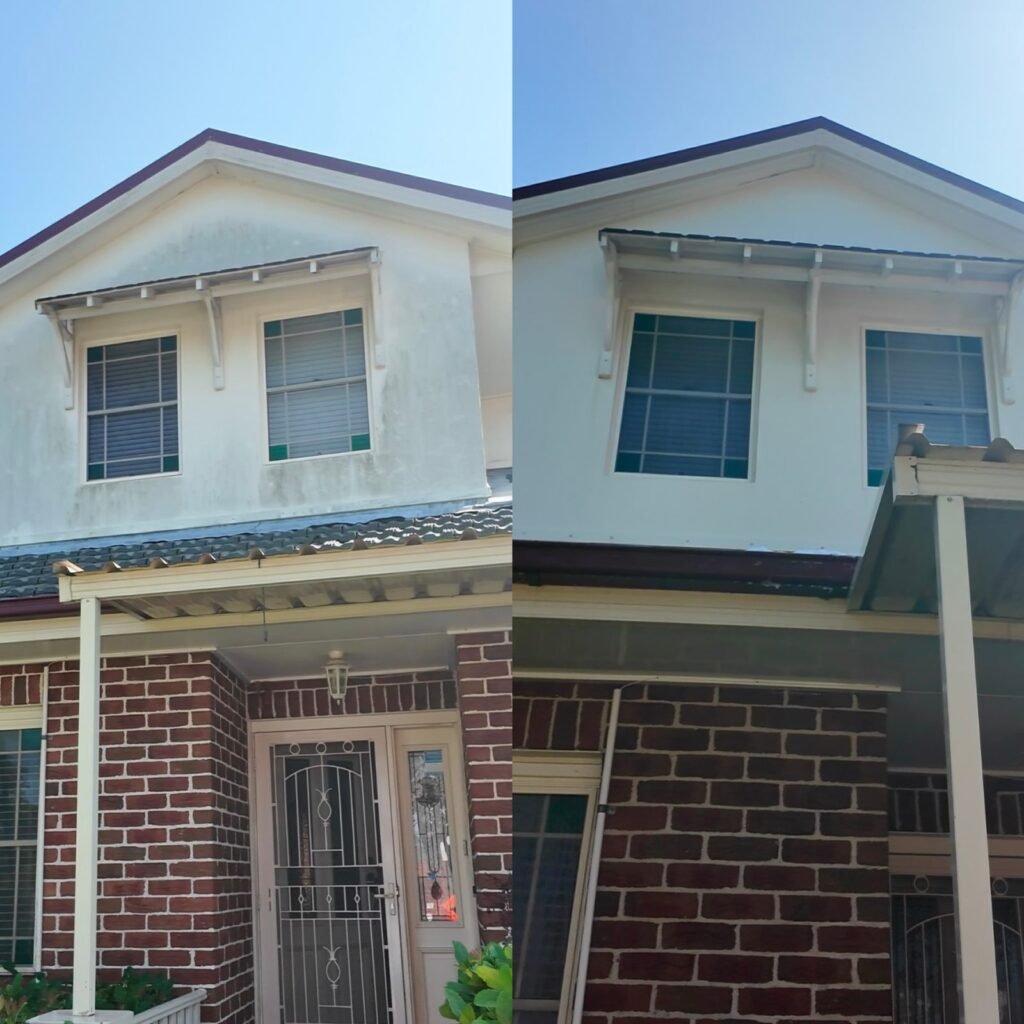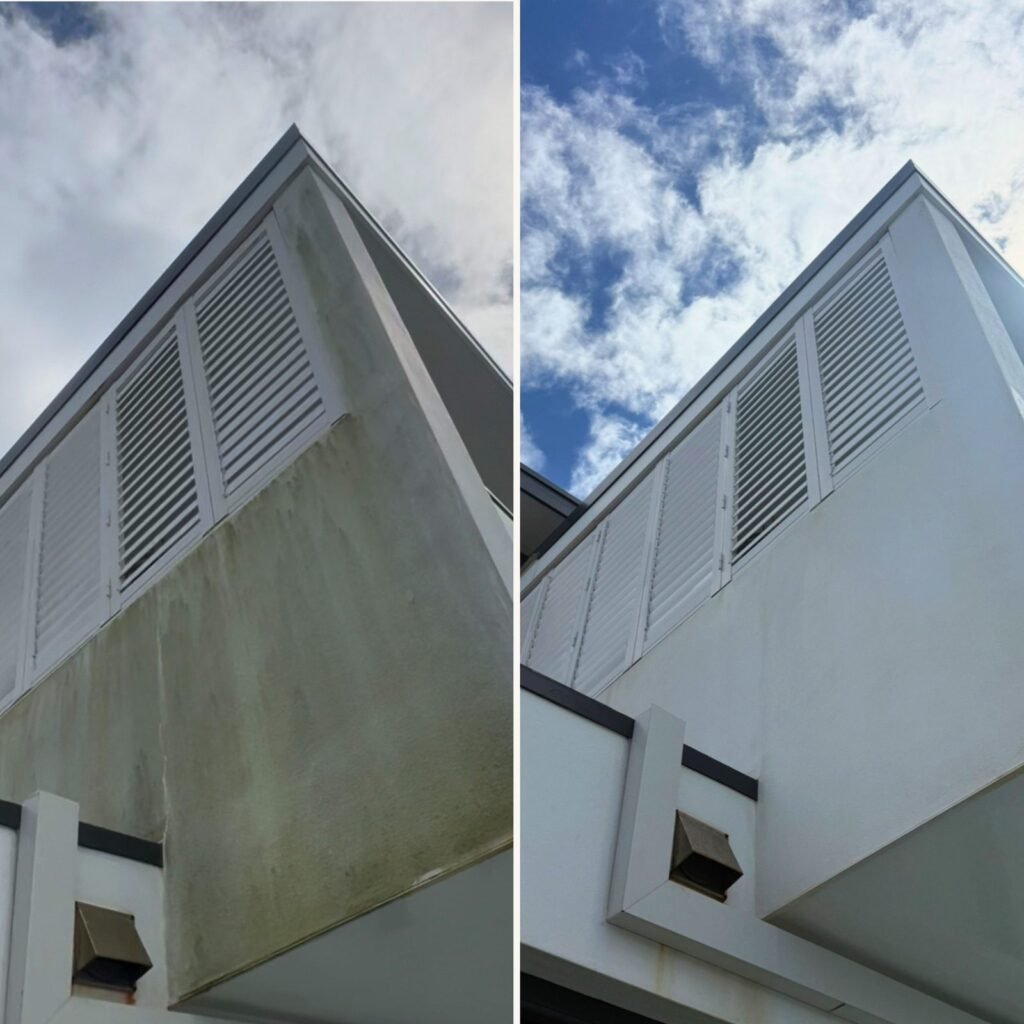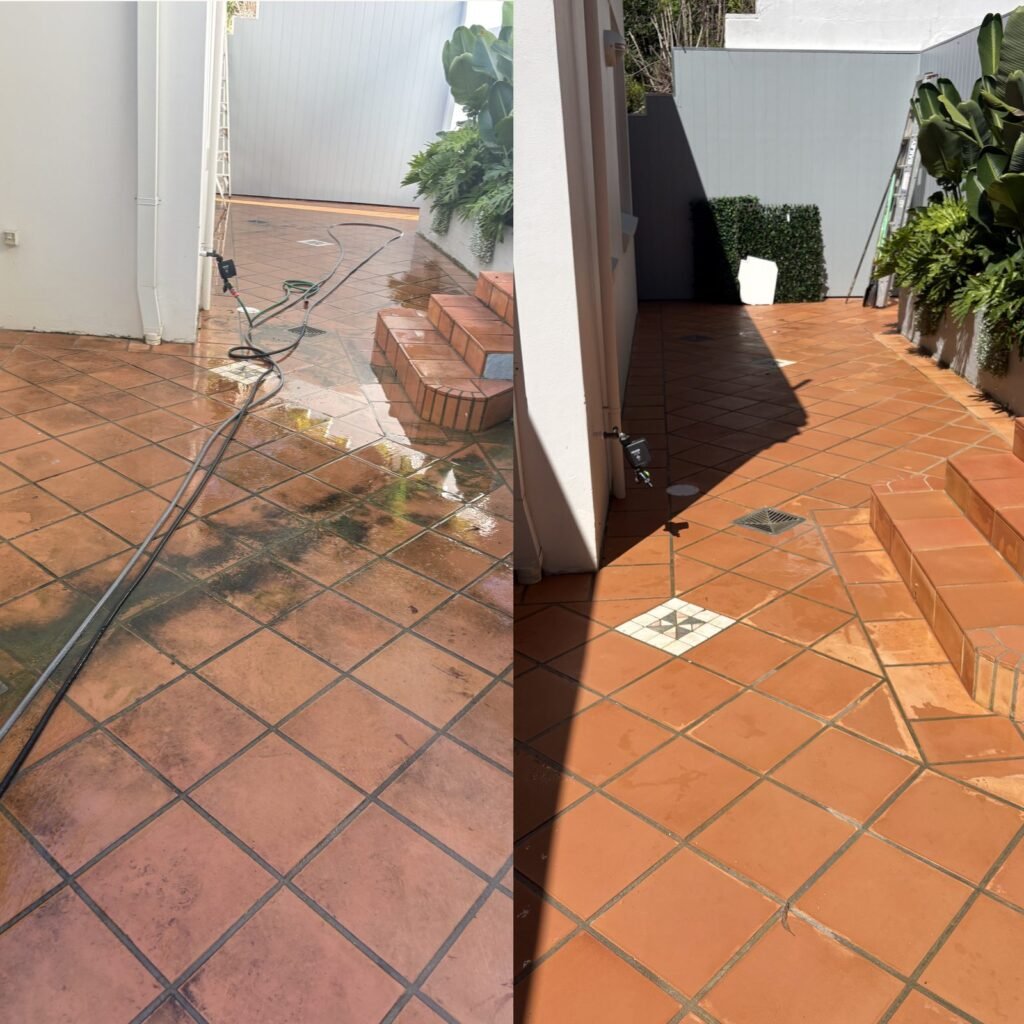
The Eastern Suburbs is where this business started, and it is where the gap between a good clean and a damaging one is widest.
Three things stack up here that do not stack up anywhere else in Sydney. The materials are soft — sandstone, lime mortar, aged render, heritage brick. The environment is aggressive, with salt coming off the ocean and the harbour on almost every elevation. And the properties are valuable enough that a mistake is genuinely expensive to put right.
Which is unfortunate, because this is also the area with the highest concentration of operators willing to point a pressure washer at a sandstone wall.
Sandstone is the whole story
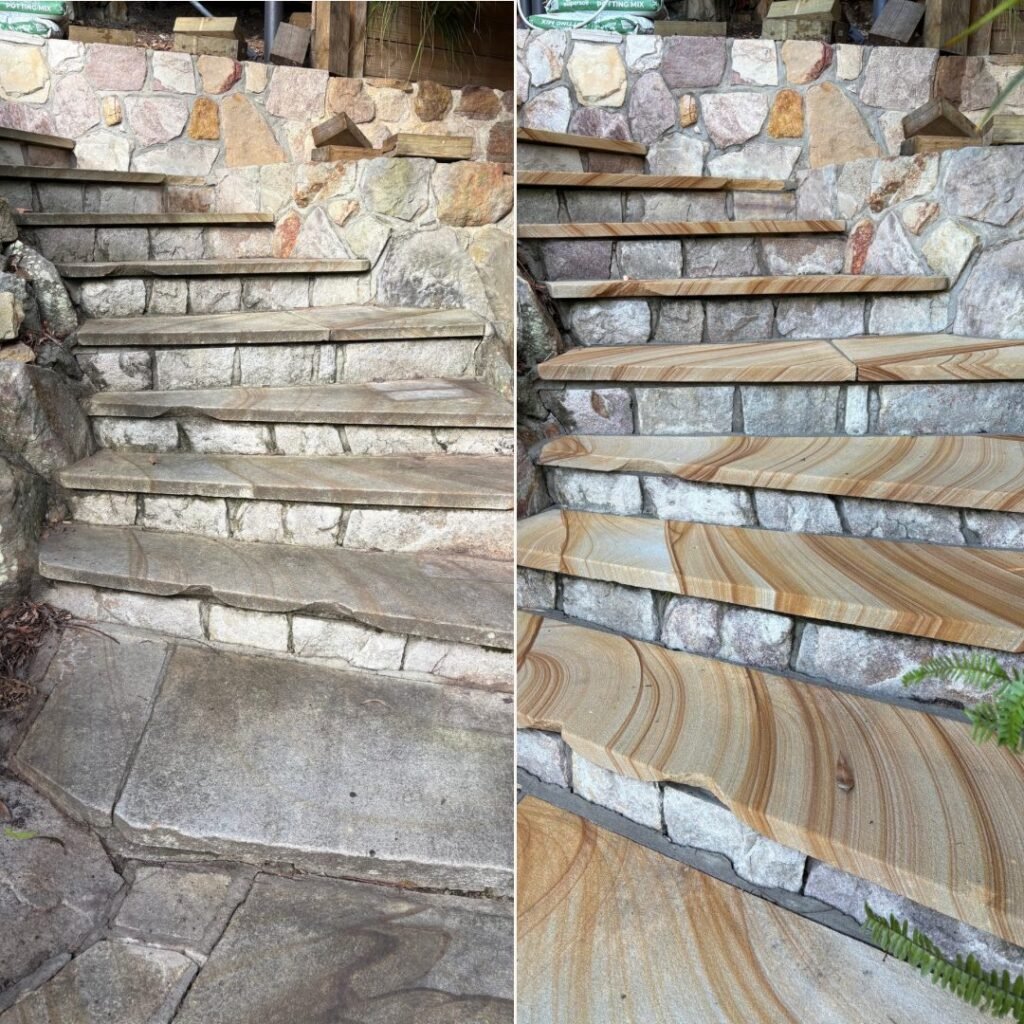
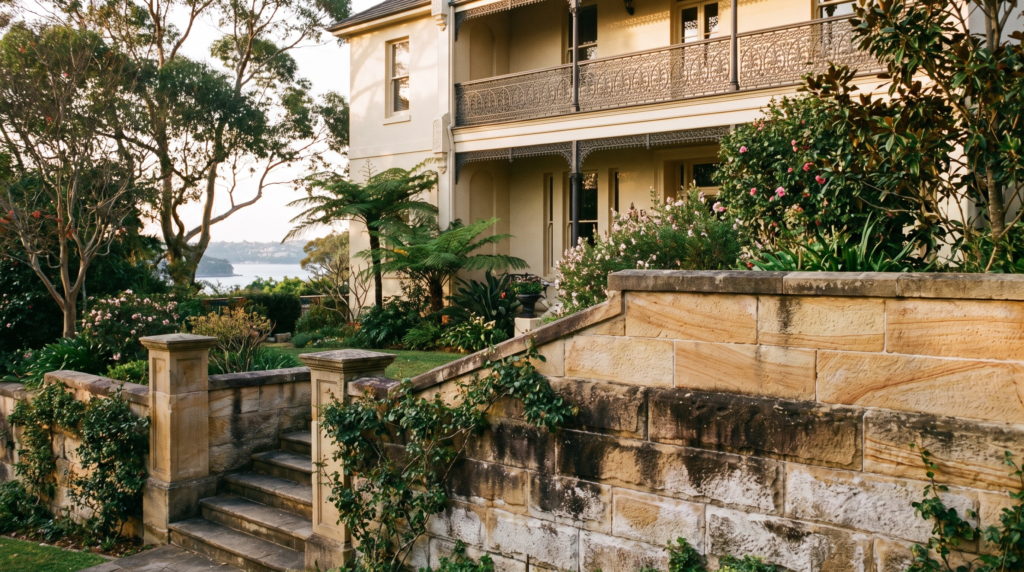
Sydney sandstone is soft, porous and permanently unforgiving. It is in the retaining walls, the steps, the garden walls, the foundations and the facades from Paddington through Woollahra, Bellevue Hill, Vaucluse and Watsons Bay.
High pressure pits it, and pitting cannot be undone. There is no filler, no coating and no polish that restores a pitted face — the stone is gone. Every one of those little craters then holds water and dirt, which means the wall gets dirty faster afterwards and greens up sooner. You have permanently made the maintenance problem worse while paying someone to improve it.
Acidic cleaners do their own damage, burning and discolouring the stone in ways that show up unevenly weeks later.
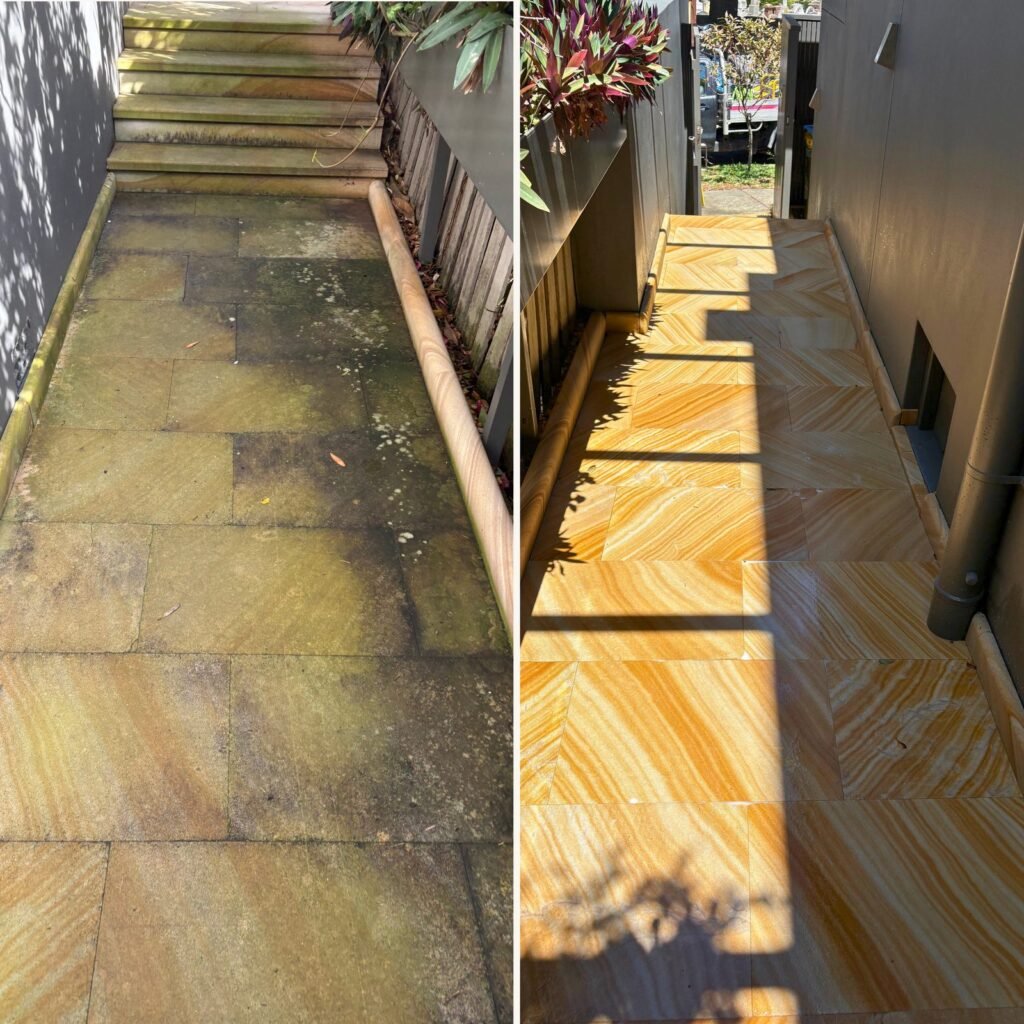
Sandstone needs pH-appropriate product, low pressure, and patience. That is the entire method, and it is not negotiable. We have written on what pressure washing actually does to sandstone and how to clean sandstone pavers safely.
Salt, on top of soft stone
Add the marine environment and it gets worse. The ocean strip through Bondi, Bronte, Coogee and Dover Heights takes a direct salt load; the harbour side through Rose Bay, Vaucluse and Point Piper takes a slightly gentler but constant one.
Salt penetrates porous stone, crystallises inside it, and pushes the surface off from within. That is spalling, and it is why harbourside sandstone walls fail in sheets rather than wearing evenly. The white bloom you see on the lower courses is the salt emerging — we cover what efflorescence is telling you separately, but the short version is that it is a moisture signal, not a dirt problem.
Pressure washing salt-affected sandstone is the worst combination available. You drive more water into stone that is already saturated, open the surface, and accelerate the spalling.
Heritage controls are real
Large parts of Paddington, Woollahra and surrounds sit in heritage conservation areas, and plenty of individual properties are separately listed.
That has practical consequences. Original lime mortar is softer than the brick around it and is meant to be — it is the sacrificial element that lets a wall move and breathe. High pressure blows it out of the joints, and repointing a Victorian terrace facade is expensive specialist work.
Tuck pointing, decorative cement mouldings, original render and slate all have their own tolerances. And depending on what is proposed, works to a listed property or one in a conservation area may need council approval — worth checking with Woollahra or the City of Sydney before anyone starts, rather than after.
Our guide to cleaning Paddington heritage terraces goes into the facade detail.
Glass, and why it matters more here
Eastern Suburbs homes are built around the view, which means a lot of glass on the elevations facing the water — exactly the elevations taking the salt.
Salt on glass etches. Once it has, cleaning will not recover it and the window needs restoration or replacement, which on a large fixed marine-grade pane is a serious number. Frequent washing of harbour- and ocean-facing glass is straightforwardly cheaper than the alternative, and it is the maintenance item owners most often under-do.
The pre-sale question
In this market the campaign photos do the selling, and exterior cleaning is the cheapest presentation spend with the most visible return — provided it is sequenced properly.
The order matters: roof and gutters first, then the house wash, then hard surfaces, then windows last. Do the windows first and you will be paying for them twice. Allow time before the photography, and if sandstone is being cleaned and sealed, allow considerably more — sealing needs the stone properly dry.
We have set this out for Double Bay and Bellevue Hill sellers and in a general pre-sale checklist.
A realistic Eastern Suburbs schedule
Ocean-facing property: windows quarterly, full exterior wash twice a year, fresh-water rinse of sheltered zones between times.
Harbourside: windows three times a year, full wash annually to twice yearly depending on exposure.
Inland pockets — Paddington, Woollahra, Randwick: full wash annually. Salt is a smaller factor; shade and street tree drop matter more.
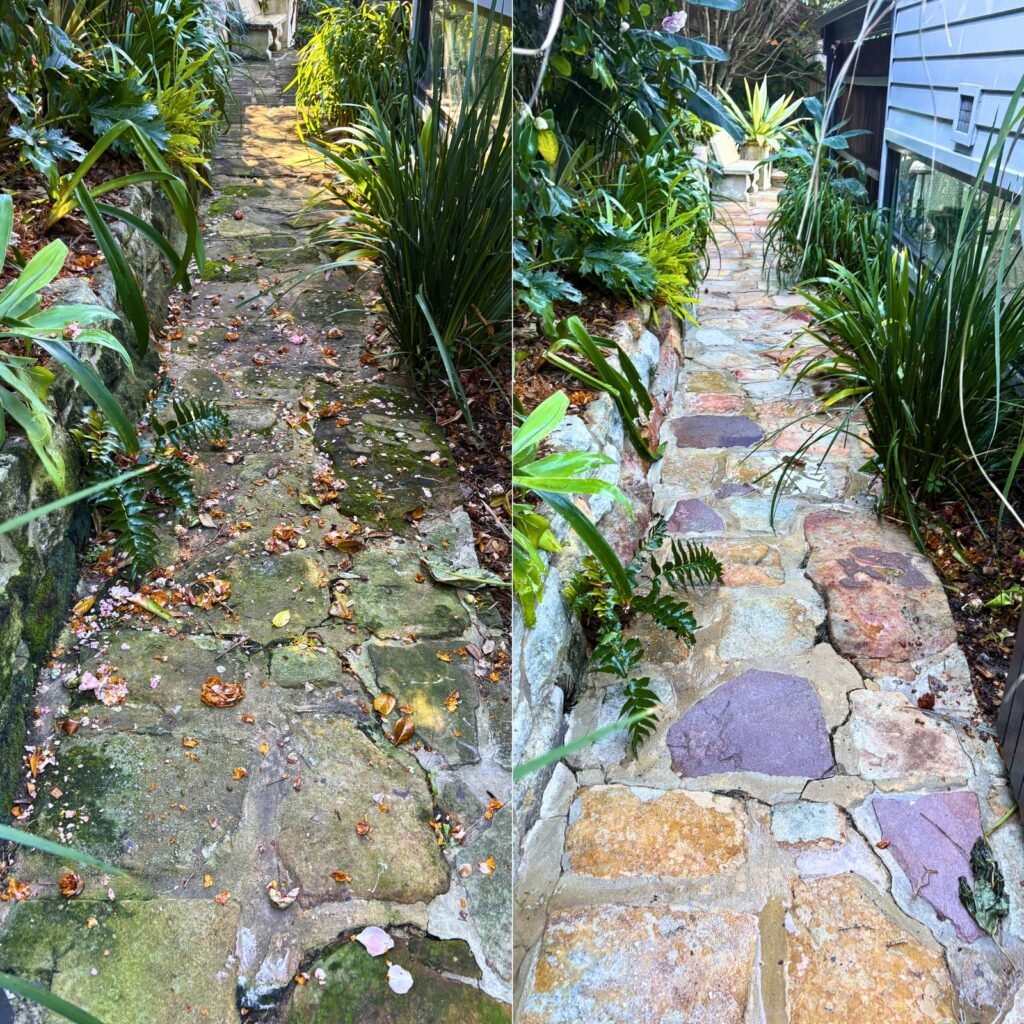
Sandstone: cleaned as needed rather than on a fixed cycle, and sealed with a breathable sealer afterwards. Sealing is what slows the regrowth and resists the salt — whether to seal after cleaning covers when it is worth it.
Gutters: twice a year. Less canopy pressure than the North Shore, but salt corrodes gutters from the inside and blockages hold moisture against the metal.
What I would tell an Eastern Suburbs owner
Ask one question before anyone touches your property: what pressure and what product are you using on the sandstone?
If the answer is vague, or if it involves a number of PSI rather than a description of chemistry, do not let them start. That single question filters out most of the operators who cause the damage we get called in to look at, and it costs you nothing to ask.
The other thing: get it in writing per surface. A quote that says “pressure clean exterior” for a property with sandstone, heritage brick, painted render and marine glass has not been thought about. Yours is not a one-method house.
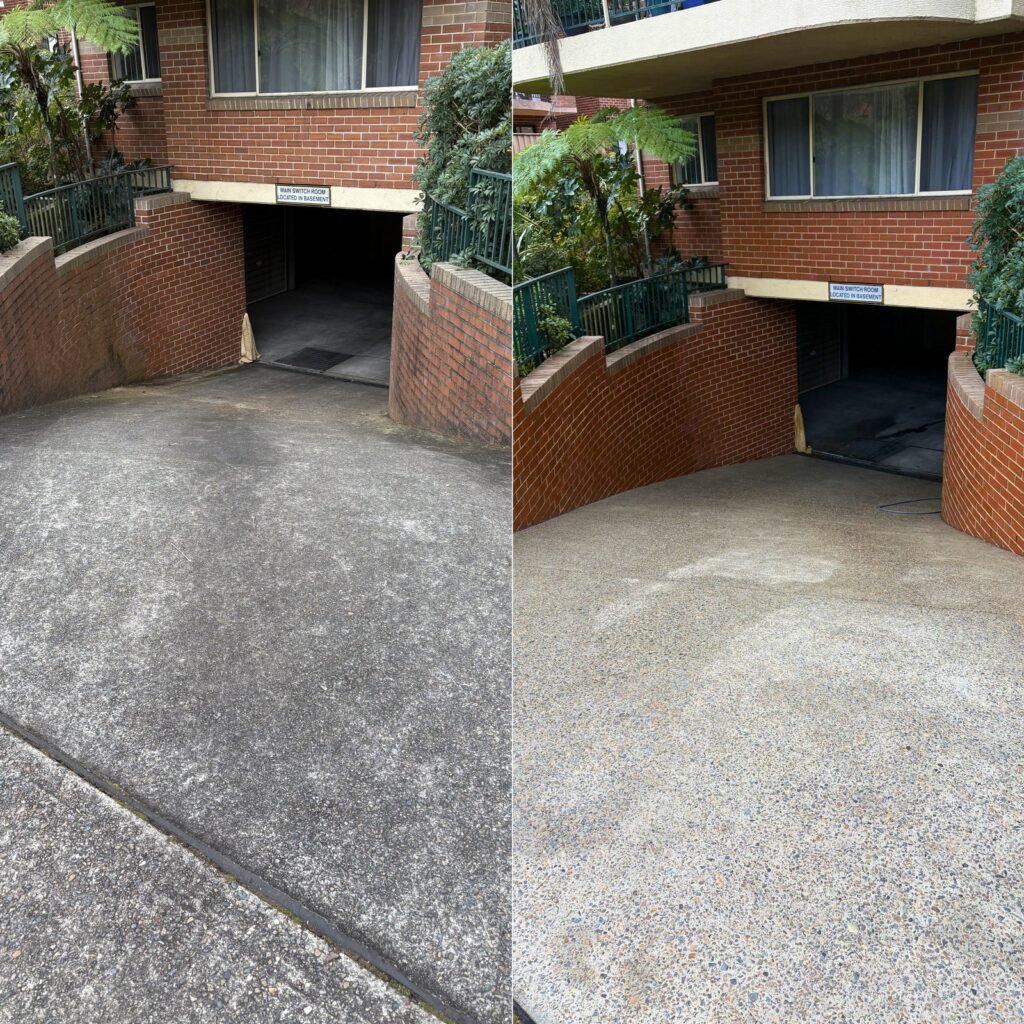
We work across the Eastern Suburbs: sandstone cleaning and sealing, pressure washing, window cleaning and gutter cleaning. Request a fixed written quote — 24-hour turnaround, $20 million public liability, photo report on every job.
Suburb-by-suburb maintenance guides
A year of exterior maintenance for each suburb, timed to Sydney’s weather and the buildings in it. The full set of fifty guides is on the Eastern Suburbs maintenance guides page.