Search for roof cleaning products and you will find plenty on the shelf at Bunnings: pressure washers, surface cleaners, moss and mould killers, extension poles. It is a fair question whether you need anyone at all.
We clean roofs for a living, so treat this with appropriate scepticism. But there is a real line between what is sensible to do yourself and what reliably ends badly, and pretending otherwise helps nobody.
Start with the part nobody sells you
The risk is not the cleaning. It is being on the roof.
Falls from height are among the most common causes of serious injury in home maintenance in Australia, and residential roofs are the usual setting. A wet tiled roof coated in algae is genuinely slippery, and the slip happens before you have registered that it is happening.
Older terracotta compounds it. Tiles become brittle with age, and stepping in the wrong place cracks one under your weight, which is both a leak and the reason you lost your footing.
No product on a shelf changes that arithmetic. If your roof is steep, two storeys, or old terracotta, this is where the DIY conversation should stop.
What a consumer pressure washer will actually do
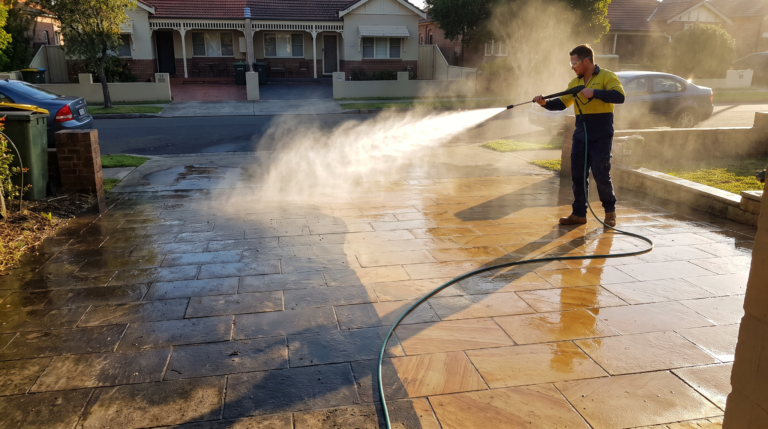
A domestic pressure washer produces more than enough pressure to damage a roof, and not enough flow to clean one efficiently. That is the worst combination.
On concrete or terracotta tile, high pressure strips the surface glaze. The tile looks clean for a season, then holds moss better than it did before because the surface is now open and porous. Roofs that were pressure washed a few years earlier are usually the worst ones we see.
On Colorbond, pressure plus the wrong angle drives water up under laps and into the roof cavity. On old terracotta it simply breaks tiles.
Pressure is the tool that feels most effective and does the most harm.
Roof treatments off the shelf
This part is more reasonable. Moss and lichen treatments sold at hardware stores are real products, and applying one and letting weather do the work over months is a legitimate approach.
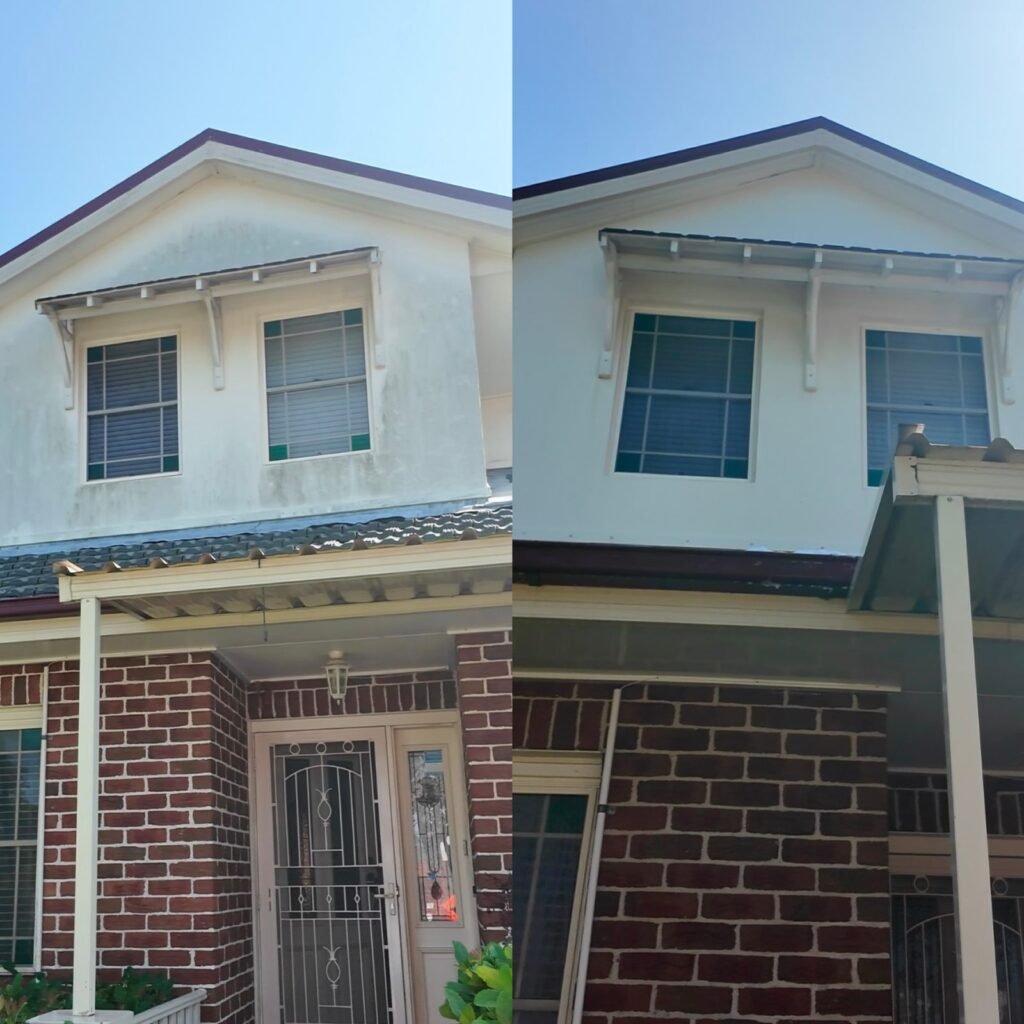
The catch is application. Getting even coverage across a whole roof from a ladder is difficult, and the untreated strips regrow first and look worse than before. Some products also stain render, damage plants and mark driveways, so masking and rinsing matter.
Read whether the product is safe for your specific roof material. Several are not suitable for Colorbond or for painted tile.
What is genuinely fine to do yourself
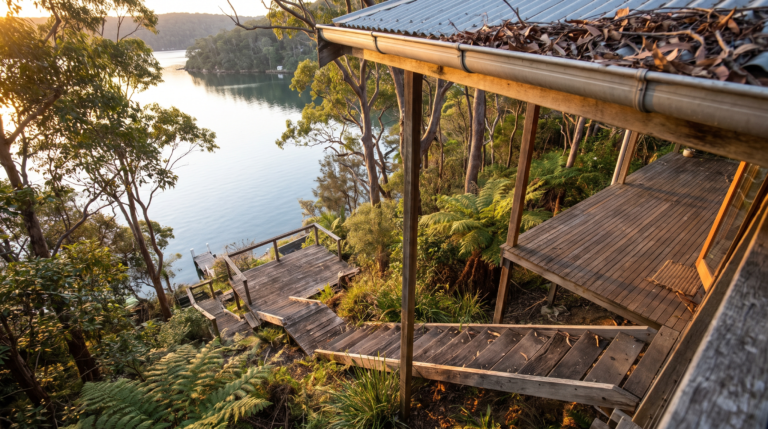
- Clearing gutters from a properly footed ladder, without getting onto the roof
- Rinsing solar panels from ground level with a pole, early or late in the day
- Cutting back branches that drop litter onto the roof
- Watching from the ground during heavy rain to see where gutters overflow
- Photographing the roof with a zoom lens or a drone to see its condition safely
That last one is underrated. Most people have never actually seen their own roof.
Where it stops being worth it
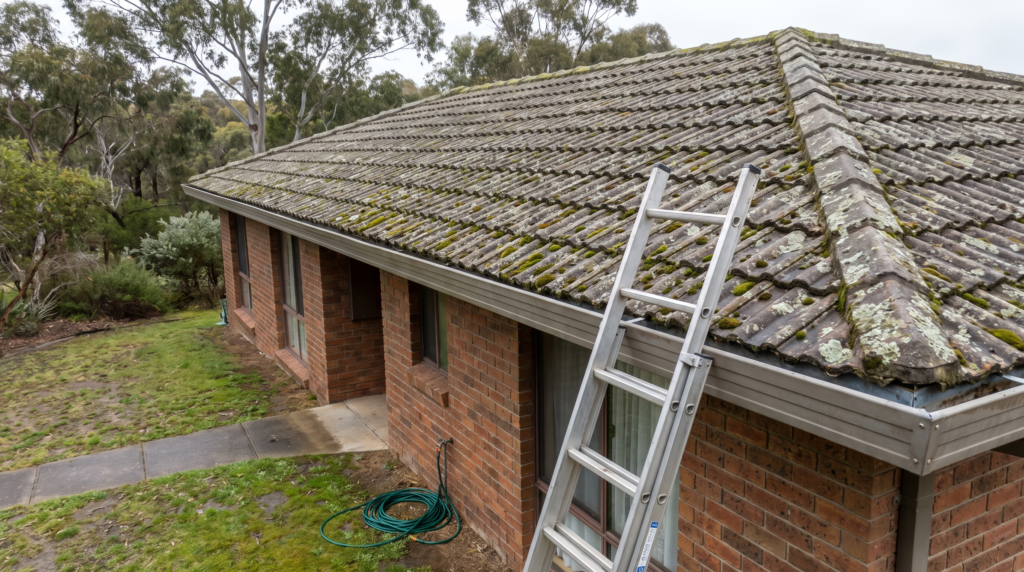
Two storeys. Steep pitch. Old terracotta or slate. Anything requiring you to walk the roof rather than reach from a ladder. Any roof with solar, where the array is live in daylight and the frames are a trip hazard.
Also worth weighing: hiring a decent pressure washer, buying the treatment, and taking a weekend gets you a fair way toward the cost of a professional visit, without the insurance, the fall protection, or a warranty on the result.
If you do go ahead
- Never work alone, and tell someone you are up there
- Do not walk a wet roof, ever
- Use low pressure and stand back further than feels necessary
- Work down the slope, never spray upward under the laps
- Check the product is rated for your roof material before opening it
- Mask or wet down plants, paths and render first
- Stay well clear of solar arrays and any overhead power line
Plenty of people clean their own gutters perfectly safely for years. Far fewer should be walking a two-storey tiled roof with a pressure washer, and that is the honest distinction.
Related: how to clean a roof safely, soft washing vs high pressure, what roof cleaning costs and are gutter guards worth it.