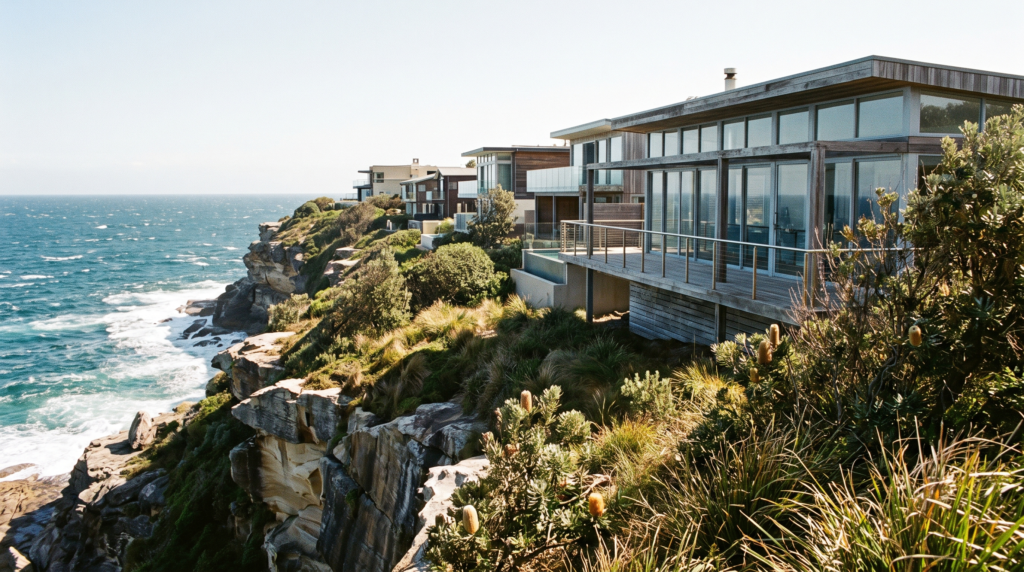
Dover Heights and North Bondi occupy the ridge running north from Bondi towards Vaucluse, sitting directly above the cliffs with open ocean to the east.
There is no shelter here. No headland, no bay, no tree line of any consequence. If you want to see what unmitigated marine exposure does to a building in Sydney, this is where to look.
Salt lands dry and stays
In a surf zone, salt arrives as airborne aerosol carried on onshore wind. On a clifftop with a hundred-metre drop straight to the water, that aerosol arrives at full strength and hits the first thing standing.
It deposits dry, builds a crust, and then behaves hygroscopically — pulling moisture out of the night air and holding a damp salt film against the surface for hours. That wet-dry cycling is what actually drives corrosion, and it happens here every single night.
The practical consequences show up in a predictable order. Stainless tea-stains first, often within months of installation. Fixings and fasteners corrode next. Powder-coated aluminium chalks. Glass hazes, and if it is left long enough the haze becomes etching that no cleaning will remove.
Rinse frequency beats cleaning quality
This is the single most useful thing to understand about maintaining a house on this ridge.
An excellent deep clean twice a year will not protect a Dover Heights house. A fresh-water rinse of the exposed elevations every few weeks will. The damage is done by salt sitting on the surface, so the objective is to reduce how long it sits there — not to periodically restore appearance after the fact.
Owners who understand this spend less over ten years and have a house that has not corroded. Owners who deep-clean annually spend more and replace balustrades.
Marine grade is not a solved problem
316 stainless is the usual specification and it still tea-stains here. It is a surface phenomenon rather than structural failure, and it is cosmetic if caught early — but on a rough or poorly passivated finish it will keep returning.
Cleaning it needs the right product. Chloride-based cleaners on stainless make the problem worse, and steel wool or a general-purpose abrasive pad contaminates the surface with free iron that then rusts on its own. It is a common and expensive mistake.
Paint and render
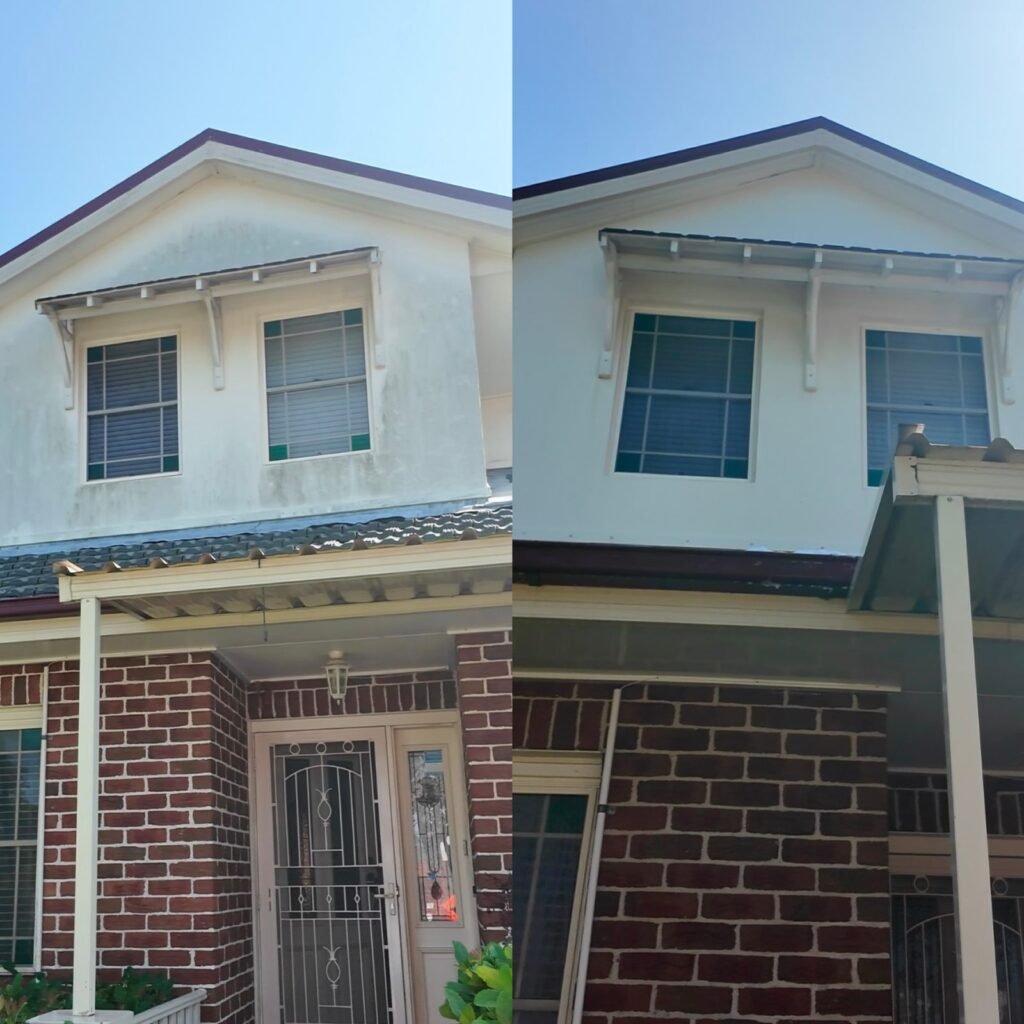
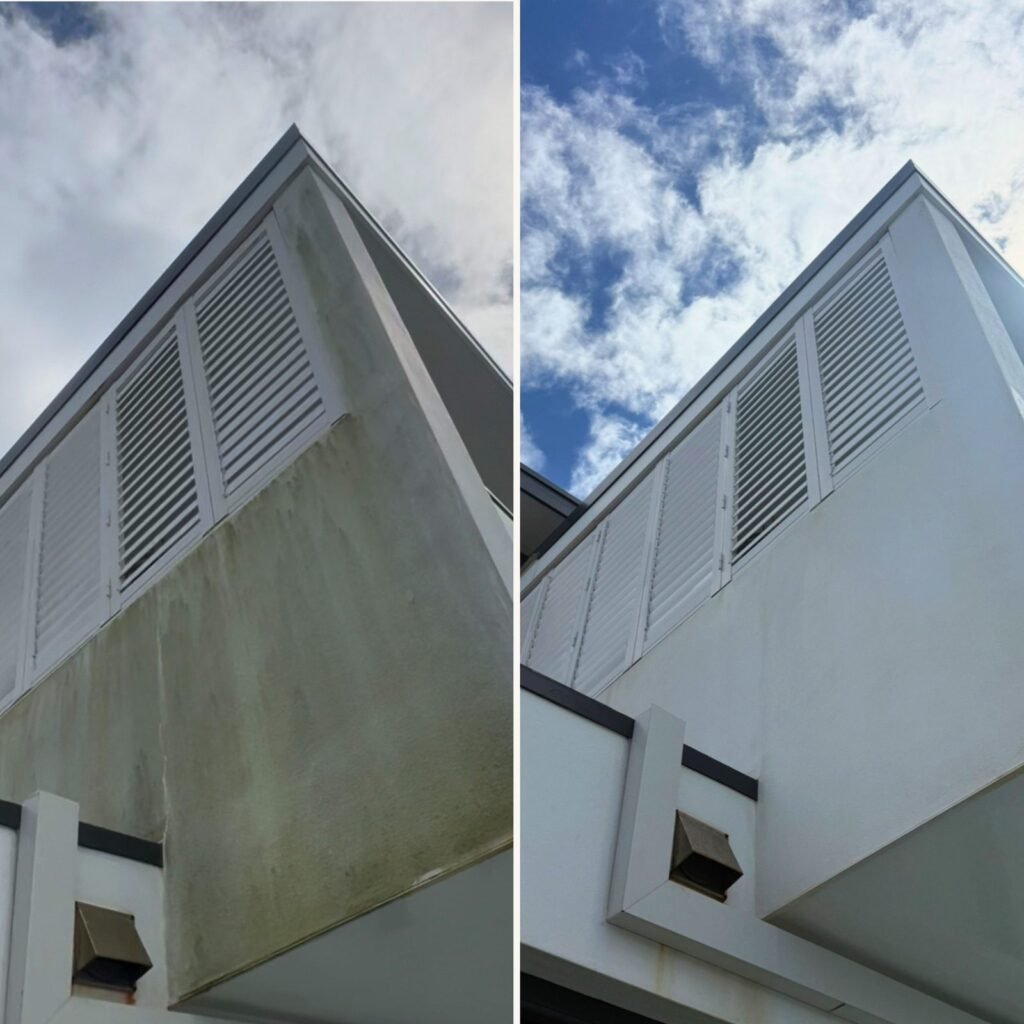
Combined salt and UV on unshaded western and eastern walls shortens paint life noticeably. Chalking is the visible symptom — a powdery surface that comes off on your hand and takes the colour with it.
A chalked wall cannot simply be washed. The chalk layer has to come off before anything will bond to it, and if the surface is that far gone, cleaning is prep for repainting rather than a substitute for it. Being honest about which of those the owner is buying matters.
Wind makes the work harder
Working on this ridge means working in wind almost every day. Anything applied under pressure atomises and travels, and on blocks with this little separation it lands on neighbours’ cars, windows and gardens.
Contact-time products dry before they have worked, which is how jobs quietly fail and someone reaches for a higher pressure setting instead. Scheduling around wind direction is not fussiness here, it is the difference between the treatment working and not.
Roofs and drainage
Metal roofs and metal fixings are on the front line. Corrosion typically starts at screws, flashings, and the cut edges where a sheet has been trimmed on site, not in the middle of a sheet.
Anyone cleaning a roof up here should be looking at those points and reporting them. Sand accumulation in gutters is the other North Bondi-specific issue — fine wind-blown sand builds up, holds water, and accelerates corrosion in the gutter itself.
Both suburbs sit within Waverley Council, and while much of the housing is post-war and modern, there are heritage items and conservation areas worth checking before work on original fabric.
What we’d prioritise
- Frequent fresh-water rinsing of exposed elevations, glass and metalwork — this is the whole strategy
- Treat stainless tea staining with a purpose-made product; never abrasives or chloride cleaners
- Inspect fixings, flashings and cut edges on metal roofs while cleaning, and report them
- Clear wind-blown sand from gutters, not just leaf litter
- Assess chalking before quoting a wash — a chalked wall needs paint, not cleaning
- Schedule exposed elevations around wind direction and control overspray
- Do not leave glass haze untreated long enough to become etching
Related: the Eastern Suburbs exterior cleaning guide, what salt and sea air do to a home, glass balustrades and why the haze will not come off and exterior cleaning in Dover Heights.