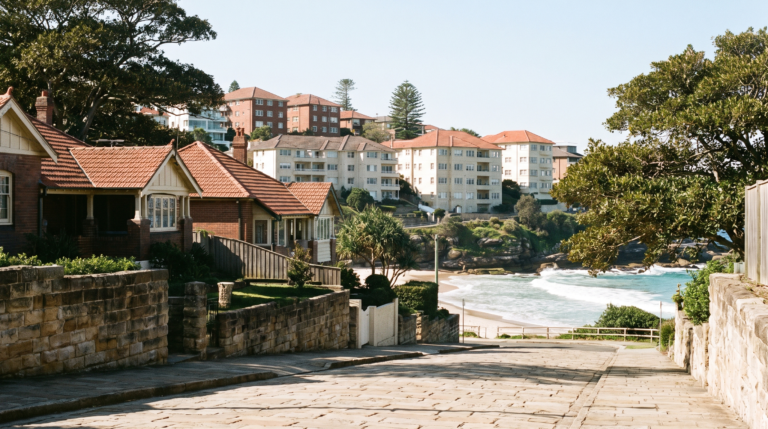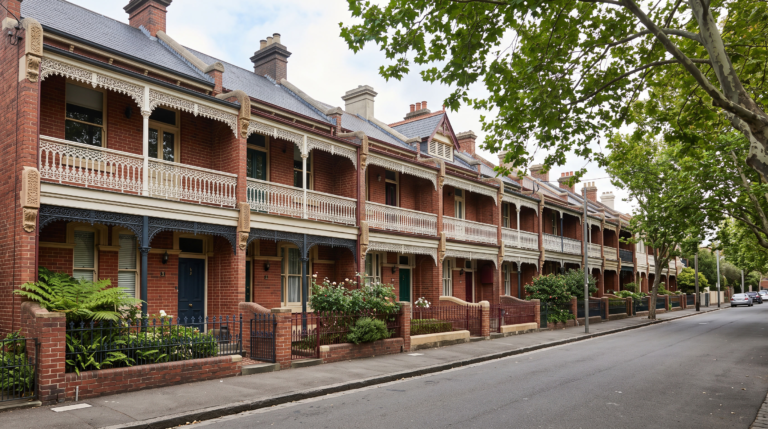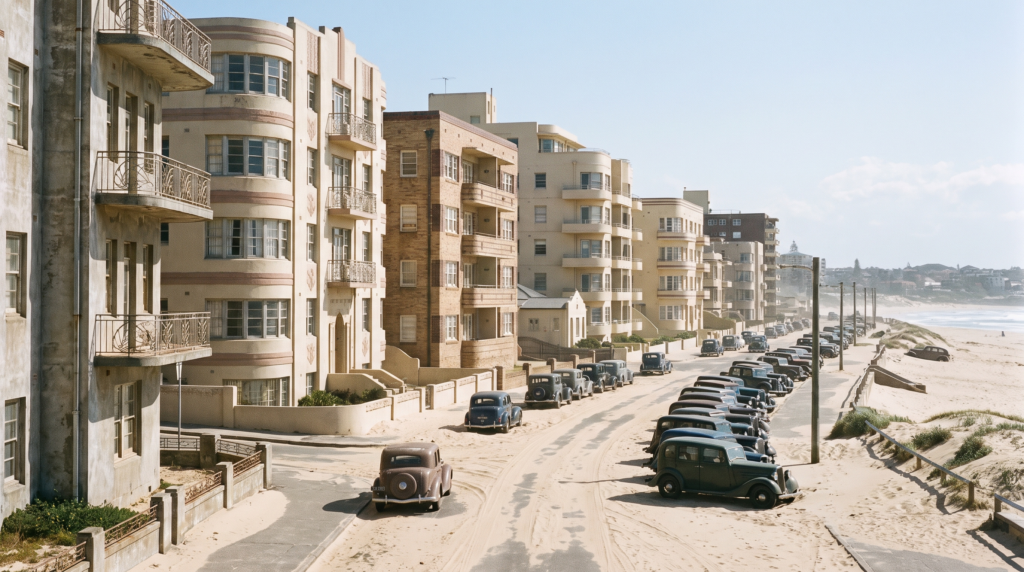
Bondi and Tamarama are dense, fully exposed to the ocean, and built mostly of interwar apartment blocks with a layer of terraces and semis behind them.
Everyone expects the salt. What catches people out is the sand, and how much of the job is actually logistics.
Sand is abrasive, and it gets everywhere
Wind-blown sand from the beach travels several streets inland. It accumulates in gutters, on flat roofs, in drainage channels, in window tracks, and on balcony floors.
In a gutter it behaves like wet ballast — it holds moisture permanently against the metal, which is how gutters on beachfront blocks corrode from the inside while looking fine from the ground. It also blocks outlets far more effectively than leaves do, because it packs rather than sitting loose.
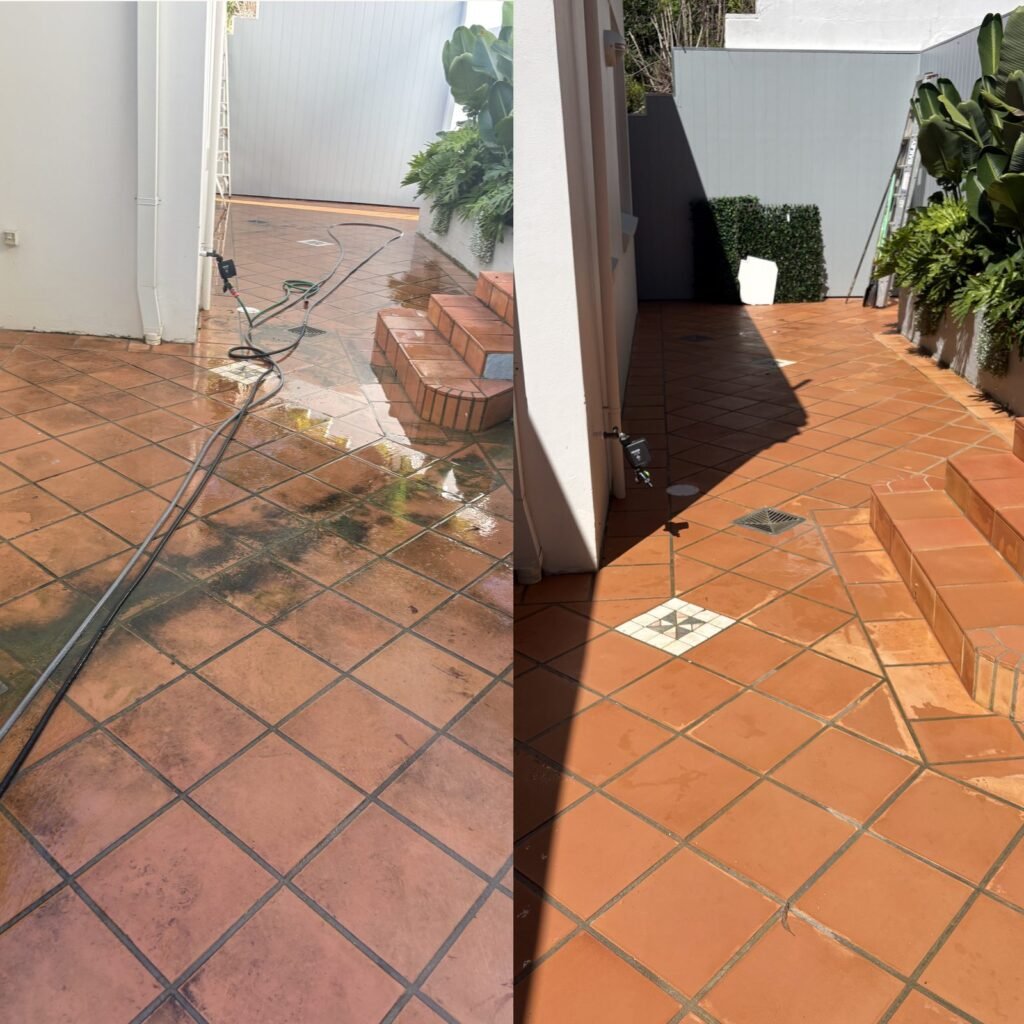
On surfaces, sand is abrasive. Dragging a brush or a pressure wand across a sandy balcony tile or a painted rail grinds the sand into the finish and leaves fine scratching. Rinsing loose sand off first is not a nicety, it is the difference between cleaning a surface and sanding it.
Salt exposure is close to maximum
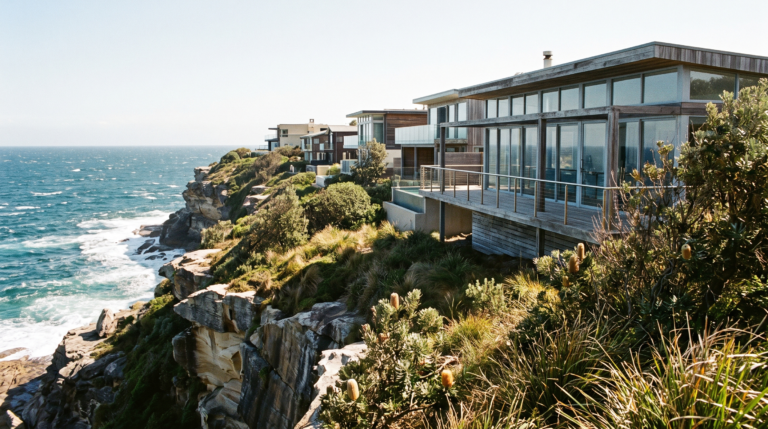
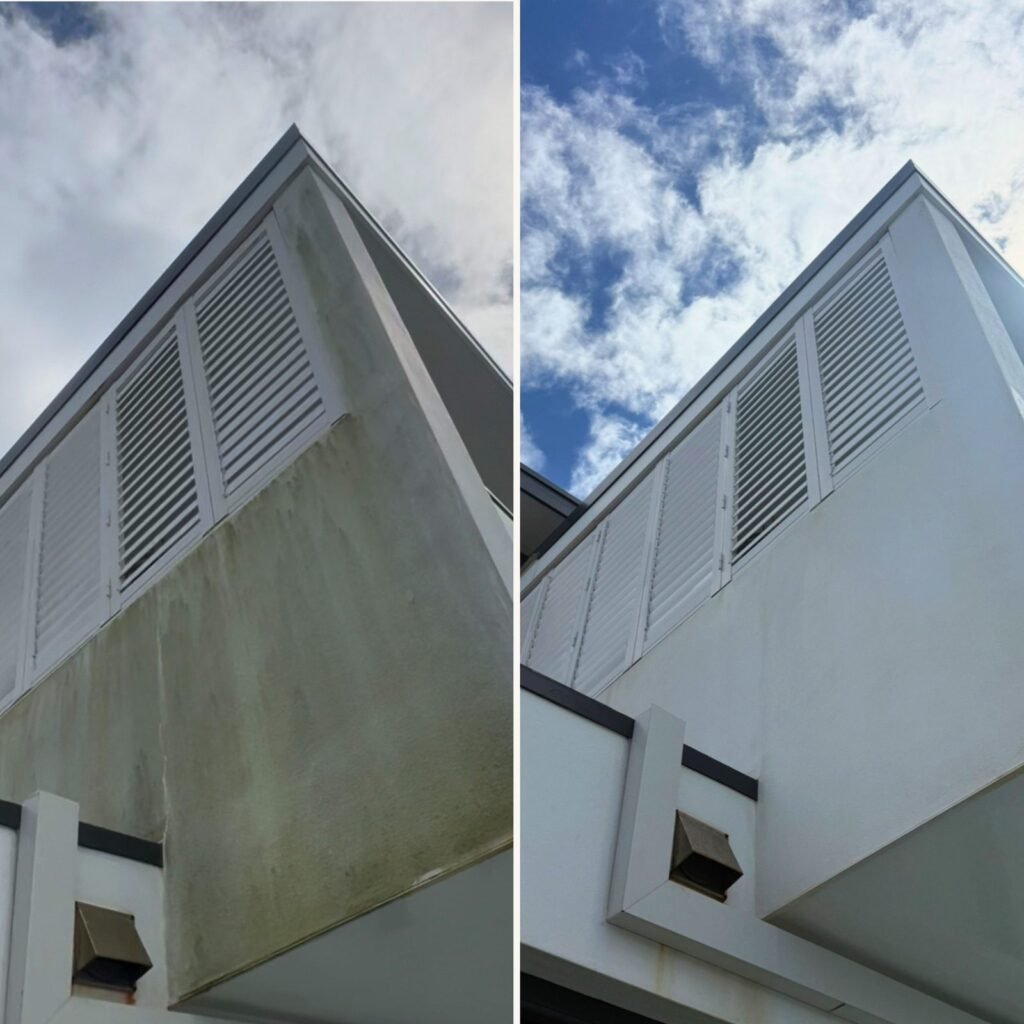
Beachfront and second-row buildings take direct surf aerosol. Everything the exposed clifftop suburbs deal with applies here: stainless tea staining, hazing glass, chalking paint, corroding fixings.
The added factor is density. Buildings are close together, which means shaded and sheltered pockets between them where salt-laden moisture sits and does not clear. Two elevations of the same block can need completely different treatment.
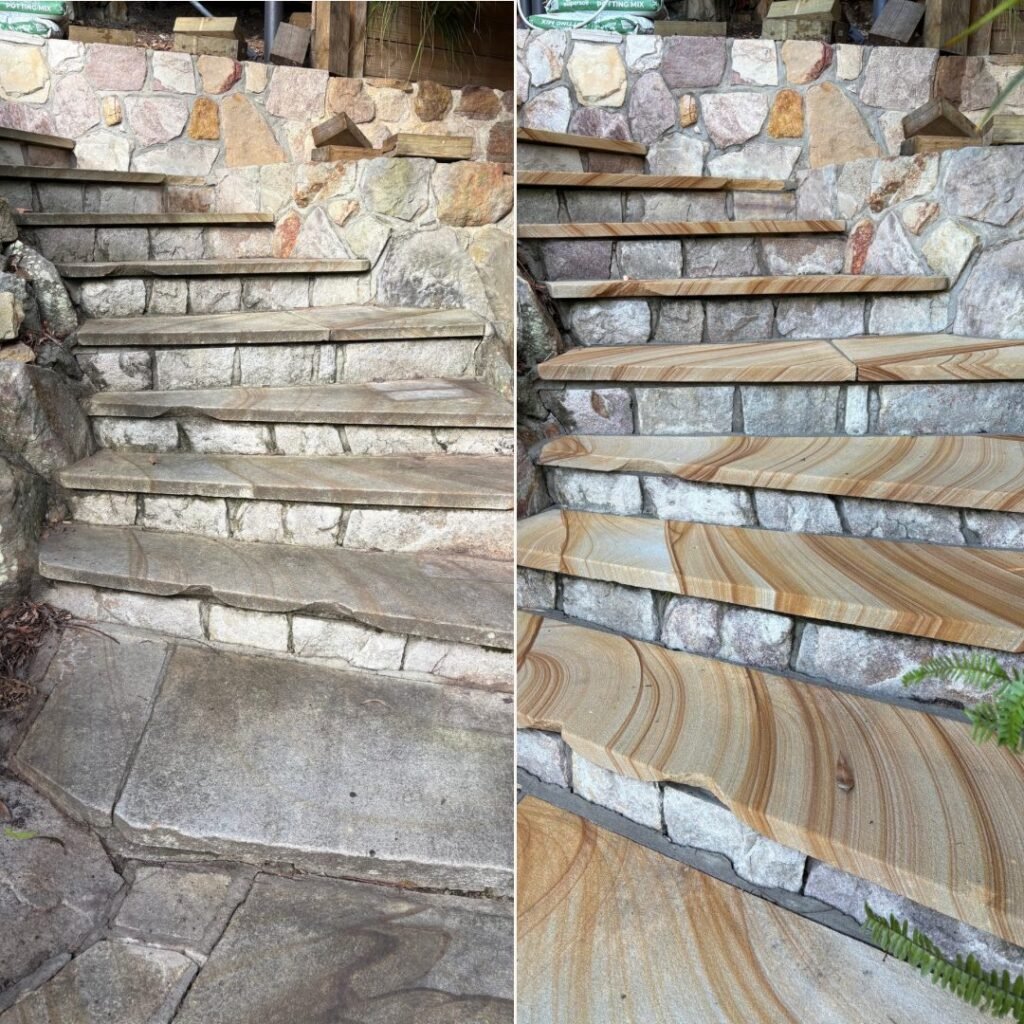
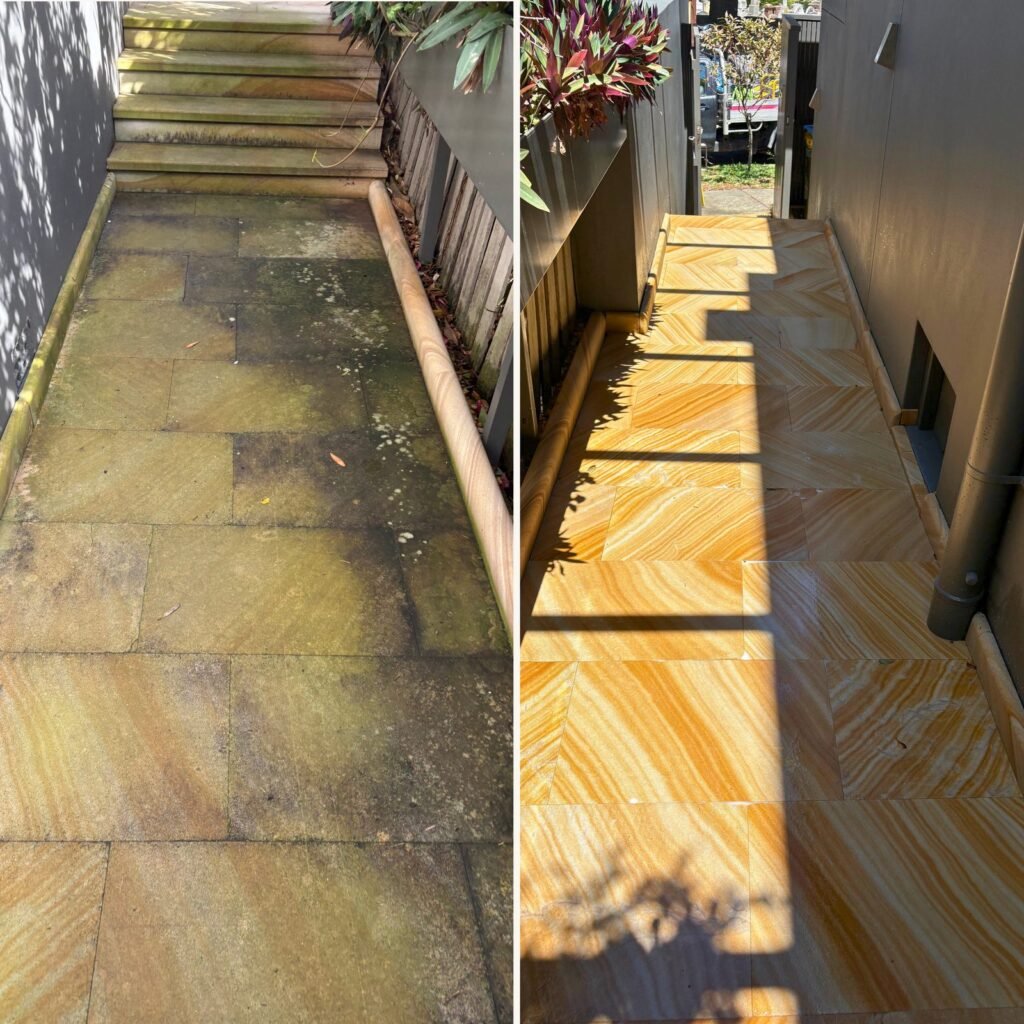
As on the rest of this coast, frequent rinsing protects a building far better than occasional deep cleaning. On a strata block that means writing it into a maintenance schedule rather than reacting when the building looks bad.
Interwar blocks and their weak points
The deco and interwar apartment stock along Campbell Parade and the streets behind it is close to a century old in places.
Common issues are consistent: painted render repainted many times and now delaminating, concrete balcony edges spalling where reinforcement has corroded, original steel-framed windows rusting at the frame, and rendered parapets with failed waterproofing behind them.
Pressure on any of these makes them worse. Water driven behind loose render or into a spalling slab edge accelerates exactly the failure you can see starting. Low pressure and correct chemistry cleans them; a contractor who notices and reports the spalling is worth considerably more than the clean itself.
Access is the real cost driver
Bondi is genuinely difficult to work in. Parking is scarce and metered, streets are congested, and getting a vehicle with a water tank within hose reach of a building often needs a permit or a booked zone.
Height compounds it. Most blocks are three to six storeys, which rules out ladder work and means a platform, swing stage or rope access — each with its own cost and lead time, and each needing somewhere to set up in a street that has no spare room.
This is why quotes for two identical buildings, one in Bondi and one in Randwick, can differ substantially. The difference is access, and it should be explained rather than buried.
Strata, tenants and timing
Much of the housing is strata and a large share is rented with high turnover. Exterior walls, roofs, common driveways and usually balcony structures are common property, so work is authorised by the committee or building manager rather than an individual owner.
Resident notice matters more here than in quieter suburbs. Balconies need clearing, windows need closing, and cars need moving — and on a block with twenty tenancies that takes lead time.
Both suburbs sit within Waverley Council. There are heritage items and conservation areas among the interwar stock, so original fabric is worth checking before work rather than after.
Local council area: Waverley Council
Bondi Beach, North Bondi and Tamarama all sit within the Waverley local government area. Waverley carries 325 heritage items in its Local Environmental Plan and 15 properties on the State Heritage Register, and Bondi Beach itself is listed on the National Heritage List. The Bondi Beach Urban Conservation Area covers most of the interwar apartment stock behind Campbell Parade, running roughly between Notts Avenue, Gould Street, Warners Avenue and Ramsgate Avenue.
Confirm a specific property before any work on original fabric: Waverley Council heritage conservation areas.
Local note: Tamarama spent five years as an amusement park. Wonderland City, complete with a roller coaster and a resident elephant, opened above the beach in 1906 and closed in 1911.
What we’d prioritise
- Rinse loose sand off before any brushing or washing — otherwise you are abrading the surface
- Clear sand from gutters and outlets, not just leaves; it holds water permanently
- Build frequent light rinsing into the strata maintenance schedule instead of reacting
- Low pressure on interwar render, spalling concrete and original steel window frames
- Report spalling, render delamination and waterproofing failure to the committee in writing
- Confirm access method, parking and permits as part of the quote
- Give residents real notice — balconies cleared, windows shut, cars moved
Related: the Eastern Suburbs exterior cleaning guide, Bronte and Clovelly, what coastal air does to a home and exterior cleaning in Bondi.