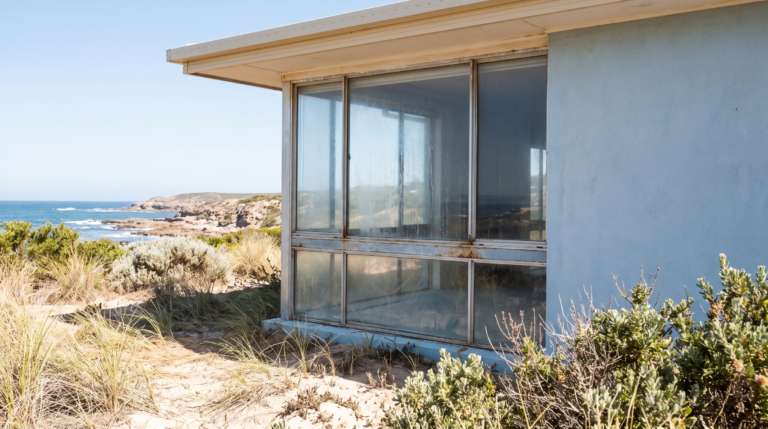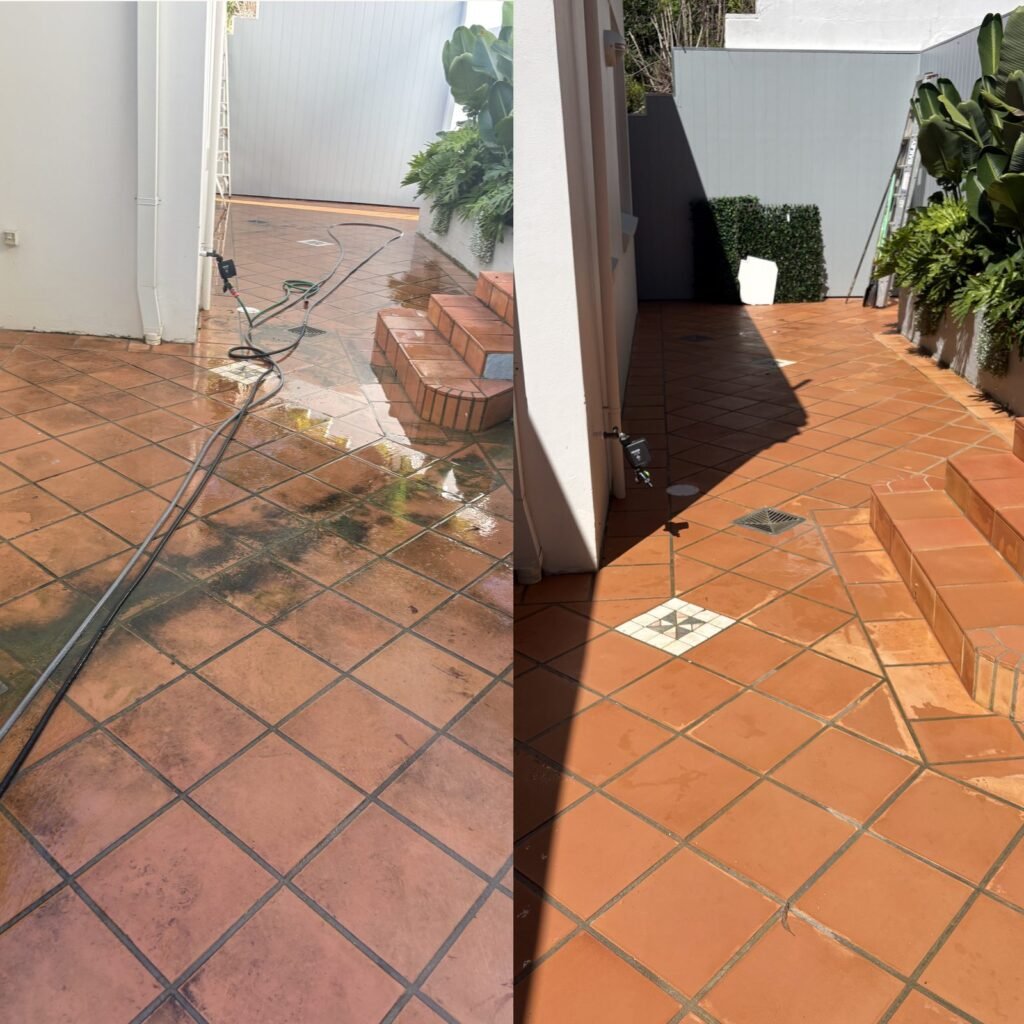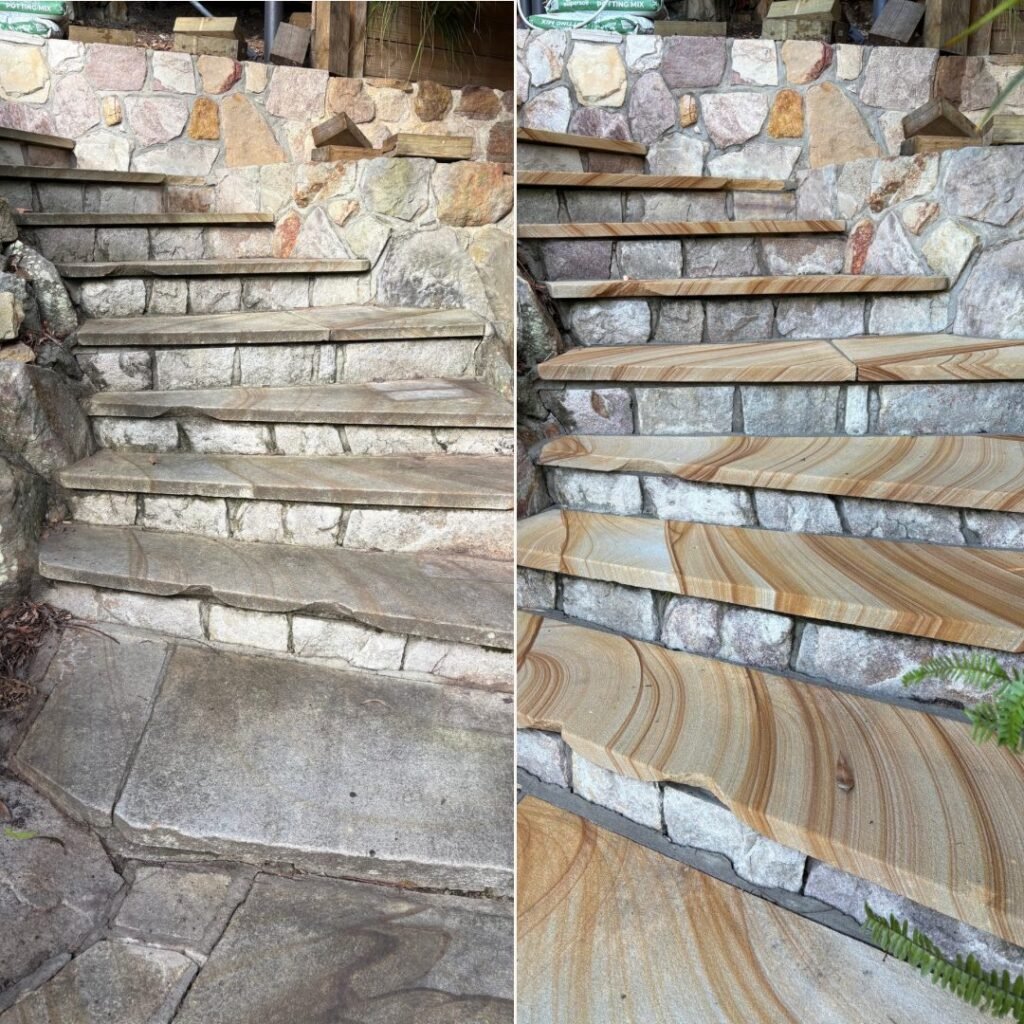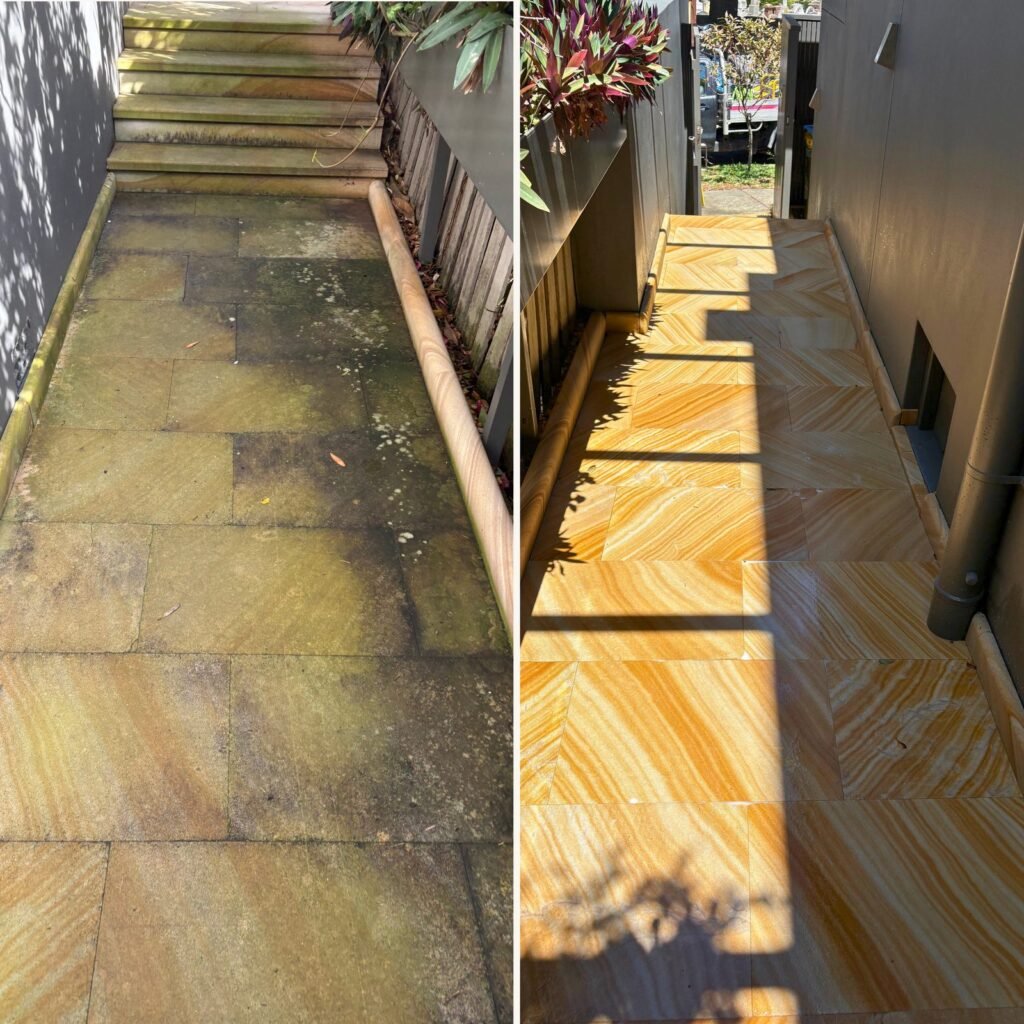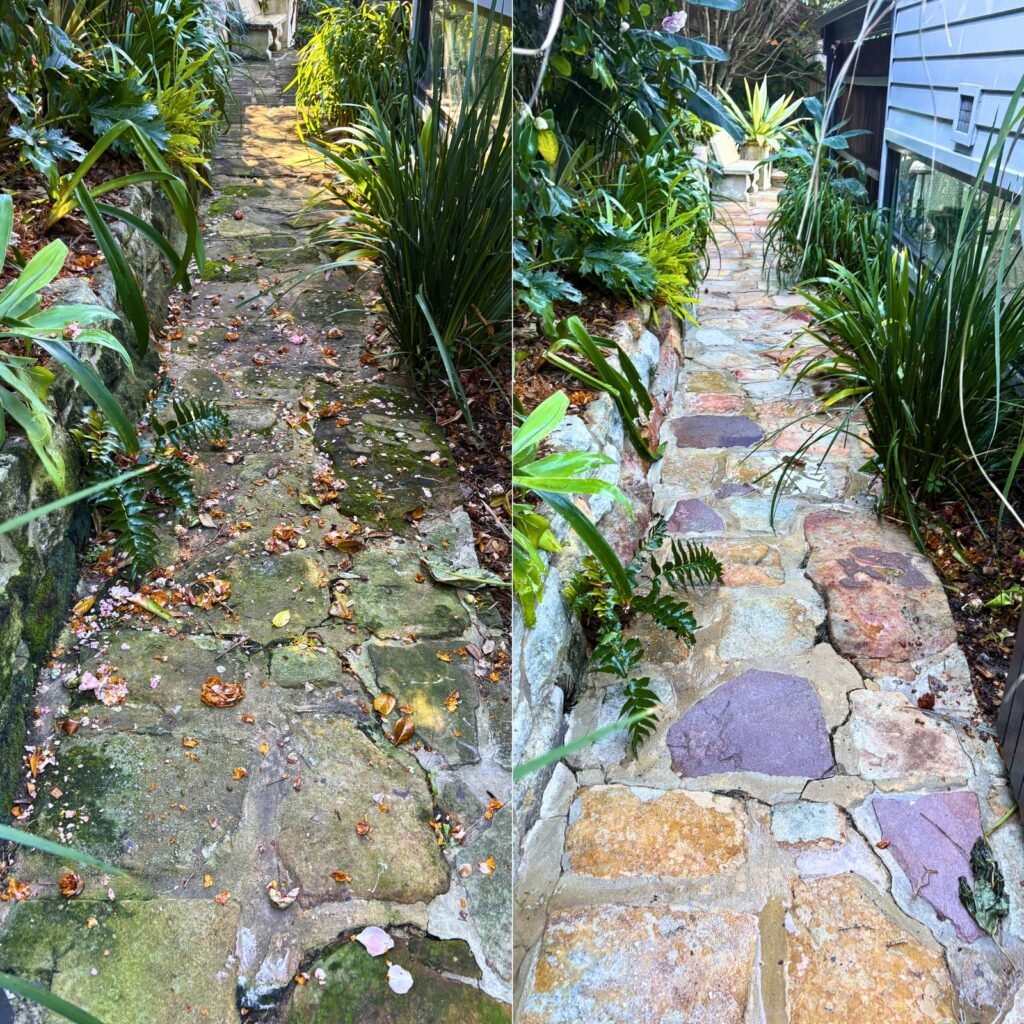
Bronte and Clovelly are built into narrow gullies running down to their beaches, with housing packed tightly along the slopes — Victorian and Federation terraces, semis, and post-war flats, on small blocks with minimal setbacks.
The density is what makes these suburbs difficult to work on, more than the coastal exposure.
No side access, shared walls
On a terrace or semi, two of your four walls are shared and the side setbacks are often under a metre. Sometimes there is no side access at all and everything has to come through the house or over a fence.
That has real consequences. Equipment has to be small enough to fit. Platforms are frequently impossible. And whatever is applied to a wall will affect the neighbour’s property if it isn’t controlled, which puts the emphasis on low-pressure application rather than anything that atomises and drifts.
Party walls raise a second issue. Where two owners share a wall, cleaning or treating it is a conversation with the neighbour before it is a job. It’s worth having that conversation early rather than after someone’s washing has been rained on.
Gully shade is the dominant condition
Because the housing sits on the sides of a gully, a large proportion of walls face across or into the slope rather than at the sun. Combined with close spacing, southern and side elevations get very little direct light.
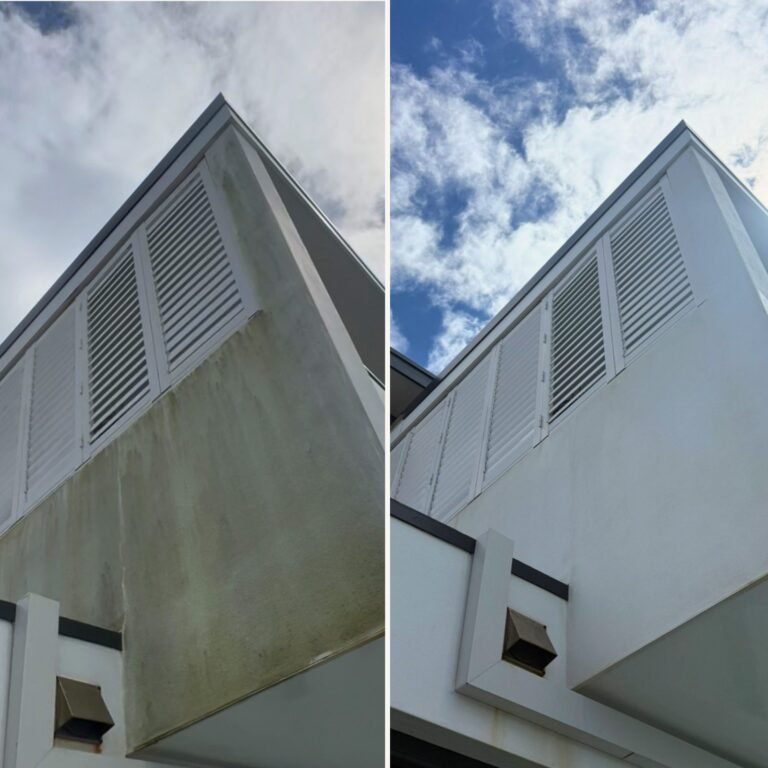
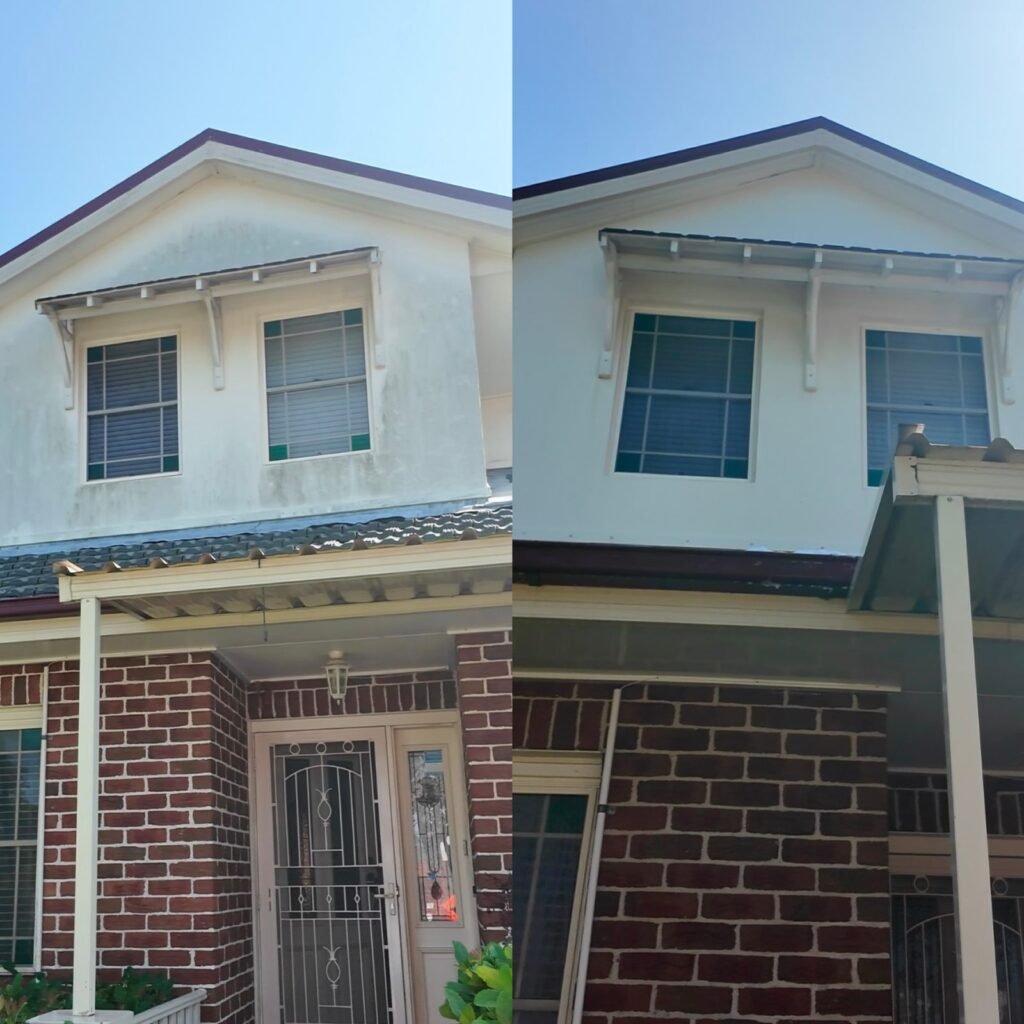
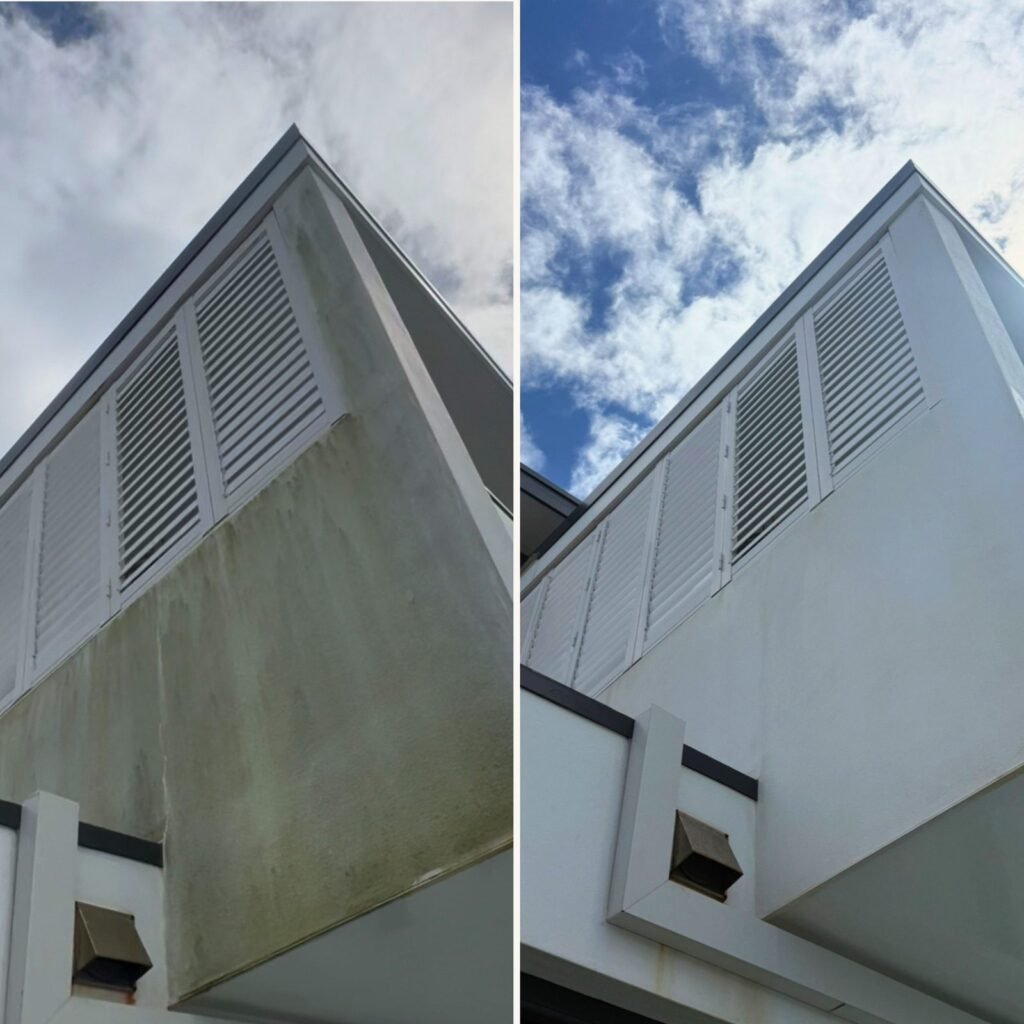
They stay damp, and they grow mould heavily — usually on the walls the owner sees least. The rear elevation and the light well are typically far worse than the street frontage.
On painted render and old brick that growth needs treating at the root. Washing removes the visible layer and leaves the organism, and in a shaded gully it re-establishes within a season.
Salt arrives, but differently
Both beaches are small and framed by headlands, so the gullies get less direct salt blast than an open beach like Collaroy. What salt does arrive tends to come over the top on a strong onshore wind and settle across the upper slopes.
The practical result is that the top of a gully street and the seaward-facing upper elevations take more salt than the sheltered lower sections, which take more moisture instead. Two different problems on the same street.
Ocean-facing glass still hazes and still needs rinsing between cleans. Stainless balustrades still show tea staining.
Victorian and Federation fabric
The terraces bring the material constraints of their period: lime mortar rather than cement, tuckpointing on better examples, slate roofs, cast iron lacework, and render over soft brick.
Acidic masonry cleaners are the standard mistake. They dissolve lime mortar, destroy tuckpointing, and leave chloride salts in the masonry that drive further decay. On a heritage terrace that damage is visible and permanent.
Iron lacework wants gentle washing and prompt drying — water trapped in the joints between iron and timber is how both fail.
Parts of both suburbs sit within Waverley and Randwick heritage conservation areas, so on a listed or contributory property some methods and any repointing may attract council requirements.
Roofs and the parapet problem
Terraces frequently have parapets with box gutters behind them, discharging internally rather than over an eave.
That’s the highest-risk drainage arrangement in residential housing. A blocked box gutter doesn’t overflow into the garden — it overflows inside, into the roof cavity and down the wall. On a terrace with a shared wall it can become the neighbour’s problem too.
Box gutters, rainheads and outlets need checking as standard, not as an extra. It is the single most valuable thing anyone does on these roofs.
What we’d prioritise
- Check box gutters and internal outlets before anything cosmetic
- Treat shaded rear and light-well walls, which will be worse than the frontage
- Low-pressure application only, given how close the neighbours are
- No acidic cleaners on lime-mortared or tuckpointed brickwork
- Rinse ocean-facing glass and metalwork between cleans
- Agree party wall work with the neighbour first
- Confirm heritage status before touching original fabric
Related: the Eastern Suburbs exterior cleaning guide, terraces, box gutters and shared walls and exterior cleaning in Bronte.