Almost every piece of gutter advice you will read online assumes a freestanding house with eaves gutters you can reach from a ladder. Inner West terraces are not that house.
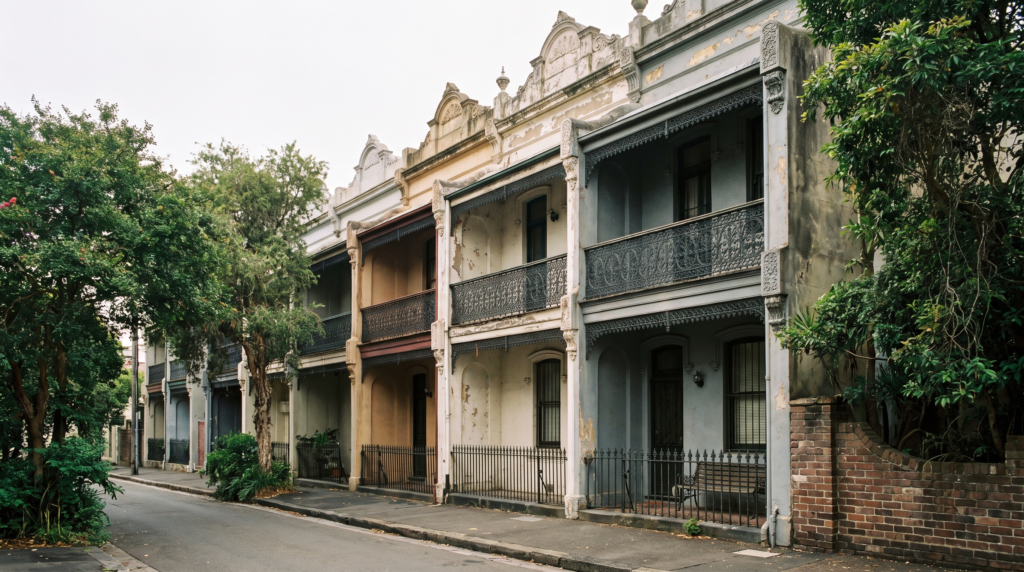
Through Newtown, Erskineville, Annandale, Balmain, Glebe and Leichhardt, you are dealing with Victorian and Federation terraces that share walls with the neighbours, hide their drainage behind a parapet, and route the entire roof’s water through a single concealed channel. When that channel blocks, the water does not spill harmlessly into a garden bed. It goes into the ceiling — yours, or the neighbour’s.
The box gutter is the whole story
A box gutter is a rectangular channel running along a valley or behind the front parapet, usually out of sight from the street and often from your own yard. On a typical terrace it carries all or most of the roof’s water to one or two outlets.
Two features make it high-risk in a way an eaves gutter never is.
It is inside the building line. An eaves gutter that overflows dumps water outside the wall. A box gutter that overflows dumps it over the internal side, straight into the roof cavity and down through the ceiling. The first sign is usually a stain on a bedroom ceiling during heavy rain, by which point insulation is wet and plaster is going.
It has almost no fall and one outlet. Box gutters run nearly level with a small sump at the outlet. A single tennis ball’s worth of leaf matter, a possum nest or a dislodged tile fragment at that outlet takes the whole system out. There is no second path for the water.
Most terraces also have an overflow provision — a slot or spout designed to relieve pressure before the water backs up into the roof. Plenty of older terraces either never had one, or have had it painted over, rendered over or covered during a renovation. Worth finding out which yours is.
Slate, and why it matters who walks on your roof
Many original Inner West terraces are slate, and a good number of the ones that look like tile are slate that has been partially replaced. Slate is unforgiving: it does not carry weight the way a concrete tile does, and it breaks under a boot rather than flexing. A cracked slate is not a quick swap either — matching salvaged slate to an existing roof is genuinely difficult and expensive.
Slate roofs also fail at the fixings before they fail at the slate. The nails corrode over a century and slates start slipping, which is why you see the occasional slate sitting crooked or missing entirely. Anyone working on a slate terrace should be working off the ladder and from the box gutter, on boards, not walking the field of the roof.
The same caution applies to roof cleaning. High pressure on aged slate drives water under the laps and lifts slates off failing nails.
Shared walls make it a two-party problem
The party wall between terraces usually runs up through the roof, and the box gutter often runs right along it — sometimes as a shared valley, sometimes with a separating flashing that has been patched by three generations of different tradespeople.
Practically, this means a blockage on your neighbour’s side can flood your ceiling and the other way round. It also means access is frequently a conversation: getting to your own box gutter may require going over their roof, or a ladder in their yard.
Our advice, learned the hard way, is to sort the access question before the rain rather than during it. If you are on good terms with next door, a joint clean is usually cheaper for both of you and removes the argument about whose leaves caused what. If the terrace is strata or a converted block, the box gutter is almost certainly common property and the owners’ corporation should be maintaining it on a cycle — we have written a guide for strata committees on how to scope that.
The parapet and the render below it
The other Inner West signature: a rendered or face-brick parapet across the front, often with decorative cement mouldings, sitting directly above the facade.
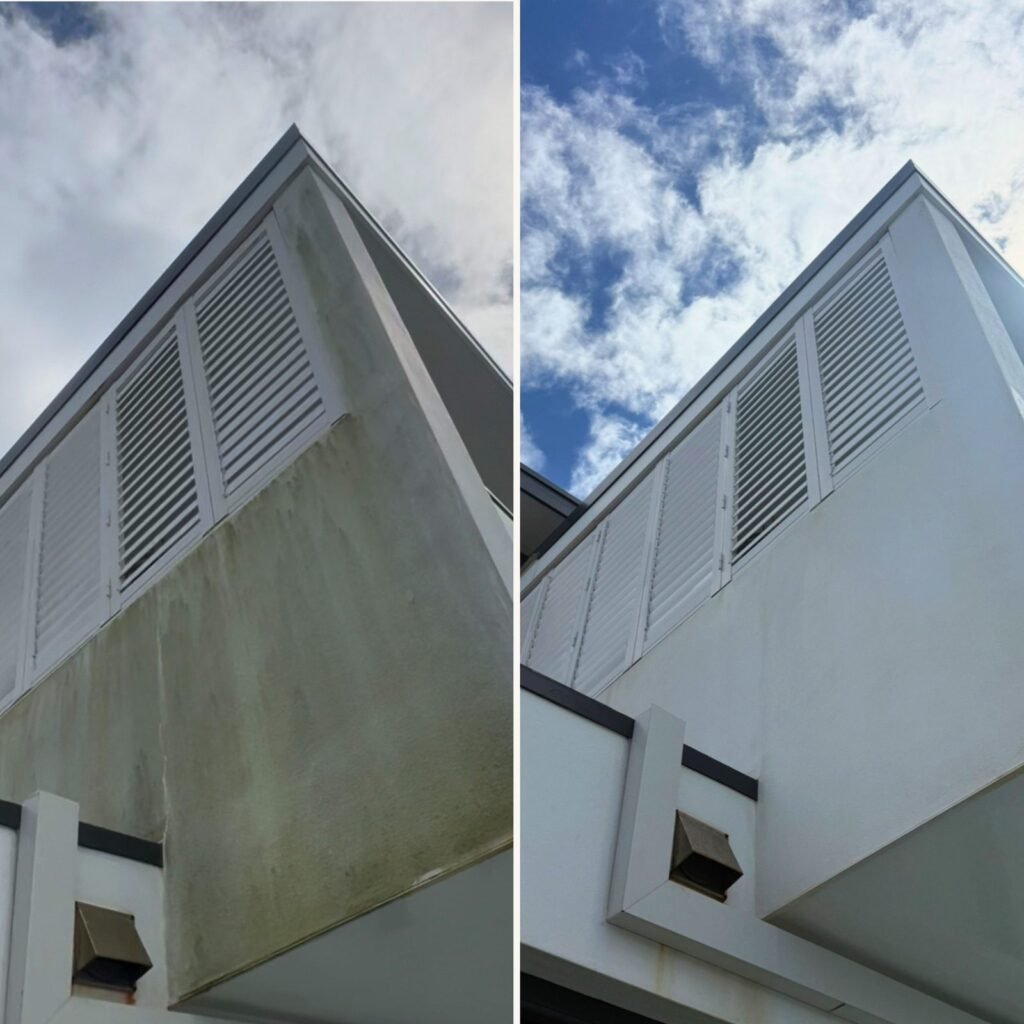
When the box gutter behind it leaks or overflows, water tracks down inside the parapet and comes out through the front render. You get a persistent damp patch, then salt bloom, then render blowing off in sheets. Owners often treat this as a render problem and repaint it. It comes back, because the cause is above it.
If you have staining running down from the parapet on your facade, the roof drainage is where to look first — not the paint.
What actually needs doing on a terrace
Clear the box gutter and the sump properly, by hand, and flush it to confirm flow. Check the outlet is not partially restricted rather than fully blocked — a half-blocked outlet passes a slow flush and fails in a storm. Confirm the overflow exists and is clear. Check the valley between your roof and the neighbour’s. Flush the downpipe, which on many terraces runs internally or down a narrow side passage and blocks at the bend. Look at the flashings against the party wall and the parapet.
What should not happen: high pressure on slate, walking the roof field, or clearing the visible gutter and calling it done while the sump stays packed.
Timing
Inner West streets are heavily planted with plane trees and figs, which means a real autumn drop and large leaves that are very good at sealing a box gutter outlet. Twice a year works for most terraces: once in late autumn after the plane trees have finished, and once before the summer storm season, which is when the short, intense downpours that overwhelm a restricted outlet actually happen.
If you have a fig or a large plane directly over the roof, or the terrace has an internal downpipe, be more frequent.
Get the concealed drainage checked
The frustrating thing about terrace roofs is that the expensive failure is invisible from the ground. You cannot see a box gutter sump from your yard, which is why the first sign is so often a wet ceiling.
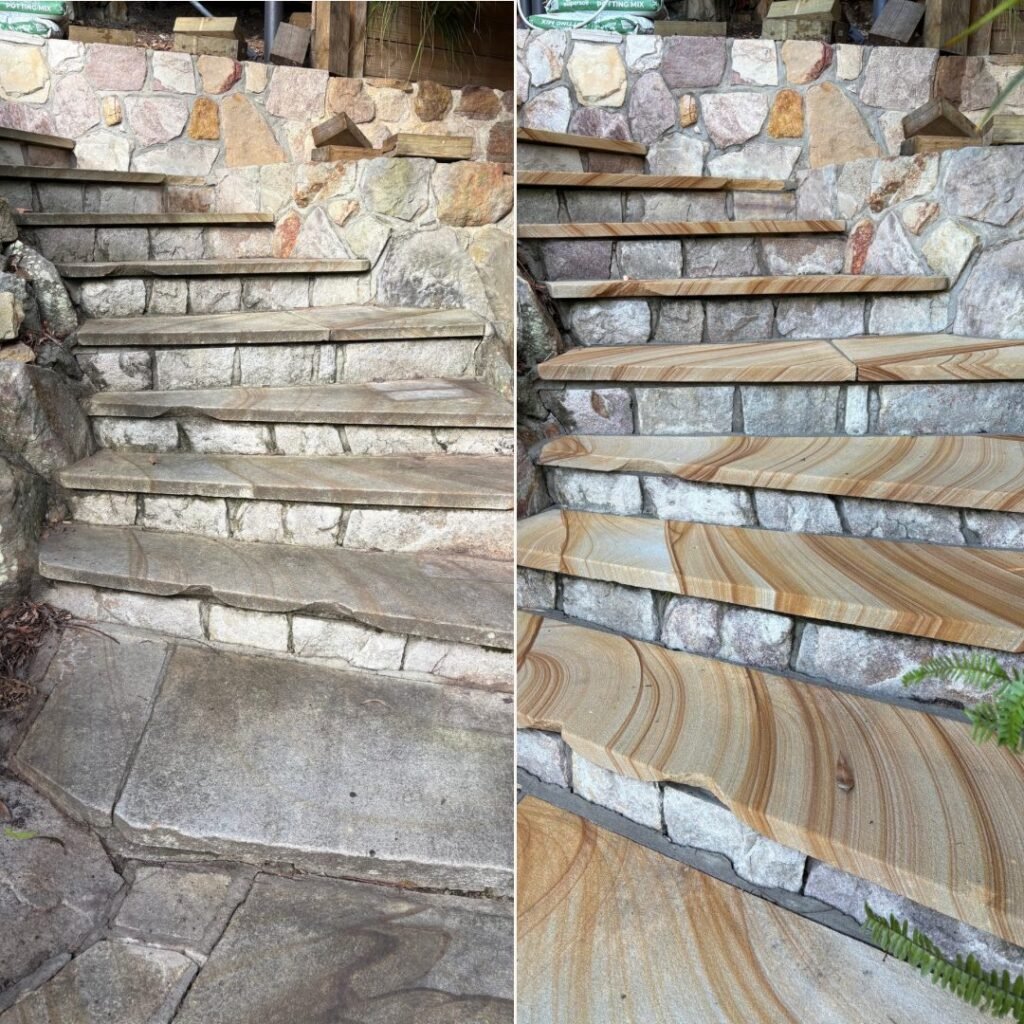
Our gutter cleaning across the Inner West is set up for terraces specifically — box gutters, sumps, concealed downpipes and party wall valleys, with a photo report so you can see what is up there without going up. We also handle heritage brick and sandstone cleaning for the facades below.
Request a fixed written quote — 24-hour turnaround, $20 million public liability.