Gutter cleaning in the Hills District is a different job from gutter cleaning in the Eastern Suburbs, and not just because the properties are bigger. Out past Castle Hill — through Dural, Glenorie, Kenthurst, Annangrove, Middle Dural — three things change at once: the tree load, the bushfire exposure, and the fact that a lot of these homes drink what falls on the roof.
Each one of those changes what a gutter clean needs to be.
The tree load is constant, not seasonal
Homes closer to the coast mostly deal with deciduous street trees and a seasonal drop. On the bushland fringe you are typically under mature eucalypts, angophoras and turpentines, and natives do not have a season — they shed leaves, bark and gumnuts continuously, with a heavy surge through the hot dry months right when you least want fuel in the gutter.
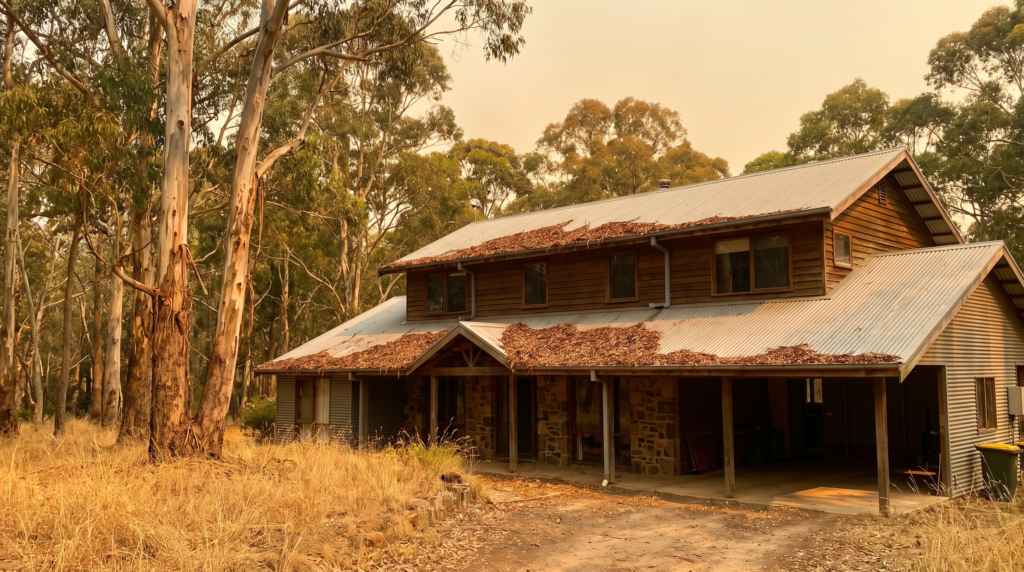
Stringybark is the worst of it. Long ribbons of bark peel off and drape across the roof, then work down into the gutter and pack in hard. Unlike leaves, bark does not break down and flush away — it forms a fibrous mat that holds water against the gutter base and clogs downpipe outlets completely.
Add gumnuts, which are effectively small ball bearings that roll straight down to the outlet and plug it, and you have a gutter that can go from clear to overflowing in a single storm.
Acreage rooflines are bigger than they look
A Hills acreage home often has two or three times the roof perimeter of a suburban house, plus the outbuildings — sheds, stables, carports, pool houses, water tank sheds. Those secondary roofs get forgotten routinely, and they are frequently the ones feeding the tank.
Long runs also mean fall matters more. On a thirty-metre gutter run, a slight sag from a previous ladder or a bracket that has let go will pond water in the middle, and that pond is where the rust starts. Anyone clearing your gutters should be telling you where the water is sitting, not just that the leaves are gone.
Bushfire: the reason the timing matters
Most of the Hills District bushland interface sits in a bushfire-prone area, and gutters are one of the most consistent ignition points in an ember attack. Embers can travel kilometres ahead of a fire front. They do not need to land on something dramatic — a gutter full of dry bark and leaf litter, sitting directly against the timber fascia and the roof edge, is close to ideal fuel.
This is why the timing of a Hills gutter clean is not the same as the timing elsewhere in Sydney. The clean that matters most is the one done before the season starts, not the one done when you happen to think of it. Late winter into early spring is the window — after the worst of the winter drop, before the fire danger period.
The NSW RFS publishes property preparation guidance and the fire danger period dates for the Hills area, and it is worth reading their material directly rather than relying on any contractor’s summary, including ours. If your property sits on the interface, gutter clearing is one item on a longer list that includes fine fuel around the house, under-deck spaces and gaps in the roof line.
If you have gutter guard fitted for ember protection, it still needs clearing — the mesh holds the litter on top, and dry litter on top of a mesh directly above the fascia is still fuel at the roof edge. We have covered whether gutter guards are worth it in more detail separately.
Tank water changes the standard
A large share of Hills District properties run rainwater tanks, and plenty of them are on tank water for drinking. That makes the roof and gutter a water catchment system, not just a drainage one.
What that changes in practice:
What goes in the gutter matters. Any cleaning product used on the roof or gutters ends up in the tank. On tank-fed properties the first flush diverter should be isolated or the downpipes disconnected before any wash work starts, and reconnected afterwards. If a contractor has not asked you whether you are on tank water before quoting a roof or gutter job, that is a bad sign.
Organic matter is a water quality problem. Decomposing leaf litter and bird droppings in the gutter wash straight into the tank. Sludge accumulating in the bottom of a tank starts in the gutter.
Leaf strainers and tank screens need checking too. They are part of the same system and they block. Clearing the gutter and leaving a choked tank inlet screen only moves the problem downstream.
A realistic Hills schedule
For a bushland-fringe property under mature natives, twice a year is the floor, not the target:
Late winter to early spring. The important one. Clear everything before the fire danger period, check the tank inlet, and get eyes on the roof and outbuildings after winter.
Late autumn. After the bulk of the summer and autumn drop, before the winter rain. This is the one that protects the gutters themselves from sitting full and wet through the cold months.
Properties directly under heavy stringybark or with a lot of overhang often need a third visit, and if you are on tank water for drinking it is worth being more frequent rather than less.
What a proper job should include out here
Not just the eaves gutters. Valleys — where two roof planes meet — collect more than anywhere else and cause more leaks. Downpipes need flushing and checking for flow, not just clearing at the top. Box gutters, if the home has them, are the single highest-consequence blockage on any roof. Outbuildings and shed roofs should be included by default on an acreage property, particularly anything plumbed to a tank.
And you should get photos. On a property this size you cannot verify the work from the ground, and the photo record is also useful to keep as part of your bushfire preparation documentation.
Book the pre-season clean
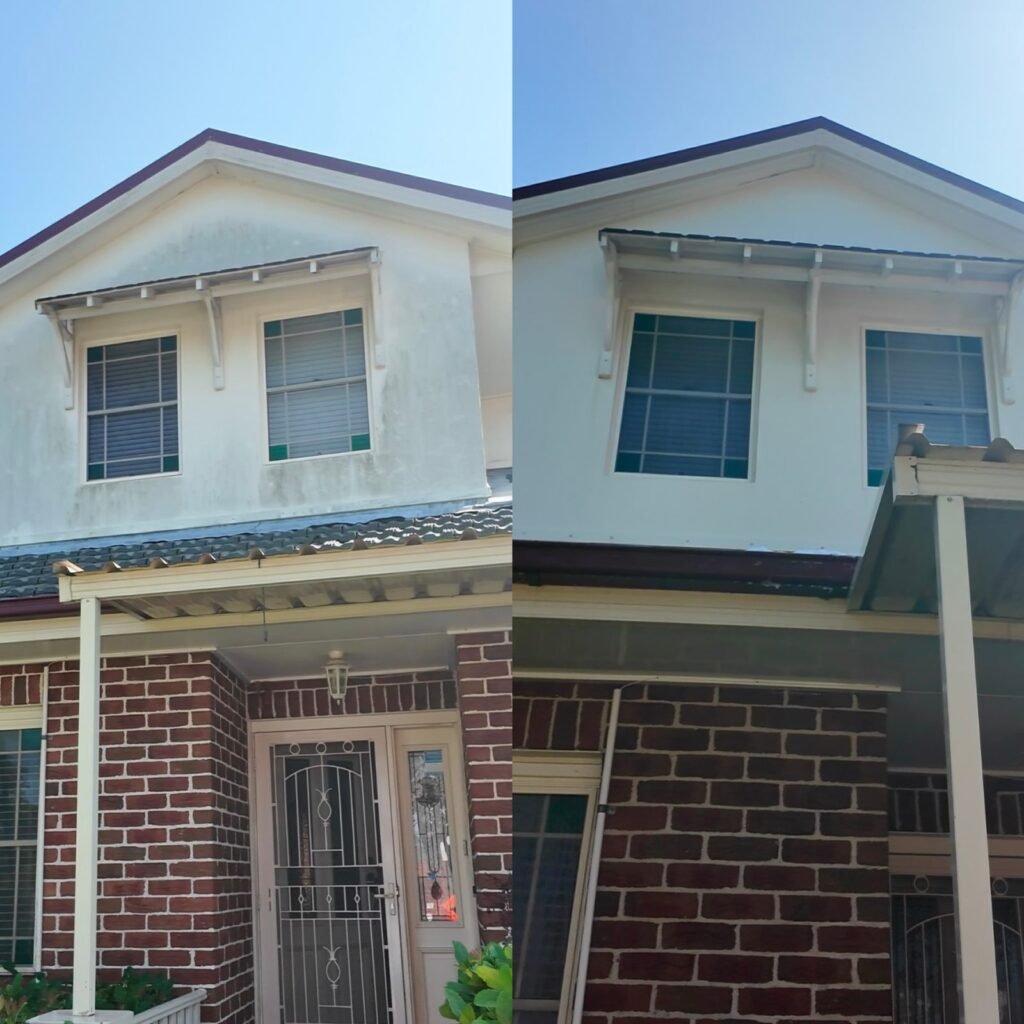
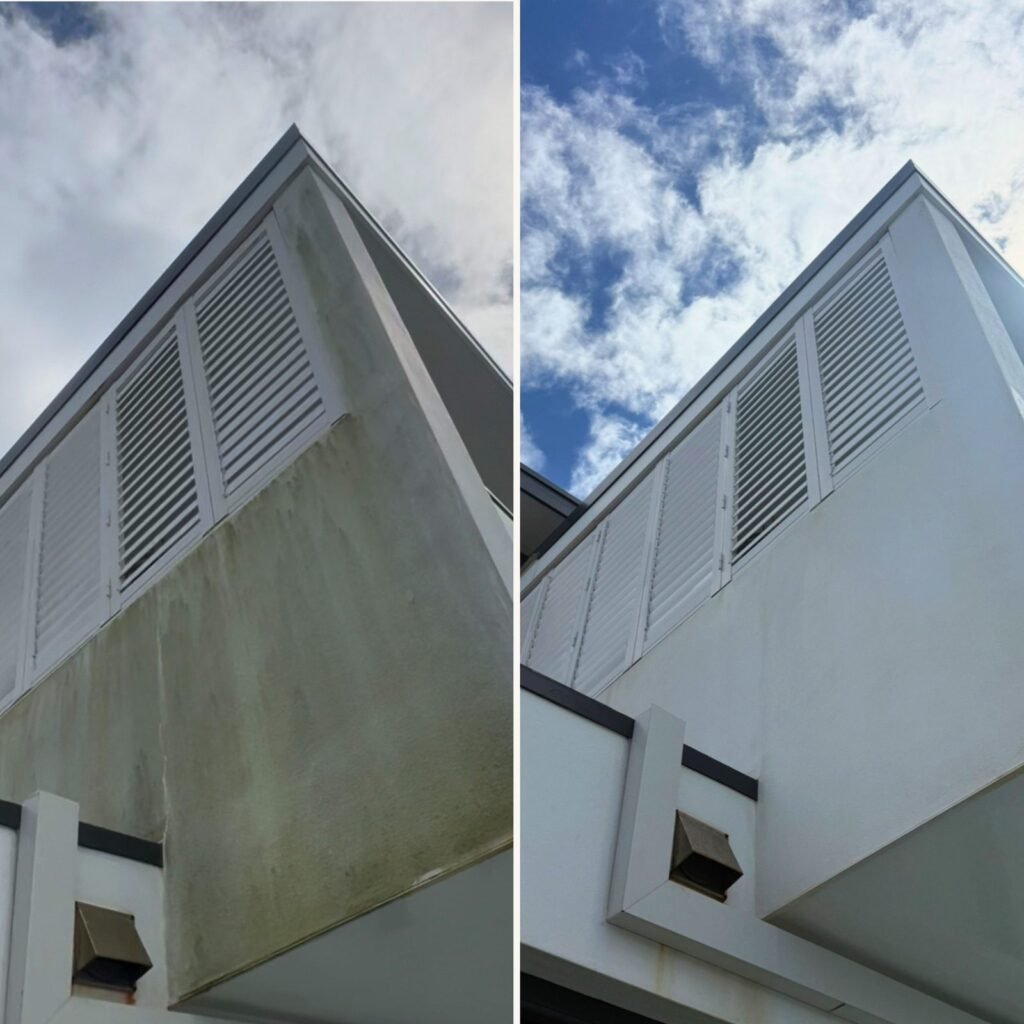
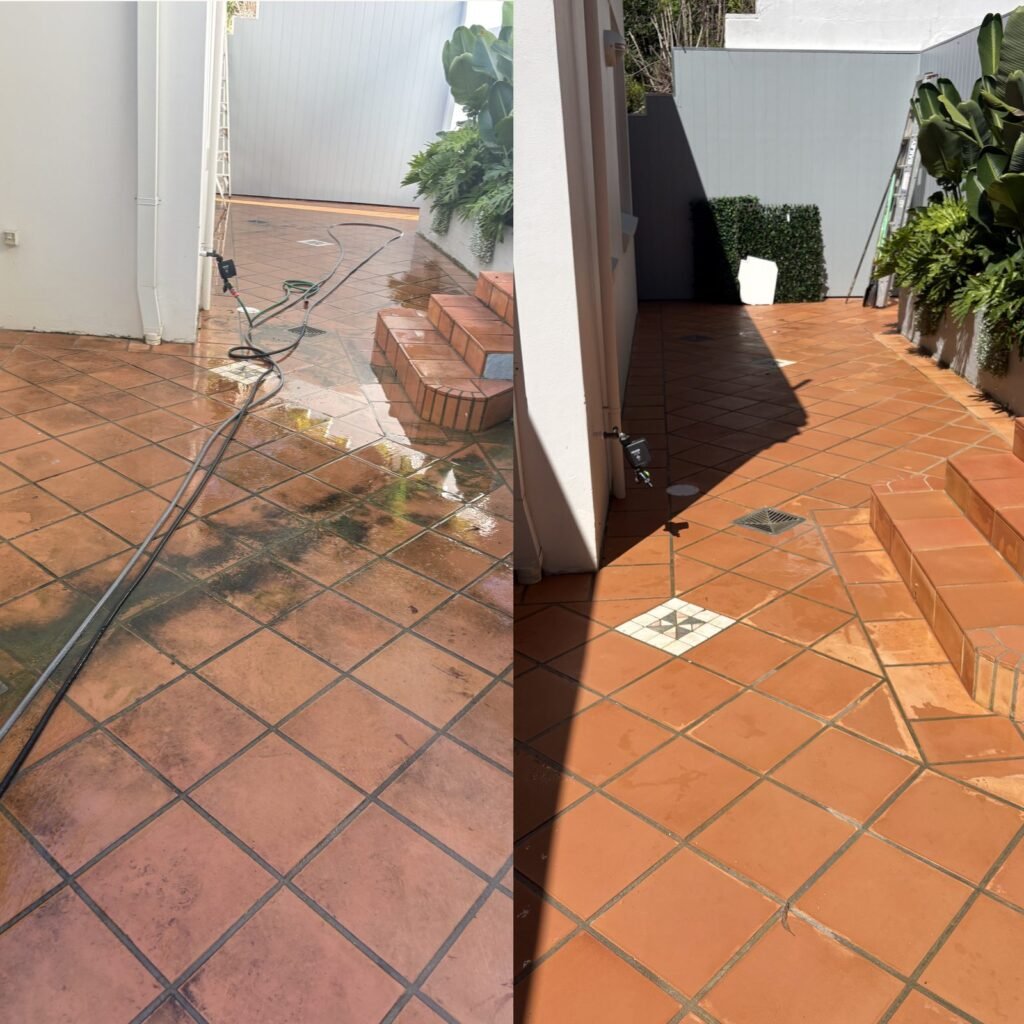
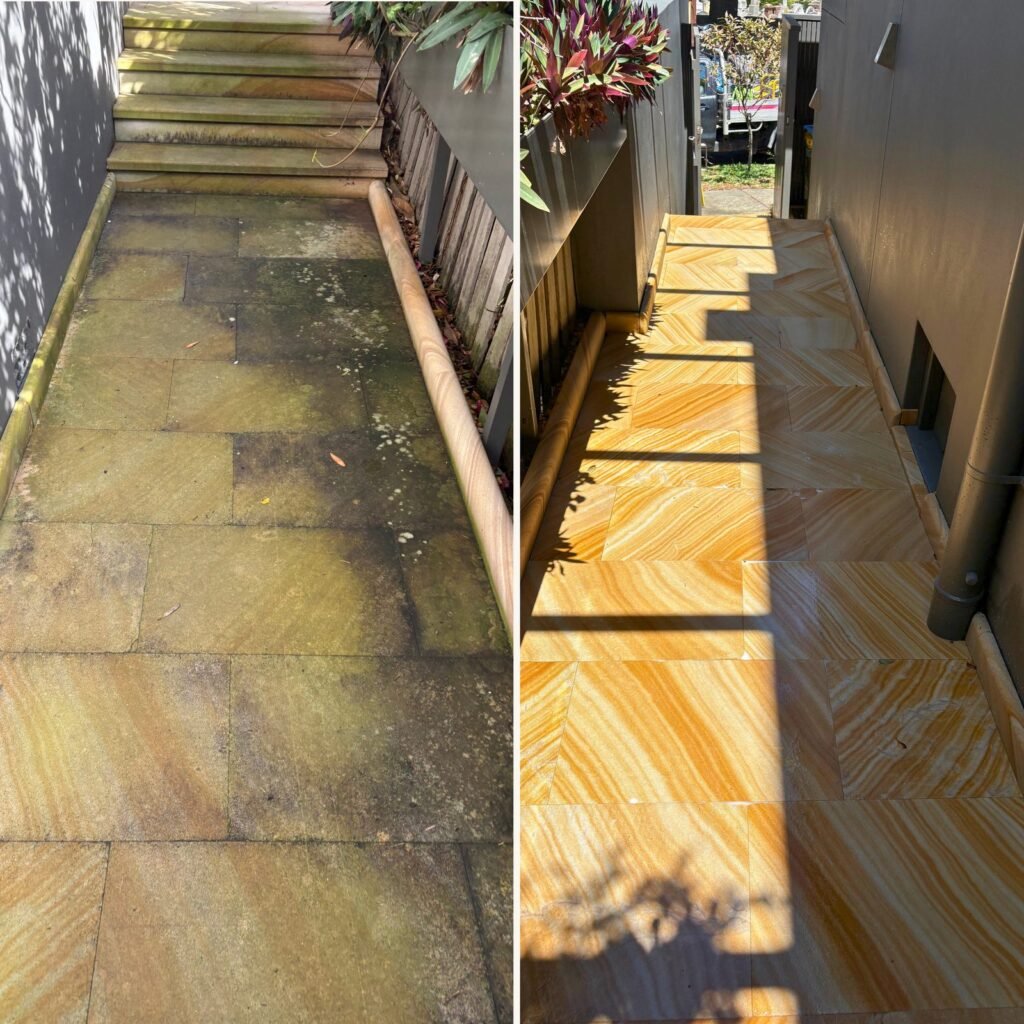
Our gutter cleaning across the Hills District covers acreage rooflines and outbuildings, and we work tank-water-safe as standard — downpipes isolated before any wash work, reconnected after. We also handle pressure cleaning for acreage driveways, sheds and patios.
Request a fixed written quote — 24-hour turnaround, $20 million public liability, photo report on every job.