Sandstone Cleaning Eastern Suburbs | Walls, Steps & Facades Done Safely
Specialist sandstone cleaning across Paddington, Woollahra, Vaucluse, Bellevue Hill and the Eastern Suburbs. Black growth treated at the root — never blasted off the stone.
Sydney sandstone is the defining surface of the Eastern Suburbs — boundary walls in Woollahra, retaining walls stepping down to the harbour in Vaucluse and Rose Bay, entry stairs in Bellevue Hill, terrace thresholds and sills through Paddington, and whole facades on the grander homes. It is also the softest common building stone in Australia, and the surface most frequently wrecked by a pressure washer.
Why sandstone turns black
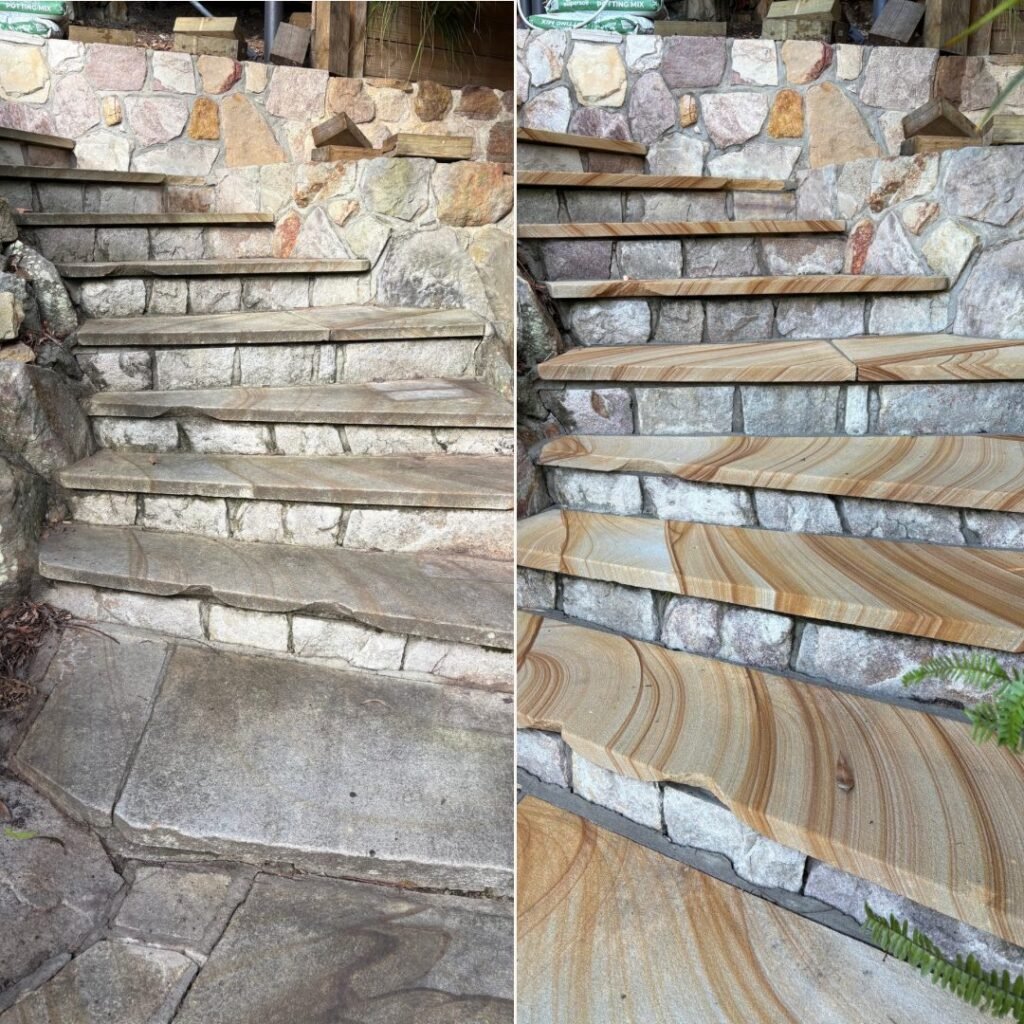
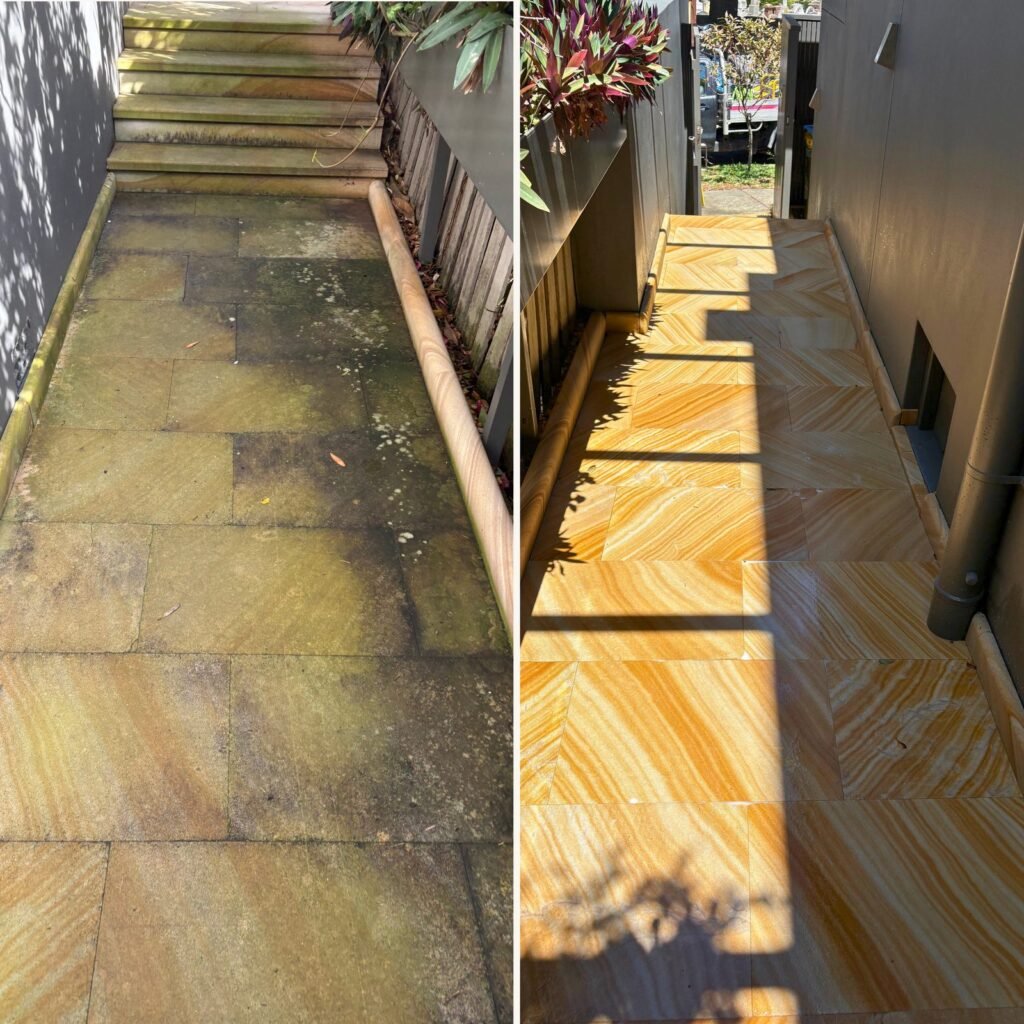
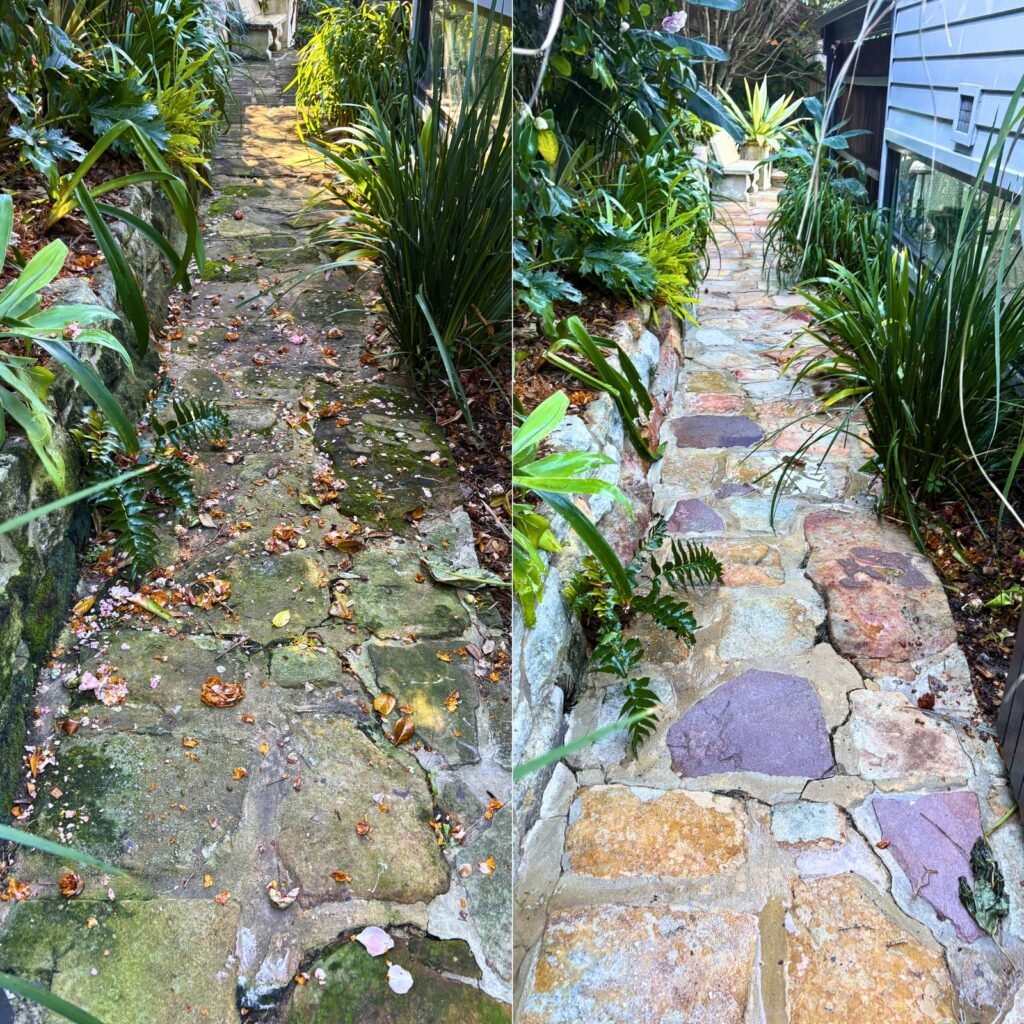
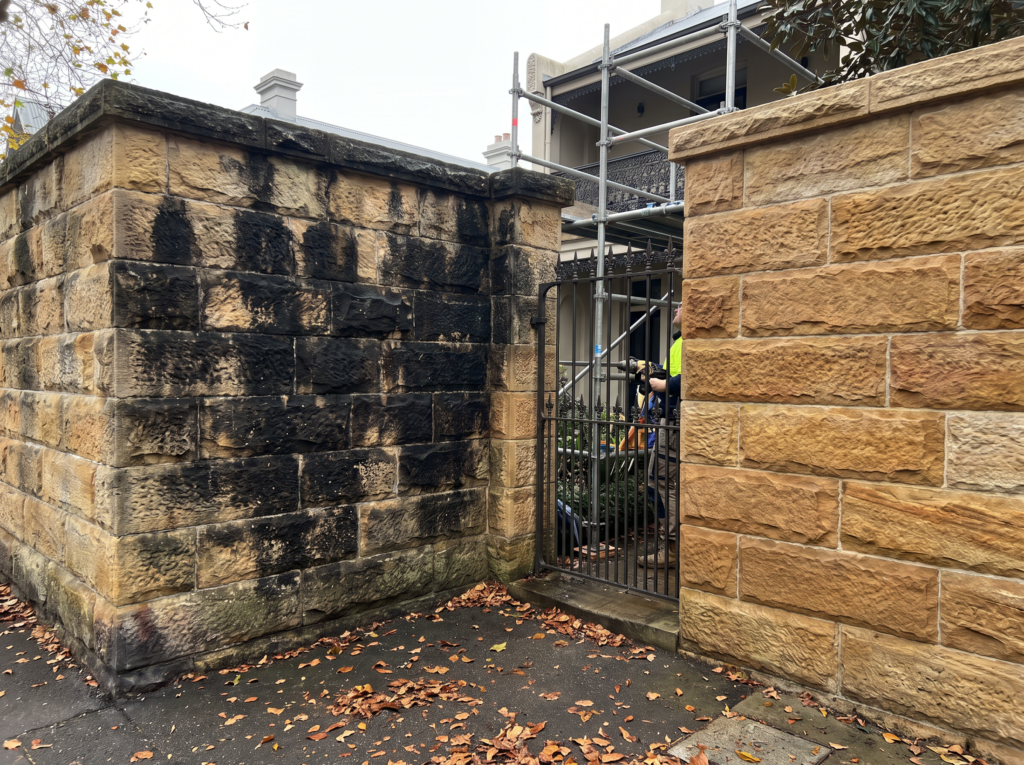
The black isn’t dirt. It’s a living biofilm — cyanobacteria, algae and fungal growth — feeding on moisture held in the stone’s pores. Shaded and south-facing stone goes first, coastal stone follows as salt keeps the surface damp. Because the growth lives partly inside the pore structure, anything that only removes the visible layer is a short-term fix: the colony regrows from within, usually darker, within a season.
What high pressure does to sandstone
Sandstone is cemented sand. A pressure wand cuts the weathered face off the block — you can watch the surface turn pale and sacrificial grit run down the wall. That freshly exposed face is softer and more porous than what was removed, so it drinks water faster, regrows biology faster, and erodes faster. Once tooling marks and wand striping are cut into a heritage block, no cleaning brings the original face back. On older walls, high pressure also blows out soft lime mortar joints, which is a structural problem, not a cosmetic one.
How we clean it instead
The growth is treated chemically with a biocide appropriate to the stone, given proper dwell time to kill the colony through the pore structure, then rinsed at low pressure — enough to carry the dead material away, never enough to cut the face. Heavier crusts get repeat treatment rather than more force. Stubborn organic staining continues to fade for weeks after the clean as the residual treatment works and the stone weathers. Delicate carved detail, tooled margins and heritage joints are worked by hand.
Efflorescence and salt attack
The white bloom on harbour-side retaining walls is efflorescence — salts migrating out of the stone as it dries. Near the water it’s often accompanied by fretting, where salt crystallising inside the pores pops grains off the face. This is a moisture problem wearing a stain’s costume: we remove the deposit correctly, and we’ll tell you honestly when the underlying cause is drainage behind the wall rather than anything a cleaner can fix.
Sealing — sometimes, not always
A breathable penetrating sealer slows water uptake and regrowth on the right stone in the right position. The wrong sealer — anything film-forming — traps moisture inside the block and accelerates decay, which is why we recommend sealing selectively rather than by default. Freshly cleaned, fully dry stone only.
Heritage conservation areas
Much of Paddington and Woollahra sits within conservation areas under Woollahra Municipal Council and the City of Sydney. Gentle, reversible cleaning methods are the appropriate standard for that fabric regardless of whether formal approval applies, and it’s the standard we work to on every job.
Related services
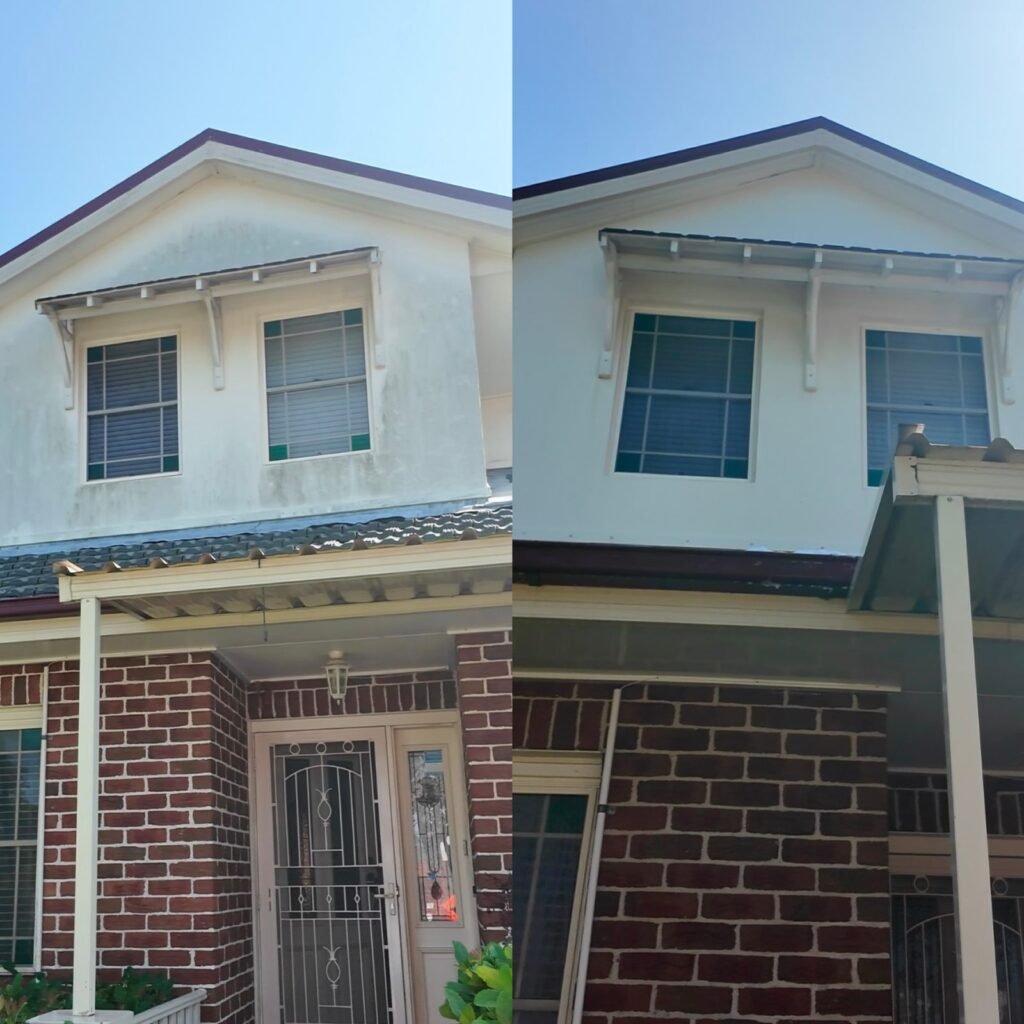
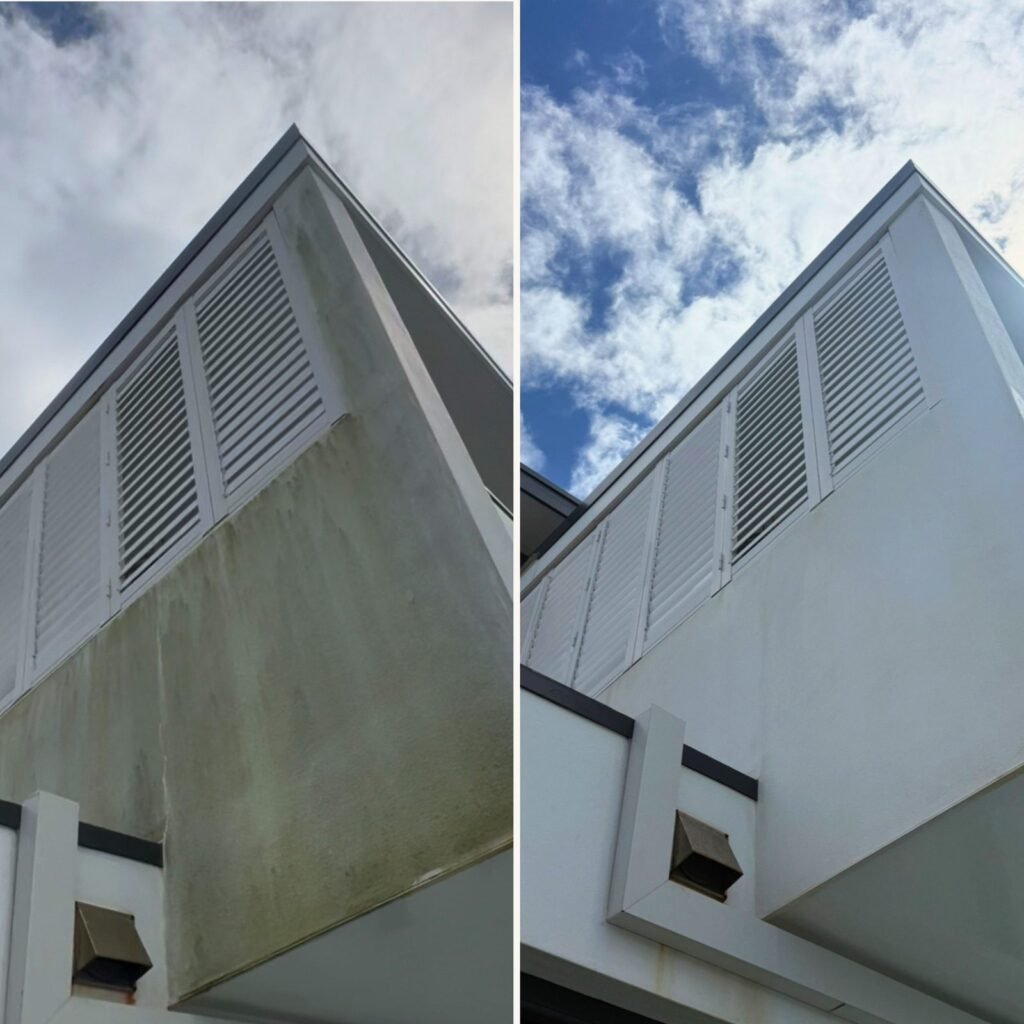
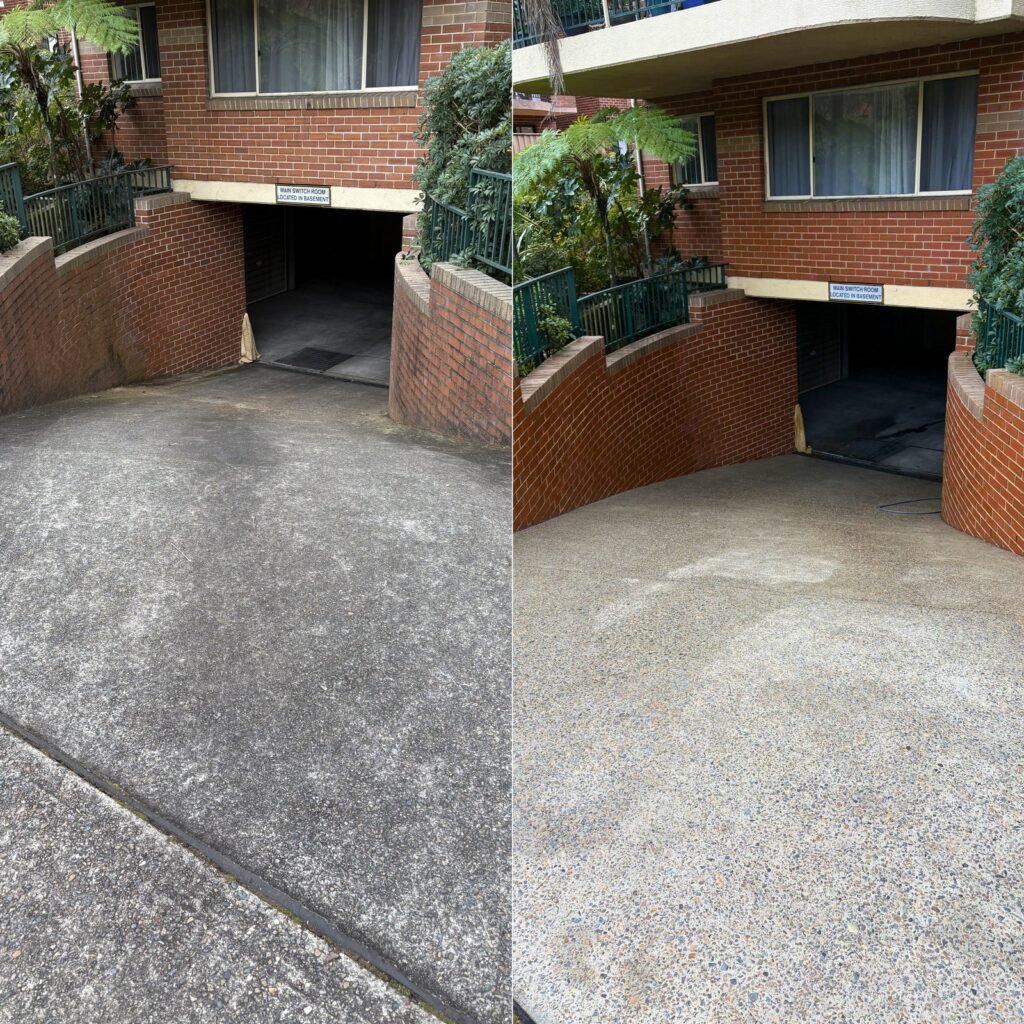
Sandstone work pairs naturally with soft house washing — the facade above the stone carries the same growth — and with driveway cleaning where stone paths meet concrete. See also our main sandstone cleaning & sealing service page.
Fixed written quotes, $20m public liability, 5.0 on Google. Request a quote and we’ll respond within 24 hours.
Servicing homes across Sandstone Cleaning Eastern Suburbs
Fixed written quotes within 24 hours. Surface-matched methods, $20m public liability.
Request a Free Quote