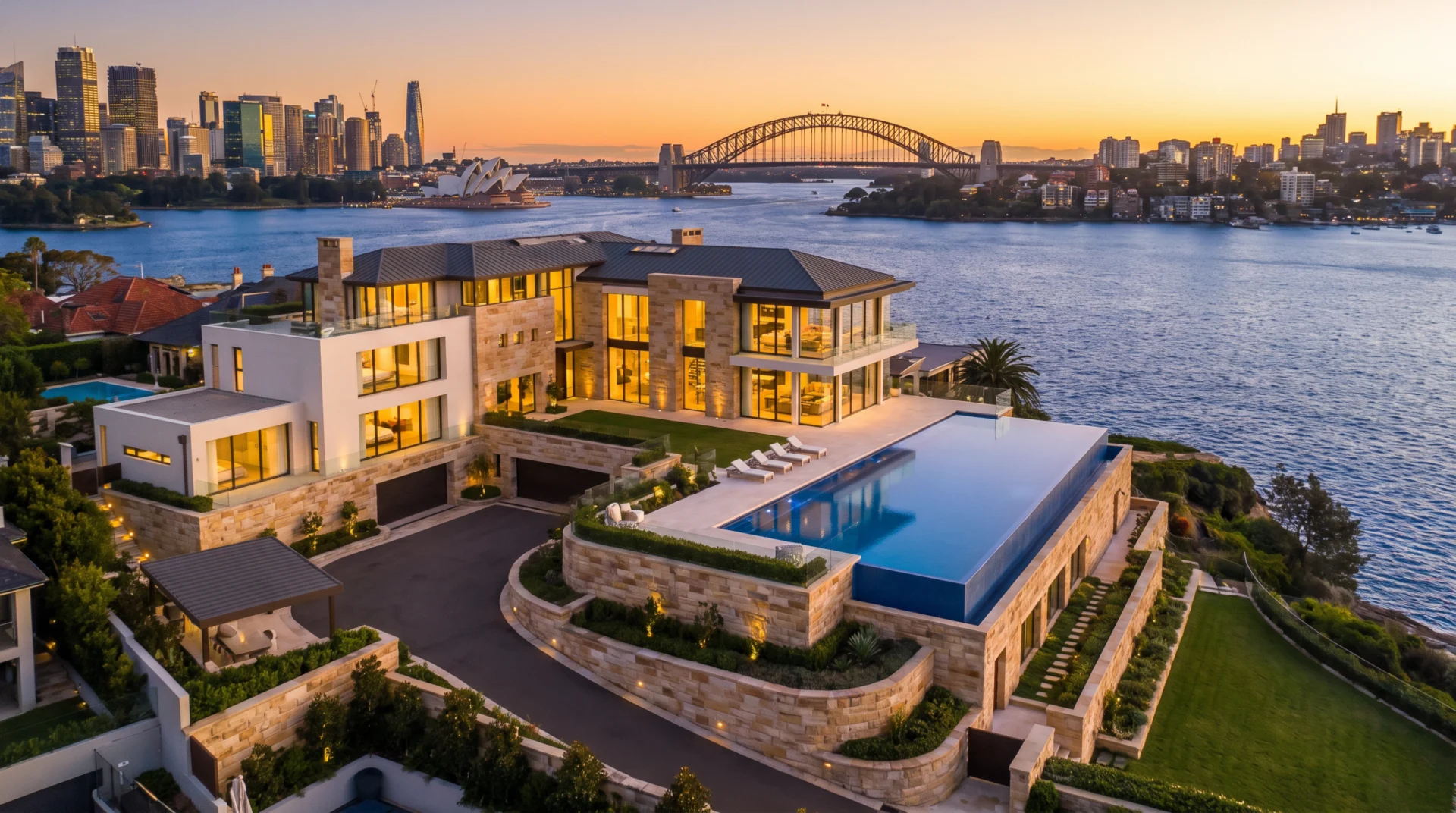
The pool terrace on a Point Piper estate is usually pale natural stone: travertine, limestone, sometimes sandstone, occasionally a porcelain lookalike. It is the surface that sees the most use in summer and the one most often damaged by the wrong product.
Travertine cleaning is searched in Sydney more than most stone topics, with interest peaking in October as people prepare pools for summer. Here is what matters on a harbour property.
Know which stone you have
Travertine and limestone are both calcium carbonate. Acid dissolves them. That includes hydrochloric acid brick cleaner, most rust removers, many tile cleaners, vinegar, and some pool chemicals spilled and left.
Acid damage on carbonate stone is permanent. The surface goes dull, rough and pale, often in exactly the shape of the spill or the area someone tried to clean. It can be honed back in some cases, at a cost far above the original clean.
Porcelain looks similar once laid and tolerates far more. Before any product goes near a terrace, the stone needs identifying. On older estates it is not unusual to find two or three different materials on the same terrace from different renovations. More: limestone pavers.
What dirties a harbour pool terrace
Organic staining from leaves and pollen, which shows strongly on pale stone. Black biological growth in grout lines and shaded edges. Salt crystallising out of the stone as it dries. Sunscreen and body oil around the pool edge. Rust spots from furniture feet. And calcium scale at the waterline and on the coping where pool water evaporates. More: pool waterline scale.
Cleaning without damage
Neutral or alkaline cleaners, low pressure, soft brushes. Travertine has natural holes, usually filled during installation, and high pressure blows the filler out and opens the face. A rotary surface cleaner at controlled pressure gives an even result on the flat areas; edges and coping are hand work.
Organic stains on pale stone respond to the right oxidising cleaner with dwell time, not force. Rust needs a stone-safe rust treatment, not a general-purpose acid. More: rust stain removal on stone.
Sealing, and why salt changes the answer
A penetrating, breathable sealer is the right choice for most natural stone around pools. It reduces staining and water uptake without forming a film on the surface.
Film-forming sealers are a poor fit on a harbour property. Salt water and pool water get under them, moisture moving through the stone gets trapped behind them, and they cloud, peel and go slippery. Removing a failed topical sealer from travertine is a far bigger job than applying a penetrating one. More: sealing travertine around a pool and penetrating versus topical sealers.
Coping and the pool edge
Coping takes the most punishment: pool chemistry from one side, sun and foot traffic from above, and salt. Check for drummy or loose coping stones before any cleaning; a loose stone over a pool is a safety problem. More: pool coping cleaning and sealing.
Timing
Clean and seal in spring, in a run of dry days, so the stone is dry through before sealing. Rinse the terrace with fresh water regularly through summer. That is all most well-sealed terraces need between professional cleans.
For the rest of the property, see the Point Piper maintenance calendar and our guide to pool surrounds in the Eastern Suburbs.






