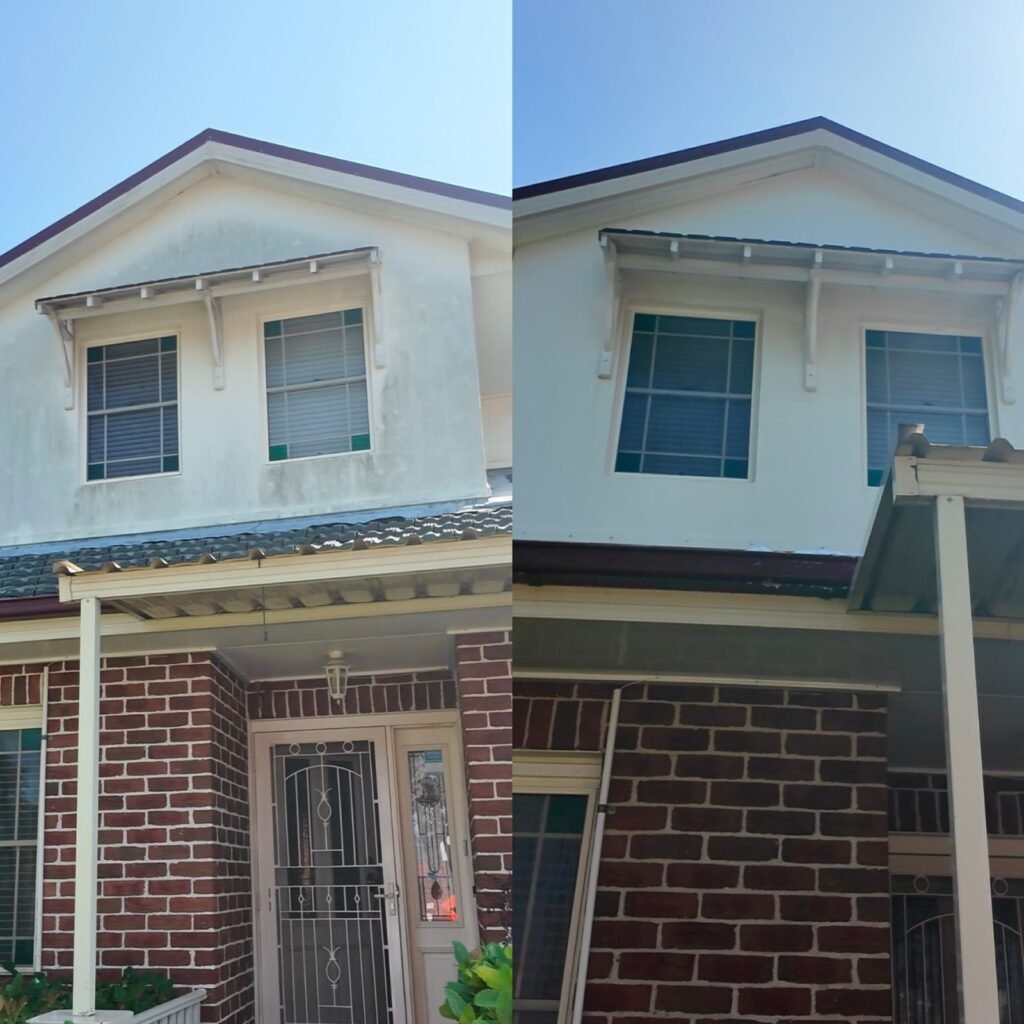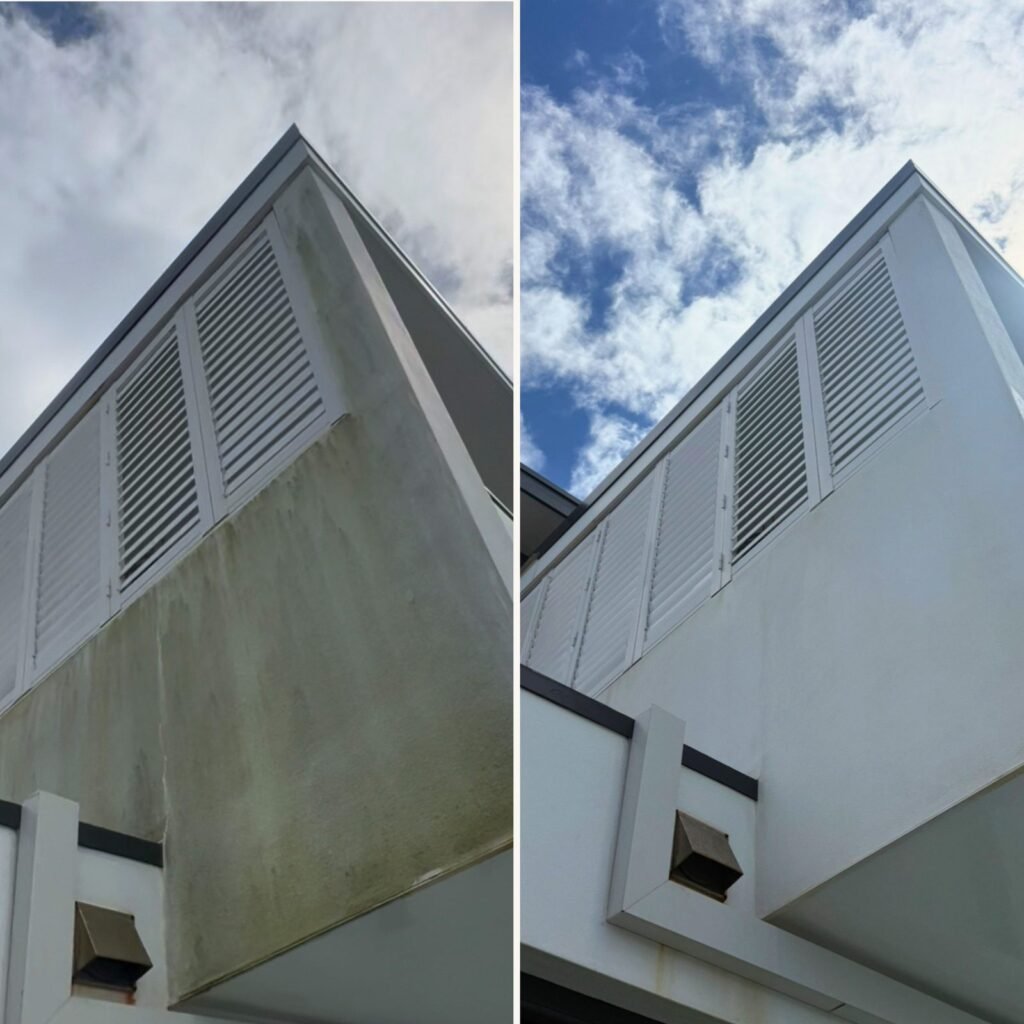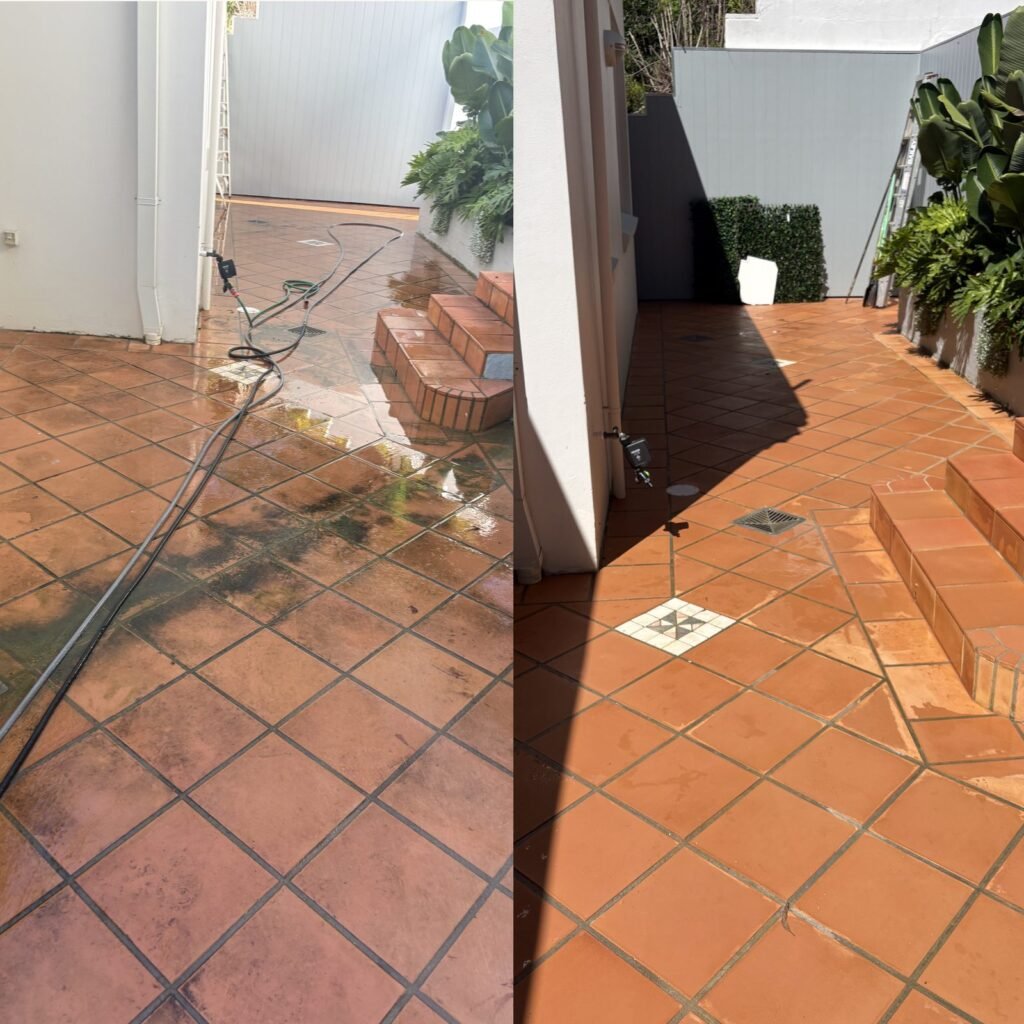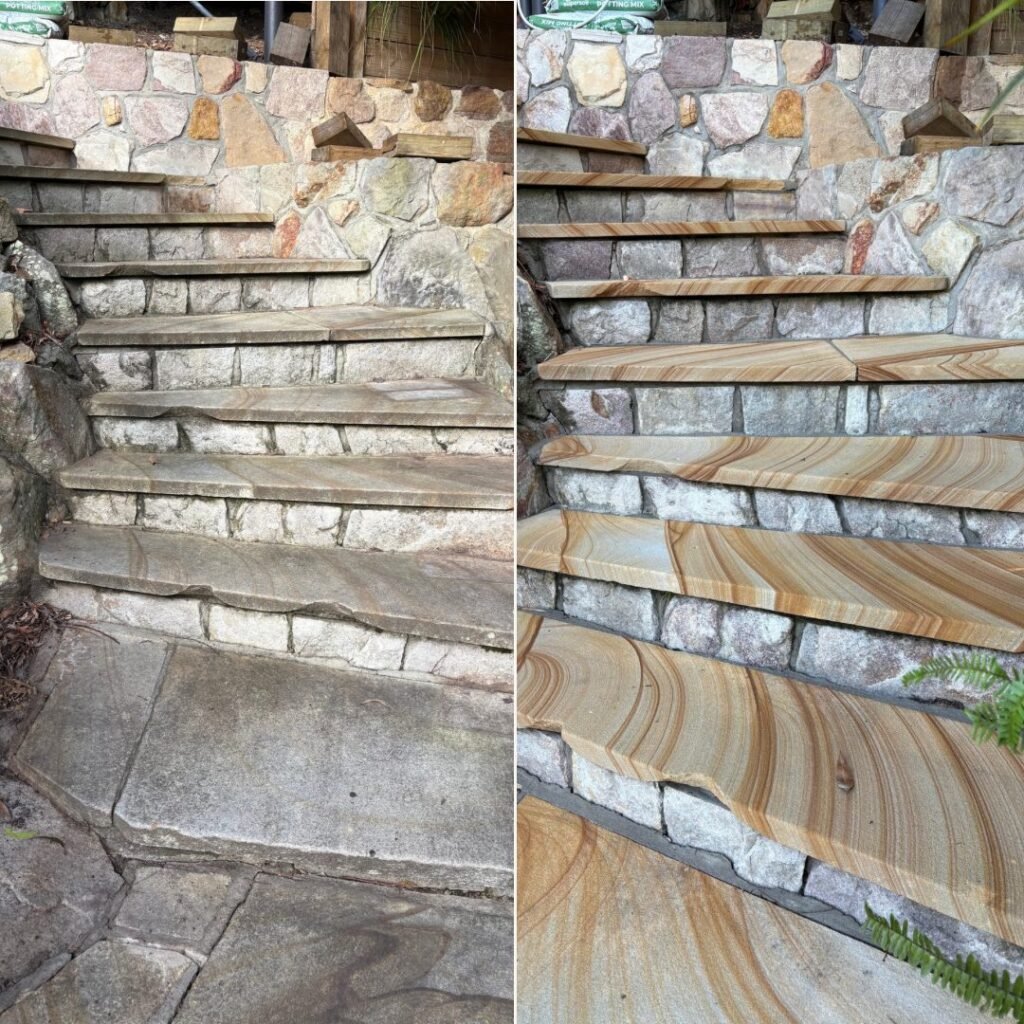
Double Bay village, around Cross Street, Knox Street and Bay Street, trades on presentation. Boutiques, cafes and restaurants compete on how they look from the footpath, and the frontage is the first thing a customer sees.
Keeping it clean is a regular job with a few rules that catch people out.
Glass
Shopfront glass is the priority. It collects fingerprints, street grime, and in summer, salt carried in from the harbour on the breeze. Weekly or fortnightly glass cleaning is normal for retail, with a deeper clean of frames, signage and high glass less often.
Purified water through a water-fed pole leaves no spots on high glass and signage without ladders on a busy footpath. More: window cleaning.
Awnings and canopies
Fabric awnings grow mould and collect bird droppings; metal and glass canopies collect leaves and grime on top where nobody sees it until it streaks down. Fabric needs gentle cleaning suited to the material, not pressure. Gutters on canopies need clearing. More: awning and outdoor blind cleaning.
The footpath
Footpaths are generally council’s, not the shop’s. Many businesses still want the area in front of their door cleaned of gum, spills and staining, particularly outdoor dining areas.
Two rules matter. Council approval may be needed for work on public land, especially with equipment, exclusion zones or during trading hours; check with Woollahra Council. And runoff must not go into stormwater pits: Sydney stormwater generally flows untreated into the harbour, and polluting it is an offence. Food grease and detergent are exactly what the rules are aimed at. More: stormwater rules.
Outdoor dining
Outdoor dining areas collect food, drink and grease, which stain pavers and attract pests. They need frequent cleaning with methods that capture the waste water. Hot water and degreasers work on grease; acid on stone pavers does not. More: commercial pressure cleaning.
Heritage frontages
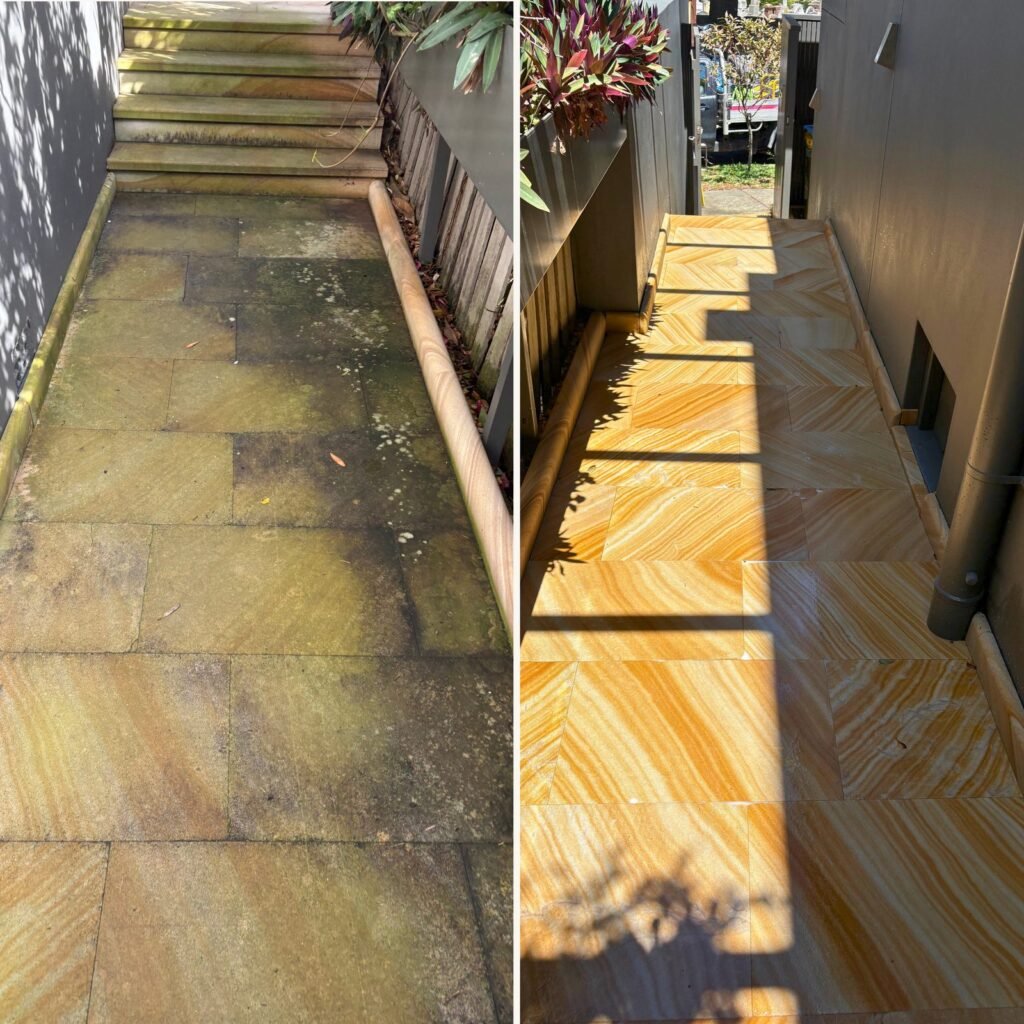
Some older shopfronts and buildings around the village have original tiles, terrazzo, timber or sandstone. These need gentle methods: no acid on terrazzo or marble, no pressure on sandstone or old tiles. More: graffiti removal by surface.
Timing
Out of trading hours. Early morning before opening is usual; it keeps the work away from customers and makes the frontage fresh for the day. Noise rules apply to equipment early in the morning, so quiet methods suit early starts. More: noise rules and working hours.
Who pays
Lease terms decide whether the tenant or the landlord cleans the façade, awnings and upper glass. Ground-floor glass is usually the tenant’s. Upper levels, façades and building-wide work are often the landlord’s or the strata’s.
Setting up a regular program
Most village businesses do best on a fixed schedule rather than calling when it looks bad. A typical pattern: shopfront glass weekly or fortnightly, the entry and immediate frontage weekly, awnings and upper glass quarterly, and a deeper façade clean once or twice a year.
A regular program is also cheaper per visit than ad-hoc calls, because the contractor knows the site, the access and the timing.
Chewing gum and spills
Gum on paving is the commonest complaint in busy retail strips. It needs steam or a specific gum-removal method; high pressure alone spreads it and can damage paving. Drink and food spills on porous pavers stain quickly and should be dealt with the same day where possible.
Insurance and paperwork
Anyone working on a shopfront, especially at height or on a public footpath, should carry public liability insurance and be able to produce a certificate of currency. Landlords and centre managers often require it before work starts. More: public liability cover and its gaps.
See the Double Bay maintenance calendar and our commercial pressure cleaning service.