Sandstone Cleaning North Shore | Walls, Steps & Heritage Stone
Low-pressure cleaning and breathable sealing for Hawkesbury sandstone from Mosman to Wahroonga — retaining walls, steps and original stonework.
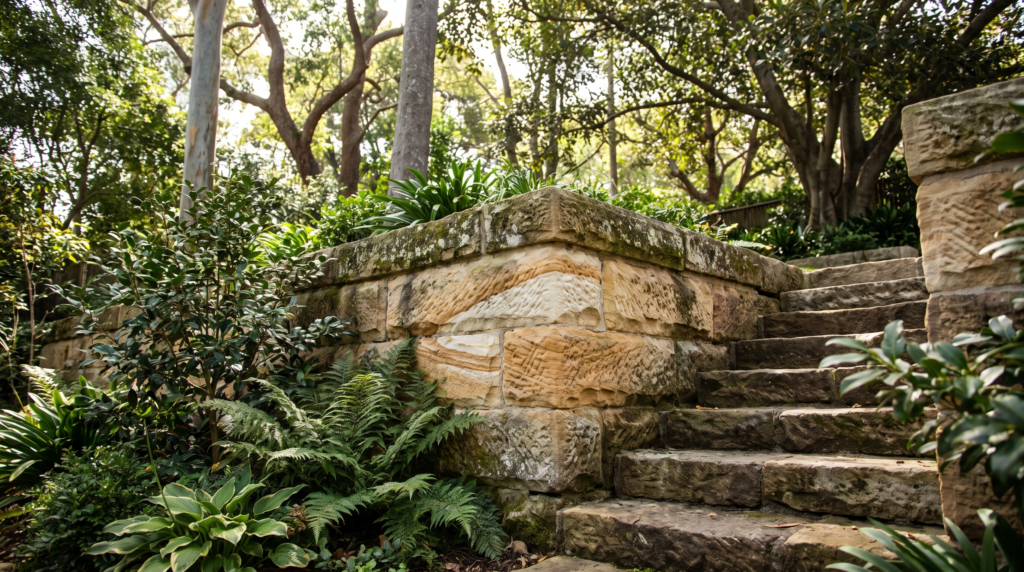
Much of the sandstone on the North Shore was never brought in. It was cut from the block it sits on. Hawkesbury sandstone runs through the ridgelines from Mosman up through Ku-ring-gai, and when these homes were built the excavated stone became the retaining walls, the front steps, the garden edging and the base courses. That matters, because it means the stone is often a century old, hand-dressed, and structurally doing a job — not decorative cladding that can be replaced if it is damaged.
It also means it cannot be cleaned the way concrete is cleaned.
Why North Shore sandstone goes black and green
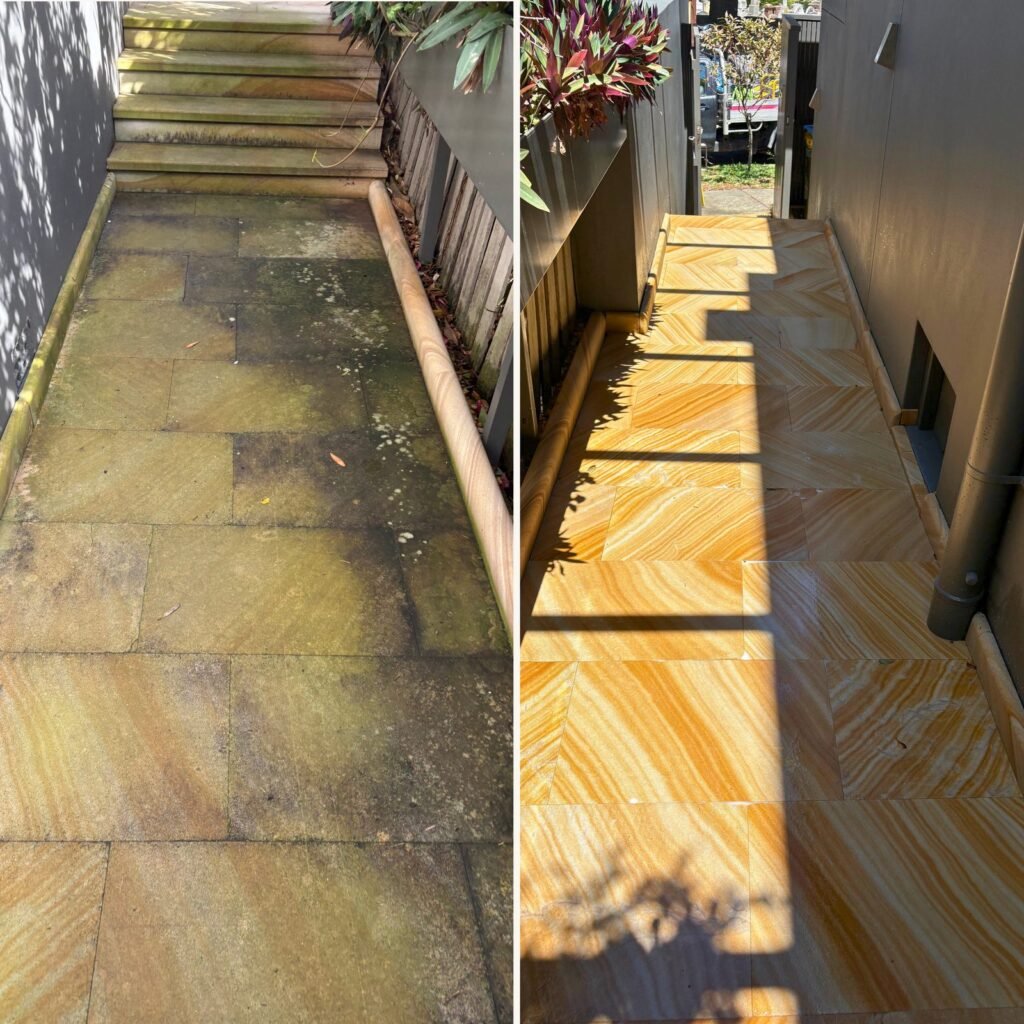
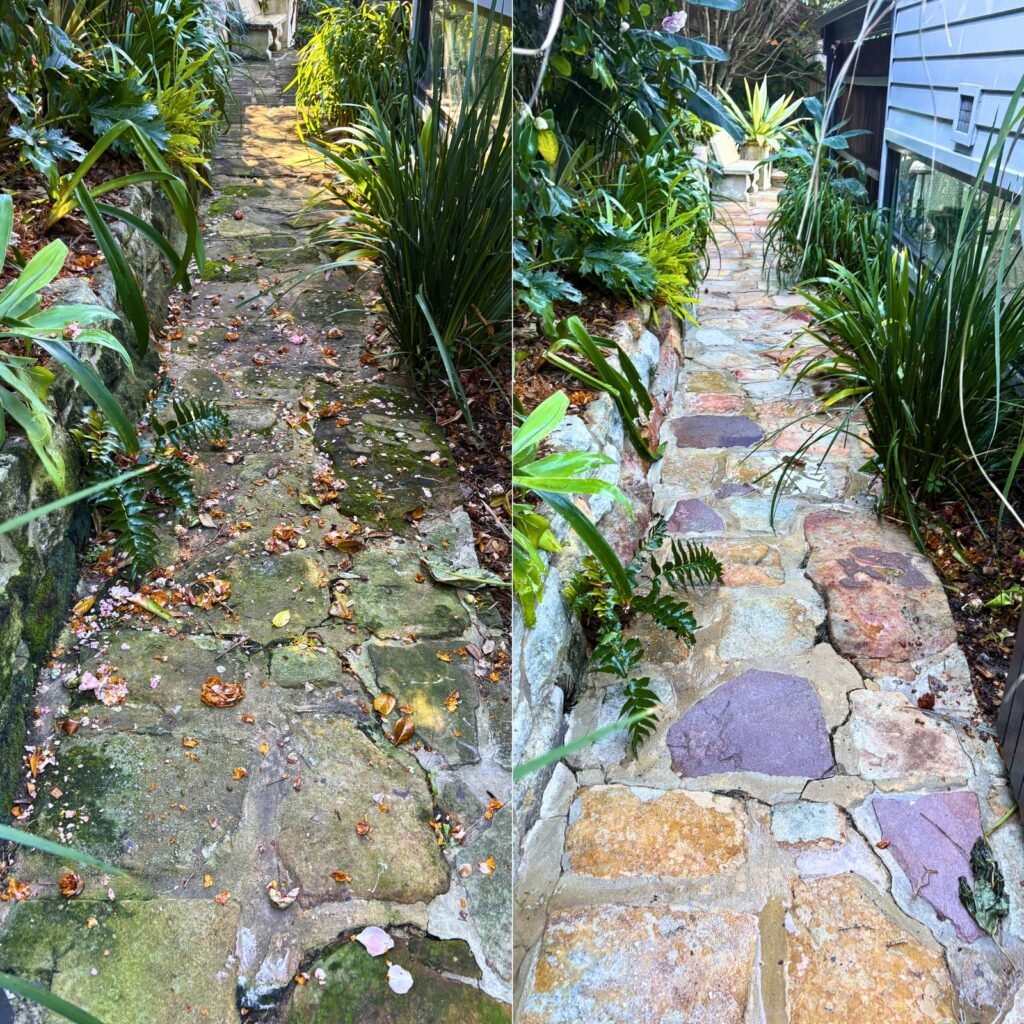
Under canopy, sandstone stays damp. Hawkesbury sandstone is porous by nature, so it draws moisture in and holds it, and shade means it rarely dries fully between rain events. That creates ideal conditions for algae, moss and lichen, which is what most of the black and green actually is. It is not soot and it is not dirt sitting on the surface — it is growth with a root structure that has worked its way into the pores.
Alongside that, three other things show up consistently here. Tannin from leaf and bark litter stains the stone a reddish-brown. Iron minerals naturally present in the sandstone oxidise and bleed rust-coloured streaks. And on retaining walls, salts migrate through from the soil behind and crystallise on the face as a white bloom — efflorescence — which is a moisture problem, not a cleaning problem.
Why pressure washing damages it
Sandstone is soft. A pressure washer at the settings used on a concrete driveway will strip the weathered outer skin off the stone, taking the tooling marks and the patina with it. The surface left behind is rougher and more porous than what was there before, which means it absorbs more moisture and re-colonises faster. Each aggressive clean makes the next one necessary sooner.
The damage is also permanent. Blasted sandstone cannot be restored — the material is gone. It is common to find North Shore walls where a previous clean has left visible lance striping or a mottled, sugary surface, and the only option from that point is to manage the stone gently going forward.
How we approach it
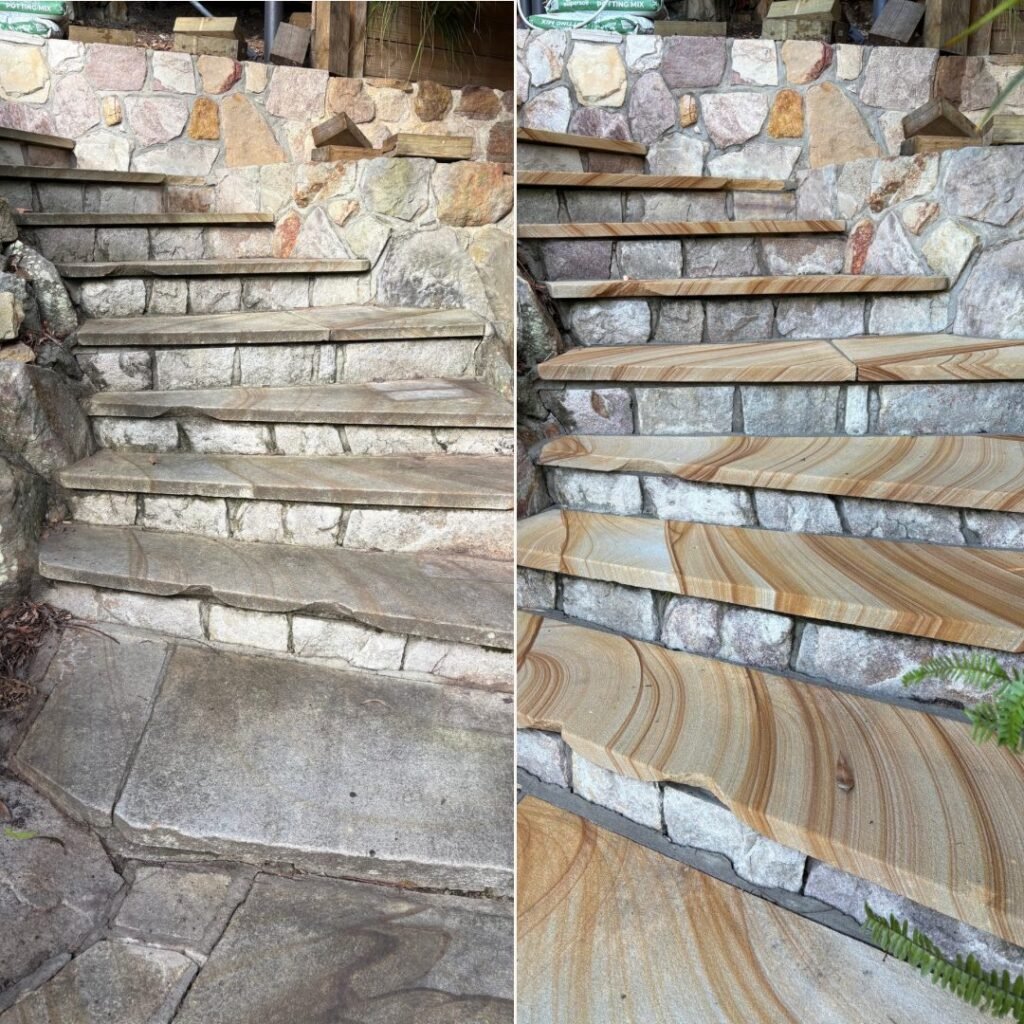
The method is chemical and biological rather than mechanical. An appropriate solution is applied at low pressure to kill the growth at its root, given dwell time to work through the colonised layer, then rinsed at a pressure the stone can tolerate. Heavier areas may need a second application rather than more force. The stone lightens progressively over the following weeks as dead growth weathers off, which is normal and expected.
Iron and tannin staining are treated separately, typically with a poultice drawn through the surface rather than scrubbed at it. Efflorescence is addressed at the source where possible — drainage behind the wall — because cleaning the face alone means it returns.
What results look like
Cleaned sandstone comes back to an even, warm honey tone. It does not come back to the colour of freshly quarried stone, and it should not — a century of weathering is part of what the material is. Stone that has been previously blasted will clean up but will retain the texture damage. Deep iron staining lifts substantially but occasionally leaves a shadow. Anyone quoting a guaranteed uniform result has not examined the stone closely.
Should it be sealed afterwards?
On shaded North Shore properties, sealing is often worth it. A breathable, penetrating sealer slows moisture absorption and gives the growth less to work with, which extends the interval between cleans considerably. Two rules matter: it must be breathable, because a film-forming sealer traps moisture inside the stone and can cause spalling in a retaining wall; and it must go onto stone that is fully clean and fully dry, or the staining is locked underneath it.
Protecting the surrounds
Sandstone is usually surrounded by established planting. Beds are pre-wet and covered before any solution is applied, runoff is directed away from root zones and towards stormwater, and dilution is matched to the stone rather than to the speed of the job.
Suburbs we cover
Sandstone work across the North Shore, including Mosman, Northbridge, Castlecrag, Willoughby, Lane Cove, Roseville, Lindfield, Killara, Gordon, Pymble, Turramurra, St Ives and Wahroonga. See the full North Shore service area.
Related services in this area
Pressure washing · House washing · Roof cleaning · Gutter cleaning
Request a fixed quote
Sandstone is assessed before it is quoted, because condition varies enormously between properties. Call 0494 810 609 or send photos of the walls, steps or paving you want looked at.
Servicing homes across Sandstone Cleaning North Shore
Fixed written quotes within 24 hours. Surface-matched methods, $20m public liability.
Request a Free Quote